


2026 Top Lead Apron Suppliers for Global Buyers

Choosing reliable lead apron suppliers in 2026 requires more than comparing prices or browsing polished product pages. Global buyers must examine material composition, protective equivalence, stitching quality, sizing accuracy, and documented testing. A well-made apron should hang evenly, cover the torso comfortably, and remain flexible after repeated use. Small defects matter. Cracked shielding layers can appear invisible during a quick inspection.

Radiation safety expert Dr. Madan M. Rehani has emphasized, “Radiation protection is about justification and optimization, not simply adding more shielding.” This principle should guide every supplier review. A heavier apron is not automatically safer. Poor fit may create gaps, restrict movement, and encourage incorrect wearing habits. Buyers should request current test reports, quality-control records, storage guidance, and clear information about lead-free alternatives.

This guide evaluates leading suppliers through a practical purchasing lens. It considers manufacturing experience, product consistency, customization support, international communication, and after-sales service. It also examines whether supplier claims are supported by traceable evidence. Some published specifications remain incomplete. That deserves careful attention.

Hospitals, dental clinics, imaging centers, and medical distributors face different operating conditions. A busy fluoroscopy department needs different apron features than a small dental practice. Climate, transport distance, cleaning routines, and staff turnover also influence product performance. The strongest suppliers explain these differences instead of offering one universal solution.

No ranking can replace local inspection or professional radiation-safety advice. Still, a focused comparison can reduce costly mistakes. It can also help global buyers select lead apron products that support comfort, durability, and responsible protection practices.
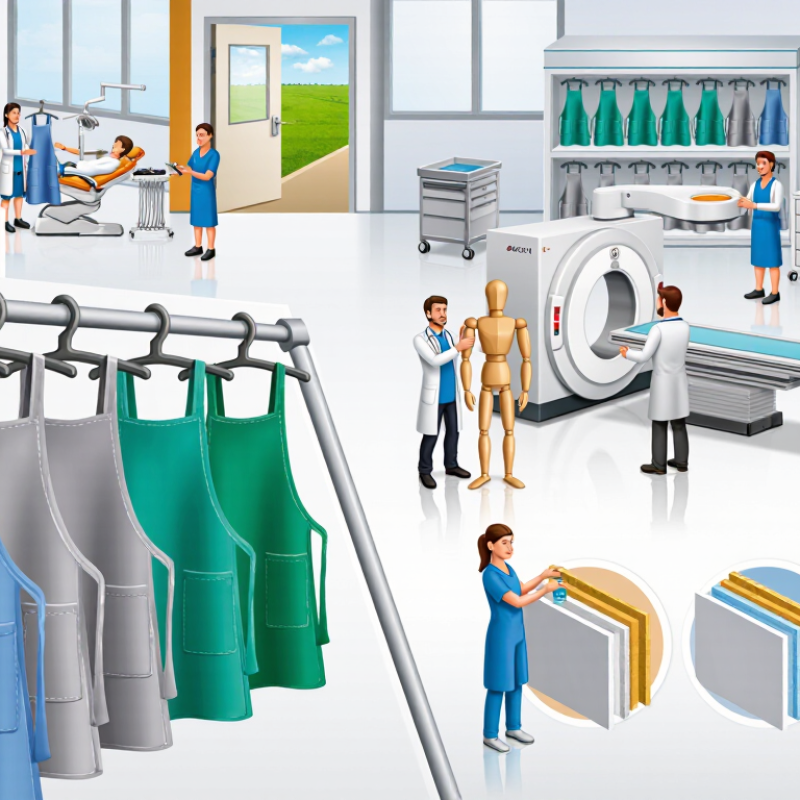
2026 Top Lead Apron Suppliers for Global Buyers

Lead Aprons: Purpose, Types, and Global Buyer Applications

Lead aprons reduce occupational exposure to scattered radiation during diagnostic imaging. They do not make the primary beam safe. Staff must still follow distance, shielding, and exposure-time controls. Fit matters as much as thickness. A poorly fitted apron can leave the chest, sides, or lower abdomen exposed. Common options include front-protection aprons, wraparound designs, dental aprons, and lightweight composite models. Buyers may also need thyroid collars, protective eyewear, and carefully selected gloves. A 0.25 mm lead-equivalent apron offers lighter protection, while 0.35 mm or 0.50 mm options suit higher scatter environments. However, thicker does not always mean better for daily use.

Global buyers commonly purchase aprons for hospitals, dental clinics, imaging centers, veterinary facilities, and mobile radiography teams. Fluoroscopy rooms often require wraparound protection because staff may change position frequently. Dental users usually prefer lighter front protection and simple storage. Procurement teams should verify lead-equivalent labeling, test reports, sizing ranges, closure strength, and material composition. Requirements differ across regions, so local regulatory guidance must be checked before ordering. Ask how each apron is inspected and replaced. Small cracks can develop near folded areas. Hanging storage is essential, although busy departments sometimes forget it. That weakness deserves attention. Buyers should compare total service life, not only the purchase price. A reliable supplier provides traceable documentation, consistent sizing, and practical after-sales support. No apron replaces correct positioning or a working radiation-safety program.

2026 Top Lead Apron Suppliers for Global Buyers - Lead Aprons: Purpose, Types, and Global Buyer Applications

Global procurement comparison matrix for radiation-protection garment sourcing

Apron Type Typical Protective Specification Primary Global Applications Supplier Capability to Verify Key Buyer Considerations Common Procurement Format
Front-protection apron Usually available in 0.25 mm, 0.35 mm, or 0.50 mm lead-equivalent protection, depending on the product design and intended use. General radiographyDental imagingVeterinary imaging Documented lead-equivalence test results, size range, material composition, stitching quality, and inspection procedures. Suitable when the wearer normally faces the radiation source. Confirm whether the design provides adequate overlap when worn. Individual units or cartons for clinics and imaging departments.
Wrap-around apron Commonly specified with front and partial back coverage; lead-equivalent values often range from 0.25 mm to 0.50 mm. FluoroscopyInterventional proceduresOperating rooms Accurate front-and-back protection declaration, balanced weight distribution, secure fastening, and coverage diagrams. Offers broader coverage than a front-only design but may be heavier. Size and fit are important for reducing gaps and fatigue. Size-based orders with optional matching thyroid collars and skirts.
Vest-and-skirt system Two-piece configuration designed to distribute weight between the shoulders and hips; protection levels are commonly specified in lead equivalence. Interventional radiologyCardiologyPain management Separate component test data, overlap requirements, attachment durability, and compatibility between vest and skirt sizes. Can improve wearer comfort during long procedures. Buyers should verify that the two pieces overlap during normal movement. Component sets, usually ordered by size and protection level.
Dental apron Compact apron commonly supplied with approximately 0.25 mm or 0.35 mm lead-equivalent protection; designs may include a thyroid collar. Dental radiographyOrthodonticsSmall-animal imaging Lightweight construction, easy-clean outer fabric, child and adult sizing, and clear protective-area specifications. Compact coverage improves handling in high-throughput environments. Confirm the product’s intended use and local regulatory requirements. Multi-unit packs for dental practices, hospitals, or distributors.
Pediatric apron Child-sized design with protection selected according to the imaging procedure and applicable local protocols. Pediatric radiographyEmergency departmentsMobile imaging Age- or size-specific dimensions, non-toxic surface materials, secure closures, and documented protective performance. Correct sizing is essential. Avoid excessive length or loose closures that may create handling and positioning problems. Size-specific units or mixed-size institutional orders.
Maternity-design apron Usually a larger or specially shaped garment intended to provide abdominal coverage; protection level must be stated in lead-equivalent terms. Diagnostic imagingPregnancy-conscious workflowsRadiology departments Coverage dimensions, ergonomic design, material flexibility, and evidence supporting the stated lead-equivalence rating. Protective garments should be used according to the facility’s radiation-safety program and procedure-specific risk assessment. Individual units with extended-size options.
Lead-free composite apron Uses non-lead shielding compounds, such as bismuth- or tungsten-based composites; protection must be declared as lead equivalence at a specified beam energy. HospitalsDental clinicsMobile imaging Material composition, energy-specific attenuation data, environmental documentation, and independent performance testing. Lead-free does not automatically mean lighter. Compare weight, flexibility, durability, and protection at the buyer’s operating conditions. Institutional purchase orders or distributor supply contracts.
Radiation-protection skirt Lower-body protective component, commonly paired with a vest; front or wrap-around coverage should be clearly identified. FluoroscopyInterventional cardiologySurgical imaging Coverage map, waistband strength, overlap dimensions, attachment compatibility, and lead-equivalence documentation. Verify compatibility with the selected vest and ensure that the combined system does not restrict movement. Matching two-piece sets or replacement components.
Thyroid collar accessory Neck protection is commonly offered at approximately 0.25 mm or 0.50 mm lead equivalence, subject to the product specification. FluoroscopyDental imagingGeneral radiography Neck coverage, closure security, seam durability, lead-equivalence test report, and compatibility with the apron. Useful as a complementary accessory where the neck is exposed to scatter radiation. Fit should allow comfortable movement and breathing. Single units, sets, or accessories bundled with aprons.
Procurement and compliance baseline Protection claims should be expressed as lead equivalence and supported by test documentation appropriate to the product and market. HospitalsDistributorsGovernment tendersPrivate clinics Request technical datasheets, quality-management evidence, batch traceability, warranty terms, care instructions, and applicable conformity documents. Check local import rules, labeling requirements, cleaning limitations, storage instructions, and periodic visual inspection procedures. Framework agreements, tenders, OEM supply, or distributor contracts.
Buyer note: Lead-equivalent values, coverage, weight, and compliance status vary by model and market. Buyers should request product-specific test reports and verify requirements with the facility’s radiation-safety officer before purchase.

Key Safety Standards for Evaluating Lead Apron Suppliers in 2026

When evaluating lead apron suppliers in 2026, safety evidence should come before price. Ask for current test reports showing lead equivalence at relevant tube voltages. Reports should identify thickness, coverage areas, and testing methods. IEC 61331-3 is a useful reference for protective clothing testing. However, local healthcare requirements may demand additional documentation.

Inspect the apron, not only the certificate. Check stitching, fasteners, overlap at the front, and protection around the shoulders. A small gap can matter during repeated fluoroscopy procedures. Look for clear labels, size charts, cleaning instructions, and storage guidance. Aprons should hang flat, never fold. In real purchasing reviews, this detail is often missed. It can shorten service life.

Tips: Request sample units before a large order. Place them on a light table and check for cracks or thin areas. Confirm independent quality testing, batch traceability, warranty terms, and replacement procedures. Ask whether the supplier can provide thyroid collars, skirts, and flexible panels with matching protection levels. Do not rely on vague claims such as “premium protection.” Written evidence is stronger. Still, even careful checks have limits. A supplier’s document may be valid, yet the product may not suit your workflow. Reassess fit and condition regularly.

How to Compare the Top Lead Apron Suppliers Worldwide

Comparing the top lead apron suppliers worldwide requires more than checking price lists. Buyers should assess shielding performance, garment weight, fit, and documented quality control. The UNSCEAR 2020/2021 Report identifies medical exposure as the largest artificial source of ionizing radiation exposure. That makes procurement decisions clinically important, not merely administrative.

Request independent test records showing lead-equivalent protection, typically 0.25, 0.35, or 0.50 mm Pb. Check whether testing follows IEC 61331-3:2014 or equivalent national requirements. Ask for batch traceability, material composition, warranty terms, and replacement guidance. The IAEA’s SSG-46 safety guidance also supports regular inspection of protective garments, especially after repeated folding or visible surface damage. Look closely at stitching, closures, collar coverage, and ergonomic design. Small details matter.

NCRP Report No. 160 estimated that medical imaging contributed about 48% of average annual U.S. population radiation exposure in its assessment. That figure strengthens the case for reliable protection and documented maintenance. Compare total ownership cost, not only the purchase quote. Include shipping, storage racks, inspection tools, staff sizing, and disposal arrangements. A low price may hide weak support. I would still avoid treating certificates as absolute proof; paperwork can be incomplete, outdated, or poorly matched to the actual model. Request current reports for the exact product configuration. Measure twice. Buy once.

2026 Top Lead Apron Suppliers for Global Buyers

How to Compare the Top Lead Apron Suppliers Worldwide

Lead-equivalent protection is a key specification when comparing suppliers. Common procurement levels include 0.25 mmPb for lighter protection, 0.35 mmPb for general radiography, and 0.50 mmPb for higher-exposure applications. Buyers should also verify certification, size availability, ergonomic design, durability, and compliance with applicable local requirements.

Supplier Selection Factors: Protection, Comfort, Quality, and Cost

Protection comes before price. ICRP Publication 103 sets the occupational dose limit at 20 mSv annually, averaged over five years. A single year must not exceed 50 mSv. This makes verified lead-equivalent performance essential for global buyers. Request independent attenuation reports, material thickness, seam testing, and clear records for each production batch. Do not rely on marketing claims alone.

Comfort affects real-world use. The IAEA notes that protective clothing should be inspected regularly and used correctly. A heavy apron can restrict movement during long fluoroscopy procedures. Look for balanced weight distribution, flexible panels, adjustable closures, and ventilation-friendly designs. ASTM F2547 provides recognized test methods for protective garments. Still, a standard test cannot fully predict daily fatigue, heat, or poor storage. Ask working radiographers to trial samples.

Quality and cost need a wider calculation. Compare durability, warranty terms, cleaning instructions, replacement parts, shipping, and inspection support. A cheaper apron may become expensive after early cracking or deformation. NCRP Report No. 160 identifies medical imaging as a major source of population exposure from artificial radiation. That context deserves careful purchasing. I would not choose the lowest quotation without checking evidence, usability, and after-sales response. The uncomfortable truth is that supplier documents can look complete while practical performance remains uncertain.

Global Purchasing, Customization, and Compliance Considerations

2026 Top Lead Apron Suppliers for Global Buyers
Global Purchasing, Customization, and Compliance Considerations

Global buyers should evaluate lead aprons as protective equipment, not ordinary garments. UNSCEAR’s 2020/2021 report records billions of diagnostic X-ray examinations worldwide each year. This scale increases demand for consistent shielding, traceable testing, and dependable international delivery. A supplier should disclose lead-equivalent values at relevant tube voltages, garment weight, seam construction, and inspection methods. Weight matters. A heavy apron may reduce staff compliance during long fluoroscopy procedures.

Customization should follow the facility’s real workflow. Buyers can request different front and back shielding, wraparound designs, maternity sizing, thyroid collars, and embroidered identification. However, customization can introduce weak seams or uneven overlap. This is where my earlier assumption needs caution: a higher lead-equivalent rating does not automatically provide better practical protection. Fit, coverage, storage, and correct use also influence performance. Suppliers should provide sample measurements and a documented quality-control process before bulk production.

Compliance evidence must be specific to the destination market. IEC 61331-3 provides requirements for protective clothing against diagnostic medical X-radiation, while ASTM F2547 describes testing methods for protective garments. The IAEA also emphasizes optimization and routine quality assurance in medical exposure systems. Buyers should request recent test reports, material declarations, labeling details, and batch traceability. For global shipments, confirm applicable medical-device or personal-protective-equipment rules before ordering. Do not rely on a generic certificate. It may be incomplete.

Powder Coat Booths

For those larger-sized parts, or smaller quantity runs, we have 2 independent powder coat booths and ovens. The quality, durability and affordability of today’s powder coating finishes make this the process of choice for world-class companies.

Powder coating advantages over other forms of coating are many. Materials used in the Powder coating process can be metals and non-metals that come in a multitude of thicknesses, textures, colors, etc. Another of Powder coating’s biggest advantages over conventional coatings is its ability to create finishes in many different textures. Powder Coating Booths allow us the ability to apply these advantages to large products.

Wet Paint Line

Tri-State Fabricators runs a full-service conveyor line for painting. Wet painting can provide protection or decoration to many different part styles. From start to finish, every project is easier to undergo random and point-based inspection by our skilled painting team.

Advantages to our Wet Paint Line are these lines start with product prep and ends with a thorough inspection of a high quality finished product. Our ability to complete large and small projects with a superior finish and doing so in a timely and economical fashion. This passes along the savings in production to our customers. When powder coating ins not an option, our Wet Paint Line gets the job done right the first time.

Wet Paint Booths

When the parts get big and heavy we roll-out our custom paint racks and oversize booth. By utilizing our partnerships with all the major paint brands, we can match virtually any color with wet paint.

The advantages of having access to a Wet Paint Booth are many. Large projects of many different shapes can be loaded into the booth. The Wet Paint Booth offers an environment that is much more controlled than a typical parts painting operation.

Not only are they used because of their controlled environment, but they’re are also advantageous when it comes to applying paint to parts that are needed in industries that require specialty coatings such as medical, aerospace, etc.

Military CARC

Our military forces have some very high standards when it comes to the finish of their vehicles and equipment. From the first pre-treatment step to final coat, it takes a great deal of knowledge and experience to protect the men and women of our armed forces. They deserve only the best, and Tri-State Fabricators provides it.

All of our processes are closely monitored by our staff and management teams. Both of which are highly trained in the processes of metal fabrication and finishing. Tri-State Fabricators’ goal is to always fully satisfy each and every customer, including the military. We will always put a 110% into what we do.

Glass-Bead Blasting

Abrasive media blasting is an excellent way to remove old paint, rust, and increase the paint/powder adhesion. Glass beads produce a much smoother and brighter finish than angular abrasives; leaving the part clean yet without any dimensional change. Chemically inert and environmentally friendly, we can recycle our beads approximately 30 times; making them a more preferred method of metal cleaning or surface finishing.

Advantages to Glass Bead Blasting are many. Glass bead blast media is used when a project is needing rough surfaces need to become smooth for applications of coatings such as paint. It is typically used to clean paint and rust from a product surface without deforming the surface it is being used on. Overall, compared to many other blasting media, Glass Bead Blasting is a very economical choice and those savings are always passed on to our customers.

Part Washing

Tri-State Fabricators utilize a zinc phosphate wash to clean and etch the material to ensure the best paint adhesion possible. The unique design of our 3-stage wash system does the work like a 5-stage. From Cleaning and rinsing to conversion coating and post-treatment, Our Part Washing process is a complete service and works throughout the fabrication service and the finishing service.

Along with the previously mentioned benefits, Curing is a vital chemical reaction that leaves the product finish hard and relatively safe from mild abrasion and aggressive corrosion. This process can be done in more than one way; ambient air-dry or in curing ovens at temps that exceed 240°.

Burn-Off Oven

From fixing paint mistakes (someone else’s of course) to simply cleaning our paint line hooks, our burn-off oven is put to good use. After a quick burn-off, a little clean up, and a fresh coat of paint, your parts will look better than new.

Why does our Burn-Off Oven work so well? Because super heating the air around parts turns the materials into ashes. From paint and powder coatings to rubber and machining oils, high temps do the job without degrading the integrity of the part.

Masking

Masking is a vital part of producing high quality products. We have die-cut masking patterns to protect machined surfaces as well as a wide range of plugs and caps to protect threaded holes and bolts. We provide permanent and temporary masking.

Masking allows the selected sections of a product to be protected from a fabrication or finishing service. This can be with both chemicals when etching and tapes, paints when only finishing just a section of the product. Masking is great in aiding the customization process of a project.

Screen Printing

Screen printing is a photographic process that transfers artwork onto a porous nylon screen which allows colored ink to flow through the screen and be deposited on an aluminum or plastic component. We can generally have just about any design created onto a screen for your parts.

Some of the advantages of Screen Printing are, brand recognition for your business displaying on your products, assembly instructions, product warnings/hazards, etc. Tri-State Fabricators produces Screen Printing of the highest quality so you know it’s durable.

Metal Finishing

Metal Finishing is the art of treating the exterior portion of product, often metal but can also be made of other materials, so that the surface is clean and free of any debris. Then the process of applying coats or either paint of powder coat takes place. This coating process improves the quality of the product in both appearance and resistance to wear and corrosion.

Tri-State Fabricators, Inc., understands that a project typically isn’t complete until a high-quality finish has been added to your product. This is why our painting and powder coating teams continuously inspect the products throughout the Metal Finishing process.


