2026 Top Hand Made Cleanroom Panel Suppliers
Cleanroom demand is expanding across semiconductor, pharmaceutical, and advanced manufacturing facilities. MarketsandMarkets’ Cleanroom Technology Market report estimated a rise from USD 6.1 billion in 2023 to USD 8.9 billion by 2028. That forecast points to sustained investment, but it does not make every supplier equally suitable. Buyers still need to assess construction quality, documentation, and installation support.
A Hand-Made Cleanroom Panel can be built to fit specific room dimensions and service openings. That flexibility matters when a project includes unusual layouts, frequent equipment changes, or limited installation space. Yet handmade does not automatically mean better. Joint alignment, surface finish, core consistency, and sealing details can vary between factories. Small gaps matter.
ISO 14644-1 provides the framework for classifying cleanrooms by airborne particle concentration; panels alone cannot guarantee compliance. The 2026 supplier comparison should therefore consider material options, dimensional tolerances, fire and load documentation, lead times, and quality-control records. Ask suppliers how they verify panel dimensions and protect finished surfaces during transport. A careful review may uncover trade-offs: a lower quote can bring longer lead times or less complete technical support. This guide examines leading Hand-Made Cleanroom Panel suppliers and the practical questions that help buyers compare them with confidence.
What Are Handmade Cleanroom Panels?
2026 Top Hand Made Cleanroom Panel Suppliers
What Are Handmade Cleanroom Panels?
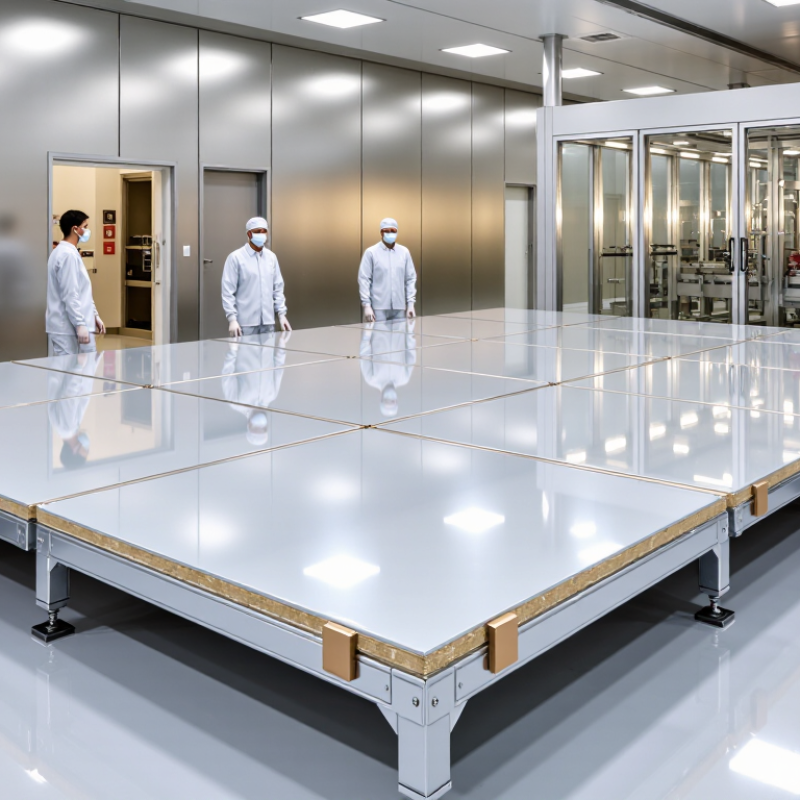
Handmade cleanroom panels are modular wall or ceiling units assembled and finished by skilled workers. They typically combine metal or coated sheet facings with a lightweight core, such as mineral wool or honeycomb. Panel edges, cut-outs, and joints are shaped to suit doors, windows, services, and room dimensions. That flexibility helps when a project needs unusual sizes or careful on-site adjustments. It also means workmanship matters. A slightly uneven joint can complicate sealing and cleaning.
These panels do not, by themselves, make a room clean. Performance depends on the complete design, including sealed interfaces, airflow, filtration, and installation quality. ISO 14644-1:2015 sets airborne particle concentration limits: at 0.5 micrometres and larger, ISO Class 5 allows up to 3,520 particles per cubic metre; Class 7 allows 352,000. These figures are useful design references, not a guarantee of panel performance. Ask suppliers for panel construction details, test evidence, and documented installation procedures. Inspect corners and penetrations closely. They are easy to overlook. Even careful fabrication can leave small inconsistencies, so review samples and finished joints before approving a large order.
2026 Top Handmade Cleanroom Panel Suppliers — What Are Handmade Cleanroom Panels?
Cleanroom panels are building components used to form walls and ceilings in controlled environments. The chart shows the maximum airborne particle concentration for selected ISO cleanroom classes.
How to read this chart: Values are maximum concentrations of particles ≥0.5 µm per cubic metre under ISO 14644-1. A lower concentration corresponds to a cleaner classification. A panel alone does not determine a room’s ISO class; the complete room design, filtration, installation, and operating conditions matter.
How Handmade Cleanroom Panels Are Manufactured
Handmade cleanroom panels begin with a project drawing and a careful review of room dimensions. Technicians check wall heights, door openings, and service cutouts before preparing the materials. Metal sheets are trimmed to size, while the core is cut to fit between them. The core may be selected for insulation, fire performance, or structural needs. These choices depend on the project specification.
Small details matter. Workers apply adhesive evenly, align the face sheets, and place each panel in a press or jig. Pressure helps the layers bond and keeps the surface flat while the adhesive cures. After curing, the edges are trimmed and joint profiles are fitted. Any window, outlet, or pipe opening must be measured closely; a small mismatch can complicate installation. The process involves skilled hands, but it still depends on suitable tools and repeatable checks.
Before dispatch, panels are inspected for dimensions, surface marks, edge quality, and visible bonding defects. Samples or production records may also be checked against the agreed specification. Handmade does not automatically mean more precise. In practice, careful templates and documented inspections help reduce variation between panels. Still, some finishing decisions can be subjective, so clear acceptance criteria matter. A clean-looking surface is only one part of reliable panel construction.
Key Materials, Standards, and Performance Features
Hand-made cleanroom panels are built from a facing sheet, an insulated core, and carefully sealed joints. Common facings include coated galvanized steel, aluminum, and stainless steel. The right choice depends on cleaning chemicals, humidity, impact risk, and expected service life. Stainless steel handles frequent wipe-downs well, but it can raise project costs. A small sample panel can reveal surface marks or edge details before installation.
Core materials shape both safety and comfort. Mineral wool can support fire resistance, while rigid foam cores may provide effective thermal insulation at lower weight. No core is best in every room. Ask for test reports that match the proposed panel thickness and assembly, not just general material data. Details matter.
Cleanroom classification under ISO 14644 concerns airborne particle levels; it does not certify a panel by itself. Panel joints, door interfaces, and penetrations must also support the room’s cleaning and pressure-control plan. Check applicable fire-test requirements for the project location, along with surface durability and moisture performance. During inspection, look for flush seams, intact seals, and consistent panel dimensions. Hand-made work can vary. That deserves attention. A supplier’s documented quality checks and clear installation guidance help reduce avoidable gaps, though on-site workmanship still needs review.
How to Evaluate Handmade Cleanroom Panel Suppliers
2026 Top Hand Made Cleanroom Panel Suppliers
How to Evaluate Handmade Cleanroom Panel Suppliers
Evaluate suppliers by checking both their workmanship and their quality controls. Ask how panels are assembled, how dimensions are checked, and whether production records can be traced to each batch. Request a sample with a finished joint, not just a loose panel. Look closely. Use a straightedge to spot uneven surfaces, and inspect corners for gaps, chipped edges, or inconsistent sealant. Small flaws can complicate cleaning and installation.
Ask for technical data that matches your project’s needs, including panel thickness, core material, surface finish, and relevant fire or thermal test reports. Confirm that the proposed finish suits your planned cleaning agents. Review installation drawings and clarify who handles cut-outs, door frames, and site measurements. A polished sample is useful, but it cannot prove every production run will be identical. Requesting a trial order or inspecting completed work can provide more context.
Tips: Compare written specifications, not sales descriptions. Ask how defects are recorded and corrected. Keep a sample and approved drawings for comparison during delivery. If a supplier’s answers are vague, pause and ask again. No checklist catches everything; site conditions can still expose details missed during review.
Leading Handmade Cleanroom Panel Suppliers in 2026
In 2026, leading handmade cleanroom panel suppliers are defined by consistent workmanship and clear technical documentation, not polished sales claims. Handmade production can suit custom layouts, unusual openings, and retrofit projects. Yet each panel still needs reliable dimensions, sealed edges, and a smooth, cleanable surface. Details matter. Ask how the supplier checks panel thickness, joint fit, and finish before shipment. Request drawings, material data, and relevant test records for the proposed assembly. Performance depends on the complete system, including doors, sealants, and installation.
A capable supplier should discuss the room’s intended use before recommending a panel. They should clarify the core and facing materials, connection method, cleaning requirements, and any project-specific fire or moisture criteria. A sample corner or mock-up can reveal rough seams and surface defects that brochures miss. Even careful fabrication may leave small variations; a trustworthy supplier explains acceptable tolerances and how issues are corrected. That conversation is worth having early.
Tips: Compare suppliers using the same specification and ask for a written scope. Check references for similar projects, not just general construction work. Confirm who handles site measurements, delivery checks, and installation support. Keep a record of approved samples and drawings. Small checks prevent costly rework.





