2026 Best Fishing Tackle Manufacturers for Global Buyers
Choosing a fishing tackle manufacturer is no longer just a matter of comparing prices. Global buyers must weigh material quality, production consistency, customization, lead times, and supplier communication. A polished catalog helps. Reliable samples matter more.
The U.S. Fish and Wildlife Service’s 2022 National Survey of Fishing, Hunting, and Wildlife-Associated Recreation estimated that 57.7 million Americans went fishing. That figure signals substantial demand, but it is not a global tackle-market estimate. Buyers should avoid treating participation data as proof of sales volume. The distinction matters.
Izaak Walton, the influential angling writer, observed, “Angling is somewhat like poetry; men are to be born so.” His words concern the practice, not manufacturing. Still, they point to a useful buyer principle: tackle must work for real anglers, not just look convincing in a product sheet. A reel handle should turn smoothly. A hook’s finish should hold up under use. Small details count.
This guide to the 2026 Best Fishing Tackle Manufacturers for Global Buyers compares suppliers through practical purchasing criteria, including product range, quality controls, customization, and export readiness. Public information is uneven, and factory claims are not independent audits. Keep that in mind. Where possible, request current certifications, production samples, and written specifications before placing a large order. The goal is not to crown one universal winner, but to help buyers find a dependable FISHING TACKLES partner for their market.
Global Buyer Context: 57.7M U.S. Anglers in 2022 (USFWS)
USFWS reported 57.7 million U.S. anglers in 2022. For global buyers, that figure signals a substantial and varied fishing audience, not a guaranteed sales forecast. Anglers use different waters, techniques, and equipment. A freshwater spinning setup may need different components from gear used along a rocky coast. The number is useful context, but it cannot describe every buyer.
When evaluating tackle manufacturers, ask how they control materials, dimensions, and production consistency. Request specifications for line strength, hook sizing, corrosion resistance, and packaging where relevant. Samples matter. Check finishes under bright light, test closures with wet hands, and compare several pieces from the same production run. Small differences can affect retail returns. Clear lead times and realistic minimum order quantities also help buyers plan inventory.
There is no perfect checklist. A sample may feel solid while later batches vary, so define inspection criteria before placing a large order. Ask how defects are recorded and corrected, and whether production changes are communicated. The 57.7 million figure offers scale, not certainty. It should guide market questions, while product testing and transparent supplier records guide purchasing decisions. I would still leave room for judgment; specifications never tell the whole story.
How to Compare Manufacturers: Quality, Capacity, Compliance, and Export Reach
Choosing a fishing tackle manufacturer for global orders means checking more than a polished catalog. Compare production samples with approved specifications, including hook alignment, knot strength, coating consistency, and packaging durability. Ask how defects are recorded and corrected. A smooth sample is useful, but it does not prove every production batch will match. Request inspection records and clear acceptance criteria.
Capacity should fit your real order pattern, not just a supplier’s largest stated output. Ask about normal lead times, seasonal constraints, minimum order quantities, and backup production plans. For compliance, confirm which product tests and documents apply in your destination markets. Check that test reports match the actual materials and models you plan to buy. Export experience also matters: ask for examples of shipping documents, packaging details, and delivery timelines. These checks reduce surprises, though paperwork alone cannot guarantee a trouble-free shipment.
Tips: Request samples from different production runs, not only handpicked pieces. Feel the finish. Ask for written answers on tolerances, inspection frequency, and replacement handling. If a response is vague, pause and clarify. It may slow the decision, but that is often better than discovering a mismatch after a large order.
2026 Manufacturer Profiles by Category: Rods, Reels, Lines, Hooks, and Lures
For global buyers, manufacturer profiles are most useful when they separate capability by category. Rod makers should explain blank materials, power ratings, guide placement, and available lengths. Ask how they check straightness and protect rod tips during export packaging. A sample should feel balanced with a reel, not merely look polished. Small details matter. Printed specifications cannot fully describe a rod’s action.
Reel suppliers should document gear ratios, drag performance, bearing configuration, and corrosion testing. Request clear tolerances and spare-parts policies, especially for orders serving several markets. Line manufacturers should identify material, diameter range, breaking-strength test methods, and spool options. Compare samples under consistent conditions; labels alone do not establish equal performance. I would not treat a single lab figure as a complete buying decision.
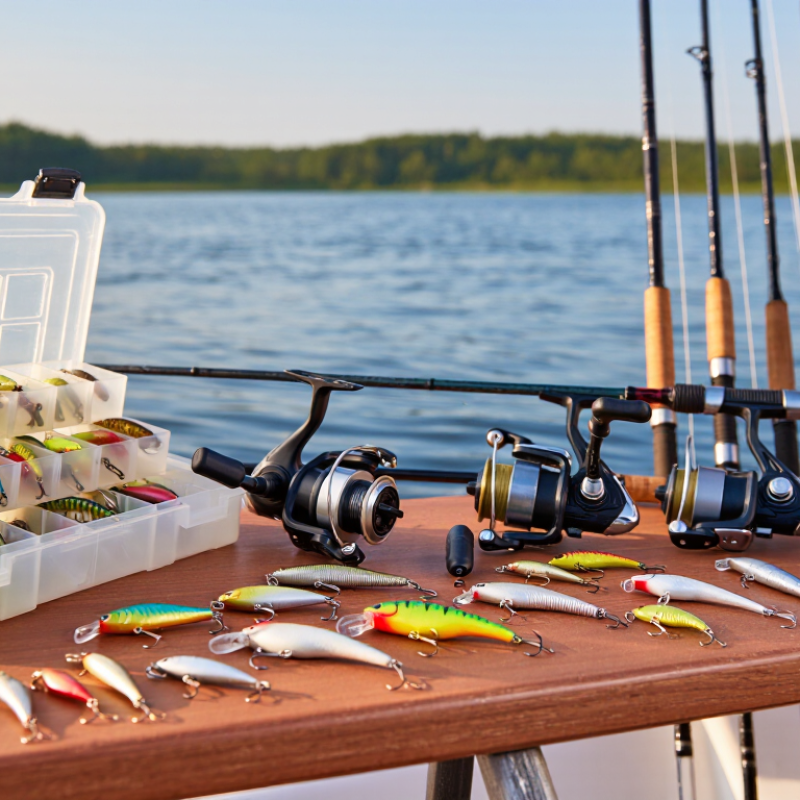
Hook profiles should cover wire options, point geometry, finish consistency, and packaging that prevents tangles. Lure makers should show repeatable color matching, realistic swimming action, and secure hardware attachment. Ask for production samples from different batches. This takes time. A common sourcing mistake is judging lures under showroom lights rather than clear water or shade. Even detailed profiles leave room for testing, and buyers may need to revise specifications after field feedback.
Industry Impact: $230.5B in U.S. Sportfishing Output (ASA, 2022)
The American Sportfishing Association reported $230.5 billion in U.S. economic output from sportfishing in 2022. That figure describes broad economic activity, not sales earned by tackle manufacturers alone. It reflects a wider network: equipment production, retailers, travel, and local services connected to fishing. For global buyers, the scale signals why dependable tackle supply matters.
A manufacturer’s contribution can be seen in practical details: a reel that retrieves smoothly after repeated use, guides that hold their alignment, and packaging that protects hooks during long shipments. Small defects matter. They can mean returns, delays, or lost trust.
Buyers should compare material specifications, production consistency, inspection practices, and realistic lead times—not just quoted prices. Ask how samples are tested and what happens when a batch falls short. Those questions do not guarantee a perfect order. No supplier can promise that. The $230.5 billion figure is a useful measure of the sector’s reach, but it cannot replace careful supplier checks or clear product requirements.
Global Sourcing Checklist: MOQ, Lead Time, Incoterms, and Warranty
For global buyers comparing fishing tackle manufacturers in 2026, treat MOQ as a product-level negotiation, not a factory-wide number. Ask for separate minimums on rods, reels, and packaged accessories, then price a pilot order before committing. Confirm whether custom colors, printed cartons, or replacement parts change the MOQ. Small details matter. Request a dated production schedule that separates sampling, manufacturing, inspection, and dispatch; “30 days” means little without a start date and clear approval milestones.
Incoterms affect who books freight, pays charges, and bears risk at each stage. Name the exact rule and named place in the purchase contract, and confirm it matches your freight forwarder’s plan. UNCTAD’s Review of Maritime Transport 2024 documented more-than-twofold increases in some container spot rates during the first half of 2024, a reminder that freight assumptions can quickly become outdated. OECD analysis estimates that full implementation of trade-facilitation measures could reduce trade costs by 14.3% on average; accurate invoices and packing lists help make clearance less painful. Ask suppliers to identify who prepares each document.
Warranty terms should specify coverage, claim deadlines, evidence required, and who pays return shipping. Request defect limits for guides, reel drag, and rod joints, plus a written remedy: replacement parts, credit, or repair. Test a small batch, keep dated inspection photos, and record serial or lot codes where available. I would still challenge any warranty that sounds generous but leaves “normal use” undefined. Cite: UNCTAD, Review of Maritime Transport 2024; OECD, Trade Facilitation and the Global Economy, 2018.





