2026 Top Exterior Elevator Lift Types for Global Buyers
Exterior Elevator Lift systems are becoming practical solutions for homes, hotels, clinics, and public buildings with limited indoor space. Global buyers now compare access, weather resistance, energy use, and maintenance before comparing prices. The need is substantial. The World Health Organization reports that about 1.3 billion people, or 16% of the global population, experience significant disability. Meanwhile, the United Nations expects the number of people aged 65 and above to increase strongly through 2050. Vertical accessibility is no longer a luxury feature.
Market forecasts support this shift. Fortune Business Insights estimates that the global elevator market will grow from approximately USD 88 billion in 2024 to more than USD 145 billion by 2032. Grand View Research also identifies modernization, urban expansion, and accessibility requirements as major market drivers. These reports usually combine indoor and outdoor equipment, so they do not measure Exterior Elevator Lift demand separately. That limitation matters.
Different projects require different lift types. Enclosed traction elevators suit multi-storey commercial buildings and heavy daily traffic. Hydraulic models can work well in low-rise properties with slower travel requirements. Platform lifts offer simpler access between two levels, especially where wheelchair movement is the priority. Panoramic glass lifts create a stronger architectural statement, but their exposed surfaces demand careful cleaning and climate planning.
Standards remain essential. Buyers should review EN 81-41, EN 81-20, EN 81-50, ASME A18.1, and applicable local building codes with qualified professionals. Coastal salt, freezing rain, dust, and unstable power can change the best specification. A low purchase price may become expensive after one harsh winter. This guide examines the leading 2026 Exterior Elevator Lift types, their practical strengths, and the assumptions buyers should question.
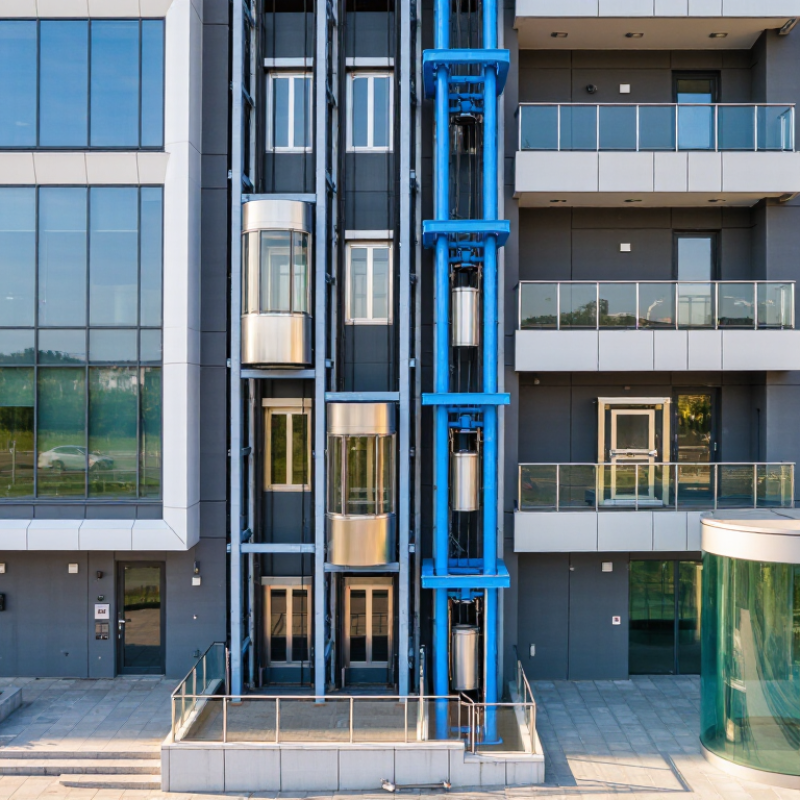
Exterior Elevator Lift Categories: Passenger, Platform, Goods, and Home Models
Exterior Elevator Lift Categories: Passenger, Platform, Goods, and Home Models
Exterior elevators serve different buildings, users, and loading conditions. Passenger lifts support daily movement between floors, often with enclosed cabins, handrails, lighting, and weather-resistant doors. Platform lifts suit wheelchair users and short vertical travel. Their open design needs careful drainage and slip-resistant surfaces, especially after rain.
Goods lifts move tools, cartons, or equipment, but they require clear load ratings and stable loading zones. A tilted pallet can create dangerous side pressure. Home models usually emphasize quiet operation, compact footprints, and simple controls. However, small spaces can limit turning room, service access, and emergency evacuation planning. In my experience, the cheapest layout is rarely the easiest to maintain.
Tips: Confirm the rated load, travel height, shaft position, and local access requirements before selecting a model. Check wind exposure, corrosion protection, drainage, lighting, and backup lowering systems. Ask for service intervals and inspection records, not only performance claims. A site survey by a qualified lift professional can reveal foundation problems early. Do not overlook noise near bedrooms or neighboring properties. Platform lifts may appear simple, but poor gate alignment can affect safe operation. Passenger and goods systems also need separate traffic planning. Every project has compromises. The right choice depends on actual users, climate, building structure, and maintenance skills.
Drive Systems Compared: Traction, Hydraulic, Screw, and Chain Technologies
2026 Top Exterior Elevator Lift Types for Global Buyers
Drive Systems Compared: Traction, Hydraulic, Screw, and Chain Technologies
Choosing an exterior elevator begins with the drive system, not the cabin finish. Each technology responds differently to travel height, weather, load, and service access. Traction systems use ropes and a motor-driven sheave. They offer efficient movement, smooth starts, and good performance in taller buildings. However, exposed equipment needs careful sealing against moisture, dust, and temperature changes.
Hydraulic lifts suit low-rise applications where powerful lifting is more important than speed. Their operation is steady and practical, but oil temperature can affect performance in cold climates. Installation may also require suitable pit drainage and regular inspection for leakage. Screw-driven lifts provide compact layouts and controlled movement. They work well for limited travel heights, yet the screw assembly needs consistent cleaning and lubrication. They can feel slower than expected.
Chain-driven systems are often selected for platform lifts and modest travel distances. Their structure can simplify installation, especially where space is restricted. Chain tension, alignment, and lubrication require disciplined maintenance. Neglect becomes noisy first, then expensive. Exterior buyers should examine corrosion protection, wind exposure, emergency lowering, drainage, and local safety requirements. A coastal site may favor different materials than a dry inland site. Real projects are messier. Load calculations, technician availability, and spare-part access can change the best choice. A technically elegant system may perform poorly when local service support is weak.
Outdoor Design Criteria: Weatherproofing, Corrosion Classes, Wind, and Drainage
2026 Top Exterior Elevator Lift Types for Global Buyers
Outdoor elevator design begins with the site, not the cabin shape. ISO 12944 classifies environments from C1 to CX, including severe offshore exposure. Coastal buyers should specify coating systems for C5 or CX conditions, not assume ordinary outdoor paint is enough. Stainless fasteners, sealed joints, and isolated dissimilar metals reduce galvanic corrosion. However, material selection still needs local salt, humidity, and pollution data.
Wind loads require engineering, not visual judgment. EN 1991-1-4 and ASCE 7-22 provide recognized methods for calculating wind pressure and regional exposure. A basic pressure relationship uses q = 0.613V² N/m², with V measured in meters per second. Tall buildings, open terrain, and corner zones can increase suction forces. The lift shaft, doors, glazing, and anchoring system must be checked together. Small details matter.
Drainage is often underestimated. Rainwater should fall away from doors, with sloped thresholds, covered channels, and accessible cleanouts. NOAA Atlas 14 precipitation data can support local rainfall intensity selection, while regional stormwater codes should control final sizing. IEC 60529 enclosure ratings help define water protection, but an IP rating cannot fix poor drainage. I have seen drawings that looked weatherproof but trapped water behind base plates. That mistake is expensive. Design reviews should include hose tests, blocked-drain scenarios, and maintenance access before installation.
2026 Top Exterior Elevator Lift Types for Global Buyers
Outdoor Design Criteria: Weatherproofing, Corrosion Classes, Wind, and Drainage
Hydraulic Exterior Lifts
Suitable for low- to mid-rise applications. Outdoor installations require sealed hydraulic components, protected control cabinets, corrosion-resistant materials, and effective pit drainage.
Traction Lifts
Well suited to higher travel and frequent use. Exposed equipment should be enclosed against rain, salt spray, dust, condensation, and temperature changes.
Machine-Room-Less Lifts
Offer a compact layout for exterior shafts. The shaft enclosure, controller location, ventilation, and maintenance access must be designed for the local climate.
The chart shows reference dynamic wind pressure calculated from q = 0.613V², where q is pressure in pascals and V is wind speed in metres per second. Final structural design must use the governing local building code, site exposure, building height, terrain, gust factors, and lift-shaft geometry. For outdoor equipment, buyers should also specify an appropriate IP enclosure rating, an ISO 12944 corrosion environment classification, sloped surfaces, sealed joints, drainage channels, and a sump or drain system where water can collect.
Safety Benchmarks: ISO 8100-1, EN 81-41, ASME A18.1, and 0.15 m/s Limits
2026 Top Exterior Elevator Lift Types for Global Buyers
Exterior lift selection should begin with the building’s access problem, not the product brochure. The WHO Global Report on Health Equity for Persons with Disabilities estimates that 1.3 billion people experience significant disability. The United Nations World Population Prospects 2024 also projects that one in six people will be over 65 by 2050. These figures make reliable step-free access a practical requirement, not a luxury.
For low-rise entrances, vertical platform lifts often suit wheelchair access and limited travel. EN 81-41 addresses these platforms and commonly limits their rated speed to 0.15 m/s. A three-metre rise therefore takes about 20 seconds.
ISO 8100-1 targets passenger and goods-passenger lifts, including essential safety principles for enclosed systems. ASME A18.1 covers platform lifts and stairway chairlifts, with requirements for installation, operation, testing, and maintenance. Local authorities still decide which edition applies.
Small details matter outdoors. Specify door interlocks, emergency lowering, drainage, non-slip flooring, lighting, and protection against wind-driven rain.
At 0.15 m/s, stopping accuracy deserves attention near wheelchair thresholds.
A checklist is not enough. I have seen designs pass paper reviews yet struggle with water pooling and poor emergency access. Standards define the baseline; competent site inspection tests whether that baseline survives real weather, uneven paving, and daily use.
Global Buyer Selection Matrix: Capacity, Travel Height, Climate, Codes, and Service
For global buyers, exterior elevator selection in 2026 begins with the building, not the catalog. Capacity should reflect real traffic, wheelchair dimensions, attendant use, and peak loading. A 450-kilogram lift may suit a private home. It may feel inadequate at a clinic or hotel. Travel height changes the engineering choice. Low-rise projects often use compact platform lifts. Taller façades may require enclosed car systems, stronger guides, and controlled landing access. Measure every stop.
Climate can quietly decide reliability. Coastal air demands corrosion-resistant finishes, sealed controls, and drainage that does not trap saltwater. Cold regions need heated cabinets, freeze protection, and door seals tested after overnight exposure. In hot, dusty areas, ventilation and filtration matter. Rain enters from the side, not only above. That detail is often missed. Ask for operating temperature ranges, wind limits, emergency lowering, and backup power behavior. An attractive enclosure is not enough.
Codes must be checked locally before ordering. Requirements may reference accessibility rules, electrical codes, fire separation, or standards such as EN 81 or ASME A17.1. Confirm the current edition with the local authority. Service access deserves equal weight. Can technicians reach the controller safely? Are seals, batteries, and door components available locally? Request inspection records, load-testing procedures, and response times in writing. I have seen projects delayed by one missing part. The specification looked complete. It was not. Leave room for site conditions, because drawings rarely show every problem.





