


The 2026 Best Electric Heating Wire Manufacturers Worldwide guide examines a market shaped by electrification, energy efficiency, and stricter performance expectations. An Electric Heating Wire Manufacturer now supplies more than resistance wire. It delivers controlled heat for ovens, industrial furnaces, medical devices, battery systems, and underfloor heating. Material choice remains decisive. Nickel-chromium alloys tolerate high temperatures, while iron-chromium-aluminium alloys often provide stronger oxidation resistance. Small differences matter.
The International Energy Agency’s The Future of Heat Pumps reports that modern heat pumps can deliver three to five units of heat for each electricity unit consumed. That finding supports wider electrification, although resistance wire still serves applications requiring compact, direct, and highly responsive heating. MarketsandMarkets and Grand View Research both identify industrial automation, renewable-energy equipment, and consumer appliances as important growth areas. Their forecasts are useful, but not perfectly aligned. Some projections appear overly confident.
“Heat pumps are a critical part of the solution,” IEA Executive Director Dr. Fatih Birol has stated. His observation reflects the wider transition toward efficient electric heating, even when wire-based systems remain essential inside the equipment. In this ranking, supplier evaluation will consider alloy consistency, watt-density control, insulation quality, testing records, delivery capability, and technical support. Factory photographs may show clean production lines. They do not prove reliability. Real evidence includes resistance stability, thermal cycling results, traceable certificates, and field performance. Buyers should also question impressive claims. The best manufacturer is not always the largest. Sometimes, a smaller specialist offers better engineering attention.
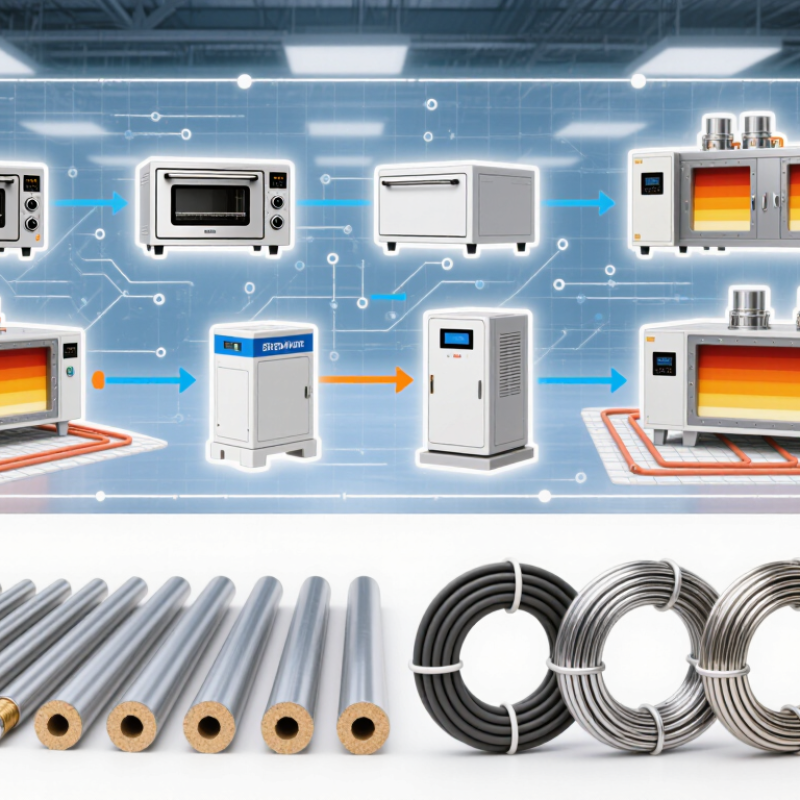
Electric heating wire manufacturers produce more than simple resistance coils. Their portfolios often include bare wire, insulated cable, braided heating cord, woven mats, and custom-shaped elements. Nichrome suits stable medium-temperature heating, while iron-chromium-aluminum alloys support higher operating temperatures. Stainless-steel options target moisture-prone environments. Material choice changes resistance, flexibility, oxidation resistance, and service life.
Manufacturers differ most in engineering control. Some focus on tight resistance tolerance, often within ±5% or better. Others specialize in flexible layouts for floors, pipes, vehicles, or industrial equipment. A serious supplier should provide resistance testing, insulation checks, thermal cycling, and traceable batch records. The U.S. Department of Energy states that electric resistance heating converts nearly all incoming electricity into heat at the point of use. However, system efficiency still depends on insulation, controls, and installation quality.
Energy demand adds commercial pressure. The International Energy Agency’s Energy Efficiency 2023 report identifies heating as a major part of building energy consumption worldwide. This encourages manufacturers to develop thinner wires, faster heat response, and sensor-compatible designs. Yet thinner is not automatically better. It can create hot spots when spacing is poor. A practical comparison should examine watt density, bending limits, moisture protection, operating temperature, and testing evidence. Market reports often forecast strong growth for electric heating components, but forecasts remain assumptions, not guarantees. Real performance can disappoint when product specifications are incomplete.

Electric heating wires rely on carefully selected resistive alloys. Nickel-chromium wire offers stable resistance and good oxidation resistance. Iron-chromium-aluminum alloys handle higher temperatures and form a protective oxide layer. Nickel-chromium suits compact heaters with repeated heating cycles. Copper usually serves as a lead wire, not the main heating element. Small details matter.
The insulation must match the operating environment. Fiberglass withstands heat and provides mechanical support, while silicone remains flexible at moderate temperatures. PTFE resists chemicals but has a lower temperature limit than mineral insulation. High-temperature cables may use magnesium oxide powder inside a metal sheath. This structure transfers heat efficiently, but moisture can reduce insulation reliability. Ceramic beads offer another option for exposed heating assemblies.
Manufacturing technology controls performance as much as material choice. Wire drawing creates a consistent diameter and stable electrical resistance. Controlled winding sets the spacing between hot sections and reduces local overheating. Spot welding or laser welding can secure reliable terminals. Quality checks should include resistance measurement, insulation testing, thermal cycling, and visual inspection for uneven coils. Engineers also need to test bending, vibration, and corrosion exposure. A laboratory result is not always a field result. That assumption can fail. In practice, installation errors, sharp bends, and poor heat dissipation may shorten service life, even when the wire meets its specifications.
Evaluating the best electric heating wire manufacturers worldwide requires more than comparing catalog prices. Examine their experience with your application, such as pipe tracing, industrial ovens, medical equipment, or heated seating. A capable manufacturer should explain alloy selection, resistance tolerance, maximum operating temperature, and insulation compatibility in clear technical language.
Request production samples, not only polished brochures. Measure wire diameter, electrical resistance, surface temperature, and flexibility under controlled conditions. Ask for test records covering thermal cycling, insulation strength, moisture exposure, and continuous operation. Factory traceability matters. Each batch should connect to material certificates, inspection data, and a defined quality procedure. Independent certifications can support credibility, but they should match the intended market and product design.
Visit the facility when practical. Observe drawing equipment, winding control, calibration methods, and storage conditions. Ask how rejected wire is identified and corrected. Their answers often reveal more than a sales presentation. Check engineering support after delivery, including response times, design changes, and failure analysis. A reliable supplier will discuss limits openly instead of promising universal performance.
No evaluation is perfect. Lab results may not reflect tight bends, vibration, or poor installation. I have seen technically strong samples fail after careless assembly. Therefore, test the wire inside the real component whenever possible. Compare total service value, not just the lowest quotation: stable performance, documented quality, practical support, and honest communication usually matter more over the product’s working life.
2026 Best Electric Heating Wire Manufacturers Worldwide
In 2026, leading heating wire manufacturers differ by engineering focus, not simple production volume. European specialists often emphasize laboratory stability, traceable alloys, and precise resistance control. East Asian producers commonly offer high-volume ceramic, silicone, and fiberglass-insulated wires. North American manufacturers frequently focus on industrial heating assemblies, custom terminals, and rapid technical support. These are broad patterns, not fixed rules.
A strong manufacturer should explain alloy composition, operating temperature, wattage tolerance, and insulation limits clearly. Nichrome wire suits many air-heating and appliance applications because it handles repeated heating cycles. Iron-chromium-aluminum wire supports higher temperatures but may require careful forming. Flexible silicone-insulated wire fits compact equipment, while fiberglass insulation performs better near hotter surfaces. Some suppliers provide testing reports, sample coils, and dimensional drawings. That practical evidence matters more than polished marketing language. No profile is perfect. Even experienced factories may show gaps in documentation or inconsistent lead times.
Tips: Request a small sample before approving bulk production. Check resistance at the intended working temperature, not only at room temperature. Confirm bend radius, terminal design, insulation thickness, and batch traceability. Ask how failures are recorded and corrected. A supplier that welcomes technical questions usually demonstrates stronger engineering discipline, although this is not absolute proof. Judge performance through documented tests, realistic samples, and communication during difficult design changes.
| Profile | Primary Manufacturing Region | Main Heating-Wire Specialty | Common Resistance Materials | Typical Product Forms | Typical Applications | Relevant Standards and Quality Areas | Key Selection Strength |
|---|---|---|---|---|---|---|---|
| Profile 01 | Western Europe | Precision resistance wire for industrial heating assemblies | Nickel-chromium and iron-chromium-aluminium alloys | Bare wire, stranded wire, resistance ribbon and formed elements | Industrial ovens, laboratory furnaces, heat-treatment equipment and air heaters | Alloy composition control, dimensional tolerance, electrical resistance testing and traceability | Consistent resistance value and stable performance at elevated temperatures |
| Profile 02 | Northern Europe | Heating cables and floor-heating systems | Nickel-chromium conductors with polymer or fluoropolymer insulation | Single-core cables, twin-core cables, mats and prefabricated heating sections | Underfloor heating, frost protection, pipe tracing and roof de-icing | Electrical safety, insulation integrity, moisture resistance and installation compatibility | Reliable low-temperature surface heating and straightforward installation |
| Profile 03 | Central Europe | Mineral-insulated heating cable assemblies | Nickel-chromium or iron-chromium-aluminium conductor inside a mineral-insulated structure | Metal-sheathed cable, cartridge heater wire and custom terminated assemblies | Process heating, semiconductor equipment, gas analysis and high-temperature machinery | Sheath integrity, insulation resistance, dimensional accuracy and high-temperature testing | High mechanical protection and compact construction for demanding environments |
| Profile 04 | North America | Custom resistance wire and heating-element fabrication | Nickel-chromium, iron-chromium-aluminium and copper-nickel alloys | Coils, spirals, zigzag elements, ribbon and cut-to-length wire | Commercial appliances, HVAC equipment, laboratory devices and industrial heaters | Application-specific engineering, electrical testing, dimensional inspection and production repeatability | Flexible customization for voltage, wattage, geometry and mounting requirements |
| Profile 05 | East Asia | High-volume resistance wire and appliance heating components | Nickel-chromium and iron-chromium-aluminium alloys | Bare wire, resistance ribbon, coiled wire and integrated heating elements | Rice cookers, ovens, hair dryers, water heaters and household appliances | Batch consistency, automated winding, resistance tolerance and production inspection | Scalable production and cost-efficient supply for standardized components |
| Profile 06 | South Korea and Japan | Miniature and high-precision heating wire for electronics | Fine-gauge nickel-chromium, stainless resistance alloys and copper-based alloy systems | Fine wire, micro-coils, etched or formed heating patterns and sensor heaters | Sensors, analytical instruments, cameras, battery systems and compact thermal devices | Fine-wire dimensional control, thermal cycling, insulation performance and clean manufacturing | Small form factor, rapid thermal response and tight manufacturing tolerances |
| Profile 07 | China | General-purpose resistance wire, heating cable and OEM assemblies | Nickel-chromium, iron-chromium-aluminium and nickel-iron alloys | Bare wire, braided cable, insulated cable, coils and customized heating parts | Industrial equipment, household appliances, HVAC systems and electric furnaces | Material certification, resistance testing, export documentation and OEM quality control | Broad product range and suitability for customized international sourcing projects |
| Profile 08 | India and South Asia | Industrial heating elements and replacement resistance wire | Iron-chromium-aluminium and nickel-chromium alloys | Coils, spiral elements, ribbon elements and furnace replacement parts | Heat-treatment furnaces, ceramic kilns, ovens, boilers and process heaters | Alloy verification, electrical continuity, furnace-fit dimensions and operating-temperature suitability | Practical replacement solutions and adaptable designs for industrial maintenance |
| Profile 09 | Southeast Asia | Insulated heating cable for environmental and building systems | Nickel-chromium conductor with PVC, silicone, fluoropolymer or fiberglass insulation | Flexible cable, self-regulating cable assemblies and pre-terminated heating leads | Pipe freeze protection, tank heating, greenhouse systems and cold-room protection | Moisture resistance, insulation aging, bending performance and electrical safety | Flexible installation in humid, outdoor and temperature-sensitive environments |
| Profile 10 | Global specialist suppliers | High-temperature furnace wire and refractory heating systems | Iron-chromium-aluminium alloys, nickel-chromium alloys and molybdenum-based materials for specialized equipment | Ribbon, mesh, wire coils, shaped elements and furnace modules | Industrial furnaces, vacuum equipment, laboratory heating and advanced materials processing | High-temperature oxidation behavior, load testing, dimensional stability and thermal cycling | High operating-temperature capability and suitability for engineered thermal systems |
Electric heating wire supports controlled warmth in many products. Common uses include heated floors, vehicle seats, pipes, roof de-icing systems, appliances, and outdoor equipment. Each application needs a different balance of heat output, flexibility, insulation, and operating temperature. A wire for a bathroom floor faces moisture and repeated heating cycles. A pipe system may require continuous operation in cold weather. The design cannot rely on wattage alone. The details matter.
Manufacturers should provide resistance tolerance, voltage ratings, watt density, insulation material, bending limits, and maximum surface temperature. Relevant standards depend on the finished product and market. IEC 60335 requirements may apply to household heating appliances, while IEC 62395 can guide electrical resistance trace heating systems. Regional certification may also involve electrical safety, fire performance, electromagnetic compatibility, and ingress protection. Certification should match the final assembly, not only the bare wire.
Purchasers should request drawings, test reports, material declarations, and production traceability. Sample testing should measure resistance, insulation strength, temperature rise, and durability after bending. Ask how suppliers control conductor diameter and insulation thickness. Small variations can create cold spots or dangerous overheating. Test before scaling. A low purchase price may hide higher installation and maintenance costs. Delivery history, technical support, and change-control procedures also deserve attention. A polished datasheet is helpful, but it is not proof of field performance. Specifications sometimes miss real installation errors, so pilot projects and independent verification remain valuable.


For those larger-sized parts, or smaller quantity runs, we have 2 independent powder coat booths and ovens. The quality, durability and affordability of today’s powder coating finishes make this the process of choice for world-class companies.
Powder coating advantages over other forms of coating are many. Materials used in the Powder coating process can be metals and non-metals that come in a multitude of thicknesses, textures, colors, etc. Another of Powder coating’s biggest advantages over conventional coatings is its ability to create finishes in many different textures. Powder Coating Booths allow us the ability to apply these advantages to large products.
Tri-State Fabricators runs a full-service conveyor line for painting. Wet painting can provide protection or decoration to many different part styles. From start to finish, every project is easier to undergo random and point-based inspection by our skilled painting team.
Advantages to our Wet Paint Line are these lines start with product prep and ends with a thorough inspection of a high quality finished product. Our ability to complete large and small projects with a superior finish and doing so in a timely and economical fashion. This passes along the savings in production to our customers. When powder coating ins not an option, our Wet Paint Line gets the job done right the first time.
When the parts get big and heavy we roll-out our custom paint racks and oversize booth. By utilizing our partnerships with all the major paint brands, we can match virtually any color with wet paint.
The advantages of having access to a Wet Paint Booth are many. Large projects of many different shapes can be loaded into the booth. The Wet Paint Booth offers an environment that is much more controlled than a typical parts painting operation.
Not only are they used because of their controlled environment, but they’re are also advantageous when it comes to applying paint to parts that are needed in industries that require specialty coatings such as medical, aerospace, etc.
Our military forces have some very high standards when it comes to the finish of their vehicles and equipment. From the first pre-treatment step to final coat, it takes a great deal of knowledge and experience to protect the men and women of our armed forces. They deserve only the best, and Tri-State Fabricators provides it.
All of our processes are closely monitored by our staff and management teams. Both of which are highly trained in the processes of metal fabrication and finishing. Tri-State Fabricators’ goal is to always fully satisfy each and every customer, including the military. We will always put a 110% into what we do.
Abrasive media blasting is an excellent way to remove old paint, rust, and increase the paint/powder adhesion. Glass beads produce a much smoother and brighter finish than angular abrasives; leaving the part clean yet without any dimensional change. Chemically inert and environmentally friendly, we can recycle our beads approximately 30 times; making them a more preferred method of metal cleaning or surface finishing.
Advantages to Glass Bead Blasting are many. Glass bead blast media is used when a project is needing rough surfaces need to become smooth for applications of coatings such as paint. It is typically used to clean paint and rust from a product surface without deforming the surface it is being used on. Overall, compared to many other blasting media, Glass Bead Blasting is a very economical choice and those savings are always passed on to our customers.
Tri-State Fabricators utilize a zinc phosphate wash to clean and etch the material to ensure the best paint adhesion possible. The unique design of our 3-stage wash system does the work like a 5-stage. From Cleaning and rinsing to conversion coating and post-treatment, Our Part Washing process is a complete service and works throughout the fabrication service and the finishing service.
Along with the previously mentioned benefits, Curing is a vital chemical reaction that leaves the product finish hard and relatively safe from mild abrasion and aggressive corrosion. This process can be done in more than one way; ambient air-dry or in curing ovens at temps that exceed 240°.
From fixing paint mistakes (someone else’s of course) to simply cleaning our paint line hooks, our burn-off oven is put to good use. After a quick burn-off, a little clean up, and a fresh coat of paint, your parts will look better than new.
Why does our Burn-Off Oven work so well? Because super heating the air around parts turns the materials into ashes. From paint and powder coatings to rubber and machining oils, high temps do the job without degrading the integrity of the part.
Masking is a vital part of producing high quality products. We have die-cut masking patterns to protect machined surfaces as well as a wide range of plugs and caps to protect threaded holes and bolts. We provide permanent and temporary masking.
Masking allows the selected sections of a product to be protected from a fabrication or finishing service. This can be with both chemicals when etching and tapes, paints when only finishing just a section of the product. Masking is great in aiding the customization process of a project.
Screen printing is a photographic process that transfers artwork onto a porous nylon screen which allows colored ink to flow through the screen and be deposited on an aluminum or plastic component. We can generally have just about any design created onto a screen for your parts.
Some of the advantages of Screen Printing are, brand recognition for your business displaying on your products, assembly instructions, product warnings/hazards, etc. Tri-State Fabricators produces Screen Printing of the highest quality so you know it’s durable.
Metal Finishing is the art of treating the exterior portion of product, often metal but can also be made of other materials, so that the surface is clean and free of any debris. Then the process of applying coats or either paint of powder coat takes place. This coating process improves the quality of the product in both appearance and resistance to wear and corrosion.
Tri-State Fabricators, Inc., understands that a project typically isn’t complete until a high-quality finish has been added to your product. This is why our painting and powder coating teams continuously inspect the products throughout the Metal Finishing process.

