


Choosing the right Ec Meter in 2026 requires more than comparing screen size, price, or advertised accuracy. Global buyers must match the meter type with the testing environment, sample range, and daily workload. A pocket meter suits quick checks in hydroponic tanks or small laboratories. A handheld model offers stronger protection for field inspections. Benchtop units provide stable readings beside a quality-control workstation. Inline systems support continuous monitoring in treatment lines, aquaculture facilities, and manufacturing processes.
Conductivity specialist Dr. Andrew J. Cole offers a practical reminder: “A meter reports a number; the user must confirm what that number means.” This principle remains important because temperature, electrode condition, cell constant, and calibration solution can change the result. Even a premium Ec Meter can produce questionable data when its probe is dirty or poorly stored. Small details matter.
This guide compares the leading Ec Meter types for global buyers, including pocket, handheld, benchtop, inline, and multiparameter designs. It considers measurement range, automatic temperature compensation, IP protection, calibration flexibility, display usability, and long-term maintenance. No single model fits every market. A rugged handheld unit may outperform a laboratory meter outdoors, while an inline meter may be unsuitable for occasional sampling. Buyers should also verify regional service support, documentation quality, and replacement-probe availability. The best choice is not always the most advanced one. It is the meter that delivers dependable readings under real working conditions.
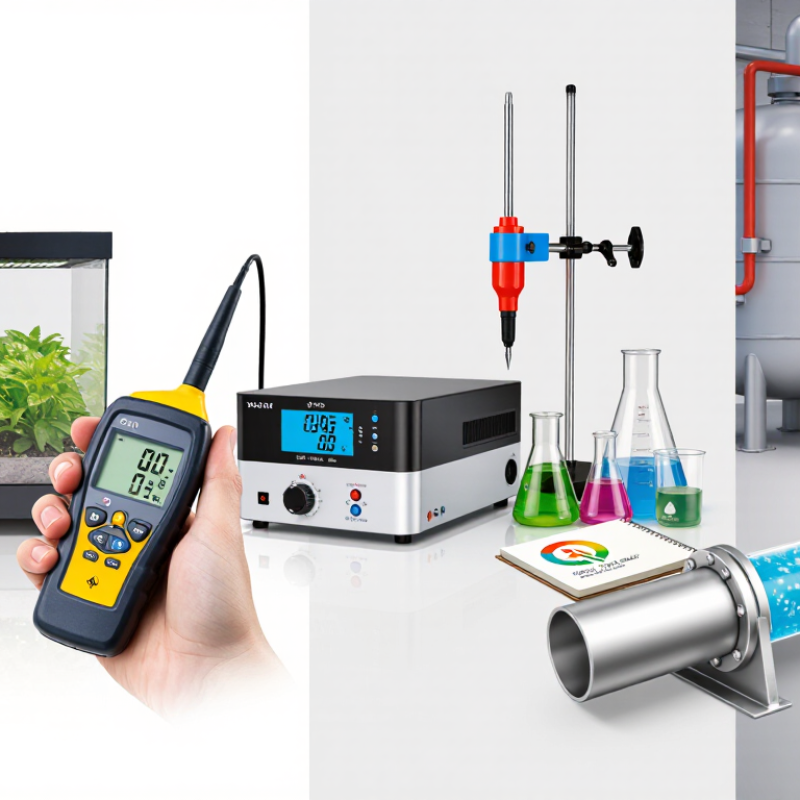
An EC meter measures electrical conductivity in water or another liquid. Conductivity rises when dissolved ions increase. Common ions include calcium, magnesium, sodium, nitrate, and chloride. The meter does not identify each ion. It reports conductivity, usually in µS/cm or mS/cm. Many devices also estimate TDS or salinity. These values are useful, but they are not direct chemical analyses. Readings can change with temperature, electrode condition, and sample contamination.
Global buyers usually choose among pen-style, portable, benchtop, and inline EC meters. Pen meters suit quick checks in irrigation tanks or nutrient solutions. Portable units offer stronger housings and replaceable probes for field work. Benchtop models provide stable readings for laboratories and water-testing rooms. Inline meters monitor flowing water continuously, reducing manual sampling. For international purchasing, confirm voltage, connector standards, measurement range, temperature compensation, and calibration support. A broad range is not automatically better.
Reliable use depends on calibration with suitable standard solutions. Rinse the probe with clean water, remove droplets gently, and avoid touching the sensing surface. Wait for the reading to stabilize. Small habits matter. A meter may show impressive precision while the sample itself is poorly mixed. That is an uncomfortable limitation. Buyers should also check IP protection, probe replacement costs, data records, and operating instructions. In practice, the best EC meter is the one staff can calibrate correctly and use consistently.

In 2026, EC meters remain essential for checking dissolved salts in water, nutrient solutions, and industrial liquids. The main types differ by portability, accuracy, and installation method. A pen-style EC meter fits easily into a pocket or sampling case. It suits quick checks in hydroponic reservoirs, irrigation tanks, and laboratories with limited testing needs. Readings are fast, but small probes may foul easily.
Handheld EC meters offer stronger housings, replaceable probes, and wider measurement ranges. Many include automatic temperature compensation, which improves readings when water changes from 20°C to 30°C. Some models measure EC, TDS, salinity, and temperature together. They are useful for field technicians who test several sites each day. Calibration still matters. A dirty probe can produce convincing, incorrect numbers.
Benchtop EC meters support controlled laboratory work. Their larger displays and stable probe connections help during repeated testing. Inline and panel-mounted meters serve treatment systems, manufacturing lines, and greenhouse dosing equipment. These units monitor conductivity continuously and may connect with controllers or data systems. Smart wireless versions are becoming more common in 2026, although connectivity can add setup problems.
Buyers should compare range, resolution, cell constant, temperature compensation, and water resistance. Low-conductivity samples need a sensitive probe, while concentrated solutions require a higher range. Calibration solutions should match the expected testing range. I have found that convenience often hides maintenance needs. Battery life, probe replacement, and cleaning instructions deserve equal attention. No meter stays accurate by itself.
Electrical conductivity (EC) meters estimate dissolved ionic content by measuring how easily current moves through water. Their accuracy depends on sensor design, temperature control, calibration, and sample conditions. A low-cost handheld meter may work well for routine irrigation checks, but it can drift when the probe becomes dirty.
Contacting EC meters use two or four electrodes placed directly in the sample. Two-electrode models are affordable and practical for clean water. Four-electrode designs usually handle a wider conductivity range and reduce measurement errors caused by electrode polarization. They still need careful rinsing between samples.
Small errors matter.
Inductive, or toroidal, EC meters measure conductivity without exposing electrodes to the liquid. This design suits wastewater, fertilizer solutions, and process lines because coatings are less likely to distort readings. However, these meters may respond slowly in small containers or very low-conductivity water. They also require suitable pipe installation.
Temperature compensation is essential. Conductivity can change noticeably with only a few degrees of temperature difference. Automatic compensation improves comparison, but it cannot correct every problem. I have seen stable readings from a poorly maintained probe, which looked reliable until checked against a certified reference solution. That is an easy mistake to make.
For global buyers, the best choice depends on the measurement range, sample cleanliness, response time, and calibration routine. A portable meter supports field decisions. An inline unit supports continuous monitoring. Accuracy should be verified regularly, not assumed from the display alone.
Choosing an EC Meter for Water, Agriculture, or Industry
For water testing, a handheld EC meter suits drinking-water checks, aquariums, and field sampling. Choose automatic temperature compensation and a clear calibration reminder. A conductivity range around 0–20 mS/cm covers many freshwater tasks, but not every source. Salty water needs a wider range. Look for IP-rated housing if wet hands are unavoidable. A replaceable probe can reduce long-term waste and downtime.
Agricultural users need stable readings from irrigation water, nutrient tanks, and drainage. A pocket meter is convenient, while a portable kit offers better control during repeated greenhouse checks. Confirm whether the probe handles fertilizers and frequent cleaning.
In industry, select a benchtop or inline EC meter for continuous process monitoring. Verify cell constant options, output compatibility, and calibration records. A low-cost meter may look attractive, yet unstable readings can distort dosing decisions. I have seen operators trust a number without checking temperature or probe condition. That mistake is easy to repeat.
Tips: Calibrate with fresh standard solutions before critical measurements. Rinse the probe with distilled water, then gently blot it. Do not wipe the sensing surface aggressively. Record temperature, sample location, and calibration date. Compare unusual results with a second meter when possible. Manuals matter, but real samples can still expose weaknesses.
Global buyers should treat standards as a purchasing filter, not a certificate checklist. For conductivity meters, IEC 60746-3 supports performance expectations for electrolytic conductivity measurement. ISO/IEC 17025 strengthens confidence in calibration laboratories. Ask for traceable calibration records, stated uncertainty, and test conditions. A meter reading of 1,413 µS/cm means little without temperature details. Small omissions create expensive disputes.
Calibration needs practical evidence. NIST Technical Note 1297 explains how measurement uncertainty should be evaluated and reported. Buyers should compare repeatability, temperature compensation, cell constant stability, and calibration intervals.
Portable meters suit field sampling, while benchtop systems support controlled laboratory work. Inline instruments reduce manual checks, but installation quality becomes critical. The pipe was clean. The sensor was not.
Connectivity is now a separate buying decision. A 2024 International Telecommunication Union report recorded 5.5 billion internet users worldwide, yet industrial sites still face weak signals and restricted networks. Choose data export that matches the site: USB for controlled transfer, Bluetooth for short-range checks, or industrial wireless links for remote monitoring. Security settings, offline storage, and readable timestamps matter more than impressive app screens.
One practical weakness remains. Buyers often compare advertised accuracy, but ignore calibration drift after cleaning chemicals, temperature shocks, or long storage. Request a sample data file and a real calibration certificate before approval. The best EC meter is not always the most connected. It is the one that keeps trustworthy records under actual operating conditions.


For those larger-sized parts, or smaller quantity runs, we have 2 independent powder coat booths and ovens. The quality, durability and affordability of today’s powder coating finishes make this the process of choice for world-class companies.
Powder coating advantages over other forms of coating are many. Materials used in the Powder coating process can be metals and non-metals that come in a multitude of thicknesses, textures, colors, etc. Another of Powder coating’s biggest advantages over conventional coatings is its ability to create finishes in many different textures. Powder Coating Booths allow us the ability to apply these advantages to large products.
Tri-State Fabricators runs a full-service conveyor line for painting. Wet painting can provide protection or decoration to many different part styles. From start to finish, every project is easier to undergo random and point-based inspection by our skilled painting team.
Advantages to our Wet Paint Line are these lines start with product prep and ends with a thorough inspection of a high quality finished product. Our ability to complete large and small projects with a superior finish and doing so in a timely and economical fashion. This passes along the savings in production to our customers. When powder coating ins not an option, our Wet Paint Line gets the job done right the first time.
When the parts get big and heavy we roll-out our custom paint racks and oversize booth. By utilizing our partnerships with all the major paint brands, we can match virtually any color with wet paint.
The advantages of having access to a Wet Paint Booth are many. Large projects of many different shapes can be loaded into the booth. The Wet Paint Booth offers an environment that is much more controlled than a typical parts painting operation.
Not only are they used because of their controlled environment, but they’re are also advantageous when it comes to applying paint to parts that are needed in industries that require specialty coatings such as medical, aerospace, etc.
Our military forces have some very high standards when it comes to the finish of their vehicles and equipment. From the first pre-treatment step to final coat, it takes a great deal of knowledge and experience to protect the men and women of our armed forces. They deserve only the best, and Tri-State Fabricators provides it.
All of our processes are closely monitored by our staff and management teams. Both of which are highly trained in the processes of metal fabrication and finishing. Tri-State Fabricators’ goal is to always fully satisfy each and every customer, including the military. We will always put a 110% into what we do.
Abrasive media blasting is an excellent way to remove old paint, rust, and increase the paint/powder adhesion. Glass beads produce a much smoother and brighter finish than angular abrasives; leaving the part clean yet without any dimensional change. Chemically inert and environmentally friendly, we can recycle our beads approximately 30 times; making them a more preferred method of metal cleaning or surface finishing.
Advantages to Glass Bead Blasting are many. Glass bead blast media is used when a project is needing rough surfaces need to become smooth for applications of coatings such as paint. It is typically used to clean paint and rust from a product surface without deforming the surface it is being used on. Overall, compared to many other blasting media, Glass Bead Blasting is a very economical choice and those savings are always passed on to our customers.
Tri-State Fabricators utilize a zinc phosphate wash to clean and etch the material to ensure the best paint adhesion possible. The unique design of our 3-stage wash system does the work like a 5-stage. From Cleaning and rinsing to conversion coating and post-treatment, Our Part Washing process is a complete service and works throughout the fabrication service and the finishing service.
Along with the previously mentioned benefits, Curing is a vital chemical reaction that leaves the product finish hard and relatively safe from mild abrasion and aggressive corrosion. This process can be done in more than one way; ambient air-dry or in curing ovens at temps that exceed 240°.
From fixing paint mistakes (someone else’s of course) to simply cleaning our paint line hooks, our burn-off oven is put to good use. After a quick burn-off, a little clean up, and a fresh coat of paint, your parts will look better than new.
Why does our Burn-Off Oven work so well? Because super heating the air around parts turns the materials into ashes. From paint and powder coatings to rubber and machining oils, high temps do the job without degrading the integrity of the part.
Masking is a vital part of producing high quality products. We have die-cut masking patterns to protect machined surfaces as well as a wide range of plugs and caps to protect threaded holes and bolts. We provide permanent and temporary masking.
Masking allows the selected sections of a product to be protected from a fabrication or finishing service. This can be with both chemicals when etching and tapes, paints when only finishing just a section of the product. Masking is great in aiding the customization process of a project.
Screen printing is a photographic process that transfers artwork onto a porous nylon screen which allows colored ink to flow through the screen and be deposited on an aluminum or plastic component. We can generally have just about any design created onto a screen for your parts.
Some of the advantages of Screen Printing are, brand recognition for your business displaying on your products, assembly instructions, product warnings/hazards, etc. Tri-State Fabricators produces Screen Printing of the highest quality so you know it’s durable.
Metal Finishing is the art of treating the exterior portion of product, often metal but can also be made of other materials, so that the surface is clean and free of any debris. Then the process of applying coats or either paint of powder coat takes place. This coating process improves the quality of the product in both appearance and resistance to wear and corrosion.
Tri-State Fabricators, Inc., understands that a project typically isn’t complete until a high-quality finish has been added to your product. This is why our painting and powder coating teams continuously inspect the products throughout the Metal Finishing process.

