2026 Top Clear Tempered Glass Suppliers for Global Buyers?
Choosing a Clear Tempered Glass supplier in 2026 involves more than comparing unit prices. Buyers need consistent clarity, accurate thickness, smooth edges, and reliable delivery. A sample can look flawless under showroom lights. Real performance becomes clearer after processing, packing, and installation. Small defects matter.
This guide introduces suppliers for global buyers and highlights practical points for comparison. Consider product range, available dimensions, customization options, production capacity, and export packaging. Ask how quality checks are documented, and confirm which certifications apply to your product and destination. Request samples and written specifications before placing a large order. Check lead times, minimum quantities, communication practices, and after-sales support, too. A low quotation may not include protective crates, special processing, or replacement terms.
No shortlist is perfect. Supplier suitability depends on the project, order volume, destination, and required finish. One company may offer broad production capacity, while another may suit smaller, specialized orders. Treat published claims as starting points, not guarantees. Compare current quotations and verify details directly with each supplier. That extra check takes time. It may prevent costly surprises later.
What Is Clear Tempered Glass and How Is It Manufactured?
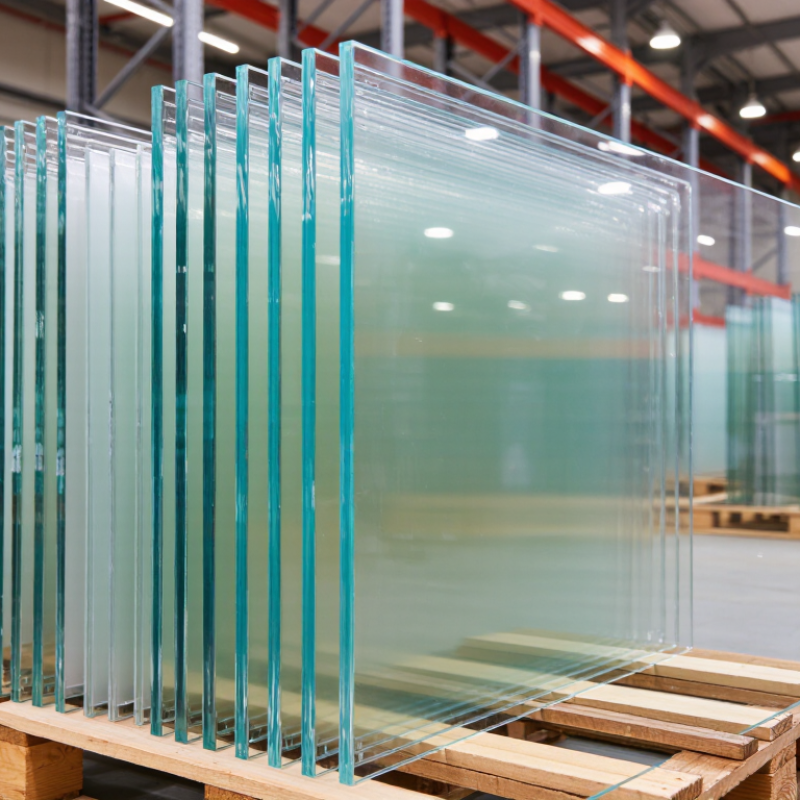
Clear tempered glass is ordinary float glass strengthened through controlled heating and rapid cooling. It looks much like standard clear glass, but its surfaces carry compression while its core remains under tension. This internal stress helps it resist impact and temperature changes better than annealed glass of similar thickness. It is not unbreakable. If it fails, it usually breaks into smaller pieces, though those pieces can still cause injury.
Manufacturing starts with cutting the glass to size and finishing edges, holes, and notches. These details must be completed before tempering because the finished panel cannot be cut or drilled safely. The glass is washed, then heated in a furnace; the exact temperature depends on its composition and thickness. High-pressure air cools both surfaces quickly. Quality checks may include dimensions, visual distortion, and breakage patterns. In practice, slight optical waviness can still appear, so inspection under changing light matters.
Tips: Confirm thickness, edge finish, hole locations, and tolerances before ordering. Ask how panels are inspected, and check a sample in the intended lighting. Small details matter. Don’t assume “clear” means perfectly colorless; thicker glass may show a faint green edge.
Which Specifications and Standards Should Buyers Understand?
For clear tempered glass, buyers should define more than thickness. Specify nominal thickness, panel dimensions, edge finish, corner radius, and locations of holes or cut-outs. A 10 mm panel with polished edges behaves differently from one with sharp, unfinished edges. Small drawing errors can become costly after tempering, because the glass cannot be cut or drilled afterward.
Ask suppliers which standards apply to the intended market and use. Common references include ASTM C1048 and ANSI Z97.1 in the United States, and EN 12150 with EN 12600 in Europe. Requirements can vary by application, so confirm the current local rules rather than relying on a certificate alone. Request test reports, batch traceability, and clear identification of the glass type. Check whether it is fully tempered or heat-strengthened; these are not interchangeable. Heat-soak testing may reduce the risk of spontaneous breakage, but it cannot eliminate it. It may also add time and cost. Worth discussing. Finally, review samples under real lighting. Roller wave and visual distortion can be easy to miss on a small desk sample, yet noticeable across a large glazed façade.
How Can Buyers Evaluate Clear Tempered Glass Suppliers?
Choosing a clear tempered glass supplier takes more than comparing quotes. Ask how the supplier controls each step, from cutting and edge finishing to heating and quenching. Request recent test reports tied to the glass type, thickness, dimensions, and intended use. A report for a different product proves little. Keep that in mind.
Assess physical samples under consistent lighting. Look for waviness, roller marks, chips along edges, and visible distortion near straight lines. Check dimensions and thickness against your drawings, then ask how defects are recorded and handled. For repeat orders, request production records or batch identification that connect delivered panels with inspection results. Clear answers matter.
A capable supplier should explain tolerances, packing methods, lead times, and what happens when a shipment arrives damaged. Ask for references from buyers with comparable volumes and applications, and verify capacity before placing a large order. If possible, inspect a trial batch. It is useful, not perfect. Suppliers may perform well on samples yet struggle with scale, so review communication during the first production run.
Which Clear Tempered Glass Suppliers Serve Global Buyers in 2026?
Global buyers in 2026 are served by architectural glass processors, regional tempering plants, and export-focused manufacturers. The right fit depends less on a polished catalogue than on repeatable quality, capacity, and delivery visibility. Small details matter. Ask how suppliers control glass thickness, edge finishing, heat treatment, and optical distortion across production batches.
For projects spanning countries, export-experienced suppliers can coordinate crate design, container loading, shipping documents, and delivery updates. Request recent test records and sample panels, then compare them with project specifications instead of relying on a generic certificate. A clear response should explain tolerances, breakage replacement terms, and who handles damage claims. Not every supplier can do this consistently.
Check whether suppliers handle standard sizes or custom dimensions, holes, notches, and polished edges. For example, inspect a sample edge under angled light; tiny chips can complicate installation. Compare lead times with actual production schedules, especially during seasonal demand. A lower quote may exclude protective packing or involve a long replacement cycle. No supplier is flawless; a vague point in a quotation deserves another question.
How Should Buyers Compare Quality, Pricing, and Delivery?
For clear tempered glass, compare suppliers against the same written specification. Confirm thickness, dimensions, edge finish, hole placement, and permitted tolerances. Ask for inspection records and test documentation relevant to the product and destination market. Details matter. A sample can reveal color tint or optical distortion, but it cannot prove every production batch will match. Request a plan for checking consistency before shipment.
Pricing is meaningful only when the specifications and service terms are comparable. A low quotation may exclude custom crating, inspection, or replacement provisions for transit damage. Ask for a clear breakdown of glass, processing, packaging, and freight costs. Also check payment terms and how changes to drawings affect the price. This comparison is not always neat; different suppliers may define “standard packaging” differently.
Delivery estimates should include production time, inspection, packing, and transport—not just the factory schedule. Ask how capacity is reserved, when the order becomes fixed, and how delays are communicated. For a large order, a trial shipment can test crate strength and handling before the full volume moves. Get milestones in writing, including document deadlines. A confident estimate is useful, but evidence of recent, similar shipments is more reassuring.





