


2026 Top Ceramic Radiant Tube Heating Wire Types for Buyers?

Choosing a Ceramic Radiant Tube Heating Wire is not just a matter of comparing maximum temperature ratings. Buyers also need to consider tube dimensions, furnace atmosphere, heating cycles, and the required service life. A wire that performs well in a dry, steady process may behave differently under frequent starts or in a corrosive environment. Small details matter.

Common options include iron-chromium-aluminum (FeCrAl) and nickel-chromium (NiCr) resistance alloys. FeCrAl is often considered for high-temperature applications, while NiCr can suit systems that value ductility and stable resistance. Actual performance depends on alloy grade, wire diameter, coil design, and installation conditions. A catalog rating alone is not enough.

This guide compares the main wire types buyers may encounter in 2026 and explains what to check before requesting a quotation. Look closely at the element’s operating temperature, electrical load, atmosphere compatibility, and support arrangement inside the ceramic tube. Ask suppliers for technical data and confirm that quoted values match your working conditions. That sounds simple. It isn’t. A tidy specification sheet can still leave out details such as cycling frequency or recommended element spacing. There is no universal best wire; the right choice follows the process, not the product label. If your operating data is incomplete, pause and verify it before selecting an alloy.
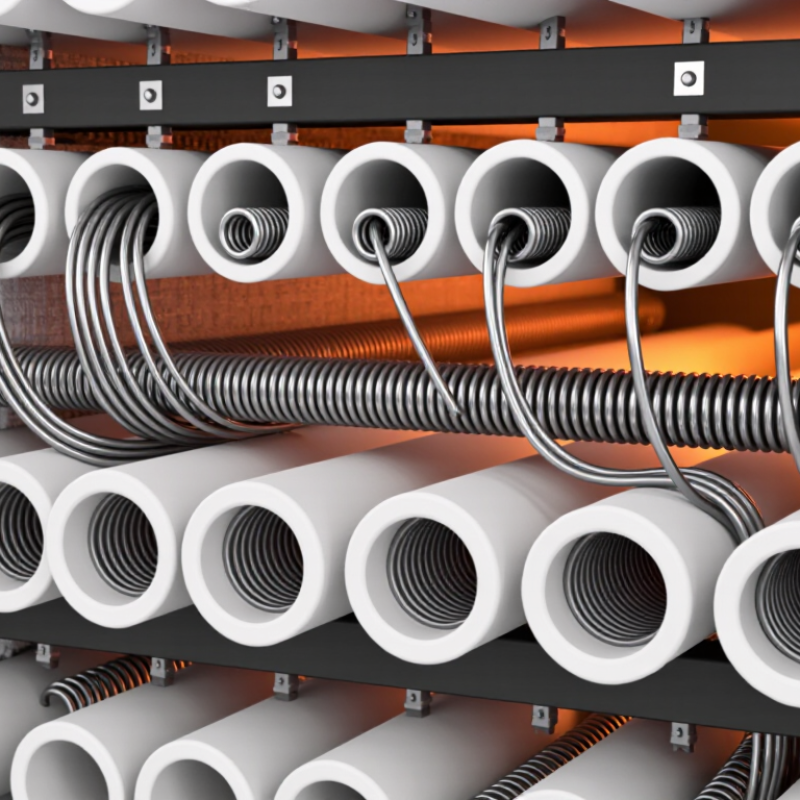
2026 Top Ceramic Radiant Tube Heating Wire Types for Buyers?

Ceramic Radiant Tube Heating: Components and Operating Principles

A ceramic radiant tube heater contains a ceramic tube, a resistance heating wire, electrical terminals, and mounting supports. The wire sits inside the tube, held in position by ceramic insulators. When current passes through it, electrical resistance produces heat. The tube absorbs some of that heat and radiates energy toward nearby surfaces. Warm parts, not just warm air.

The tube’s shape and placement influence how evenly heat reaches a work area. Reflectors can direct radiation toward a target, while a temperature sensor and controller help regulate output. In use, check that the wire remains supported and that terminals are suitable for the operating temperature. Small installation details matter. A loose support can create uneven heating or shorten component life.

Buyers comparing heating wire types should consider operating temperature, wire diameter, electrical load, and compatibility with the tube and supports. These factors affect warm-up time and service life. A specification sheet is useful, but it cannot describe every installation condition. Dust, airflow, and mounting distance may change performance. Even a carefully selected assembly can need adjustment after real operating tests. That is worth planning for.


Common Heating Wire Alloys Used in Ceramic Radiant Tubes

Common heating wires in ceramic radiant tubes are FeCrAl and NiCr alloys. FeCrAl typically offers higher resistivity and oxidation resistance at elevated temperatures. ASM Handbook, Volume 2, gives representative room-temperature resistivity near 1.4 μΩ·m for FeCrAl and about 1.1 μΩ·m for NiCr; exact values vary by grade. Typical maximum element temperatures are often around 1,400°C for FeCrAl and 1,200°C for NiCr, but these are not guaranteed service limits. Check the alloy supplier’s data against tube design and atmosphere. ASTM B603 covers iron-chromium-aluminum resistance wire, while ASTM B344 covers nickel-chromium and nickel-chromium-iron resistance wire.

In practice, FeCrAl can suit a hotter operating zone, while NiCr may be easier to form into coils and can offer stable resistance. Small details matter. Wire diameter, coil spacing, and tube clearance affect temperature distribution and element life. A tight coil may create local hot spots; a poorly matched alloy can oxidize faster than expected. ASM Handbook data describe alloy properties, not the full performance of a finished radiant-tube assembly. That distinction is easy to miss. Buyers should compare operating temperature, electrical load, atmosphere, and replacement access—not just alloy names or headline temperature ratings.

2026 Top Ceramic Radiant Tube Heating Wire Types for Buyers? - Common Heating Wire Alloys Used in Ceramic Radiant Tubes
Heating Wire Alloy Typical Nominal Composition (wt.%) Typical Maximum Element Temperature in Air Key Characteristics Common Buyer Considerations
NiCr 80/20 (Nichrome-type) Approximately Ni 80%, Cr 20%; exact limits vary by specification. About 1,200°C (2,192°F) Good oxidation resistance in air, stable electrical resistance, and generally good ductility and forming characteristics. A widely used option for general-purpose radiant tube elements. Check the required element temperature, wire diameter, and resistance tolerance.
NiCr 60/15 Approximately Ni 60%, Cr 15%, with iron making up most of the balance; minor constituents vary by grade. About 1,150°C (2,102°F) Nickel-chromium resistance alloy with useful oxidation resistance and electrical properties for many industrial heating applications. Compare cost, service temperature, and atmosphere compatibility with higher-nickel NiCr grades before specifying.
NiCr 35/20 Approximately Ni 35%, Cr 20%, with iron making up most of the balance; composition is grade-dependent. About 1,100°C (2,012°F) An iron-containing NiCr alloy used in resistance-heating applications where its operating limits and cost profile are suitable. Confirm the specific alloy standard and allowable element temperature; nominal alloy names alone do not define all properties.
FeCrAl (iron-chromium-aluminium) Typically Cr 20–23%, Al 4–6%, iron balance; ranges depend on grade. About 1,300–1,400°C (2,372–2,552°F), depending on grade and conditions Forms a protective alumina-rich surface layer in suitable oxidizing conditions and can support higher element temperatures than many common NiCr grades. Assess the full thermal cycle, element support, atmosphere, and handling requirements. FeCrAl grades can be less ductile, particularly after high-temperature exposure.
Selection note: Temperature figures are typical approximate maximum element temperatures in air, not guaranteed radiant-tube operating limits. Actual suitability depends on the exact alloy grade, wire diameter, element surface loading, tube design, temperature cycle, and furnace atmosphere. Verify the supplier’s current technical data and the applicable material specification before purchasing.

Wire Designs and Configurations for Different Heating Needs

Ceramic radiant tube systems use resistance wire in different shapes to match the tube, power supply, and heating pattern. A helical coil is common because it packs a long length of wire into a compact space. Its pitch and diameter affect how heat spreads along the tube. Tighter spacing can create concentrated heating, while wider spacing may help distribute heat more evenly. Fit matters.

Straight wire sections or open-pitch coils can suit layouts where airflow, clearance, or easier inspection is important. Some assemblies divide the element into separate heating zones. This can help operators adjust temperatures across a long furnace, though extra connections add design and maintenance considerations. Terminals also need suitable support to limit strain from repeated heating and cooling.

Wire alloy, diameter, operating temperature, and electrical load should be considered together. A thicker wire may tolerate more mechanical stress, but it can change resistance and response time. Ceramic supports must hold the element securely without restricting thermal expansion. In practice, installation details can shift performance; even a carefully selected design may need adjustment after temperature mapping. Not always. Buyers should compare drawings, rated conditions, and service access before choosing a configuration.

How to Compare Heating Wire Types for 2026 Purchasing

For 2026 purchasing, compare heating wires by operating temperature, atmosphere, start-up frequency, and expected service life—not by alloy name alone. FeCrAl wire is often considered for higher-temperature service and resistance to oxidation. NiCr wire can suit stable operating cycles and offers good ductility. Actual limits depend on wire diameter, tube design, and furnace conditions. Check the supplier’s temperature-resistance curves and verify them against your operating profile.

The IEA’s 2023 industry tracking report estimates that industry accounts for roughly 37% of global energy use. That figure is broad, not a heater-efficiency rating. Still, it makes energy use over the full service life worth checking. Compare measured power consumption, warm-up time, replacement intervals, and the cost of downtime. Small details matter. A wire that lasts longer may still be a poor fit if it heats too slowly or performs badly under repeated thermal cycling. Real furnaces vary, so treat catalogue limits as a starting point.

Tips: Ask for test data at your actual tube temperature and atmosphere. Confirm resistance tolerance, wire dimensions, and failure assumptions in writing. If a quote promises a long service life without stating test conditions, pause and ask how that figure was measured.

2026 Ceramic Radiant Tube Heating Element Comparison

Typical maximum element-temperature capability by material family

FeCrAl and NiCr are resistance-wire alloys; molybdenum disilicide (MoSi₂) is typically supplied as a rod element, not wire. The values shown are representative upper element-temperature capabilities, not recommended process temperatures. Actual limits vary by grade, tube design, atmosphere, and operating conditions.

Key Selection Factors: Temperature, Power, Compatibility, and Service Life

Buyers comparing ceramic radiant tube heating wires should start with operating temperature, not a catalogue maximum. Nickel-chromium alloys suit many high-temperature duties, while iron-chromium-aluminium alloys are often selected for hotter oxidizing environments. Actual limits depend on wire diameter, element design, atmosphere, and heating cycles. Numbers need context.

Match power and voltage to the furnace supply and the element’s specified resistance. Then check the wire’s shape and dimensions against the ceramic tube bore, supports, and connection space. A coil that rubs the tube can create uneven heating or fail early. Small clearances matter. Ask for the rated power, cold resistance, and recommended operating range; missing details make comparisons unreliable.

Service life depends on more than alloy choice. Frequent starts, temperature swings, contamination, and poor airflow can all shorten it. Inspecting an old element may reveal where it failed, though that evidence is not always conclusive. A perfect selection on paper can still disappoint if installation conditions differ. Compare expected cycle frequency and replacement access, not just the quoted lifespan.

Powder Coat Booths

For those larger-sized parts, or smaller quantity runs, we have 2 independent powder coat booths and ovens. The quality, durability and affordability of today’s powder coating finishes make this the process of choice for world-class companies.

Powder coating advantages over other forms of coating are many. Materials used in the Powder coating process can be metals and non-metals that come in a multitude of thicknesses, textures, colors, etc. Another of Powder coating’s biggest advantages over conventional coatings is its ability to create finishes in many different textures. Powder Coating Booths allow us the ability to apply these advantages to large products.

Wet Paint Line

Tri-State Fabricators runs a full-service conveyor line for painting. Wet painting can provide protection or decoration to many different part styles. From start to finish, every project is easier to undergo random and point-based inspection by our skilled painting team.

Advantages to our Wet Paint Line are these lines start with product prep and ends with a thorough inspection of a high quality finished product. Our ability to complete large and small projects with a superior finish and doing so in a timely and economical fashion. This passes along the savings in production to our customers. When powder coating ins not an option, our Wet Paint Line gets the job done right the first time.

Wet Paint Booths

When the parts get big and heavy we roll-out our custom paint racks and oversize booth. By utilizing our partnerships with all the major paint brands, we can match virtually any color with wet paint.

The advantages of having access to a Wet Paint Booth are many. Large projects of many different shapes can be loaded into the booth. The Wet Paint Booth offers an environment that is much more controlled than a typical parts painting operation.

Not only are they used because of their controlled environment, but they’re are also advantageous when it comes to applying paint to parts that are needed in industries that require specialty coatings such as medical, aerospace, etc.

Military CARC

Our military forces have some very high standards when it comes to the finish of their vehicles and equipment. From the first pre-treatment step to final coat, it takes a great deal of knowledge and experience to protect the men and women of our armed forces. They deserve only the best, and Tri-State Fabricators provides it.

All of our processes are closely monitored by our staff and management teams. Both of which are highly trained in the processes of metal fabrication and finishing. Tri-State Fabricators’ goal is to always fully satisfy each and every customer, including the military. We will always put a 110% into what we do.

Glass-Bead Blasting

Abrasive media blasting is an excellent way to remove old paint, rust, and increase the paint/powder adhesion. Glass beads produce a much smoother and brighter finish than angular abrasives; leaving the part clean yet without any dimensional change. Chemically inert and environmentally friendly, we can recycle our beads approximately 30 times; making them a more preferred method of metal cleaning or surface finishing.

Advantages to Glass Bead Blasting are many. Glass bead blast media is used when a project is needing rough surfaces need to become smooth for applications of coatings such as paint. It is typically used to clean paint and rust from a product surface without deforming the surface it is being used on. Overall, compared to many other blasting media, Glass Bead Blasting is a very economical choice and those savings are always passed on to our customers.

Part Washing

Tri-State Fabricators utilize a zinc phosphate wash to clean and etch the material to ensure the best paint adhesion possible. The unique design of our 3-stage wash system does the work like a 5-stage. From Cleaning and rinsing to conversion coating and post-treatment, Our Part Washing process is a complete service and works throughout the fabrication service and the finishing service.

Along with the previously mentioned benefits, Curing is a vital chemical reaction that leaves the product finish hard and relatively safe from mild abrasion and aggressive corrosion. This process can be done in more than one way; ambient air-dry or in curing ovens at temps that exceed 240°.

Burn-Off Oven

From fixing paint mistakes (someone else’s of course) to simply cleaning our paint line hooks, our burn-off oven is put to good use. After a quick burn-off, a little clean up, and a fresh coat of paint, your parts will look better than new.

Why does our Burn-Off Oven work so well? Because super heating the air around parts turns the materials into ashes. From paint and powder coatings to rubber and machining oils, high temps do the job without degrading the integrity of the part.

Masking

Masking is a vital part of producing high quality products. We have die-cut masking patterns to protect machined surfaces as well as a wide range of plugs and caps to protect threaded holes and bolts. We provide permanent and temporary masking.

Masking allows the selected sections of a product to be protected from a fabrication or finishing service. This can be with both chemicals when etching and tapes, paints when only finishing just a section of the product. Masking is great in aiding the customization process of a project.

Screen Printing

Screen printing is a photographic process that transfers artwork onto a porous nylon screen which allows colored ink to flow through the screen and be deposited on an aluminum or plastic component. We can generally have just about any design created onto a screen for your parts.

Some of the advantages of Screen Printing are, brand recognition for your business displaying on your products, assembly instructions, product warnings/hazards, etc. Tri-State Fabricators produces Screen Printing of the highest quality so you know it’s durable.

Metal Finishing

Metal Finishing is the art of treating the exterior portion of product, often metal but can also be made of other materials, so that the surface is clean and free of any debris. Then the process of applying coats or either paint of powder coat takes place. This coating process improves the quality of the product in both appearance and resistance to wear and corrosion.

Tri-State Fabricators, Inc., understands that a project typically isn’t complete until a high-quality finish has been added to your product. This is why our painting and powder coating teams continuously inspect the products throughout the Metal Finishing process.
