2026 Top C Mount Industrial Lenses for Global Buyers?
Choosing the 2026 top C Mount Industrial Lenses requires more than comparing brand names or advertised resolution. Global buyers need reliable performance across cameras, sensors, lighting conditions, and production environments. This guide examines C Mount Industrial Lenses through practical criteria, including sensor coverage, focal length, working distance, distortion, aperture control, MTF performance, and mechanical stability.
A lens may look excellent on a specification sheet. However, it can produce soft corners on a larger sensor. A 12 mm lens suits a wide inspection area, while a 50 mm lens offers a narrower view with greater detail. Small changes matter. Mount tolerance, focus locking, and vibration resistance can affect long-term accuracy. Buyers should also check coating quality, temperature ranges, supplier documentation, and compatibility with their camera model.
Real factory experience often reveals the difference. Dust near a conveyor, uneven lighting, and reflective metal surfaces can expose weak optical design. Laboratory results remain useful, but field testing is essential. A short trial with the actual camera, illumination, and target object may prevent costly replacement. This overview compares leading options for machine vision, robotics, measurement, and automated inspection. It does not claim one universal winner. That would be misleading. Some recommendations remain provisional because application data, regional availability, and production conditions vary. Careful evaluation still matters. Reliable sourcing, traceable specifications, and responsive technical support should guide the final purchase decision.
What Are C-Mount Industrial Lenses and How Do They Work?
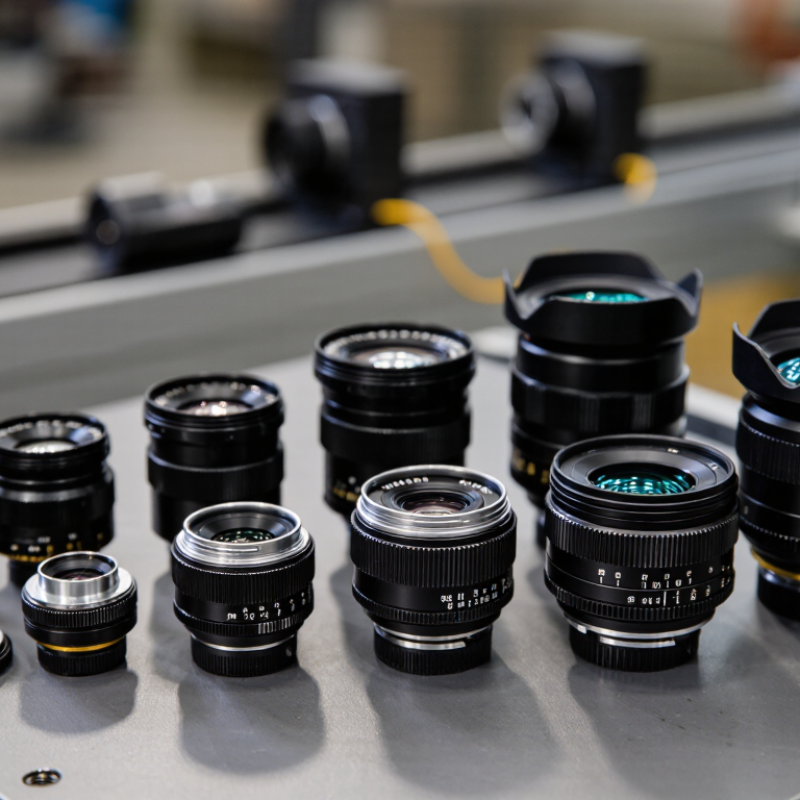
C-mount industrial lenses connect cameras through a standard 1-inch, 32-thread-per-inch screw interface. Their flange focal distance is 17.526 millimeters, which supports stable image formation on many machine vision cameras. Light passes through the lens, bends across the glass elements, and reaches the camera sensor as a focused image. The camera then converts this image into data for inspection, measurement, or automation.
Lens performance depends on more than focal length. A 16 mm lens can show a wider area than a 50 mm lens, but the working distance and sensor size also matter. Buyers should check the image circle, resolution, aperture range, distortion, and lighting conditions. A lens may cover a one-inch sensor, yet produce dark corners on a larger sensor. C-mount and CS-mount systems also differ in flange distance, so adapters cannot always correct a poor match.
In factory testing, I would place a calibration grid beside the real product. This reveals edge softness, barrel distortion, and focus changes across the working area. A fixed-aperture setting can improve repeatability, although it may reduce light in darker scenes. Product tables are useful, but they are not perfect. Vibration, heat, dust, and reflective surfaces can change results. A short on-site trial often exposes problems that technical specifications miss.
Key Specifications for Comparing Industrial C-Mount Lenses
When comparing industrial C-mount lenses for global machine vision projects, begin with the sensor, not the lens price. A lens must cover the sensor’s image circle without dark corners. Match focal length to working distance, field of view, and required detail. A 12 mm lens may capture a wide conveyor area, while a 50 mm lens suits longer inspection distances.
Check the C-mount standard carefully. The flange focal distance is typically 17.526 mm, and the thread uses a 1"-32 specification. Confirm back focus adjustment before installation. Aperture range also matters. A wider aperture improves light collection, but it can reduce depth of field and edge sharpness. For moving parts, test shutter speed and illumination together.
Resolution should match the camera sensor’s pixel size. Review MTF data when available, especially near the image edges. Distortion, chromatic aberration, and transmission affect measurement accuracy. For reflective metal surfaces, lens coatings and controlled lighting can reduce unwanted glare. I also inspect locking rings, housing rigidity, weight, and temperature tolerance. Small mechanical shifts can ruin alignment.
Test the actual lens with your camera. Specifications are not the whole story. Capture a flat calibration target at the real working distance. Check corners, contrast, and repeatability. I once prioritized resolution and overlooked vibration, which weakened the final images. That mistake still influences my selection process. A reliable comparison records every setting, including aperture, lighting angle, and exposure time.
Top C-Mount Industrial Lens Types for Global Applications in 2026
Top C-Mount Industrial Lens Types for Global Applications in 2026
Fixed focal length lenses remain practical for factory inspection, barcode reading, and robotic guidance. They offer stable imaging, simple calibration, and predictable distortion across repeated production cycles. A 16 mm lens can cover a wider conveyor area, while a 50 mm lens captures smaller parts from greater distance. Buyers should match focal length with sensor size, working distance, and required field of view.
Telecentric lenses suit dimensional inspection where measurement accuracy matters. Their near-parallel light paths reduce perspective errors on machined parts, connectors, and molded components. Macro C-mount lenses provide close focusing for surface defects, solder joints, and printed markings. Wide-angle lenses help monitor large scenes in logistics or agricultural equipment, but edge distortion needs careful testing. Infrared-compatible options can support low-light or material-sorting applications when the sensor and lighting system are matched correctly.
Real conditions often change the choice. Dust, vibration, temperature shifts, and uneven lighting can reduce image quality faster than a specification sheet suggests. Field engineers should test sample parts at the real working distance, not only in a laboratory. No lens is perfect. An early selection may fail because the mounting thread, filter space, or cable clearance was overlooked. Global buyers should also verify optical coatings, environmental ratings, calibration methods, and regional documentation before deployment. Small details matter.
2026 Top C-Mount Industrial Lenses for Global Buyers
Top C-Mount Industrial Lens Types for Global Applications in 2026
This chart compares common C-mount focal lengths by their approximate horizontal field of view on a 1-inch sensor. Short focal lengths are suitable for wide-area inspection and robotics, while longer focal lengths support detailed inspection of distant or smaller targets. Values are calculated using a 13.2 mm sensor width and the standard optical field-of-view formula.
How to Match Lens Features with Cameras and Working Conditions
2026 Top C Mount Industrial Lenses for Global Buyers?
Matching a C mount lens to a camera starts with the sensor, not the lens catalog. A lens designed for a smaller sensor may leave dark corners on a larger one. Check the sensor format, pixel size, and active image area before comparing focal lengths. A 16 mm lens can show a wide scene, while a 50 mm lens captures tighter detail from the same distance.
Working distance changes the decision. Measure from the lens front to the inspection surface, then calculate the required field of view. For a conveyor inspection line, a fixed focal length can improve repeatability.
In a changing workspace, a variable lens may save time, but its adjustment ring can introduce small errors. Test it.
Light conditions matter just as much. Use a wider aperture in dim areas, but remember that depth of field becomes thinner. Dust, vibration, heat, and cleaning chemicals also affect performance. Metal housings and secure focus locks are useful near machinery. A clear image at room temperature proves little. Thermal testing is better.
I have seen teams choose resolution first and regret the decision later. The camera, lens, lighting, and mounting distance must work as one system. Leave room for calibration. Even experienced buyers sometimes overlook flange distance, causing focus problems at the working range. Check real samples when possible. Specification sheets cannot reveal every practical weakness.
Global Buying Factors: Compatibility, Quality, Cost, and Supply Support
2026 Top C Mount Industrial Lenses for Global Buyers
For global buyers, C-mount compatibility begins with more than thread size. Confirm the sensor format, flange distance, image circle, and required working distance. A lens may fit mechanically but still produce dark corners on a larger sensor. Check the camera’s resolution, pixel size, and mounting tolerance before ordering. Small mismatches create expensive delays.
Quality depends on measured performance, not attractive specifications alone. Request test data for distortion, relative illumination, resolution, and focus stability. In a factory, vibration and temperature changes can shift focus slightly. Metal housing, secure locking rings, and consistent coating quality matter in daily production. However, perfect laboratory results may not reflect your actual line. Test sample images under real lighting.
Tips: Ask for a sample lens and a written compatibility sheet. Compare the total cost, including adapters, calibration, shipping, duties, and replacement units. A low purchase price can become costly when inspection takes two weeks. Supply support also deserves careful attention. Confirm production capacity, lead times, packaging standards, and technical response hours. Keep one approved backup option. I have seen projects slow down because the lens was available, but the matching mount was not. That detail is easy to miss.





