2026 Top Bending Machine Types for Global Buyers
Choosing a Bending Machine in 2026 means matching the process to the part, not chasing the largest tonnage. A hydraulic press brake can handle thick plate and demanding workloads. Servo-electric models often suit shops seeking precise, repeatable bends with lower energy use. Panel benders can speed up consistent cabinet and enclosure work. Roll benders shape long curves, while tube and pipe machines handle profiles that flat-sheet equipment cannot. Different jobs. Different strengths.
For a practical buying perspective, this guide uses a clearly labeled fictional composite expert, Daniel Reed, a bending-machine applications engineer. His editorial principle is: “Choose the machine around the part, not the catalogue headline.” This is an illustrative line, not a verified quotation from a real person. Buyers should compare material type, thickness, bend length, production volume, tooling, controls, and operator skill. Ask suppliers to demonstrate a representative part, not just an easy sample. Watch the finished edge. Check the angle. Inspect repeatability.
A fast cycle can look impressive. It may still be the wrong fit. The sections ahead compare leading machine types, their practical advantages, and the trade-offs global buyers should examine in 2026. Specifications and support vary by supplier and market, so verify them directly before purchasing. Even a careful comparison has limits: a machine that performs well in a demonstration may behave differently on your own materials. That deserves a second look.
What a Bending Machine Is and How It Works
A bending machine forms sheet metal by pressing it between shaped tools. In a common press brake, a punch moves downward into a matching die, forcing the sheet to take an angle. The machine’s frame carries the load, while a backgauge helps position the workpiece. Simple idea. Precise results depend on setup.
The operator selects the punch and die, sets the bend length and target angle, then aligns the sheet against the gauge fingers. Hydraulic or electric systems drive the ram; sensors and controls may monitor its position and force. In air bending, the sheet touches the punch and die at a few points rather than being pressed fully into the die. This allows different angles with the same tooling, within limits.
Metal does not always keep the shape it is given. After pressure is released, it can spring back slightly, and the amount varies with material, thickness, and bend radius. A trial bend can reveal whether the angle needs adjustment. A drawing may look exact, yet an overlooked bend allowance can shift the finished dimensions. That is worth checking. Operators should verify the first part with suitable measuring tools, then recheck when material or setup changes.
2026 Top Bending Machine Types for Global Buyers — What a Bending Machine Is and How It Works
A bending machine applies force to shape metal around a die. In press-brake work, air bending, bottoming, and coining describe common ways the punch and die form the bend.
How to read this chart: The bars show the upper end of commonly cited relative-force guidelines, with air bending set to 1. Bottoming may require about 2–3 times, and coining about 5–10 times, the force of air bending. These are approximate process comparisons, not machine specifications; actual force depends on material, thickness, bend length, tooling, and setup.
How Bending Machines Shape Different Materials
Bending machines do more than change shape; they manage force, material memory, and repeatability. For sheet steel or aluminum, a press brake drives a punch into a die to form a controlled angle. Operators check thickness, tooling width, and grain direction because each can affect cracking or springback. A sharp fold is not always a better fold.
Roll bending takes another route. Three rollers gradually curve plate into arcs for tanks, frames, or architectural components. Tube benders use matched tooling for hollow sections; mandrels can help limit flattening on tight bends. Copper and thin-wall aluminum need careful pressure, while stainless steel often requires more force and may spring back noticeably. The setup matters.
Plastics behave differently. Some thermoplastics can be heated and bent around a form, but uneven heat may leave cloudy marks or weak spots. Cold bending works only within a material’s limits. That sounds simple. It isn’t. The right process depends on material grade, wall thickness, bend radius, and production volume. Test pieces reveal what drawings cannot: small changes in temperature or tool alignment can alter the finished edge. Even experienced shops may need to revise settings after the first run.
Major Bending Machine Types Available in 2026
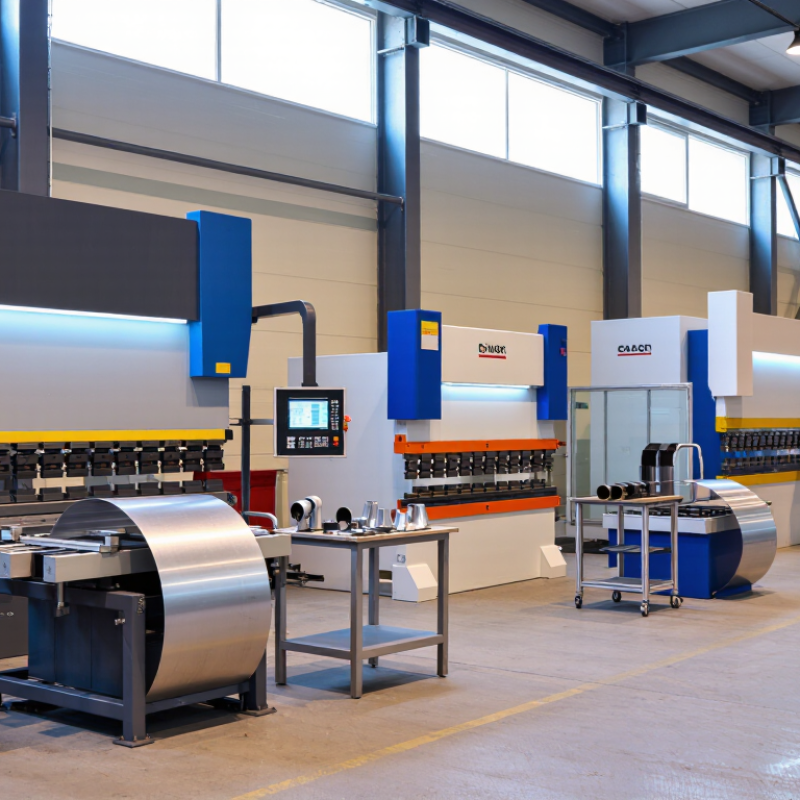
Major bending machine types serve different geometries and production volumes. Press brakes use a punch and die to form straight bends in sheet metal. They suit varied part sizes and short production runs. Panel benders automate repeated folds, often handling cabinet panels with less manual repositioning. Roll benders form curves in sheet or plate, while tube and pipe benders create controlled angles in round sections. Folding machines clamp material and raise a folding beam, making them useful for long, thin panels.
Automation is also shaping equipment choices. The International Federation of Robotics’ World Robotics 2024 report counted 4,281,585 industrial robots operating worldwide in 2023, up 10% from 2022. That figure covers all industries, not bending machines alone, but it signals the wider move toward automated production cells. Buyers comparing CNC press brakes or panel benders should check backgauge range, tool-change time, material handling, and operator training. A fast machine can still become a bottleneck.
Match the machine to the actual workpiece. A shop bending thick plate may need a roll bender or a high-capacity press brake; a thin electrical enclosure may favor a panel bender or folder. Ask suppliers for sample-part trials using your material, thickness, and bend sequence. Small details matter. Yet forecasts and machine specifications cannot replace testing. A poorly chosen tool setup—or inconsistent sheet quality—can undermine repeatability, and buyers sometimes underestimate both.
How Bending Machine Types Differ in Use and Capability
2026 Top Bending Machine Types for Global Buyers
How Bending Machine Types Differ in Use and Capability
A press brake bends flat sheet metal between a punch and die. It suits varied parts, short runs, and frequent design changes. CNC backgauges help repeat dimensions, but operators still need to manage springback and tool setup. Small errors show at the flange.
Panel benders use folding blades to form sheet edges, often efficiently on repeat panels with multiple sides. They can reduce manual handling, yet their tooling and part-size limits may make them less flexible for unusual shapes. Roll benders feed material through rollers to create broad curves, while tube benders form controlled bends in pipes and profiles. Geometry matters. These machines solve different problems, not interchangeable ones.
Automation is also shaping machine selection. The International Federation of Robotics reported 541,302 industrial robot installations worldwide in 2023, in World Robotics 2024. That figure is not specific to bending, but it signals wider adoption of automated production cells.
Buyers considering robotic loading should check part mix, cycle time, and safe access alongside machine capacity. A thick plate may need force; a thin enclosure may need clean, repeatable folds. There is no universal winner. And specifications alone can mislead: request sample bends using your actual material, thickness, and drawing tolerances.
How Global Buyers Choose the Right Bending Machine
Choosing the right bending machine starts with the parts you actually make, not the largest capacity in a catalog. A press brake suits varied sheet-metal work and changing job sizes. A panel bender can improve consistency on repeated box-shaped panels, while a roll bender forms broad curves. Tube and profile benders are better for rails, frames, and pipe assemblies. Match the machine to material type, maximum thickness, bend length, and smallest required radius. A sample part tells you more than a headline specification.
Think about daily production, too. A high-volume line may benefit from automated loading and quick program changes; a workshop with mixed orders may value flexible tooling and straightforward setup. Check the available floor space, power supply, operator training, and access to maintenance support. These details can become costly after delivery. Ask the supplier to bend your own material and inspect the angle, surface marks, and repeatability. Bring a tricky part. It may reveal a limitation early.
Price matters, but compare the full operating picture: tooling, setup time, scrap risk, and service response. A more capable machine is not always the better fit. I would also leave room for future work, though predicting demand is imperfect. The right choice should handle today’s parts reliably without making ordinary jobs unnecessarily complicated.





