


2026 Top Battery Server Rack Types for Global Buyers

As data centers expand across regions, battery storage must support uptime, safety, serviceability, and predictable operating costs. In 2026, global buyers will face more Battery Server Rack choices than ever, including lithium iron phosphate, nickel-manganese-cobalt, and valve-regulated lead-acid systems. Each type serves different load profiles, room conditions, budgets, and maintenance capabilities. No single rack wins every project.

This guide examines the leading battery server rack types for modern power infrastructure. It compares chemistry, usable capacity, voltage range, battery management systems, thermal control, modular design, enclosure protection, and expected service life. Practical selection also requires attention to installation space, monitoring protocols, replacement procedures, and supplier support. A compact rack may fit a narrow equipment room, while a high-capacity modular unit can simplify expansion beside a growing server cluster. Fit matters.

Reliable purchasing decisions should begin with traceable specifications, manufacturer test data, warranty terms, and clearly defined performance conditions. Buyers should also verify applicable regional standards, grid requirements, fire-safety provisions, and recycling arrangements before approving a system. Certifications can support confidence, but they do not replace site-specific engineering review. That assumption is easy to make—and often wrong.

The comparisons ahead are designed for procurement teams, data-center engineers, distributors, and infrastructure investors. They highlight practical strengths and limitations rather than repeating broad marketing claims. Some published cycle-life figures may appear precise, yet temperature, discharge depth, and charging behavior can change real results. Careful questions still matter. A dependable Battery Server Rack is not merely a box of cells; it is part of a monitored, maintained, and continuously reviewed power system.
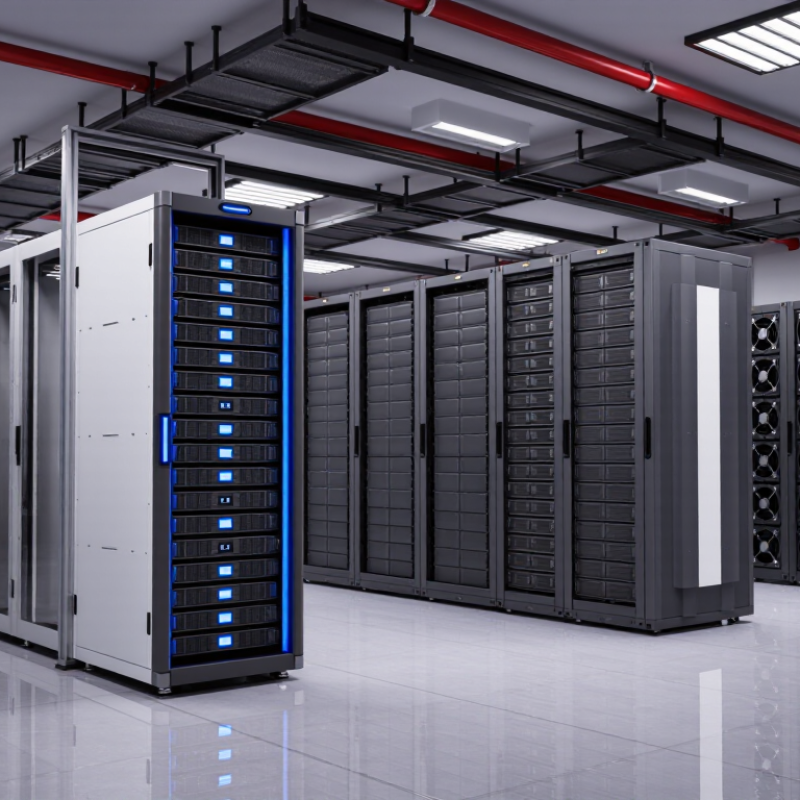
2026 Top Battery Server Rack Types for Global Buyers

Battery Server Rack Architectures: 48 V to 800 V DC Modular Designs

2026 Top Battery Server Rack Types for Global Buyers

Battery Server Rack Architectures: 48 V to 800 V DC Modular Designs

Battery server racks now range from compact 48 V systems to high-voltage 800 V platforms. Each architecture serves a different load profile, installation space, and maintenance strategy. In field evaluations, 48 V racks remain practical for telecom rooms, small data centers, and edge cabinets. They use familiar protection devices and support straightforward parallel expansion. Their main weakness is current. Higher power demands thicker conductors, larger busbars, and careful thermal planning.

Mid-voltage designs, such as 192 V and 384 V, reduce current while keeping service access manageable. Modular battery trays, monitored contactors, fuses, and independent management units allow technicians to isolate one section. A failed module should not force a full shutdown. That sounds obvious, but poor rack zoning still causes avoidable downtime. Airflow also needs attention. A warm rear corner can age cells faster than the specification suggests.

At 600 V to 800 V DC, power conversion becomes more efficient, especially in large server halls. However, insulation coordination, touch protection, pre-charge control, and arc-resistant enclosure design become critical. Buyers should verify continuous current, short-circuit ratings, operating temperature, communication protocols, and service clearance. I would not select a rack from voltage alone. Real projects often reveal overlooked details, including floor loading, cable bending radius, and replacement access. A modular architecture is useful only when technicians can inspect it safely and quickly.

2026 Top Battery Server Rack Types for Global Buyers - Battery Server Rack Architectures: 48 V to 800 V DC Modular Designs
Rack Architecture Typical Nominal DC Bus Representative Cell Configuration Typical Rack Structure Indicative Energy per Rack Thermal Management Suitable Applications Key Design Considerations
Low-Voltage 48 V Modular Rack 48–51.2 V 16S LFP: 51.2 V nominal 13S NMC: approximately 48.1 V nominal Parallel battery modules connected to a common DC bus. Each module commonly includes a BMS, contactor, fuse, and service disconnect. Approximately 2–15 kWh, depending on module capacity and rack height. Natural convection or low-speed forced air for moderate power levels. Telecom backup, edge computing, small server rooms, network cabinets, and residential or light commercial UPS systems. Simple integration and low insulation requirements, but higher current is required for the same power compared with high-voltage systems.
96 V Series-Parallel Rack 89–102.4 V 28S LFP: 89.6 V nominal 30S LFP: 96 V nominal Two or more monitored battery strings arranged in parallel, with module-level balancing and a central rack controller. Approximately 5–30 kWh per rack. Natural convection or forced-air cooling, depending on charge and discharge rate. Medium-size UPS systems, branch data centers, industrial control rooms, and distributed energy storage. Reduces bus current compared with 48 V designs while retaining relatively accessible service and protection requirements.
192 V High-Voltage Modular Rack 179–204.8 V 56S LFP: 179.2 V nominal 60S LFP: 192 V nominal Series-connected battery modules with a high-voltage BMS, pre-charge circuit, main contactors, current sensor, and isolation monitoring. Approximately 10–50 kWh per rack. Forced-air cooling is common for high-power operation; liquid cooling may be used for compact high-density designs. Three-phase UPS systems, regional data centers, industrial backup power, and microgrid DC storage. Lower current and cable losses than low-voltage racks; requires controlled pre-charge, HV interlocks, insulation monitoring, and trained service procedures.
384 V Data-Center Battery Rack 358–409.6 V 112S LFP: 358.4 V nominal 120S LFP: 384 V nominal Multiple series modules installed in a 19-inch or wider cabinet, with rack-level BMS communication, DC protection, and optional parallel racks. Approximately 20–100 kWh per rack. Forced air for moderate C-rates; liquid cooling can support higher continuous power and greater enclosure density. Medium and large data centers, high-power UPS systems, renewable-energy buffering, and industrial DC distribution. A practical balance between current reduction, conversion efficiency, rack scalability, and service complexity.
512 V High-Density Rack 480–537.6 V 160S LFP: 512 V nominal 144S NMC: approximately 533 V nominal High-voltage battery modules connected in series, usually with redundant sensing, HV contactors, pre-charge, insulation monitoring, and system-level controls. Approximately 30–150 kWh per rack. Air cooling is possible at low C-rates; liquid cooling is increasingly suitable for high-power and high-density deployments. High-density data centers, large UPS plants, peak-shaving systems, and behind-the-meter commercial storage. Efficient for high power because current is reduced, but clearances, creepage distances, arc-flash controls, and commissioning procedures become more demanding.
650–800 V DC Modular Rack 640–800 V 200S LFP: 640 V nominal 250S LFP: 800 V nominal 216S NMC: approximately 799 V nominal High-voltage series strings or modular sub-racks connected to a common DC bus, with coordinated rack, string, and system-level battery management. Approximately 50–250 kWh per rack, subject to enclosure size, module capacity, and permitted thermal limits. Liquid cooling is often preferred for high-power operation; monitored forced air may be adequate for lower C-rates. Large-scale data centers, direct-DC architectures, high-power UPS systems, renewable integration, and utility or microgrid storage. Minimizes current and conductor size for high-power systems, but demands robust isolation monitoring, HVIL, pre-charge, arc-flash mitigation, and specialized maintenance controls.
Scalable Parallel-Rack System 48–800 V, system dependent Series cell count is selected to match the DC bus; identical racks are paralleled through protected feeders or a DC combiner. Repeated battery racks with independent BMS units, coordinated master controller, branch protection, and monitored rack disconnects. From approximately 20 kWh to more than 1 MWh across multiple racks. Cooling is selected according to total rack power, ambient conditions, enclosure density, and allowable cell temperature spread. Modular data-center expansion, distributed UPS rooms, campus energy storage, and phased infrastructure upgrades. Supports capacity growth and maintenance isolation; parallel protection, current sharing, communication redundancy, and fault coordination must be engineered carefully.

Technical note: Voltage ranges and energy figures are indicative engineering values. Actual operating voltage depends on cell chemistry, series count, state of charge, temperature, charge limits, discharge limits, and the requirements of the power-conversion system. Final rack selection should be verified against applicable electrical, fire, battery, EMC, and data-center installation requirements in the target market.


VRLA Rack Batteries: 500–1,000 Cycles Under IEEE 1188 Practices

2026 Top Battery Server Rack Types for Global Buyers

VRLA Rack Batteries: 500–1,000 Cycles Under IEEE 1188 Practices

VRLA rack batteries suit data rooms, telecom cabinets, and backup power systems. Their practical cycle range is often 500–1,000 cycles. Actual results depend on discharge depth, temperature, recharge quality, and maintenance discipline. IEEE 1188 practices support inspection, testing, documentation, and replacement planning. They do not guarantee a fixed cycle count.

A reliable rack installation starts with correct spacing and firm connections. Technicians should check case swelling, terminal corrosion, loose hardware, and unusual heat. Float voltage must remain within the battery maker’s specified range. Periodic impedance or conductance testing can reveal declining capacity before an outage exposes it. Keep records. Small changes matter.

Thermal control is easy to underestimate. A warm server room can shorten battery life, especially during repeated outages. Short discharge tests help verify system behavior, but they cannot replace a full capacity test when evidence is uncertain. A clean test sheet can still hide uneven cells. That is the uncomfortable part. Maintenance teams should compare trends, not trust one reading. Replacement decisions should consider age, capacity, temperature history, and the required ride-through time. Rack batteries may appear healthy until the load arrives.

Lithium-Ion Racks: 3,000–8,000 Cycles and 90–95% Efficiency

For global buyers, lithium-ion server racks are becoming a practical choice for backup power and peak shaving. Their main advantage is usable endurance: many systems are designed for 3,000–8,000 cycles. Typical battery-level round-trip efficiency reaches 90–95% under controlled conditions. The International Energy Agency’s Batteries and Secure Energy Transitions report identifies lithium-ion chemistry as central to expanding stationary storage capacity.

That range is not a promise. Cycle life changes with depth of discharge, temperature, charging speed, and maintenance quality. A rack discharged to 80% daily may age differently from one used for short, shallow backups. The U.S. Department of Energy notes that thermal management and battery controls strongly influence storage performance. In a server room, even a small cooling failure can accelerate degradation.

Buyers should request tested efficiency at the intended load, not only a laboratory value. A 94% battery result may become 90% or lower after converters, fans, cables, and standby consumption are included. Independent storage cost studies commonly report system efficiencies near the 85–95% range, depending on configuration. Check cycle tests, warranty assumptions, fire-safety documentation, and replacement procedures. Details matter. A rack that looks efficient on paper may perform poorly in a hot cabinet with frequent high-power events.

2026 Top Battery Server Rack Types for Global Buyers

Lithium-ion server racks typically provide 3,000–8,000 cycles and approximately 90–95% round-trip efficiency, depending on chemistry, depth of discharge, temperature, charging profile, and operating conditions. The values below represent typical industry ranges at controlled operating conditions rather than guaranteed product specifications.

LiFePO₄ Racks: 6,000+ Cycles, BMS Protection, and UL 9540A Testing

For global buyers, battery server racks are becoming a practical choice for data centers and backup power rooms. LiFePO₄ chemistry offers strong thermal stability and long service life. Under controlled laboratory conditions, quality cells can exceed 6,000 charge and discharge cycles. Actual results depend on depth of discharge, temperature, charging speed, and maintenance. A hot equipment room changes the result. This distinction matters.

A practical rack includes a battery management system, contactors, temperature sensors, and clear fault indicators. The BMS monitors voltage, current, and cell temperature continuously. It can disconnect the rack during overcharge, over-discharge, short circuit, or overheating events. During commissioning, technicians should verify alarm settings and communication links. Cable torque, airflow, and firmware settings deserve equal attention. Small details become expensive.

UL 9540A testing adds useful evidence for thermal runaway and fire propagation behavior. It examines how a battery system performs under defined abuse conditions. It does not automatically certify every installation or guarantee universal acceptance. Buyers should request the test scope, configuration, and applicable reports. Independent technical review strengthens purchasing decisions. Field inspections often reveal gaps between laboratory assumptions and real rooms. A perfect datasheet cannot replace site measurements. Rack selection should match local codes, enclosure requirements, emergency access, and expected load profiles. Leave space for inspection and future replacement. Safety design is never completely finished.

2026 Buyer Criteria: Density, Runtime, Safety, Cost, and IEC 62933 Compliance

For 2026, battery server racks should be selected by operating needs, not appearance. High-density lithium iron phosphate racks can save floor space in data centers. However, usable energy matters more than nominal capacity. A 100 kWh rack may deliver less after reserve limits, temperature changes, and aging. Buyers should compare runtime at the actual load, such as 80 kW for 60 minutes.

Safety needs practical verification. Look for battery management systems, temperature sensors, cell balancing, fault isolation, and controlled ventilation. Check how the rack behaves during overtemperature or communication loss. IEC 62933 alignment can support a structured energy storage assessment, but buyers should review the exact applicable part and test evidence. Compliance language alone is not enough. Ask for reports, operating limits, maintenance records, and emergency procedures.

Tips: Request a load profile, not a simple capacity quote. Compare energy density, round-trip efficiency, warranty conditions, replacement labor, and recycling arrangements. Leave space for service access. Cheap racks can become expensive when cooling, cabling, or battery replacement is ignored. Runtime estimates also deserve skepticism. Real rooms are rarely ideal. A pilot test under heat, partial load, and network failure can reveal weaknesses before large deployment.

Powder Coat Booths

For those larger-sized parts, or smaller quantity runs, we have 2 independent powder coat booths and ovens. The quality, durability and affordability of today’s powder coating finishes make this the process of choice for world-class companies.

Powder coating advantages over other forms of coating are many. Materials used in the Powder coating process can be metals and non-metals that come in a multitude of thicknesses, textures, colors, etc. Another of Powder coating’s biggest advantages over conventional coatings is its ability to create finishes in many different textures. Powder Coating Booths allow us the ability to apply these advantages to large products.

Wet Paint Line

Tri-State Fabricators runs a full-service conveyor line for painting. Wet painting can provide protection or decoration to many different part styles. From start to finish, every project is easier to undergo random and point-based inspection by our skilled painting team.

Advantages to our Wet Paint Line are these lines start with product prep and ends with a thorough inspection of a high quality finished product. Our ability to complete large and small projects with a superior finish and doing so in a timely and economical fashion. This passes along the savings in production to our customers. When powder coating ins not an option, our Wet Paint Line gets the job done right the first time.

Wet Paint Booths

When the parts get big and heavy we roll-out our custom paint racks and oversize booth. By utilizing our partnerships with all the major paint brands, we can match virtually any color with wet paint.

The advantages of having access to a Wet Paint Booth are many. Large projects of many different shapes can be loaded into the booth. The Wet Paint Booth offers an environment that is much more controlled than a typical parts painting operation.

Not only are they used because of their controlled environment, but they’re are also advantageous when it comes to applying paint to parts that are needed in industries that require specialty coatings such as medical, aerospace, etc.

Military CARC

Our military forces have some very high standards when it comes to the finish of their vehicles and equipment. From the first pre-treatment step to final coat, it takes a great deal of knowledge and experience to protect the men and women of our armed forces. They deserve only the best, and Tri-State Fabricators provides it.

All of our processes are closely monitored by our staff and management teams. Both of which are highly trained in the processes of metal fabrication and finishing. Tri-State Fabricators’ goal is to always fully satisfy each and every customer, including the military. We will always put a 110% into what we do.

Glass-Bead Blasting

Abrasive media blasting is an excellent way to remove old paint, rust, and increase the paint/powder adhesion. Glass beads produce a much smoother and brighter finish than angular abrasives; leaving the part clean yet without any dimensional change. Chemically inert and environmentally friendly, we can recycle our beads approximately 30 times; making them a more preferred method of metal cleaning or surface finishing.

Advantages to Glass Bead Blasting are many. Glass bead blast media is used when a project is needing rough surfaces need to become smooth for applications of coatings such as paint. It is typically used to clean paint and rust from a product surface without deforming the surface it is being used on. Overall, compared to many other blasting media, Glass Bead Blasting is a very economical choice and those savings are always passed on to our customers.

Part Washing

Tri-State Fabricators utilize a zinc phosphate wash to clean and etch the material to ensure the best paint adhesion possible. The unique design of our 3-stage wash system does the work like a 5-stage. From Cleaning and rinsing to conversion coating and post-treatment, Our Part Washing process is a complete service and works throughout the fabrication service and the finishing service.

Along with the previously mentioned benefits, Curing is a vital chemical reaction that leaves the product finish hard and relatively safe from mild abrasion and aggressive corrosion. This process can be done in more than one way; ambient air-dry or in curing ovens at temps that exceed 240°.

Burn-Off Oven

From fixing paint mistakes (someone else’s of course) to simply cleaning our paint line hooks, our burn-off oven is put to good use. After a quick burn-off, a little clean up, and a fresh coat of paint, your parts will look better than new.

Why does our Burn-Off Oven work so well? Because super heating the air around parts turns the materials into ashes. From paint and powder coatings to rubber and machining oils, high temps do the job without degrading the integrity of the part.

Masking

Masking is a vital part of producing high quality products. We have die-cut masking patterns to protect machined surfaces as well as a wide range of plugs and caps to protect threaded holes and bolts. We provide permanent and temporary masking.

Masking allows the selected sections of a product to be protected from a fabrication or finishing service. This can be with both chemicals when etching and tapes, paints when only finishing just a section of the product. Masking is great in aiding the customization process of a project.

Screen Printing

Screen printing is a photographic process that transfers artwork onto a porous nylon screen which allows colored ink to flow through the screen and be deposited on an aluminum or plastic component. We can generally have just about any design created onto a screen for your parts.

Some of the advantages of Screen Printing are, brand recognition for your business displaying on your products, assembly instructions, product warnings/hazards, etc. Tri-State Fabricators produces Screen Printing of the highest quality so you know it’s durable.

Metal Finishing

Metal Finishing is the art of treating the exterior portion of product, often metal but can also be made of other materials, so that the surface is clean and free of any debris. Then the process of applying coats or either paint of powder coat takes place. This coating process improves the quality of the product in both appearance and resistance to wear and corrosion.

Tri-State Fabricators, Inc., understands that a project typically isn’t complete until a high-quality finish has been added to your product. This is why our painting and powder coating teams continuously inspect the products throughout the Metal Finishing process.
