


Modern vehicles rely on more electrical functions than ever, from starter motors and cooling fans to pumps, lighting, and battery systems. Automotive Electrical Relays switch these circuits using a low-current control signal, helping isolate controls from heavier electrical loads. That small click matters.
The IEA’s Global EV Outlook 2024 reports nearly 14 million electric cars were sold worldwide in 2023, about 18% of all car sales. Electrification does not make every vehicle circuit high-voltage, but it raises the importance of choosing components suited to each application. A relay near an engine fan may face heat, vibration, and repeated switching. A relay in a battery-management system can have very different voltage and isolation requirements.
This guide explores key relay types used in automotive systems, including electromechanical, solid-state, latching, and high-voltage designs. Each offers trade-offs in switching speed, durability, power draw, and cost. The right choice depends on the circuit, operating conditions, and required service life—not just the part’s current rating. The details matter.
Industry forecasts can describe broad electrification trends, but they cannot specify the correct relay for an individual vehicle. That needs circuit-level evidence and manufacturer data. It is a limitation worth keeping in view. As vehicle architectures evolve, understanding how these relay types work can help engineers, technicians, and buyers compare components more carefully.
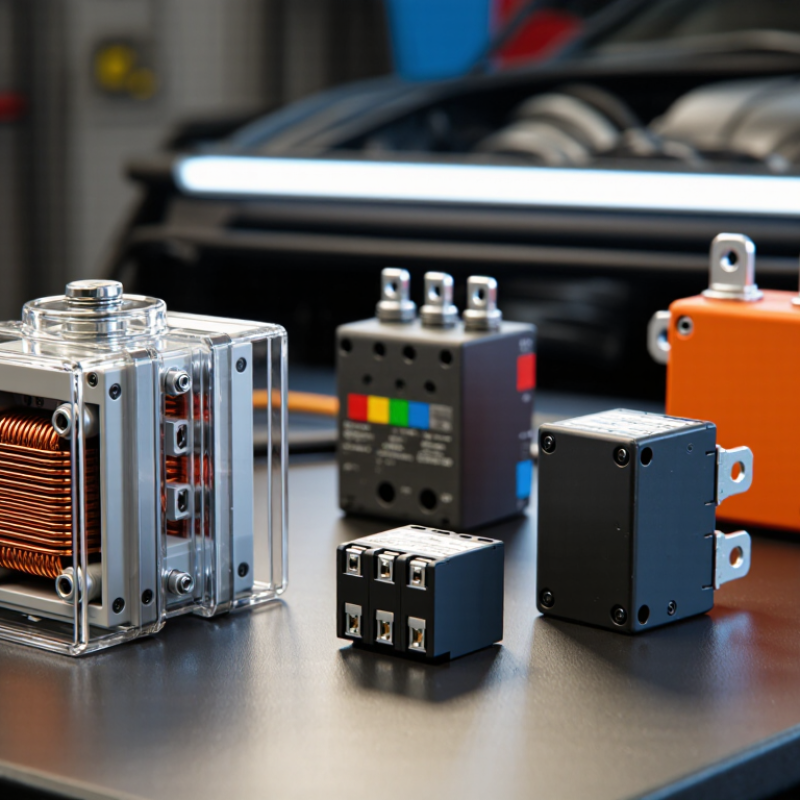
2026 Top Types of Automotive Electrical Relays
Automotive relays use a low-current control signal to switch a higher-current circuit. When energized, a coil creates a magnetic field that moves internal contacts. Those contacts may power components such as cooling fans, horns, or fuel pumps, depending on the vehicle. In a common normally open relay, the load circuit remains disconnected until the coil activates. Other designs use normally closed contacts or different terminal layouts. Small signals. Bigger loads.
A switch, sensor, or vehicle computer may control the relay’s coil. This arrangement helps keep heavy load current away from delicate controls. A fuse protects against excessive current, but it cannot correct an unsuitable relay or poor connection. If a fan stops working, hearing a click is not enough to confirm the relay works. Corroded sockets, loose pins, and worn contacts can still cause voltage drops or intermittent operation. The symptoms can be less obvious than they seem.
Tips: Match the terminal layout, coil voltage, and contact rating to the vehicle specification. Check the wiring diagram before testing. Inspect for heat marks or loose pins, and use a meter to compare control-side and load-side voltage. If readings remain unclear, pause rather than replacing parts by guesswork.
| Relay Type | How It Works | Common Contact Arrangement | Typical Vehicle Uses | Key Selection Consideration |
|---|---|---|---|---|
| General-Purpose Electromechanical Relay | An energized coil creates a magnetic field that moves an armature, opening or closing electrical contacts. The control circuit can therefore switch a separate load circuit. | Normally open (NO), normally closed (NC), or changeover | Auxiliary lighting, horns, cooling fans, and other switched loads | Check coil voltage, contact rating, terminal layout, and suitability for the vehicle environment. |
| ISO Mini or Micro Relay | Uses the same electromagnetic switching principle as a general-purpose relay, in a standardized compact automotive package. | Commonly NO or changeover; configurations vary | Fuse-and-relay boxes and space-constrained vehicle circuits | Verify the exact footprint and terminal function; similar-looking relays may have different pin assignments. |
| Changeover Relay | A single movable contact switches between two paths. When the coil is de-energized, the common contact rests on NC; energizing the coil moves it to NO. | Single-pole, double-throw (SPDT), often marked 30, 87a, and 87 | Selecting between two circuit paths or switching a load between powered and unpowered states | Confirm which output is connected in the de-energized state and whether the contact rating suits the load. |
| Solid-State Relay | Semiconductor components switch the load electronically, without moving mechanical contacts. | Electronic output; terminal and switching arrangements vary | Applications requiring frequent switching or reduced contact wear | Check compatibility with the load type, polarity, heat dissipation, leakage current, and control signal. |
| Latching Relay | A brief control pulse changes the contact state, which remains set after the control signal is removed. A further pulse, or a pulse of opposite polarity on some designs, changes it back. | NO, NC, or changeover, depending on design | Circuits where the switched state needs to be retained without continuously energizing a coil | Confirm the set/reset method and ensure the control circuit provides the required pulse. |
| Time-Delay Relay | Combines switching with a timing function, delaying activation or deactivation according to its design. | Usually NO or changeover | Delayed accessory shutoff, timed lighting, or other vehicle functions requiring a defined delay | Check whether the delay is on activation or release, and confirm the timing range and control requirements. |
| Flasher Relay | Periodically switches its output to create a repeating on-off signal for lamps. | Output arrangement varies by application | Turn signals and hazard warning lamps on vehicles that use a separate flasher unit | Verify vehicle-system compatibility, lamp configuration, and whether the unit is designed for the specific circuit. |

Automotive relays are classified by how they switch a circuit, how they are built, and where they fit. Contact arrangement is a practical starting point: normally open, normally closed, or changeover contacts serve different circuit needs. Coil voltage must match the vehicle’s electrical system. Contact ratings should also reflect the actual load; a motor’s startup current can exceed its steady running current. The number on a relay alone is not enough.
Physical design matters, too. Open-frame relays suit protected locations, while sealed housings help resist dust and moisture. PCB-mount and socket-mounted designs fit different assembly and service needs. Suppression components can reduce voltage spikes, but diode-equipped coils may require correct polarity. The International Energy Agency reported nearly 14 million electric car sales worldwide in 2023, about 18% of total car sales. That shift makes careful attention to switching loads and electrical architecture increasingly relevant. Yet relay labels do not always reveal real operating conditions.
Tips: Check the circuit diagram, coil voltage, load type, and inrush current before selecting a relay. Confirm terminal layout and environmental rating, too. A quick visual match can be misleading.
Electromechanical relays remain common for switching headlights, horns, cooling fans, and fuel pumps. A coil moves physical contacts, making the switching action easy to understand and test. In a service bay, a click can help confirm operation, but it does not prove the contacts are healthy. Contact wear and vibration still matter.
Miniature and micro relays save space in crowded fuse boxes, while high-current relays handle heavier electrical loads. Latching relays retain their state without continuous coil power, which can reduce energy use in selected circuits. Solid-state relays switch electronically and avoid moving contacts. They can respond quickly, though heat management and circuit protection need careful attention. They are not interchangeable.
The International Energy Agency’s Global EV Outlook 2025 reports that electric-car sales exceeded 17 million in 2024, surpassing one-fifth of new-car sales worldwide. Meanwhile, OICA’s 2024 production statistics record about 92.5 million motor vehicles produced globally. These figures point to a broad, changing electrical landscape, not one relay type for every vehicle. Match relay capacity, control voltage, terminal layout, and environmental rating to the circuit. A small mismatch can cause intermittent faults. That detail is easy to overlook.
Automotive relays route a small control signal to a higher-current circuit. Mini and micro electromechanical relays commonly switch headlights, horns, windshield wipers, and cooling fans. Their compact cases fit crowded fuse boxes, while familiar pin layouts make replacement straightforward. A fan relay may click on as engine temperature rises, then switch off when cooling is no longer needed. That matters. However, the same-looking relay may have a different pin arrangement or current rating.
High-current relays handle heavier loads, such as radiator fans, heated windows, and some starter-control circuits. Starter systems may use a dedicated solenoid rather than a standard plug-in relay, so check the vehicle’s wiring information. Solid-state relays suit applications needing quiet, rapid switching, including some lighting and electronic control systems. Latching relays retain their on or off state without continuous coil power, which can help reduce standby draw in selected circuits. They are not a universal upgrade. Heat, electrical noise, and control compatibility still matter.
Tips: Match the relay’s voltage, contact rating, pin layout, and coil type to the circuit. Inspect the socket for discoloration or loose terminals; a new relay cannot fix a damaged connection. When uncertain, verify the wiring diagram before testing. Relay charts simplify things a little too much.
Selecting an automotive relay starts with the circuit, not the relay’s shape. Check the vehicle’s control voltage, switched load, and wiring diagram before comparing relay types. A 12-volt coil is common, but some systems use different voltages or electronic control. Small detail, big consequence.
Match the contact arrangement to the job: normally open, normally closed, or changeover. Then check the current rating against the actual load. A motor or lamp can draw a brief surge when switched on, so its running current alone may not tell the whole story. Choose a relay rated for the load and for direct-current switching. A relay that looks adequate on paper can still run hot if its contacts face repeated high inrush current.
Consider where it will sit. Under a hood, heat, vibration, dust, and moisture can shorten service life; a protected cabin location has different demands. Confirm the relay’s dimensions, terminal layout, and connector fit before installation. A suppression diode or resistor may reduce voltage spikes, but a diode has polarity and must match the circuit. That detail is easy to overlook. One judgment call remains: real operating conditions may differ from a diagram, so leave a sensible margin and verify the circuit safely after fitting.
How to select: Match the relay to the vehicle’s system voltage, load current, switching frequency, and load type. These indicative current ranges vary by design; check the relay datasheet and allow for temperature, inrush current, and inductive-load effects.


For those larger-sized parts, or smaller quantity runs, we have 2 independent powder coat booths and ovens. The quality, durability and affordability of today’s powder coating finishes make this the process of choice for world-class companies.
Powder coating advantages over other forms of coating are many. Materials used in the Powder coating process can be metals and non-metals that come in a multitude of thicknesses, textures, colors, etc. Another of Powder coating’s biggest advantages over conventional coatings is its ability to create finishes in many different textures. Powder Coating Booths allow us the ability to apply these advantages to large products.
Tri-State Fabricators runs a full-service conveyor line for painting. Wet painting can provide protection or decoration to many different part styles. From start to finish, every project is easier to undergo random and point-based inspection by our skilled painting team.
Advantages to our Wet Paint Line are these lines start with product prep and ends with a thorough inspection of a high quality finished product. Our ability to complete large and small projects with a superior finish and doing so in a timely and economical fashion. This passes along the savings in production to our customers. When powder coating ins not an option, our Wet Paint Line gets the job done right the first time.
When the parts get big and heavy we roll-out our custom paint racks and oversize booth. By utilizing our partnerships with all the major paint brands, we can match virtually any color with wet paint.
The advantages of having access to a Wet Paint Booth are many. Large projects of many different shapes can be loaded into the booth. The Wet Paint Booth offers an environment that is much more controlled than a typical parts painting operation.
Not only are they used because of their controlled environment, but they’re are also advantageous when it comes to applying paint to parts that are needed in industries that require specialty coatings such as medical, aerospace, etc.
Our military forces have some very high standards when it comes to the finish of their vehicles and equipment. From the first pre-treatment step to final coat, it takes a great deal of knowledge and experience to protect the men and women of our armed forces. They deserve only the best, and Tri-State Fabricators provides it.
All of our processes are closely monitored by our staff and management teams. Both of which are highly trained in the processes of metal fabrication and finishing. Tri-State Fabricators’ goal is to always fully satisfy each and every customer, including the military. We will always put a 110% into what we do.
Abrasive media blasting is an excellent way to remove old paint, rust, and increase the paint/powder adhesion. Glass beads produce a much smoother and brighter finish than angular abrasives; leaving the part clean yet without any dimensional change. Chemically inert and environmentally friendly, we can recycle our beads approximately 30 times; making them a more preferred method of metal cleaning or surface finishing.
Advantages to Glass Bead Blasting are many. Glass bead blast media is used when a project is needing rough surfaces need to become smooth for applications of coatings such as paint. It is typically used to clean paint and rust from a product surface without deforming the surface it is being used on. Overall, compared to many other blasting media, Glass Bead Blasting is a very economical choice and those savings are always passed on to our customers.
Tri-State Fabricators utilize a zinc phosphate wash to clean and etch the material to ensure the best paint adhesion possible. The unique design of our 3-stage wash system does the work like a 5-stage. From Cleaning and rinsing to conversion coating and post-treatment, Our Part Washing process is a complete service and works throughout the fabrication service and the finishing service.
Along with the previously mentioned benefits, Curing is a vital chemical reaction that leaves the product finish hard and relatively safe from mild abrasion and aggressive corrosion. This process can be done in more than one way; ambient air-dry or in curing ovens at temps that exceed 240°.
From fixing paint mistakes (someone else’s of course) to simply cleaning our paint line hooks, our burn-off oven is put to good use. After a quick burn-off, a little clean up, and a fresh coat of paint, your parts will look better than new.
Why does our Burn-Off Oven work so well? Because super heating the air around parts turns the materials into ashes. From paint and powder coatings to rubber and machining oils, high temps do the job without degrading the integrity of the part.
Masking is a vital part of producing high quality products. We have die-cut masking patterns to protect machined surfaces as well as a wide range of plugs and caps to protect threaded holes and bolts. We provide permanent and temporary masking.
Masking allows the selected sections of a product to be protected from a fabrication or finishing service. This can be with both chemicals when etching and tapes, paints when only finishing just a section of the product. Masking is great in aiding the customization process of a project.
Screen printing is a photographic process that transfers artwork onto a porous nylon screen which allows colored ink to flow through the screen and be deposited on an aluminum or plastic component. We can generally have just about any design created onto a screen for your parts.
Some of the advantages of Screen Printing are, brand recognition for your business displaying on your products, assembly instructions, product warnings/hazards, etc. Tri-State Fabricators produces Screen Printing of the highest quality so you know it’s durable.
Metal Finishing is the art of treating the exterior portion of product, often metal but can also be made of other materials, so that the surface is clean and free of any debris. Then the process of applying coats or either paint of powder coat takes place. This coating process improves the quality of the product in both appearance and resistance to wear and corrosion.
Tri-State Fabricators, Inc., understands that a project typically isn’t complete until a high-quality finish has been added to your product. This is why our painting and powder coating teams continuously inspect the products throughout the Metal Finishing process.

