


Choosing the right Aluminium Takeaway Containers supplier takes more than comparing unit prices. Buyers must check material consistency, container dimensions, lid fit, print options, and delivery reliability. A tray that looks sturdy on a sample table may buckle when filled with hot food. A loose lid can turn a short delivery into a messy one. Small details matter.
Packaging procurement specialist Jordan Lee offers a practical reminder: “A dependable container is one that protects the meal, fits the operation, and arrives consistently.” Use that test when reviewing the 2026 supplier landscape. Ask for product specifications, sample packs, food-contact documentation, and clear information about minimum order quantities. Then compare lead times and communication, not just catalog claims. Real samples help. So does a careful question.
This guide introduces leading Aluminium Takeaway Containers suppliers and the factors that distinguish them, including product range, customization, quality controls, and service. Supplier rankings can be useful, but they are not a substitute for checking whether a product suits your menu, filling process, and delivery route. One limitation deserves attention: published product details may not show how containers perform under your exact conditions. Test before committing to a large order. It takes time, and buyers sometimes skip it. That is worth reconsidering.
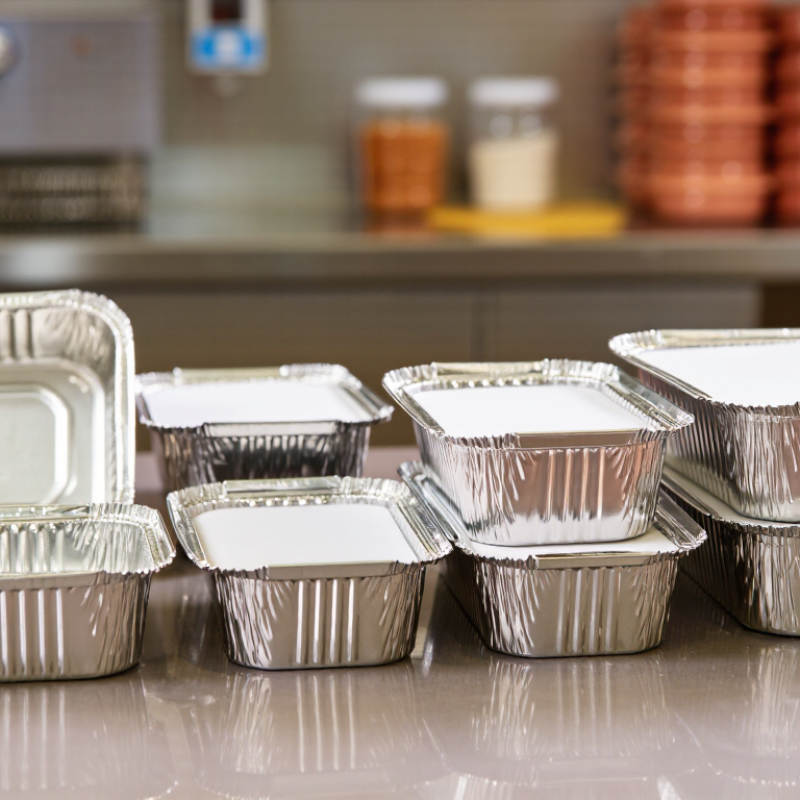
Aluminium takeaway containers are lightweight food trays made from thin, formed aluminium. Their rigid walls help protect meals during packing and transport, while the metal conducts heat efficiently. They are commonly used for hot entrées, roasted vegetables, baked dishes, and catered portions. Some have crimped foil lids; others use fitted board or plastic lids, depending on the food and delivery needs.
They are practical. A snug lid can help limit spills, but it does not make every container leakproof. Sauces may escape through loose edges, so staff should check the fit before stacking orders. Aluminium trays can often go in an oven, but temperature limits and lid compatibility vary. Check the supplier’s specifications, and do not place metal containers in a microwave. For takeaway service, the container should suit the portion size, food temperature, and expected travel time. A tray that is too shallow can let food shift; one that is oversized wastes space.
After use, recycling depends on local facilities and how clean the container is. Scraping out food can make sorting easier, though greasy or heavily soiled trays may not be accepted everywhere. The material seems simple, but the details matter. A small lid mismatch can undo an otherwise sensible choice.

Top aluminium takeaway container suppliers should be judged on repeatable performance, not brochure claims. Request samples from several production batches. Measure rim flatness, wall thickness, lid fit, and container weight. Then test hot filling, stacking, transport vibration, and leakage after cooling. Fit matters. Ask for food-contact documentation, alloy specifications, inspection records, and traceability linking each batch to its material source. A polished sample proves little if routine production varies.
Capacity and delivery reliability matter too. Compare quoted lead times with actual order records, minimum quantities, tooling costs, and procedures for handling defects. The International Aluminium Institute reports that recycled aluminium production uses about 5% of the energy required for primary aluminium production. That makes verified recycled content relevant, but suppliers should substantiate claims with material records rather than broad sustainability language. Demand proof. One awkward point: the lowest unit price can conceal inconsistent dimensions, excess rejects, or costly delays. Buyers should score total delivered cost and documented quality together, then reassess after a pilot order.
Which suppliers lead the aluminium takeaway container market? Usually, the strongest candidates combine dependable production with clear technical support. They control container thickness, rim shape, and lid fit across repeat orders. Small differences matter: a loose lid can leak during delivery, while thin foil may buckle under a hot meal. Ask for samples in the sizes you actually use. Test them with warm, oily food, not just an empty container. Simple checks help.
Market leaders may include large manufacturers with broad capacity and regional converters offering faster, smaller production runs. Neither type is automatically the better choice. Compare documented food-contact suitability, batch traceability, production lead times, and the supplier’s ability to maintain specifications. Ask how recycled content is verified and whether surface coatings affect your intended use. A polished catalogue is not proof. Request written data and recent sample lots.
Supplier rankings also depend on location, order volume, and container design, so a single global leader may not serve every buyer well. Even careful purchasers can focus too much on unit price. Freight, damaged cartons, and inconsistent lid fit can erase that saving. One detail is easy to miss: confirm how containers are packed, since nested rims may deform during transit.
Comparing aluminium takeaway container suppliers starts with the product details customers will notice. Check the stated thickness, rim finish, stacking stability, and lid fit. A loose lid can leak during delivery, even when the tray looks sturdy. Request samples in the sizes you actually use. Test them with hot, oily, and acidic foods, following the supplier’s handling guidance. A glossy sample can mislead.
Certifications and supporting records deserve equal attention. Ask for current food-contact documentation, test reports, and traceable batch information relevant to your intended markets. Confirm that the documents cover the exact container material and any coating, not just a similar product. Compare how clearly suppliers explain testing limits and renewals. A certificate alone is not proof of consistent production; clear records matter.
Service can separate otherwise similar offers. Compare minimum order quantities, lead times, carton protection, and responses to specification changes. Ask what happens when a shipment arrives with bent corners or mismatched lids. Reliable suppliers give specific answers, not only broad promises. I would still check production consistency with a repeat sample; one good batch cannot tell the whole story.
When choosing an aluminium takeaway container supplier, compare the actual product, not just the quoted price. Ask for the alloy, wall thickness, container dimensions, and lid options in writing. Small differences matter. A thin base may flex when filled with hot food, while a poorly formed rim can make lids difficult to secure. Request samples and test them with the meals, sauces, and stacking methods you use.
Check whether the supplier can provide current food-contact documentation for your intended market, plus clear details about coatings and printing. Ask how production batches are checked for weight, dimensions, and defects. Useful answers should be specific, not simply “high quality.” Also confirm minimum order quantities, lead times, carton counts, and how damaged deliveries are handled. A reliable supplier should explain changes before they affect your schedule.
Price still matters, but the lowest quote can hide thinner material or inconsistent supply. Compare cost per usable container, including freight and rejected units. Run a small trial before committing to a large order. Keep notes on lid fit, leaks, and how containers hold up during delivery. Even a thorough checklist can miss a practical issue; that is why real kitchen testing matters. I would also review supplier performance after the first few orders, not assume one successful shipment tells the whole story.


For those larger-sized parts, or smaller quantity runs, we have 2 independent powder coat booths and ovens. The quality, durability and affordability of today’s powder coating finishes make this the process of choice for world-class companies.
Powder coating advantages over other forms of coating are many. Materials used in the Powder coating process can be metals and non-metals that come in a multitude of thicknesses, textures, colors, etc. Another of Powder coating’s biggest advantages over conventional coatings is its ability to create finishes in many different textures. Powder Coating Booths allow us the ability to apply these advantages to large products.
Tri-State Fabricators runs a full-service conveyor line for painting. Wet painting can provide protection or decoration to many different part styles. From start to finish, every project is easier to undergo random and point-based inspection by our skilled painting team.
Advantages to our Wet Paint Line are these lines start with product prep and ends with a thorough inspection of a high quality finished product. Our ability to complete large and small projects with a superior finish and doing so in a timely and economical fashion. This passes along the savings in production to our customers. When powder coating ins not an option, our Wet Paint Line gets the job done right the first time.
When the parts get big and heavy we roll-out our custom paint racks and oversize booth. By utilizing our partnerships with all the major paint brands, we can match virtually any color with wet paint.
The advantages of having access to a Wet Paint Booth are many. Large projects of many different shapes can be loaded into the booth. The Wet Paint Booth offers an environment that is much more controlled than a typical parts painting operation.
Not only are they used because of their controlled environment, but they’re are also advantageous when it comes to applying paint to parts that are needed in industries that require specialty coatings such as medical, aerospace, etc.
Our military forces have some very high standards when it comes to the finish of their vehicles and equipment. From the first pre-treatment step to final coat, it takes a great deal of knowledge and experience to protect the men and women of our armed forces. They deserve only the best, and Tri-State Fabricators provides it.
All of our processes are closely monitored by our staff and management teams. Both of which are highly trained in the processes of metal fabrication and finishing. Tri-State Fabricators’ goal is to always fully satisfy each and every customer, including the military. We will always put a 110% into what we do.
Abrasive media blasting is an excellent way to remove old paint, rust, and increase the paint/powder adhesion. Glass beads produce a much smoother and brighter finish than angular abrasives; leaving the part clean yet without any dimensional change. Chemically inert and environmentally friendly, we can recycle our beads approximately 30 times; making them a more preferred method of metal cleaning or surface finishing.
Advantages to Glass Bead Blasting are many. Glass bead blast media is used when a project is needing rough surfaces need to become smooth for applications of coatings such as paint. It is typically used to clean paint and rust from a product surface without deforming the surface it is being used on. Overall, compared to many other blasting media, Glass Bead Blasting is a very economical choice and those savings are always passed on to our customers.
Tri-State Fabricators utilize a zinc phosphate wash to clean and etch the material to ensure the best paint adhesion possible. The unique design of our 3-stage wash system does the work like a 5-stage. From Cleaning and rinsing to conversion coating and post-treatment, Our Part Washing process is a complete service and works throughout the fabrication service and the finishing service.
Along with the previously mentioned benefits, Curing is a vital chemical reaction that leaves the product finish hard and relatively safe from mild abrasion and aggressive corrosion. This process can be done in more than one way; ambient air-dry or in curing ovens at temps that exceed 240°.
From fixing paint mistakes (someone else’s of course) to simply cleaning our paint line hooks, our burn-off oven is put to good use. After a quick burn-off, a little clean up, and a fresh coat of paint, your parts will look better than new.
Why does our Burn-Off Oven work so well? Because super heating the air around parts turns the materials into ashes. From paint and powder coatings to rubber and machining oils, high temps do the job without degrading the integrity of the part.
Masking is a vital part of producing high quality products. We have die-cut masking patterns to protect machined surfaces as well as a wide range of plugs and caps to protect threaded holes and bolts. We provide permanent and temporary masking.
Masking allows the selected sections of a product to be protected from a fabrication or finishing service. This can be with both chemicals when etching and tapes, paints when only finishing just a section of the product. Masking is great in aiding the customization process of a project.
Screen printing is a photographic process that transfers artwork onto a porous nylon screen which allows colored ink to flow through the screen and be deposited on an aluminum or plastic component. We can generally have just about any design created onto a screen for your parts.
Some of the advantages of Screen Printing are, brand recognition for your business displaying on your products, assembly instructions, product warnings/hazards, etc. Tri-State Fabricators produces Screen Printing of the highest quality so you know it’s durable.
Metal Finishing is the art of treating the exterior portion of product, often metal but can also be made of other materials, so that the surface is clean and free of any debris. Then the process of applying coats or either paint of powder coat takes place. This coating process improves the quality of the product in both appearance and resistance to wear and corrosion.
Tri-State Fabricators, Inc., understands that a project typically isn’t complete until a high-quality finish has been added to your product. This is why our painting and powder coating teams continuously inspect the products throughout the Metal Finishing process.

