


2026 Best Smart Home Electronics Design Trends for Buyers

Smart Home Electronics Design in 2026 is shifting from novelty to everyday usefulness. Buyers are looking beyond voice assistants and flashy screens. They want quiet sensors, dependable connectivity, clear controls, and devices that fit naturally into a room. A thermostat should be easy to read from the doorway. A motion sensor should work without drawing attention. Small details matter.

Industry research helps explain this shift. Deloitte’s 2024 Connected Consumer Survey examines how people use connected devices and the friction they encounter, including concerns about privacy and managing multiple technologies. Parks Associates’ smart-home research likewise tracks household adoption and the value buyers place on connected services. Together, these reports point to a practical design challenge: adding more devices does not automatically make a home simpler. Compatibility, setup, and long-term support still matter.

The design principle is simple. “Design is not just what it looks like and feels like. Design is how it works,” said Steve Jobs, an influential product-design leader. For smart-home buyers, that means judging a device by its daily performance—not its launch-day demo. Look for Matter support, physical controls where they help, replaceable components, and privacy settings that are easy to understand. Yet no standard solves every problem. Devices can still behave differently across brands, and sleek interfaces may hide confusing setup steps. That is worth questioning. This guide explores the 2026 trends that offer real value, the features that may disappoint, and the design choices buyers should inspect before investing.
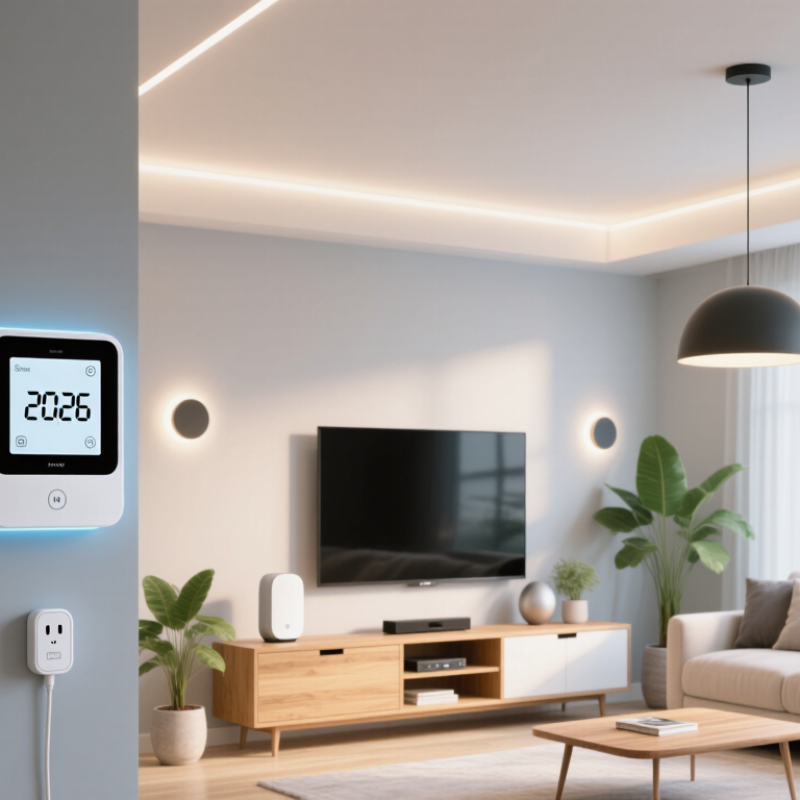
2026 Best Smart Home Electronics Design Trends for Buyers

What Defines Smart Home Electronics Design in 2026

Smart home electronics design in 2026 is less about adding screens and more about making connected devices dependable. A thermostat should show its temperature clearly from across the room. A door sensor should communicate its status without demanding an app check. Physical buttons still matter. They are useful when a phone is charging or a connection drops.

Compatibility is part of good design, not a bonus feature. Buyers should look for clear information about supported devices, setup requirements, and what happens during an internet outage. Privacy controls should be easy to find, with understandable settings for data sharing and account access. Local processing can reduce reliance on cloud services, though its availability varies by device. More features do not always mean more control.

Materials and maintenance deserve attention, too. A matte surface may hide fingerprints better than glossy plastic, while a replaceable battery can make a small sensor easier to keep in service. Check whether cables, mounting parts, and instructions are included. I would not assume that a polished interface means a thoughtful product; some menus remain confusing. Look for readable labels, adjustable alerts, and settings that can be changed without digging through several screens.


How AI and Automation Shape Everyday Devices

AI is moving smart home devices beyond simple timers. A thermostat can learn that a sunny kitchen warms faster than a shaded bedroom, then adjust each room gradually. Motion and light sensors can dim a hallway lamp when nobody is nearby, while a connected speaker sets a quieter volume after bedtime. These small changes matter because they remove repeated taps from ordinary routines. Less fiddling. More comfort.

Automation works best when it remains understandable. A useful system shows why it changed the temperature or delayed a washing cycle, and lets residents override the decision quickly. During a week of changing schedules, for example, occupancy detection may mistake an empty home for a quiet one. That can leave rooms too warm or lights unexpectedly off. AI can improve as it receives feedback, but it does not read intentions perfectly. Buyers should check whether devices work locally during internet outages, offer clear privacy settings, and support simple manual controls. Energy reports can also reveal whether automated heating actually reduces use, rather than merely shifting it to another hour. The setup can still feel fiddly. That is worth admitting.

Why Interoperability and Connectivity Matter to Buyers

Interoperability matters when everyday routines involve more than one smart device. A door sensor might trigger a hallway light, while a thermostat responds to an open window. These actions feel seamless only when devices can communicate reliably. Buyers should check which common standards and control systems each product supports. A familiar logo is less useful than clear compatibility details.

Connectivity deserves equal attention. A device may work perfectly beside the router, then miss commands from a bedroom or garage. Check whether the home network reaches the intended location, and look for practical setup guidance. Small details matter. Consider whether essential functions still work if the internet drops, and whether settings can be managed locally. A simple manual control can be reassuring.

Long-term support also affects the buying decision. Ask how updates are delivered, how long the manufacturer expects to provide them, and whether devices can be added without replacing the whole system. These answers are not always easy to compare. Compatibility claims can sound broader than real-world performance, so read the limits carefully. I would prioritize a modest system that works consistently over a larger setup that needs constant troubleshooting. That preference is not perfect; convenience means different things in different homes.

How Energy Efficiency and Privacy Influence Product Choices

In 2026, energy efficiency and privacy are becoming practical buying criteria for smart home electronics. The International Energy Agency’s 2023 Buildings report says buildings account for about 30% of global final energy use. Smart thermostats, lighting controls, and energy monitors can help households spot waste, but savings depend on setup and daily habits. A thermostat cannot fix a drafty window. And a low-power label alone tells only part of the story.

Privacy deserves equal attention. In a 2023 Pew Research Center survey, 73% of U.S. adults said they had little or no control over the data companies collect about them. Before buying, check whether a device works without cloud storage, how long recordings are retained, and whether its microphone or camera can be switched off. Fewer connected features may mean fewer conveniences. Sometimes that trade-off feels worthwhile.

Tips: Compare standby power, not just active use. Place an energy monitor where you can read it easily, and review its readings for a week. Choose devices with clear privacy settings and useful local controls. I would still question whether every room needs a sensor; more automation can mean more data, and more things to maintain.

What to Evaluate When Choosing Smart Home Electronics

Choose smart home electronics by the task they need to perform, not by the number of features listed. A motion sensor should respond reliably in the hallway, while a thermostat should be easy to adjust from the rooms you use most. Check whether devices work together through a shared platform or standard. Wi-Fi coverage matters, especially near garages and upstairs bedrooms. Read the privacy settings and find out how long software updates are expected. Convenience can hide trade-offs.

In everyday use, small delays become irritating. Test the app setup, voice controls, and manual options before committing, if a store or trial period allows it. Check whether essential functions still work when the internet drops. Compare power needs, installation steps, and replacement costs, not just the purchase price. Clear instructions and accessible support are useful signs of a thoughtfully designed product. Still, specifications cannot predict every home; thick walls and crowded networks may change performance.

Tips: Measure the space and check your Wi-Fi signal before buying. Start with one device, then see how it behaves for a week. Keep the packaging until setup is confirmed. I would not assume the newest design is automatically the best fit.

Powder Coat Booths

For those larger-sized parts, or smaller quantity runs, we have 2 independent powder coat booths and ovens. The quality, durability and affordability of today’s powder coating finishes make this the process of choice for world-class companies.

Powder coating advantages over other forms of coating are many. Materials used in the Powder coating process can be metals and non-metals that come in a multitude of thicknesses, textures, colors, etc. Another of Powder coating’s biggest advantages over conventional coatings is its ability to create finishes in many different textures. Powder Coating Booths allow us the ability to apply these advantages to large products.

Wet Paint Line

Tri-State Fabricators runs a full-service conveyor line for painting. Wet painting can provide protection or decoration to many different part styles. From start to finish, every project is easier to undergo random and point-based inspection by our skilled painting team.

Advantages to our Wet Paint Line are these lines start with product prep and ends with a thorough inspection of a high quality finished product. Our ability to complete large and small projects with a superior finish and doing so in a timely and economical fashion. This passes along the savings in production to our customers. When powder coating ins not an option, our Wet Paint Line gets the job done right the first time.

Wet Paint Booths

When the parts get big and heavy we roll-out our custom paint racks and oversize booth. By utilizing our partnerships with all the major paint brands, we can match virtually any color with wet paint.

The advantages of having access to a Wet Paint Booth are many. Large projects of many different shapes can be loaded into the booth. The Wet Paint Booth offers an environment that is much more controlled than a typical parts painting operation.

Not only are they used because of their controlled environment, but they’re are also advantageous when it comes to applying paint to parts that are needed in industries that require specialty coatings such as medical, aerospace, etc.

Military CARC

Our military forces have some very high standards when it comes to the finish of their vehicles and equipment. From the first pre-treatment step to final coat, it takes a great deal of knowledge and experience to protect the men and women of our armed forces. They deserve only the best, and Tri-State Fabricators provides it.

All of our processes are closely monitored by our staff and management teams. Both of which are highly trained in the processes of metal fabrication and finishing. Tri-State Fabricators’ goal is to always fully satisfy each and every customer, including the military. We will always put a 110% into what we do.

Glass-Bead Blasting

Abrasive media blasting is an excellent way to remove old paint, rust, and increase the paint/powder adhesion. Glass beads produce a much smoother and brighter finish than angular abrasives; leaving the part clean yet without any dimensional change. Chemically inert and environmentally friendly, we can recycle our beads approximately 30 times; making them a more preferred method of metal cleaning or surface finishing.

Advantages to Glass Bead Blasting are many. Glass bead blast media is used when a project is needing rough surfaces need to become smooth for applications of coatings such as paint. It is typically used to clean paint and rust from a product surface without deforming the surface it is being used on. Overall, compared to many other blasting media, Glass Bead Blasting is a very economical choice and those savings are always passed on to our customers.

Part Washing

Tri-State Fabricators utilize a zinc phosphate wash to clean and etch the material to ensure the best paint adhesion possible. The unique design of our 3-stage wash system does the work like a 5-stage. From Cleaning and rinsing to conversion coating and post-treatment, Our Part Washing process is a complete service and works throughout the fabrication service and the finishing service.

Along with the previously mentioned benefits, Curing is a vital chemical reaction that leaves the product finish hard and relatively safe from mild abrasion and aggressive corrosion. This process can be done in more than one way; ambient air-dry or in curing ovens at temps that exceed 240°.

Burn-Off Oven

From fixing paint mistakes (someone else’s of course) to simply cleaning our paint line hooks, our burn-off oven is put to good use. After a quick burn-off, a little clean up, and a fresh coat of paint, your parts will look better than new.

Why does our Burn-Off Oven work so well? Because super heating the air around parts turns the materials into ashes. From paint and powder coatings to rubber and machining oils, high temps do the job without degrading the integrity of the part.

Masking

Masking is a vital part of producing high quality products. We have die-cut masking patterns to protect machined surfaces as well as a wide range of plugs and caps to protect threaded holes and bolts. We provide permanent and temporary masking.

Masking allows the selected sections of a product to be protected from a fabrication or finishing service. This can be with both chemicals when etching and tapes, paints when only finishing just a section of the product. Masking is great in aiding the customization process of a project.

Screen Printing

Screen printing is a photographic process that transfers artwork onto a porous nylon screen which allows colored ink to flow through the screen and be deposited on an aluminum or plastic component. We can generally have just about any design created onto a screen for your parts.

Some of the advantages of Screen Printing are, brand recognition for your business displaying on your products, assembly instructions, product warnings/hazards, etc. Tri-State Fabricators produces Screen Printing of the highest quality so you know it’s durable.

Metal Finishing

Metal Finishing is the art of treating the exterior portion of product, often metal but can also be made of other materials, so that the surface is clean and free of any debris. Then the process of applying coats or either paint of powder coat takes place. This coating process improves the quality of the product in both appearance and resistance to wear and corrosion.

Tri-State Fabricators, Inc., understands that a project typically isn’t complete until a high-quality finish has been added to your product. This is why our painting and powder coating teams continuously inspect the products throughout the Metal Finishing process.
