


Choosing an Off Grid Wind Power Inverter is not just a matter of matching watts. The right unit must handle changing turbine output, battery voltage, surge loads, and safe energy diversion when batteries are full. A mismatch can mean unstable charging—or a turbine that lacks a suitable electrical load. Small details matter. Cable length matters, too.
Industry reports offer useful context, but they need careful interpretation. NREL’s 2023 Distributed Wind Market Report recorded about 1,110 megawatts of cumulative distributed wind capacity in the United States through 2022. These systems serve homes, farms, businesses, and other local loads; that figure does not describe off-grid installations alone. IRENA’s Renewable Power Generation Costs in 2023 reported a global weighted-average levelized cost of electricity of about $0.033 per kilowatt-hour for onshore wind. That is a broad generation benchmark, not a promise of household savings or a direct measure of inverter performance.
This guide explains how to compare inverter type, continuous and peak ratings, battery compatibility, wind-controller requirements, and protective features. It also highlights the questions worth asking before purchase: Does the system need a separate charge controller? Can the inverter tolerate the turbine’s output range? Is local technical support available? Specifications can look tidy on a product page. Real wind does not. A careful match starts with the turbine and battery documentation, then checks the inverter against the loads you actually expect to run.
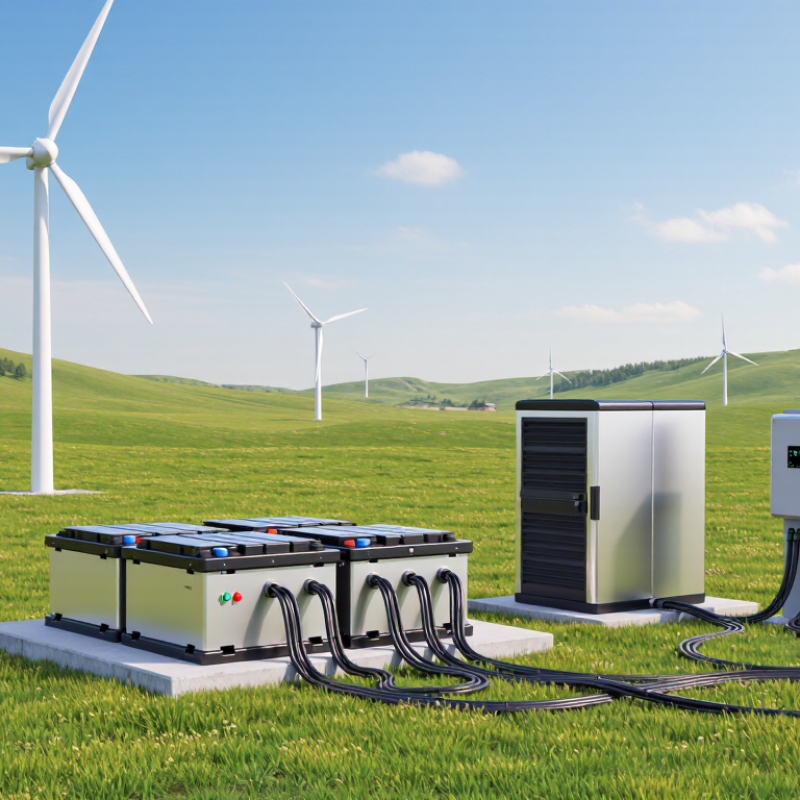
2026 Top Off Grid Wind Power Inverter Buying Guide?
A wind turbine’s output changes with rotor speed, so its electricity is not automatically ready for household use. In many off-grid systems, a rectifier turns variable-frequency AC into DC. A charge controller then regulates battery charging, while the inverter converts stored DC into steady AC for lights, tools, or a refrigerator. Labels can mislead. Check the inverter’s DC voltage, continuous rating, and surge capacity against the battery bank and real appliance loads.
Some systems also use a diversion load to absorb excess power when batteries are full. This matters because a turbine needs a suitable electrical load; simply disconnecting it may not be safe for the equipment. Match the controller’s operating range to the turbine’s output curve, and confirm whether its tracking controls are designed for wind rather than solar. IRENA’s Renewable Power Generation Costs in 2023 reported a global weighted-average cost of USD 0.033 per kWh for new onshore wind. That is a utility-scale benchmark, not a promise of home-system savings.
Tips: Test the setup with a multimeter during changing wind. Note battery voltage, controller behavior, and inverter alarms. Real wind is messy; one calm afternoon proves little.

Matching an off-grid inverter to a wind turbine starts with electrical compatibility, not advertised wattage alone. Check the turbine’s rated voltage, expected output range, and peak current against the wind controller, rectifier, and battery bank. A turbine rated at 1 kW will not produce 1 kW steadily. Wind is uneven. Choose equipment designed for wind input; a solar-only inverter may not manage turbine overspeed or excess energy. Confirm the controller can divert surplus power to a correctly sized dump load and provide braking when needed. Small details matter.
List the loads you need to run, including their running watts and startup surges. A refrigerator or water pump may briefly demand much more power when its motor starts. Size the inverter for that surge, while checking that its continuous rating can support the loads operating together. Match its DC input to the battery-bank voltage, and consider a pure sine wave output for sensitive electronics and motors. Allow for conversion losses and cold-weather battery limits. A tidy spreadsheet can still miss a pump starting at the same moment as a kettle; leave a sensible margin, then review the assumptions against actual usage. Have a qualified installer verify wiring, protection, and grounding before commissioning.
Choosing an off-grid wind power inverter starts with matching its electrical ratings to the whole system. Check the battery’s nominal voltage, such as 24 or 48 volts, and confirm the inverter accepts it. Then compare continuous output with the loads expected to run together. A refrigerator may draw modest power while running but demand much more during startup. Surge matters. Check both the surge rating and how long the inverter can sustain it.
Look for a pure sine wave output when powering sensitive electronics, pumps, or appliances with motors. Read the efficiency figure at typical operating loads, not only at peak output; idle consumption can quietly drain a small battery overnight. Small losses add up. Also verify output voltage and frequency match the equipment you plan to use, and check protections for overload, overheating, low battery voltage, and short circuits.
An inverter is not automatically a wind turbine controller. Confirm that the turbine’s rectifier, charge controller, battery bank, and any diversion or braking controls are designed to work together. This detail is easy to overlook, and I would not assume a compatible connector means a compatible system. Check the operating temperature range and enclosure rating for the installation site, especially where dust, condensation, or cold mornings are common. Record your actual loads before buying; estimates can be wrong, and that is worth admitting.
An off-grid wind inverter must match the battery, turbine, and charge-control equipment as one system. Start with the battery’s nominal voltage, then check its permitted charging range and maximum current. A 48-volt battery, for example, needs an inverter designed for that voltage. Check the labels. Battery chemistry matters too: lithium and lead-acid batteries use different charging profiles. Confirm that the inverter’s settings suit the battery, and that its charging current stays within the battery maker’s limit. If the battery has a management system, verify that it can communicate or safely disconnect from the inverter.
Wind turbines need suitable charge control. Many systems require a wind-specific controller and a diversion load to manage excess power when the battery is full. Do not assume a solar controller can handle a turbine; some models are not designed for changing wind output. Check the controller’s voltage and current ratings against the turbine’s specifications. That mismatch is costly. Also confirm that the inverter can handle the turbine system’s output and any brief power surges from connected appliances.
Read the wiring diagram, not just the product summary. Check cable sizes, protective devices, grounding instructions, and shutdown steps against the equipment manuals. Paper calculations can miss real conditions, such as long cable runs or cold-weather battery limits. It happens. When specifications conflict or a connection is unclear, ask a qualified off-grid installer to review the design before energizing it.
For off-grid wind, compare the inverter’s continuous output with your steady loads, then check surge capacity for pumps or refrigerators. Confirm that the turbine’s rectifier, charge controller, and diversion load are compatible; the inverter alone cannot manage excess wind energy. Check the exact model’s safety certification, enclosure rating, and temperature limits. Small details matter.
NREL and Sandia’s 2018 operations and maintenance guide uses a typical inverter service-life planning range of about 10–15 years. Treat that as a budgeting estimate, not a guarantee. Ask about replacement parts, warranty exclusions, and local repair options. Also compare idle consumption: a measured 25-watt draw uses about 0.6 kWh daily, or 219 kWh yearly. That can quietly shrink a small battery bank.
Compare total installed cost, not just the unit price. Include compatible controls, wiring, battery capacity, ventilation, and likely replacement costs. A cheaper inverter may need a larger battery if its standby draw is high. Check efficiency at the loads you actually use; a peak-efficiency figure can hide weaker performance at low output. I would still verify these figures against the installation manual, since published ratings do not capture every cold, gusty site.


For those larger-sized parts, or smaller quantity runs, we have 2 independent powder coat booths and ovens. The quality, durability and affordability of today’s powder coating finishes make this the process of choice for world-class companies.
Powder coating advantages over other forms of coating are many. Materials used in the Powder coating process can be metals and non-metals that come in a multitude of thicknesses, textures, colors, etc. Another of Powder coating’s biggest advantages over conventional coatings is its ability to create finishes in many different textures. Powder Coating Booths allow us the ability to apply these advantages to large products.
Tri-State Fabricators runs a full-service conveyor line for painting. Wet painting can provide protection or decoration to many different part styles. From start to finish, every project is easier to undergo random and point-based inspection by our skilled painting team.
Advantages to our Wet Paint Line are these lines start with product prep and ends with a thorough inspection of a high quality finished product. Our ability to complete large and small projects with a superior finish and doing so in a timely and economical fashion. This passes along the savings in production to our customers. When powder coating ins not an option, our Wet Paint Line gets the job done right the first time.
When the parts get big and heavy we roll-out our custom paint racks and oversize booth. By utilizing our partnerships with all the major paint brands, we can match virtually any color with wet paint.
The advantages of having access to a Wet Paint Booth are many. Large projects of many different shapes can be loaded into the booth. The Wet Paint Booth offers an environment that is much more controlled than a typical parts painting operation.
Not only are they used because of their controlled environment, but they’re are also advantageous when it comes to applying paint to parts that are needed in industries that require specialty coatings such as medical, aerospace, etc.
Our military forces have some very high standards when it comes to the finish of their vehicles and equipment. From the first pre-treatment step to final coat, it takes a great deal of knowledge and experience to protect the men and women of our armed forces. They deserve only the best, and Tri-State Fabricators provides it.
All of our processes are closely monitored by our staff and management teams. Both of which are highly trained in the processes of metal fabrication and finishing. Tri-State Fabricators’ goal is to always fully satisfy each and every customer, including the military. We will always put a 110% into what we do.
Abrasive media blasting is an excellent way to remove old paint, rust, and increase the paint/powder adhesion. Glass beads produce a much smoother and brighter finish than angular abrasives; leaving the part clean yet without any dimensional change. Chemically inert and environmentally friendly, we can recycle our beads approximately 30 times; making them a more preferred method of metal cleaning or surface finishing.
Advantages to Glass Bead Blasting are many. Glass bead blast media is used when a project is needing rough surfaces need to become smooth for applications of coatings such as paint. It is typically used to clean paint and rust from a product surface without deforming the surface it is being used on. Overall, compared to many other blasting media, Glass Bead Blasting is a very economical choice and those savings are always passed on to our customers.
Tri-State Fabricators utilize a zinc phosphate wash to clean and etch the material to ensure the best paint adhesion possible. The unique design of our 3-stage wash system does the work like a 5-stage. From Cleaning and rinsing to conversion coating and post-treatment, Our Part Washing process is a complete service and works throughout the fabrication service and the finishing service.
Along with the previously mentioned benefits, Curing is a vital chemical reaction that leaves the product finish hard and relatively safe from mild abrasion and aggressive corrosion. This process can be done in more than one way; ambient air-dry or in curing ovens at temps that exceed 240°.
From fixing paint mistakes (someone else’s of course) to simply cleaning our paint line hooks, our burn-off oven is put to good use. After a quick burn-off, a little clean up, and a fresh coat of paint, your parts will look better than new.
Why does our Burn-Off Oven work so well? Because super heating the air around parts turns the materials into ashes. From paint and powder coatings to rubber and machining oils, high temps do the job without degrading the integrity of the part.
Masking is a vital part of producing high quality products. We have die-cut masking patterns to protect machined surfaces as well as a wide range of plugs and caps to protect threaded holes and bolts. We provide permanent and temporary masking.
Masking allows the selected sections of a product to be protected from a fabrication or finishing service. This can be with both chemicals when etching and tapes, paints when only finishing just a section of the product. Masking is great in aiding the customization process of a project.
Screen printing is a photographic process that transfers artwork onto a porous nylon screen which allows colored ink to flow through the screen and be deposited on an aluminum or plastic component. We can generally have just about any design created onto a screen for your parts.
Some of the advantages of Screen Printing are, brand recognition for your business displaying on your products, assembly instructions, product warnings/hazards, etc. Tri-State Fabricators produces Screen Printing of the highest quality so you know it’s durable.
Metal Finishing is the art of treating the exterior portion of product, often metal but can also be made of other materials, so that the surface is clean and free of any debris. Then the process of applying coats or either paint of powder coat takes place. This coating process improves the quality of the product in both appearance and resistance to wear and corrosion.
Tri-State Fabricators, Inc., understands that a project typically isn’t complete until a high-quality finish has been added to your product. This is why our painting and powder coating teams continuously inspect the products throughout the Metal Finishing process.

