2026 Top Roots Blower Manufacturers for Global Buyers
Choosing reliable Roots Blower manufacturers in 2026 requires more than comparing catalog prices. Global buyers must examine engineering depth, production consistency, export experience, and after-sales support. A polished website is useful, but it cannot replace factory evidence, test records, and verified customer feedback.
This guide introduces leading manufacturers serving international markets. It considers rotary lobe design, pressure stability, airflow efficiency, noise control, sealing systems, and material quality. It also reviews practical details, such as delivery schedules, spare-parts availability, inspection procedures, and technical communication across time zones. Buyers may need equipment for wastewater aeration, pneumatic conveying, aquaculture, cement handling, or industrial gas applications. Each use demands different performance priorities.
Real purchasing decisions are rarely simple. A low purchase price may hide higher energy consumption or difficult maintenance. A famous brand may still provide slow support in a distant market. The shortlist is not perfect. Market information changes, and supplier claims require independent verification. That is why this overview emphasizes transparent criteria, documented experience, and realistic operating conditions. Readers should request performance curves, motor data, warranty terms, and references before signing contracts. Small details matter.
The strongest manufacturers combine dependable Roots Blower technology with responsive service and clear documentation. They understand that a blower runs for years, often in dusty, humid, or continuous-duty environments. This article helps global buyers compare suppliers with greater confidence, while leaving room for careful questioning and professional judgment.
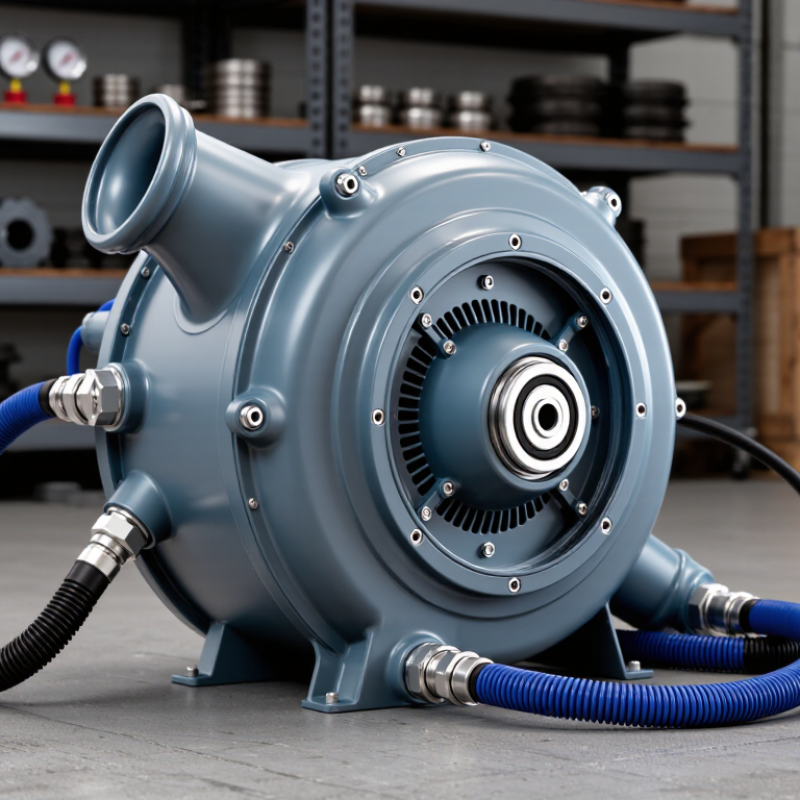
Roots Blower Fundamentals: Positive Displacement, 0.1–1.0 bar Pressure Range
Roots blowers are positive-displacement machines designed to move a nearly fixed volume of air per rotation. Two counter-rotating lobes trap air between the rotors and casing, then deliver it downstream. They do not compress air internally like a screw compressor. Pressure develops when the outlet system resists flow. The typical working range of 0.1–1.0 bar(g) suits aeration, pneumatic conveying, wastewater treatment, and low-pressure industrial air service. Actual performance depends on speed, inlet temperature, altitude, leakage, and discharge resistance.
For global buyers, compare flow at operating pressure, not free-air capacity alone. A blower rated at 1,000 m³/h may deliver less after filters, silencers, bends, and elevation losses. Ask manufacturers for performance curves, shaft power, noise data, cooling requirements, and service intervals. In field commissioning, incorrect relief-valve settings often create avoidable overheating. It is a simple detail, but it matters. Also confirm whether pressure values are gauge or absolute. Confusing them can distort equipment selection.
Tips: Keep inlet air clean and dry. Check oil level and belt tension regularly. Leave space around the package for cooling and maintenance. Select a relief valve, non-return valve, and pressure gauge as a complete protection system. Variable-speed control can reduce energy use, though its savings should be verified under real demand. No selection is perfect on paper; measured site conditions deserve a second review.
2026 Market Criteria: ISO 1217 Airflow, Efficiency, and Test-Data Standards
For global buyers, a roots blower should be compared through verified airflow, not catalogue volume alone. ISO 1217 defines methods for measuring delivered air, power input, and performance under stated conditions. These details matter when inlet temperature, pressure, or altitude changes. A blower showing 1,000 m³/h may deliver less at the buyer’s actual operating point.
Look for test reports that state suction pressure, discharge pressure, gas temperature, speed, and measurement uncertainty. Specific power is especially useful. It connects energy use with delivered airflow. The U.S. Department of Energy reports that compressed-air systems can consume about 10% of industrial electricity. Its guidance also estimates that leaks may waste 20% to 30% of compressor output. A small laboratory error can become a large operating cost.
CAGI performance-verification practices offer another useful reference for comparing published data. Buyers should request ISO 1217-based acceptance results, calibration records, and complete performance curves. Check whether the quoted airflow is actual or standard volume. That distinction is often overlooked. Noise, oil carryover, cooling demand, and maintenance access deserve field attention. Real installations are rarely as clean as test benches. Even respected data can lack enough detail for a confident decision. Ask for repeatability evidence, not attractive numbers alone.
Top Manufacturers: AERZEN, ROOTS, Howden, Tuthill, and Busch Compared
For 2026, global buyers should compare five established roots blower manufacturers through operating evidence, not catalog claims. The key checks are airflow stability, pressure range, noise, service access, and total energy cost. According to Grand View Research, the global industrial air compressor market reached about USD 30.1 billion in 2023, with continued growth expected through 2030. This expansion increases demand for reliable positive-displacement equipment.
Performance depends on application details. A wastewater plant may value oil-free air and corrosion resistance, while a pneumatic conveying line needs stable pressure and fast maintenance. The U.S. Department of Energy reports that compressed-air systems can consume around 10% of industrial electricity. It also notes that leaks may waste 20% to 30% of compressor output. Small losses become expensive.
Published figures are not always comparable. Test conditions differ. Buyers should request duty-point curves, sound measurements, lubricant specifications, and five-year service estimates. Field experience suggests that accessible filters and simple belt inspection can reduce downtime.
Yet installation quality is often overlooked. Poor pipe sizing, hot intake air, or weak foundations can erase efficiency gains. A practical comparison should include local technicians, spare-parts lead times, warranty limits, and documented performance at the buyer’s actual pressure and flow requirements. No ranking is final. Cost models should be reviewed after real operating data becomes available.
Buyer Comparison: Capacity, Pressure Ratio, Noise, Energy Use, and Service
2026 Top Roots Blower Manufacturers for Global Buyers
A serious comparison starts with capacity, not catalog horsepower. Compare actual flow at the required inlet conditions, temperature, and discharge pressure. The U.S. Department of Energy reports that compressed-air systems can consume 10–15% of industrial electricity. It also identifies leakage as a frequent loss, often reaching 20–30% of compressor output. These figures make a small capacity error expensive.
Pressure ratio deserves equal attention. A blower rated for 1.5 bar gauge may perform poorly when the system faces long pipe runs, filters, or wet media. Request performance curves, not one attractive operating point. Check shaft power at the duty point. Lower pressure does not always mean lower energy use. Heat, belt losses, and control strategy change the result. The International Energy Agency’s energy-efficiency reports repeatedly identify system optimization as a major industrial savings opportunity.
Noise can decide whether a blower fits beside workers or requires an enclosure. Ask for sound-power data under ISO 3744 or equivalent testing conditions. Compare measured dB(A), distance, speed, and enclosure configuration. Service quality is less visible, but more practical. Review spare-parts lead times, technician coverage, oil-change access, vibration monitoring, and warranty exclusions. A 2024 field review may reveal useful lessons, yet it can still miss poor installation. That is the uncomfortable part. Buyer spreadsheets often look precise, while real plants remain unpredictable. Test acceptance should include flow, pressure ratio, temperature, vibration, and energy readings over several hours.
2026 Top Roots Blower Manufacturers for Global Buyers - Buyer Comparison: Capacity, Pressure Ratio, Noise, Energy Use, and Service
| Anonymous Manufacturer Profile | Typical Air Capacity | Maximum Continuous Pressure | Pressure Ratio | Typical Noise Level | Specific Energy Use | Efficiency-Oriented Features | Global Service Capability |
| Profile A Overall: 4.8/5 Heavy-duty industrial supplier | 0.6–18,000 m³/h
(350–10,600 cfm) | 0.8 bar(g)
(11.6 psi) | Up to 1.8:1 | 72–86 dB(A)
at 1 m | 0.085–0.115 kWh/m³ | Three-lobe timing design, precision rotors, optional integrated inlet filtration, and variable-speed-drive packages. | Regional distributors in major industrial markets; remote commissioning, spare-parts planning, and multilingual technical documentation. |
| Profile B Overall: 4.7/5 Low-noise process-air specialist | 30–12,500 m³/h
(18–7,350 cfm) | 1.0 bar(g)
(14.5 psi) | Up to 2.0:1 | 68–82 dB(A)
at 1 m | 0.080–0.110 kWh/m³ | Optimized discharge pulsation control, acoustic enclosures, low-leakage seals, and factory-matched motors. | Strong application engineering, online troubleshooting, service training, and standard replacement-part kits for export customers. |
| Profile C Overall: 4.6/5 High-capacity wastewater supplier | 250–20,000 m³/h
(147–11,770 cfm) | 0.7 bar(g)
(10.2 psi) | Up to 1.7:1 | 74–88 dB(A)
at 1 m | 0.090–0.125 kWh/m³ | Package systems for aeration duty, automatic inlet control, moisture-resistant construction, and duty/standby sequencing. | Established support for municipal projects, local field-service partners, commissioning checklists, and planned-maintenance contracts. |
| Profile D Overall: 4.5/5 Compact OEM and equipment integrator | 10–5,500 m³/h
(6–3,240 cfm) | 0.9 bar(g)
(13.1 psi) | Up to 1.9:1 | 70–84 dB(A)
at 1 m | 0.088–0.120 kWh/m³ | Compact skid layouts, PLC integration, VFD compatibility, simplified maintenance access, and flexible inlet/outlet configurations. | Responsive OEM customization, digital manuals, video support, and distributor-led warranty service in selected regions. |
| Profile E Overall: 4.4/5 Value-focused export manufacturer | 20–10,000 m³/h
(12–5,885 cfm) | 0.8 bar(g)
(11.6 psi) | Up to 1.8:1 | 76–91 dB(A)
at 1 m | 0.095–0.135 kWh/m³ | Standardized three-lobe models, powder-coated housings, optional silencers, and economical motor packages. | Competitive export pricing, stocked wear parts for common models, basic remote support, and partner-based field service. |
| Profile F Overall: 4.3/5 Oil-free conveying and vacuum specialist | 15–8,000 m³/h
(9–4,710 cfm) | 0.6 bar(g)
(8.7 psi) | Up to 1.6:1 | 73–87 dB(A)
at 1 m | 0.090–0.130 kWh/m³ | Oil-free compression chamber, dry-running configuration, modular filtration, and application-specific vacuum packages. | Good support for food, packaging, and pneumatic-conveying applications; remote diagnostics and documented maintenance intervals. |
Buyer comparison basis: Figures are representative engineering ranges for oil-free positive-displacement Roots blowers and packaged systems available to international buyers in 2026. Actual performance depends on inlet conditions, discharge pressure, gas temperature, altitude, motor efficiency, control method, and installation design. Noise values are typical sound-pressure ranges measured approximately 1 m from the machine; energy-use figures are indicative specific-energy ranges at normal operating conditions and should be confirmed through a supplier performance curve.
Recommended procurement checks: Request certified flow and power data, guaranteed sound levels, pressure-relief settings, motor efficiency class, spare-parts lead time, warranty terms, local service coverage, and references for the intended application.
Selection Standards: API 619, ATEX, Lifecycle Cost, and Global Support
2026 Top Roots Blower Manufacturers for Global Buyers
For global buyers, selecting a Roots blower requires more than comparing airflow and price. API 619 should guide the technical review, especially for continuous-duty applications. It addresses design details, materials, testing, and documentation. Ask for certified performance curves, vibration limits, noise data, and inspection records. That evidence matters more than polished brochures.
ATEX assessment is essential when equipment operates near flammable gases or dust. The supplier should define the equipment category, zone suitability, temperature class, and protection method. Do not accept vague compliance claims. Request declarations, certificates, and installation instructions for the intended site. A factory test can reveal problems before shipment. In field reviews, engineers often find that unclear responsibilities cause avoidable delays.
Lifecycle cost includes energy, lubrication, seals, bearings, maintenance labor, and downtime. Energy use can outweigh the purchase price over several years. A cheaper unit may become expensive under changing pressure conditions. Global support must include regional spare parts, responsive technicians, training, and clear warranty procedures. Check local inventory and realistic delivery times. Language and time-zone coverage help. Still, selection is not perfectly predictable. Dust, humidity, poor alignment, and operator habits can change results. Leave room for operating reality.
This illustrative procurement model assigns a 100-point evaluation weight to the main selection standards used by global buyers of Roots blowers. API 619 and ATEX address engineering and hazardous-area requirements, while lifecycle cost and global support reflect long-term operating risk and serviceability. The percentages are planning weights, not supplier or brand performance scores.





