


2026 Top Precision Faucet Lever Handle Manufacturers?

The 2026 search for leading Precision Faucet Lever Handle manufacturers begins with more than appearance. It requires evidence about materials, machining accuracy, surface durability, and production consistency. A lever should turn smoothly, resist corrosion, and remain comfortable after thousands of daily movements.

Market data supports this practical focus. Grand View Research reports continued growth in the global faucets market, driven by residential construction, renovation, and demand for water-efficient fixtures. Fortune Business Insights also identifies smart homes, premium bathroom products, and improved manufacturing technology as important market influences. However, these reports usually measure complete faucets, not individual lever handles. That limitation matters.

A serious manufacturer review must examine the details behind the catalog. Look for stainless steel, brass, zinc alloy, or engineered polymers, then verify the stated grade and coating process. Ask about CNC tolerances, salt-spray testing, cycle testing, inspection records, and batch traceability. Small differences become visible at the installation site: uneven plating, loose set screws, sharp edges, or a lever that drifts after repeated use.

There is no universal “best” supplier. Cost, certification, tooling capacity, minimum order quantity, and delivery reliability can change the ranking. Some manufacturers publish impressive specifications but provide limited test evidence. That deserves caution. This guide compares 2026 manufacturers through product engineering, factory capability, quality assurance, export experience, and customer feedback. The assessment is practical, not absolute. Specification sheets can mislead. Independent verification remains essential.
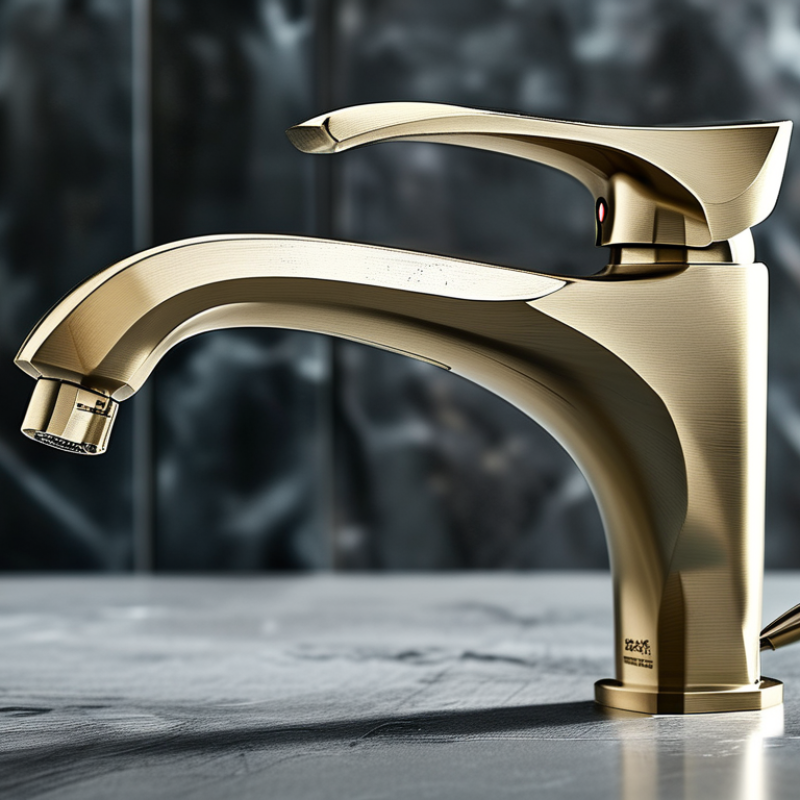
2026 Top Precision Faucet Lever Handle Manufacturers?

What Are Precision Faucet Lever Handles?

What Are Precision Faucet Lever Handles?

Precision faucet lever handles are the control components that regulate water flow and temperature through a cartridge or valve. They are not merely decorative pieces. Their internal connection must match the cartridge stem, handle angle, and rotational range with minimal play. A loose fit creates uneven movement, noise, and premature wear.

Manufacturers usually machine or mold the handle body from metal, engineered polymers, or zinc alloys. They then inspect dimensions, surface finish, thread quality, and torque performance.

Standards such as ASME A112.18.1/CSA B125.1 support safety and durability testing for plumbing fittings. The U.S. Environmental Protection Agency’s WaterSense program also limits qualified residential bathroom faucets to 1.5 gallons per minute. That is 30% less than the federal 2.2-gallon-per-minute standard.

Small details matter. A lever should move smoothly with wet fingers, resist side-to-side wobble, and remain comfortable after repeated daily use. A 2023 EPA WaterSense impact report states that labeled products have saved over 7.5 trillion gallons of water cumulatively. That figure shows why accurate flow control matters beyond appearance.

Yet visual precision can mislead. A heavy handle may still hide weak threads or poor cartridge alignment.

I would test it repeatedly. Not once. Top manufacturers should provide dimensional drawings, material declarations, finish testing, and batch traceability. Even then, installation conditions can change performance. That part is often underestimated.


How Are Precision Faucet Lever Handle Manufacturers Evaluated?

Evaluating precision faucet lever handle manufacturers in 2026 requires more than comparing polished photographs. Buyers should inspect alloy composition, surface treatment, machining tolerance, and compatibility with common valve systems. A handle may look exact but still wobble after repeated use. That detail matters.

Experienced evaluators request production samples, dimensional reports, and independent corrosion-test results. They also review cycle testing, coating thickness, torque performance, and inspection records from each batch. Ask how rejected parts are isolated. Ask who signs the release documents. Clear answers suggest a controlled process, not improvised quality checks.

Factory experience should appear in practical evidence. Technicians should explain mold maintenance, tool wear, and adjustments for different finishes. Reliable manufacturers usually provide traceable material certificates and consistent packaging instructions. Site audits can reveal more than sales presentations. Look at calibration labels, storage conditions, and the handling of finished handles.

No evaluation method is perfect. A strong laboratory result may not predict every installation problem. Water chemistry, installer technique, and household usage can change performance. I would test samples in realistic conditions, including wet hands, repeated turning, and cleaning exposure. Small defects often appear late. That is where judgment matters.

2026 Top Precision Faucet Lever Handle Manufacturers? - How Are Precision Faucet Lever Handle Manufacturers Evaluated?

Evaluation Dimension What Is Evaluated Verifiable Benchmark or Reference Suggested Weight Preferred Evidence
Dimensional Precision Consistency of mounting holes, spline or broach geometry, interfaces, wall thickness, and external dimensions. Controlled engineering drawings with stated tolerances; calibrated gauges, CMM reports, and first-article inspection records. 15% Approved drawings, inspection plans, capability studies, and sample measurement reports.
Material Verification Grade, composition, hardness, corrosion resistance, and suitability of stainless steel, brass, zinc alloy, aluminum, or engineered polymer components. Material certificates, incoming inspection, positive material identification where required, and traceable batch records. 12% Mill certificates, supplier declarations, hardness results, and lot traceability documents.
Functional Durability Resistance to repeated lifting, turning, tightening, loosening, vibration, and interface wear during the expected service life. Testing aligned with the applicable faucet product standard, including ASME A112.18.1/CSA B125.1 where applicable; acceptance limits must be defined in the test plan. 15% Life-cycle test reports, failure analysis, corrective-action records, and control-plan results.
Corrosion and Finish Performance Resistance of plated, painted, PVD-coated, brushed, or untreated surfaces to moisture, chemicals, abrasion, and handling. ISO 9227 or ASTM B117 salt-spray methods may be used when appropriate; exposure duration and acceptance criteria must be specified by the purchaser. 12% Coating specifications, thickness measurements, adhesion tests, photographs, and laboratory reports.
Quality Management Effectiveness of process control, nonconformance management, document control, calibration, audits, and continual improvement. Current ISO 9001 certification issued by an accredited certification body, supported by audit scope and expiry verification. 12% Certificate, audit summary, process flow, PFMEA, control plan, and statistical quality records.
Regulatory and Safety Compliance Compliance of the handle assembly and relevant faucet components with destination-market material, safety, and drinking-water requirements. Applicable requirements may include NSF/ANSI/CAN 61 for drinking-water system components, RoHS, REACH, and regional product regulations. 12% Valid test reports, declarations of conformity, restricted-substance declarations, and certification listings.
Manufacturing Capability Ability to perform machining, forging, casting, stamping, injection molding, polishing, plating, assembly, and inspection under controlled conditions. Documented process flow, equipment list, maintenance program, operator qualification, and capacity plan. 10% Factory audit, process capability data, maintenance records, and production-line photographs or visit records.
Supply Reliability On-time delivery, production continuity, capacity flexibility, inventory strategy, and response to engineering changes. At least 12 months of documented delivery and quality performance is recommended for supplier comparison. 6% OTD reports, lead-time records, capacity commitments, business-continuity plans, and escalation procedures.
Customization and Engineering Support Ability to develop custom geometry, finishes, packaging, tolerances, prototypes, and tooling with controlled engineering changes. Formal design-review, prototype-approval, tooling-validation, and change-control processes. 4% Sample development timeline, engineering-change notices, prototype reports, and tooling-maintenance records.
Total Cost of Ownership Unit price plus tooling, inspection, freight, packaging, warranty exposure, scrap, rework, and expected service-life costs. Use a consistent total-cost model rather than comparing unit prices alone. 2% Transparent quotation, tooling amortization, warranty terms, packaging specification, and landed-cost calculation.
Total Suggested Evaluation Weight 100% Use documented evidence and purchaser-specific requirements before final approval.
Scoring method: Rate each dimension from 1 to 5, multiply the rating by the suggested weight, and compare the resulting weighted score. Standards and certifications should be verified for the specific product, production site, market, and certification scope rather than accepted solely on the basis of a general supplier statement.

Who Are the Leading Precision Faucet Lever Handle Manufacturers in 2026?

Who Are the Leading Precision Faucet Lever Handle Manufacturers in 2026?

The leading precision faucet lever handle manufacturers in 2026 are defined by process control, not advertising. Grand View Research reports that the global faucets market is expanding steadily through 2030, increasing pressure on suppliers to improve durability and production consistency. Manufacturers with in-house forging, CNC machining, polishing, and automated inspection can control more variables. That matters when a handle must fit a cartridge with minimal play.

Small deviations become visible quickly.

Industry buyers should examine material certificates, salt-spray results, torque testing, and batch traceability. The most capable factories commonly use brass or engineered zinc alloys, robotic polishing cells, and coordinate measuring equipment. They also maintain documented sampling plans, often based on ISO 2859-1 inspection methods. According to plumbing fixture market analyses from Fortune Business Insights, replacement demand and renovation projects remain important growth drivers. This favors manufacturers that can produce stable volumes while supporting custom shapes and finishes.

Yet “precision” is sometimes overstated. A polished surface can hide weak threads or inconsistent plating. Buyers should request retained samples and inspect handles after repeated cycling, not only after visual approval. My practical view is slightly cautious: supplier rankings change when energy costs, coating capacity, or mold maintenance changes. A factory may perform brilliantly on one handle design and poorly on another. Reported market figures also vary by research firm, so procurement teams should verify claims through factory audits, third-party testing, and real installation feedback.

Which Manufacturing Technologies Define High-Precision Faucet Handles?

High-precision faucet lever handles depend on controlled geometry, stable materials, and repeatable finishing. CNC machining creates accurate holes, threads, and mounting surfaces, often within hundredths of a millimeter. Cold forging improves strength by compressing metal fibers, while precision die casting supports complex shapes with reduced machining waste. Robotic polishing then removes sharp edges and produces a consistent surface.

Measurement technology defines quality just as strongly. Coordinate measuring machines inspect critical dimensions, while optical scanners detect small deviations across curved surfaces. Statistical process control helps manufacturers identify drift before it affects large batches.

The International Federation of Robotics reported 541,302 industrial robot installations worldwide in 2023.

This growth shows why automated handling and polishing are becoming practical for precision hardware. Deloitte’s 2024 smart manufacturing survey found that 86% of respondents expect smart manufacturing to remain important for competitiveness. The figure is persuasive, though production results still depend on operator judgment.

Tips:

Check the inspection method, not only the tolerance claim. Ask for CMM records, surface-finish readings, and batch traceability. ISO 9001 certification supports process discipline, but it does not guarantee perfect handles. Suppliers should also control plating thickness, because uneven coating can affect fit and movement. A polished lever may look flawless under showroom lighting, yet reveal waviness under directional light. That detail is easy to overlook. Manufacturers should test repeated operation, corrosion resistance, and assembly force before approving a production run.

How Should Buyers Compare and Select a Manufacturer?

Selecting a precision faucet lever handle manufacturer requires more than comparing catalog photos and unit prices. Buyers should examine material specifications, machining tolerance, surface treatment, and inspection records. Ask whether the supplier can provide stainless steel, brass, or alloy certificates for each production batch. A reliable factory should explain its tolerance range in millimeters, not simply promise “high precision.” Request samples from regular production, then inspect thread fit, edge smoothness, coating uniformity, and handle movement.

Test the sample repeatedly.

Factory capability also matters. Review CNC equipment, polishing processes, quality checkpoints, and monthly capacity. A site audit, video inspection, or independent pre-shipment check can reveal details that sales documents miss. Check whether every carton carries a batch number and inspection record. This supports traceability when defects appear months later. Confirm tooling ownership, replacement timelines, packaging protection, and written warranty terms before signing.

Price can mislead. A lower quote may exclude tooling, surface treatment, or corrective work. Compare the full landed cost, lead time, minimum order quantity, and response speed. Ask for a small pilot order before committing to large volumes. Some buyers skip this step under schedule pressure, and that decision can become expensive. Still, no evaluation is perfect. Supplier data may be incomplete, while factory conditions can change after approval. Keep performance records and review the manufacturer after every shipment.

2026 Top Precision Faucet Lever Handle Manufacturers: Buyer Comparison Framework

This buyer scorecard prioritizes measurable selection factors for precision faucet lever handle manufacturers. Quality consistency and compliance receive the greatest weighting, followed by production capability, customization support, and after-sales service. Buyers can adjust these percentages according to project requirements.

Powder Coat Booths

For those larger-sized parts, or smaller quantity runs, we have 2 independent powder coat booths and ovens. The quality, durability and affordability of today’s powder coating finishes make this the process of choice for world-class companies.

Powder coating advantages over other forms of coating are many. Materials used in the Powder coating process can be metals and non-metals that come in a multitude of thicknesses, textures, colors, etc. Another of Powder coating’s biggest advantages over conventional coatings is its ability to create finishes in many different textures. Powder Coating Booths allow us the ability to apply these advantages to large products.

Wet Paint Line

Tri-State Fabricators runs a full-service conveyor line for painting. Wet painting can provide protection or decoration to many different part styles. From start to finish, every project is easier to undergo random and point-based inspection by our skilled painting team.

Advantages to our Wet Paint Line are these lines start with product prep and ends with a thorough inspection of a high quality finished product. Our ability to complete large and small projects with a superior finish and doing so in a timely and economical fashion. This passes along the savings in production to our customers. When powder coating ins not an option, our Wet Paint Line gets the job done right the first time.

Wet Paint Booths

When the parts get big and heavy we roll-out our custom paint racks and oversize booth. By utilizing our partnerships with all the major paint brands, we can match virtually any color with wet paint.

The advantages of having access to a Wet Paint Booth are many. Large projects of many different shapes can be loaded into the booth. The Wet Paint Booth offers an environment that is much more controlled than a typical parts painting operation.

Not only are they used because of their controlled environment, but they’re are also advantageous when it comes to applying paint to parts that are needed in industries that require specialty coatings such as medical, aerospace, etc.

Military CARC

Our military forces have some very high standards when it comes to the finish of their vehicles and equipment. From the first pre-treatment step to final coat, it takes a great deal of knowledge and experience to protect the men and women of our armed forces. They deserve only the best, and Tri-State Fabricators provides it.

All of our processes are closely monitored by our staff and management teams. Both of which are highly trained in the processes of metal fabrication and finishing. Tri-State Fabricators’ goal is to always fully satisfy each and every customer, including the military. We will always put a 110% into what we do.

Glass-Bead Blasting

Abrasive media blasting is an excellent way to remove old paint, rust, and increase the paint/powder adhesion. Glass beads produce a much smoother and brighter finish than angular abrasives; leaving the part clean yet without any dimensional change. Chemically inert and environmentally friendly, we can recycle our beads approximately 30 times; making them a more preferred method of metal cleaning or surface finishing.

Advantages to Glass Bead Blasting are many. Glass bead blast media is used when a project is needing rough surfaces need to become smooth for applications of coatings such as paint. It is typically used to clean paint and rust from a product surface without deforming the surface it is being used on. Overall, compared to many other blasting media, Glass Bead Blasting is a very economical choice and those savings are always passed on to our customers.

Part Washing

Tri-State Fabricators utilize a zinc phosphate wash to clean and etch the material to ensure the best paint adhesion possible. The unique design of our 3-stage wash system does the work like a 5-stage. From Cleaning and rinsing to conversion coating and post-treatment, Our Part Washing process is a complete service and works throughout the fabrication service and the finishing service.

Along with the previously mentioned benefits, Curing is a vital chemical reaction that leaves the product finish hard and relatively safe from mild abrasion and aggressive corrosion. This process can be done in more than one way; ambient air-dry or in curing ovens at temps that exceed 240°.

Burn-Off Oven

From fixing paint mistakes (someone else’s of course) to simply cleaning our paint line hooks, our burn-off oven is put to good use. After a quick burn-off, a little clean up, and a fresh coat of paint, your parts will look better than new.

Why does our Burn-Off Oven work so well? Because super heating the air around parts turns the materials into ashes. From paint and powder coatings to rubber and machining oils, high temps do the job without degrading the integrity of the part.

Masking

Masking is a vital part of producing high quality products. We have die-cut masking patterns to protect machined surfaces as well as a wide range of plugs and caps to protect threaded holes and bolts. We provide permanent and temporary masking.

Masking allows the selected sections of a product to be protected from a fabrication or finishing service. This can be with both chemicals when etching and tapes, paints when only finishing just a section of the product. Masking is great in aiding the customization process of a project.

Screen Printing

Screen printing is a photographic process that transfers artwork onto a porous nylon screen which allows colored ink to flow through the screen and be deposited on an aluminum or plastic component. We can generally have just about any design created onto a screen for your parts.

Some of the advantages of Screen Printing are, brand recognition for your business displaying on your products, assembly instructions, product warnings/hazards, etc. Tri-State Fabricators produces Screen Printing of the highest quality so you know it’s durable.

Metal Finishing

Metal Finishing is the art of treating the exterior portion of product, often metal but can also be made of other materials, so that the surface is clean and free of any debris. Then the process of applying coats or either paint of powder coat takes place. This coating process improves the quality of the product in both appearance and resistance to wear and corrosion.

Tri-State Fabricators, Inc., understands that a project typically isn’t complete until a high-quality finish has been added to your product. This is why our painting and powder coating teams continuously inspect the products throughout the Metal Finishing process.
