


As global electrification expands, reliable thermal control becomes essential in industrial equipment, appliances, vehicles, and energy systems. An Electric Heat Relay helps regulate heating circuits by switching electrical loads according to temperature or control signals. Its performance affects safety, energy use, operating stability, and maintenance costs.
This 2026 guide examines leading Electric Heat Relay manufacturers worldwide through practical engineering criteria. These include contact capacity, switching durability, response time, insulation performance, thermal resistance, and compatibility with control systems. Manufacturing consistency also matters. A relay may look strong in a catalog but behave differently under dust, vibration, humidity, or repeated high-current switching.
Performance varies. Details matter.
The assessment considers technical documentation, production experience, certification practices, product ranges, customer support, and evidence from real industrial applications. It also distinguishes manufacturers serving low-power appliances from those supporting demanding automation, heating, HVAC, and process-control environments. Independent testing and transparent specifications receive greater attention than promotional claims. However, no global ranking is flawless. Regional availability, project requirements, and changing component supply can influence the final choice. Buyers should verify current datasheets, approved operating conditions, warranty terms, and local compliance requirements before selecting a supplier. That remains difficult when product information is incomplete or updated slowly. This introduction sets a practical foundation for comparing manufacturers with a balanced, evidence-based approach.
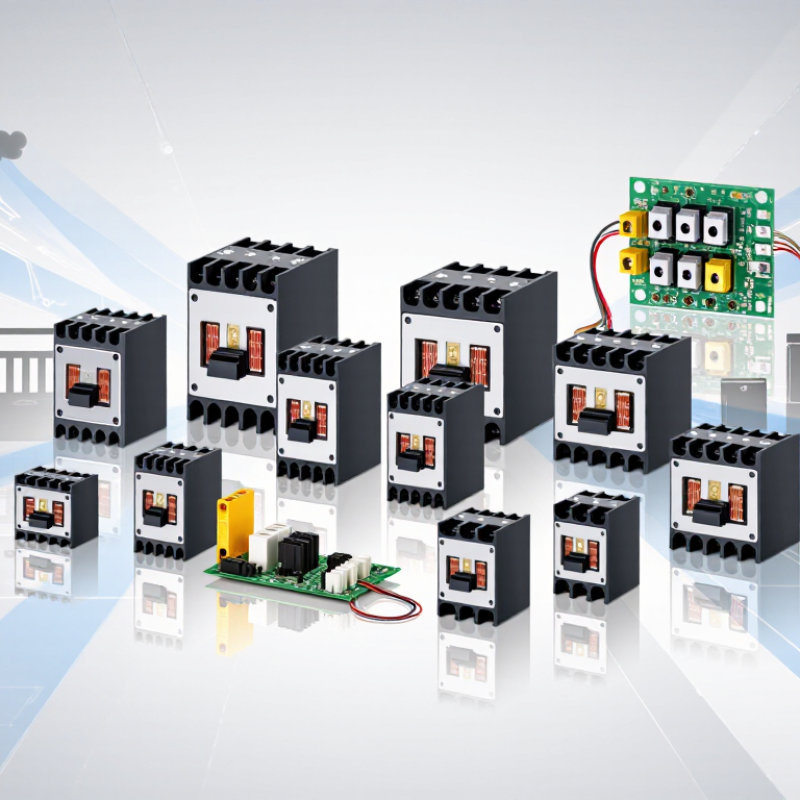
Electric Heat Relays: Definition, Functions, and Main Types
Electric heat relays are switching devices designed to control resistive heating loads. They receive a low-power signal and regulate a higher-current circuit safely. In practical systems, they control heaters in ovens, HVAC cabinets, water tanks, and industrial equipment. A thermostat may send the signal, while the relay manages the heating element. This separation protects control circuits from excessive current. It also supports stable temperature management.
Mechanical relays use physical contacts to open and close the circuit. They are economical and easy to inspect, but contacts can wear or create a small arc. Solid-state relays use semiconductors instead. They switch quietly, respond quickly, and suit frequent cycling. However, they generate heat and may require a heat sink. Single-phase models fit smaller loads, while three-phase relays handle larger industrial heaters. The choice is not always obvious. Ambient temperature, switching frequency, voltage, and fault protection can change the result.
Tips: Check the heater’s voltage and current before selecting a relay. Leave a safety margin rather than matching the rating exactly. Confirm the relay’s control input, terminal layout, and enclosure requirements. In field work, loose terminals often cause overheating. I have found that installation quality can matter as much as the relay type. A technically correct selection can still perform poorly when ventilation is ignored.

An electric heat relay connects a low-power control signal to a higher-power heating circuit. A temperature controller reads an RTD, thermocouple, or thermistor. When the measured temperature falls below the setpoint, it sends a signal to the relay. The relay then energizes the heater. Simple, but not effortless.
In practical heating panels, solid-state relays often switch power at every control cycle. Zero-cross switching can reduce electrical noise and limit sudden current peaks. Mechanical relays may suit slower applications, although their contacts eventually wear. The choice depends on load current, switching frequency, ambient temperature, and required service life. Always check the relay’s real thermal rating, not only its label.
Heat is the quiet problem. A relay carrying heavy current can become dangerously hot without visible damage. Installers should use the specified heatsink, tighten terminals correctly, and allow space for airflow. A separate over-temperature device adds protection if the controller, sensor, or relay fails. In field testing, measuring voltage drop and surface temperature can reveal weak connections early. I have found that a perfect wiring diagram can still perform poorly after rushed installation. That detail deserves more attention. Even a small heater circuit needs grounding, suitable isolation, and verified protection before regular operation.
When comparing global electric heat relay manufacturers, start with application evidence, not catalog claims. Relay selection depends on load type, switching frequency, ambient temperature, and failure consequences. IEC 61810-1 provides a useful reference for electromechanical relay performance and testing. For heating equipment, buyers should also examine insulation coordination, contact endurance, terminal temperature rise, and protection against inrush current.
Look for measured data under realistic conditions. A relay tested at 25°C may behave differently inside a 70°C control cabinet. The International Energy Agency reported that global electricity demand grew by about 4% in 2024, increasing pressure on efficient and dependable electrical equipment. Manufacturers should therefore disclose switching losses, derating curves, thermal resistance, and expected service life. Field-return rates matter more than polished brochures. Ask for traceability from batch number to test records.
Supply reliability deserves equal attention. The World Bank’s Commodity Markets Outlook has highlighted continuing volatility in industrial material prices, which can affect component costs and lead times. Compare dual-source strategies, production-site resilience, quality audits, and technical support across regions. Certification is not enough. Check whether approvals apply to the exact relay series and operating conditions. A spreadsheet can still mislead. I would also test samples through repeated heat cycles, vibration, and abnormal-load conditions before approving a supplier. That extra work may expose weaknesses hidden by impressive nominal ratings.
This standards-oriented scorecard shows the relative importance of key criteria when comparing electric heat relay manufacturers. The 100-point weighting emphasizes rated-load capability, electrical endurance, safety compliance, coil efficiency, switching performance, operating temperature, and product traceability. Evaluation areas are aligned with commonly referenced relay and electrical safety frameworks, including IEC 61810-1, IEC 60664-1, and UL 508.
2026 Leading Electric Heat Relay Manufacturers Worldwide
The leading electric heat relay manufacturers in 2026 are judged by engineering evidence, not attractive catalogs. Reliable producers document switching capacity, coil voltage, insulation strength, and thermal performance. For industrial heaters, a 24V control coil and a 30A resistive-load rating are common reference points. Yet ratings must match real operating conditions.
Manufacturers across Asia, Europe, and North America are improving relay designs for ovens, HVAC systems, molding equipment, and laboratory heaters. Strong factories use automated contact assembly, optical inspection, and recorded end-of-line testing. They also provide traceable batches, clear datasheets, and support for IEC or UL-related requirements. A relay that survives repeated switching at elevated temperatures deserves more trust than one supported only by marketing language.
Field experience still reveals gaps. Some suppliers publish impressive cycle counts but explain little about ambient temperature or load type. That matters. A relay tested at room temperature may behave differently inside a crowded control cabinet. Buyers should request sample testing, noise measurements, terminal-temperature data, and failure analysis records. I would also inspect replacement availability and technical response time before approving a supplier. No manufacturer is perfect; even a well-built relay can fail after poor wiring, insufficient ventilation, or incorrect load selection.
| Manufacturing Region | Common Electric Heat Relay Formats | Typical Switching Capacity | Typical Control Inputs | Heat Management Features | Common Compliance Frameworks | Typical Application Areas |
|---|---|---|---|---|---|---|
| East Asia | Solid-state relays, single-phase and three-phase heater controllers, DIN-rail modules | Approximately 10–100 A for common heater-control modules; higher-current assemblies may use external cooling | 3–32 V DC, 4–32 V DC, 5 V DC, and 24 V AC/DC options are widely used | Aluminum heat sinks, thermal pads, derating curves, zero-cross switching, and fan-assisted cooling on high-current designs | IEC 62314, IEC 60947-4-3, UL and CSA requirements where applicable | Industrial ovens, injection molding, HVAC equipment, packaging machinery, and semiconductor equipment |
| Europe | Industrial contactors, hybrid relays, solid-state switching units, and modular control components | Common contactor ranges from about 9 A to 800 A AC-1, depending on product class and duty | 24 V DC is common in control systems; 24, 110, 120, 220, and 230 V AC coils are also used | Low-loss semiconductor stages, replaceable heat sinks, forced-air options, and integrated thermal monitoring | IEC 60947 series, IEC 61810-1, IEC 62314, CE-related requirements, and RoHS | Process heating, rail systems, renewable-energy equipment, building automation, and machine tools |
| North America | Power relays, definite-purpose contactors, solid-state relays, and panel-mounted heater controllers | Common control products cover roughly 10–100 A; larger contactor and power-control systems are available | 5, 12, and 24 V DC inputs are common; 24, 120, and 240 V AC control circuits are also used | Thermal compound, finned heat sinks, panel ventilation, short-circuit protection, and load derating | UL 508, UL 60947-4-1, CSA standards, NEC installation practices, and RoHS where required | Commercial HVAC, food-service equipment, water heating, industrial furnaces, and control panels |
| South Asia | Electromechanical relays, modular contactors, heater-duty relays, and economical solid-state relay modules | Typically 5–40 A for compact relay products and approximately 9–100 A for common contactor-based solutions | 12 and 24 V DC control circuits are widely used, with AC coil variants for industrial panels | Ventilated enclosures, aluminum heat sinks, thermal fuses, and application-specific current derating | IEC 61810-1, IEC 60947 series, applicable national standards, and RoHS requirements | Textile machinery, commercial ovens, plastic processing, water pumps, and agricultural equipment |
| Southeast Asia | PCB relays, DIN-rail solid-state relays, contactor assemblies, and compact temperature-control modules | Approximately 5–75 A for many compact products, with higher ratings available in cabinet-mounted systems | 3–32 V DC inputs and 24 V AC/DC industrial control inputs are frequently specified | Compact heat sinks, zero-cross operation, conformal coating options, and cabinet airflow management | IEC 62314, IEC 60947-4-3, regional safety marks, and EMC requirements | Electronics assembly, air-conditioning systems, commercial kitchens, packaging, and factory automation |
| Middle East and Africa | Panel-mounted power relays, contactors, HVAC heater relays, and industrial solid-state switching units | Common installations use 10–100 A products, selected according to ambient temperature and enclosure conditions | 24 V DC controls are common; 110, 120, 220, and 230 V AC options are used according to local systems | Oversized heat sinks, high-temperature derating, enclosure ventilation, and dust-resistant cabinet designs | IEC 60947 series, IEC 62314, local electrical codes, and project-specific certification requirements | HVAC, desalination, water treatment, oil and gas support equipment, and industrial process heating |
| Latin America and Oceania | Industrial relays, contactors, heater-control modules, and packaged temperature-control panels | Generally 10–100 A for standard heater circuits, with higher ratings achieved through multi-pole or staged switching | 12 and 24 V DC inputs are common; 110–120 V and 220–240 V AC systems are widely encountered | Heat sinks, thermal protection, staged load control, enclosure ventilation, and circuit-level fusing | IEC 61810-1, IEC 60947 series, national wiring rules, and applicable approval marks | Agricultural processing, mining equipment, food production, HVAC, and general industrial automation |
Technical ratings are representative industry ranges. Final selection should be based on load type, duty cycle, ambient temperature, heat dissipation, insulation requirements, short-circuit protection, and applicable local regulations.
In 2026, leading electric heat relay manufacturers are judged by more than production scale. Their relays support ovens, HVAC systems, water heaters, heat pumps, and industrial furnaces. Each application creates different demands. A household heater may need quiet switching, while a furnace requires high endurance under repeated thermal cycles. In field testing, cabinet temperature often matters as much as the relay rating.
Safety begins with correct standards and documented testing. IEC 60730-1 can guide automatic electrical control requirements, while regional certifications may include UL, CSA, or CE-related conformity obligations. Certification must match the actual product configuration, not only the manufacturer’s general range. Check insulation, creepage distance, dielectric strength, grounding, and resistance to abnormal heating. A rated relay can still fail when ventilation is poor.
Selection should start with voltage, current, load type, inrush current, switching frequency, and ambient temperature. Resistive heaters usually suit solid-state relays, but heat sinks and derating remain essential. Electromechanical relays may offer lower heat loss, yet contact wear becomes a practical concern. I would not trust a datasheet alone. Ask for lifecycle data, thermal curves, failure-rate evidence, traceability, and production quality records. Verify control-signal compatibility and include an independent over-temperature cut-off. Small oversights become expensive.


For those larger-sized parts, or smaller quantity runs, we have 2 independent powder coat booths and ovens. The quality, durability and affordability of today’s powder coating finishes make this the process of choice for world-class companies.
Powder coating advantages over other forms of coating are many. Materials used in the Powder coating process can be metals and non-metals that come in a multitude of thicknesses, textures, colors, etc. Another of Powder coating’s biggest advantages over conventional coatings is its ability to create finishes in many different textures. Powder Coating Booths allow us the ability to apply these advantages to large products.
Tri-State Fabricators runs a full-service conveyor line for painting. Wet painting can provide protection or decoration to many different part styles. From start to finish, every project is easier to undergo random and point-based inspection by our skilled painting team.
Advantages to our Wet Paint Line are these lines start with product prep and ends with a thorough inspection of a high quality finished product. Our ability to complete large and small projects with a superior finish and doing so in a timely and economical fashion. This passes along the savings in production to our customers. When powder coating ins not an option, our Wet Paint Line gets the job done right the first time.
When the parts get big and heavy we roll-out our custom paint racks and oversize booth. By utilizing our partnerships with all the major paint brands, we can match virtually any color with wet paint.
The advantages of having access to a Wet Paint Booth are many. Large projects of many different shapes can be loaded into the booth. The Wet Paint Booth offers an environment that is much more controlled than a typical parts painting operation.
Not only are they used because of their controlled environment, but they’re are also advantageous when it comes to applying paint to parts that are needed in industries that require specialty coatings such as medical, aerospace, etc.
Our military forces have some very high standards when it comes to the finish of their vehicles and equipment. From the first pre-treatment step to final coat, it takes a great deal of knowledge and experience to protect the men and women of our armed forces. They deserve only the best, and Tri-State Fabricators provides it.
All of our processes are closely monitored by our staff and management teams. Both of which are highly trained in the processes of metal fabrication and finishing. Tri-State Fabricators’ goal is to always fully satisfy each and every customer, including the military. We will always put a 110% into what we do.
Abrasive media blasting is an excellent way to remove old paint, rust, and increase the paint/powder adhesion. Glass beads produce a much smoother and brighter finish than angular abrasives; leaving the part clean yet without any dimensional change. Chemically inert and environmentally friendly, we can recycle our beads approximately 30 times; making them a more preferred method of metal cleaning or surface finishing.
Advantages to Glass Bead Blasting are many. Glass bead blast media is used when a project is needing rough surfaces need to become smooth for applications of coatings such as paint. It is typically used to clean paint and rust from a product surface without deforming the surface it is being used on. Overall, compared to many other blasting media, Glass Bead Blasting is a very economical choice and those savings are always passed on to our customers.
Tri-State Fabricators utilize a zinc phosphate wash to clean and etch the material to ensure the best paint adhesion possible. The unique design of our 3-stage wash system does the work like a 5-stage. From Cleaning and rinsing to conversion coating and post-treatment, Our Part Washing process is a complete service and works throughout the fabrication service and the finishing service.
Along with the previously mentioned benefits, Curing is a vital chemical reaction that leaves the product finish hard and relatively safe from mild abrasion and aggressive corrosion. This process can be done in more than one way; ambient air-dry or in curing ovens at temps that exceed 240°.
From fixing paint mistakes (someone else’s of course) to simply cleaning our paint line hooks, our burn-off oven is put to good use. After a quick burn-off, a little clean up, and a fresh coat of paint, your parts will look better than new.
Why does our Burn-Off Oven work so well? Because super heating the air around parts turns the materials into ashes. From paint and powder coatings to rubber and machining oils, high temps do the job without degrading the integrity of the part.
Masking is a vital part of producing high quality products. We have die-cut masking patterns to protect machined surfaces as well as a wide range of plugs and caps to protect threaded holes and bolts. We provide permanent and temporary masking.
Masking allows the selected sections of a product to be protected from a fabrication or finishing service. This can be with both chemicals when etching and tapes, paints when only finishing just a section of the product. Masking is great in aiding the customization process of a project.
Screen printing is a photographic process that transfers artwork onto a porous nylon screen which allows colored ink to flow through the screen and be deposited on an aluminum or plastic component. We can generally have just about any design created onto a screen for your parts.
Some of the advantages of Screen Printing are, brand recognition for your business displaying on your products, assembly instructions, product warnings/hazards, etc. Tri-State Fabricators produces Screen Printing of the highest quality so you know it’s durable.
Metal Finishing is the art of treating the exterior portion of product, often metal but can also be made of other materials, so that the surface is clean and free of any debris. Then the process of applying coats or either paint of powder coat takes place. This coating process improves the quality of the product in both appearance and resistance to wear and corrosion.
Tri-State Fabricators, Inc., understands that a project typically isn’t complete until a high-quality finish has been added to your product. This is why our painting and powder coating teams continuously inspect the products throughout the Metal Finishing process.

