


Choosing a Hardox Liner is not simply a matter of selecting the highest hardness grade. Buyers must match the plate to the material, impact level, sliding distance, and maintenance conditions inside the equipment. A chute carrying fine, abrasive ore faces different wear from a crusher receiving large, falling rock. The difference matters.
Materials-selection expert Michael F. Ashby’s work offers a useful principle: choose for operating conditions, not one impressive property. This is a paraphrase of his broader materials-selection approach, not a direct quotation about Hardox. For buyers comparing Hardox 400, 450, 500, or higher-hardness options, that principle means weighing wear resistance against impact toughness, fabrication needs, and replacement access. A harder plate may last longer in some sliding-wear applications, yet perform poorly where repeated impact dominates. There is no universal winner.
This guide compares common Hardox Liner types for global buyers, including typical uses, selection trade-offs, and practical purchasing checks. It also considers plate thickness, drawings, welding procedures, and the consistency of supplier documentation. Ask for the exact grade and product data sheet. Confirm dimensions before production. Small mismatches can delay installation.
Real service data is valuable, but it is not always complete. Buyers may need to make a provisional choice, then review wear patterns after operation. That takes discipline. A sensible selection balances expected service life, downtime, fabrication, and total replacement cost—not hardness alone.
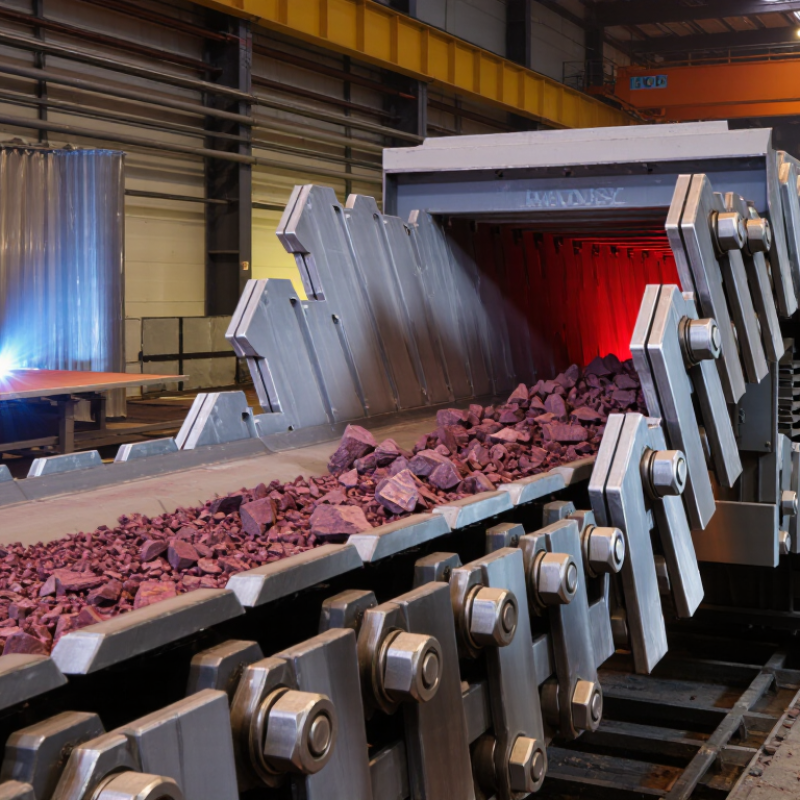
Abrasion-resistant steel liners are replaceable plates fitted inside chutes, hoppers, truck bodies, and similar equipment. They take the scraping and impact that would otherwise wear the supporting structure. Their hardness helps resist cutting by rock and ore, while suitable toughness helps limit cracking under impact. A liner is not simply “harder is better.” Plate thickness, impact size, sliding angle, and moisture all affect service life. Small details matter. A loose bolt can become a wear point, and a poorly fitted seam can catch material.
World Steel Association reported global crude steel production of 1,882.6 million tonnes in 2024, illustrating the scale of material processing that depends on reliable handling equipment. This figure is not a liner-life estimate; actual wear varies widely by site. For a practical comparison, engineers can use ASTM G65 dry-sand/rubber-wheel abrasion testing, then check results against operating conditions. The test does not reproduce every combination of wet fines, sharp rock, and sudden impact. That limitation is easy to overlook. Inspect liners for thinning, cracked edges, and movement, and record measurements at repeatable points. Those records help teams choose a suitable grade and replacement interval without assuming that a laboratory result guarantees field performance.

Wear-resistant steel liners differ most clearly by shape. Flat plates suit straight hopper walls, truck beds, and bin floors. They are easier to measure and replace. Curved liners follow chutes, transfer points, and rounded corners, where material changes direction. That fit can reduce exposed gaps, but forming and installation need careful control. Small misalignments matter.
Design affects both wear life and maintenance. One-piece liners create fewer joints, yet they can be heavy and awkward to handle. Modular panels are easier to lift and replace, especially inside confined equipment. Bolted layouts allow access, while countersunk fasteners can reduce snag points. Check clearances around seams. A proud edge may catch rocks or scrap.
Application should guide selection more than a hardness number alone. Fine, fast-moving material often causes steady sliding abrasion; large lumps can create concentrated impact. A chute handling wet aggregate may also wear differently from a dry bin, because buildup changes the flow path. Measure the worn areas, note the material size, and inspect support spacing before specifying plate thickness. There is no perfect layout. Field wear rarely follows the drawing exactly, so the first inspection should test the assumptions.
Choosing a wear-plate grade starts with the material, impact energy, and sliding distance—not hardness alone. Typical commercial classes include 400, 450, and 500 HBW. For fine, dry abrasion with limited impact, 450 HBW often offers a practical balance. In severe sliding wear, 500 HBW may last longer, but can be less forgiving during forming and repair. Check the supplier’s certified hardness range and welding guidance.
Test data helps, but it has limits. ASTM G65 abrasion reports compare material loss by volume under controlled sand-and-wheel conditions; they do not predict service life in every chute. ISO 6506-1 specifies the Brinell hardness test, reported as HBW. Hardness is not toughness. A plate that performs well against sliding grit may crack under repeated rock impact. That distinction matters.
For thin liners in supported, low-impact chutes, 6–10 mm can be a trial range; heavy impact zones may need 12–25 mm or replaceable sections. These are starting points, not design specifications. Measure the existing liner’s wear, note feed size, and inspect welds and backing support. A common mistake is adding thickness everywhere: it increases dead load and may only move the failure point. Test one representative section first; field conditions are messier than lab data.
| Operating condition | Generic hardness class | Typical starting thickness | Suitable liner configuration | Selection notes |
|---|---|---|---|---|
| Fine abrasive material with low impact, such as sand, grain, or dry powder | Approximately 450–500 HBW | 6–12 mm | Flat or lightly formed plate liners | A harder surface can improve sliding-abrasion resistance. Confirm that the supporting structure can carry the liner and fasteners. |
| General-purpose wear with moderate impact, such as aggregate chutes and truck bodies | Approximately 400–450 HBW | 8–16 mm | Flat plates or formed liners with replaceable sections | A balanced choice for wear and toughness. Thickness depends on impact energy, material flow, and expected service life. |
| Coarse rock or ore with frequent, heavy impact | Approximately 400–450 HBW | 12–25 mm | Thicker plate, supported panels, or segmented liners | Prioritize toughness and secure support. Higher hardness is not automatically better where severe impact may cause cracking or damage. |
| Severe sliding abrasion with limited impact, such as transfer points handling abrasive fines | Approximately 500–550 HBW | 6–12 mm | Replaceable flat or formed wear panels | Use only when impact is controlled and fabrication requirements are compatible with the plate supplier’s guidance. |
| Wet slurry or damp abrasive material | Approximately 400–500 HBW, selected for impact level | 8–20 mm | Smooth, well-supported panels with sealed joints where practical | Wear-resistant plate is not necessarily corrosion-resistant. Assess slurry chemistry and consider a separate corrosion-control solution if needed. |
| Chutes, hoppers, and bins with localized wear or difficult access | Approximately 400–500 HBW, based on impact and abrasion | 8–16 mm | Modular or bolted wear tiles and panels | Smaller replaceable sections can simplify maintenance. Design joints and fasteners to avoid material snagging and premature edge wear. |
| Repeated forming or complex liner shapes | Typically around 400 HBW; verify the specific product’s forming limits | 6–12 mm, subject to bend radius and process | Formed plate or segmented assemblies | Bending limits depend on thickness, hardness, plate direction, tooling, and edge preparation. Obtain product-specific fabrication instructions. |
The hardness classes and thicknesses shown are general selection ranges, not guaranteed specifications. Final selection should account for impact energy, abrasive material, liner support, fabrication method, operating temperature, and required service life. Confirm plate properties and processing limits with the material supplier and equipment designer.
Selecting a wear-resistant steel liner starts with the material moving through the chute or hopper. Sharp crushed rock cuts differently from damp sand or recycled aggregate. Note particle size, moisture, drop height, and contact speed before choosing a grade or thickness. High hardness can slow sliding abrasion, but it does not automatically prevent cracking under repeated impact. Where rocks strike one small area, a tougher plate may serve better than the hardest option. The trade-off is real.
Tips: Inspect worn liners, not just drawings. Deep grooves suggest abrasion; chipped edges may point to impact or poor support. Check plate specifications and confirm that cutting, welding, and forming requirements suit the installation.
Match thickness to the wear pattern and available space. An overly thick liner can reduce flow clearance and add weight to supports. Ask suppliers for documented mechanical properties and guidance for the intended service conditions. If possible, trial a small section and record operating hours before replacement. A tidy calculation can still miss uneven loading, so review the liner after the first service period. Small changes in feed angle can shift wear noticeably.
When sourcing Hardox liners in 2026, start with the job, not the grade name. Note the material being handled, impact height, moisture, and operating temperature. A chute carrying sharp rock may need a different balance of hardness and toughness than a conveyor handling softer material. Check the specified thickness against the liner drawing, then confirm hole positions, bend angles, and tolerances with the supplier. A mismatch of a few millimeters can complicate installation.
Ask for material test documentation that matches the delivered plates, including grade, thickness, and heat or batch identification. Clarify whether cutting, drilling, and forming are included, and how edges are finished. Compare delivery terms and lead times, too; a low quotation is less useful if replacement sections arrive after a shutdown. Paperwork can look complete while a liner still fails to fit. It is worth checking the drawing twice.
Tips: Share photos and measurements of the existing installation, not just its overall dimensions. Confirm packing protects cut edges during transport, and agree on how defects or dimensional differences will be handled. Keep one approved sample or drawing revision for future orders. Small details matter.
Typical hardness ranges for common abrasion-resistant steel plate grades (Brinell hardness, HBW)
Hardness ranges shown are representative and can vary by producer, thickness, and product specification. Use hardness as an initial screen—not the sole selection criterion. Before sourcing, confirm the material test certificate, plate thickness, impact toughness, weldability requirements, and suitability for the operating environment.


For those larger-sized parts, or smaller quantity runs, we have 2 independent powder coat booths and ovens. The quality, durability and affordability of today’s powder coating finishes make this the process of choice for world-class companies.
Powder coating advantages over other forms of coating are many. Materials used in the Powder coating process can be metals and non-metals that come in a multitude of thicknesses, textures, colors, etc. Another of Powder coating’s biggest advantages over conventional coatings is its ability to create finishes in many different textures. Powder Coating Booths allow us the ability to apply these advantages to large products.
Tri-State Fabricators runs a full-service conveyor line for painting. Wet painting can provide protection or decoration to many different part styles. From start to finish, every project is easier to undergo random and point-based inspection by our skilled painting team.
Advantages to our Wet Paint Line are these lines start with product prep and ends with a thorough inspection of a high quality finished product. Our ability to complete large and small projects with a superior finish and doing so in a timely and economical fashion. This passes along the savings in production to our customers. When powder coating ins not an option, our Wet Paint Line gets the job done right the first time.
When the parts get big and heavy we roll-out our custom paint racks and oversize booth. By utilizing our partnerships with all the major paint brands, we can match virtually any color with wet paint.
The advantages of having access to a Wet Paint Booth are many. Large projects of many different shapes can be loaded into the booth. The Wet Paint Booth offers an environment that is much more controlled than a typical parts painting operation.
Not only are they used because of their controlled environment, but they’re are also advantageous when it comes to applying paint to parts that are needed in industries that require specialty coatings such as medical, aerospace, etc.
Our military forces have some very high standards when it comes to the finish of their vehicles and equipment. From the first pre-treatment step to final coat, it takes a great deal of knowledge and experience to protect the men and women of our armed forces. They deserve only the best, and Tri-State Fabricators provides it.
All of our processes are closely monitored by our staff and management teams. Both of which are highly trained in the processes of metal fabrication and finishing. Tri-State Fabricators’ goal is to always fully satisfy each and every customer, including the military. We will always put a 110% into what we do.
Abrasive media blasting is an excellent way to remove old paint, rust, and increase the paint/powder adhesion. Glass beads produce a much smoother and brighter finish than angular abrasives; leaving the part clean yet without any dimensional change. Chemically inert and environmentally friendly, we can recycle our beads approximately 30 times; making them a more preferred method of metal cleaning or surface finishing.
Advantages to Glass Bead Blasting are many. Glass bead blast media is used when a project is needing rough surfaces need to become smooth for applications of coatings such as paint. It is typically used to clean paint and rust from a product surface without deforming the surface it is being used on. Overall, compared to many other blasting media, Glass Bead Blasting is a very economical choice and those savings are always passed on to our customers.
Tri-State Fabricators utilize a zinc phosphate wash to clean and etch the material to ensure the best paint adhesion possible. The unique design of our 3-stage wash system does the work like a 5-stage. From Cleaning and rinsing to conversion coating and post-treatment, Our Part Washing process is a complete service and works throughout the fabrication service and the finishing service.
Along with the previously mentioned benefits, Curing is a vital chemical reaction that leaves the product finish hard and relatively safe from mild abrasion and aggressive corrosion. This process can be done in more than one way; ambient air-dry or in curing ovens at temps that exceed 240°.
From fixing paint mistakes (someone else’s of course) to simply cleaning our paint line hooks, our burn-off oven is put to good use. After a quick burn-off, a little clean up, and a fresh coat of paint, your parts will look better than new.
Why does our Burn-Off Oven work so well? Because super heating the air around parts turns the materials into ashes. From paint and powder coatings to rubber and machining oils, high temps do the job without degrading the integrity of the part.
Masking is a vital part of producing high quality products. We have die-cut masking patterns to protect machined surfaces as well as a wide range of plugs and caps to protect threaded holes and bolts. We provide permanent and temporary masking.
Masking allows the selected sections of a product to be protected from a fabrication or finishing service. This can be with both chemicals when etching and tapes, paints when only finishing just a section of the product. Masking is great in aiding the customization process of a project.
Screen printing is a photographic process that transfers artwork onto a porous nylon screen which allows colored ink to flow through the screen and be deposited on an aluminum or plastic component. We can generally have just about any design created onto a screen for your parts.
Some of the advantages of Screen Printing are, brand recognition for your business displaying on your products, assembly instructions, product warnings/hazards, etc. Tri-State Fabricators produces Screen Printing of the highest quality so you know it’s durable.
Metal Finishing is the art of treating the exterior portion of product, often metal but can also be made of other materials, so that the surface is clean and free of any debris. Then the process of applying coats or either paint of powder coat takes place. This coating process improves the quality of the product in both appearance and resistance to wear and corrosion.
Tri-State Fabricators, Inc., understands that a project typically isn’t complete until a high-quality finish has been added to your product. This is why our painting and powder coating teams continuously inspect the products throughout the Metal Finishing process.

