


Choosing the right Peel Tensile Testing Machine in 2026 requires more than comparing prices or maximum load ratings. Engineers must examine the material, adhesive, peel angle, test speed, fixture design, and required reporting standards. A machine that performs well on flexible film may produce misleading results on labels, laminates, medical tapes, or battery components.
Dr. John Comyn, a widely cited adhesion scientist, describes adhesion as “the state in which two surfaces are held together by interfacial forces.” That principle remains practical inside every testing laboratory. The machine must apply a stable force while the bonded layers separate at a controlled speed. Small details matter. A misaligned specimen can twist. A rough clamp can damage the backing. An unstable grip can distort the final curve.
This guide explains how to compare a Peel Tensile Testing Machine for modern production and research needs. Load capacity is important, but it is not everything. Check force resolution, travel range, software functions, calibration records, safety features, and fixture compatibility. Ask whether the instrument supports ASTM, ISO, or company-specific methods. Also inspect the service network. A sophisticated machine becomes a problem when replacement parts take months.
Perfect testing does not exist. Even careful operators can introduce variation. That weakness deserves attention, not concealment. The strongest choice combines repeatable mechanics, clear data, practical maintenance, and trained users. Before selecting a model, define the real specimen and failure mode. The best machine is the one that produces useful evidence repeatedly.
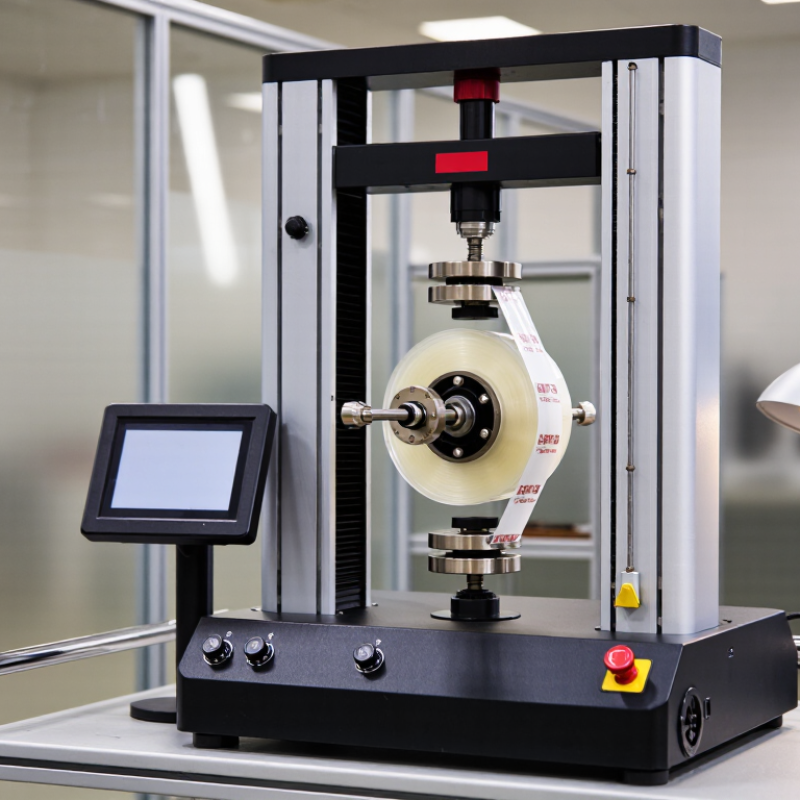
Selecting a peel tensile testing machine starts with the test angle. A 90° test suits many rigid-to-flexible bonded assemblies. A 180° test is common for tapes, labels, films, and laminated materials. The fixture must hold the sample evenly. Small alignment errors can change the peeling path and distort results.
Define the expected force range before comparing machines. Estimate the lowest and highest loads from real samples, not only supplier data. A machine rated too high may lose sensitivity at low forces. A narrow range can overload during unexpected adhesive failure. Choose a load cell that keeps normal results within its middle working range. That detail is easy to overlook.
Speed also affects measured peel strength. Faster movement may increase resistance, especially with viscoelastic adhesives. Set a controllable speed that matches your internal method or relevant standard. Record speed, angle, sample width, conditioning time, and temperature with every test. Otherwise, two numbers may look comparable when they are not. I have learned that clean graphs do not guarantee sound testing. Slipping clamps, uneven cuts, and inconsistent backing can quietly weaken repeatability. Check calibration regularly, inspect the fixtures, and keep raw force curves for review.

2026 Top Peel Tensile Testing Machine: How to Choose?
Choosing a peel tensile testing machine starts with the test method, not the display size. ASTM D3330 evaluates pressure-sensitive tape adhesion, commonly using a controlled 180-degree peel. The machine needs steady speed, suitable backing plates, and a load cell matched to low peel forces. A soft roller and clean test panel can change results more than expected.
ASTM F88 measures seal strength in flexible barrier materials. Its fixture must hold the seal without crushing the package film. Check jaw alignment, grip width, separation speed, and unsupported tail length. Operators should record seal temperature, dwell time, and conditioning history. Small changes in these details may create a large force variation. I have seen tidy specimens produce inconsistent curves because the cut edges were uneven.
ISO 8510-2 also uses peel testing for bonded assemblies, but the specimen geometry and test setup differ. The machine should provide stable travel, accurate angle control, and enough stroke for continuous measurement. Review the required peel direction and speed in the current standard edition. Do not assume one fixture serves every method. It may work. It may also introduce bending.
Select a calibrated load cell near the expected force range. Confirm traceable calibration, emergency stopping, software data export, and environmental control. A high-capacity frame can look professional while losing resolution at small loads. That is an easy mistake. Run repeat specimens, inspect the failure mode, and question unusually smooth data. Real materials are rarely perfectly consistent.
Choosing a 2026 top peel tensile testing machine requires more than reading its maximum load. The key comparison is accuracy of ≤±0.5% and a speed range of 0.001–500 mm/min. This range supports slow adhesive separation tests and faster packaging evaluations. However, accuracy should be checked across the working load, not only at full capacity.
In practical testing, a stable load cell helps reveal small force changes during peeling. A precise drive system also prevents uneven movement, especially at 0.001 mm/min. Watch the specimen closely. A loose grip, angled strip, or wrinkled film can distort results more than the machine itself. Adjustable peel fixtures should hold consistent angles, such as 90 or 180 degrees, while keeping the sample centered.
Calibration records, traceable weights, and repeatability data show whether the instrument deserves confidence. Testing software should capture force, displacement, speed, and peak values without hiding abnormal sections. A broad speed range sounds impressive, but it may not perform equally well at every setting. I would request results from low-speed and high-speed trials before purchasing. That step is easy to overlook. Temperature and humidity can also change adhesive behavior, so controlled test conditions matter. A machine with excellent specifications still needs trained operators, suitable fixtures, and regular verification.
2026 Top Peel Tensile Testing Machine: How to Choose?
Choose capacity before comparing software or frame size. A 5 N load cell suits thin films, weak seals, and low-tack laminates. A 100 N cell handles most flexible packaging bonds. Strong multilayer laminates may require 500 N. Oversizing can reduce usable resolution. That mistake is common.
ASTM D3330/D3330M commonly specifies a 25 mm strip and 300 mm/min peel speed for pressure-sensitive tape. ISO 8510-2 covers 180-degree peel testing for bonded flexible materials. Match the machine’s speed range to your selected method. Use a load cell where expected force stays near its middle range, not at the limit. A 500 N cell testing a 6 N peel may hide small failure differences.
Fixtures matter as much as capacity. Choose smooth, parallel grips for films, and self-aligning fixtures for laminates that curl. Keep the peel angle stable. I have seen clean-looking results change after only slight jaw misalignment. Check fixture width against specimen width. Record temperature, humidity, peel rate, and failure mode. ASTM F88/F88M data also shows why seal width and gripping alignment affect measured seal strength. A practical test can still be imperfect. Recheck the method when the curve looks unusually smooth.
Choose a load cell and fixture combination that keeps the expected peel force comfortably below the sensor capacity while maintaining accurate measurement resolution.
The chart compares common load-cell capacities with practical material categories used in 90° and 180° peel testing. Select the smallest capacity that safely covers the expected peak force, and use a suitable film, laminate, or flexible-packaging fixture.
Choosing a peel tensile testing machine for 2026 requires more than checking maximum force. In daily laboratory work, small setup errors can distort a clean-looking result. Confirm calibration records, load-cell range, displacement accuracy, and peel-angle control. Ask whether calibration is traceable to recognized standards. A certificate alone is not enough. Review the stated uncertainty.
The software should record force, travel, speed, specimen ID, operator, and environmental conditions. Look for protected audit trails and clear raw-data export. Automatic calculations save time, but they can hide a wrong gauge length. Run a known reference specimen before accepting a new method. Then inspect the graph. A smooth curve may still be wrong. Safety also deserves close attention, including guarded moving parts, emergency stops, overload protection, and practical operator training.
For an ISO/IEC 17025-oriented laboratory, procedures must link equipment, methods, personnel competence, and records. ISO/IEC 17025 does not make a machine compliant by itself. Ask how deviations are handled, not only how reports are printed. Keep maintenance history beside calibration and verification results. During an assessment, evidence matters more than confident claims. Teams sometimes trust software defaults too quickly. That habit deserves correction. A useful purchase leaves enough evidence for another technician to repeat the test, question the settings, and find an inconvenient error.


For those larger-sized parts, or smaller quantity runs, we have 2 independent powder coat booths and ovens. The quality, durability and affordability of today’s powder coating finishes make this the process of choice for world-class companies.
Powder coating advantages over other forms of coating are many. Materials used in the Powder coating process can be metals and non-metals that come in a multitude of thicknesses, textures, colors, etc. Another of Powder coating’s biggest advantages over conventional coatings is its ability to create finishes in many different textures. Powder Coating Booths allow us the ability to apply these advantages to large products.
Tri-State Fabricators runs a full-service conveyor line for painting. Wet painting can provide protection or decoration to many different part styles. From start to finish, every project is easier to undergo random and point-based inspection by our skilled painting team.
Advantages to our Wet Paint Line are these lines start with product prep and ends with a thorough inspection of a high quality finished product. Our ability to complete large and small projects with a superior finish and doing so in a timely and economical fashion. This passes along the savings in production to our customers. When powder coating ins not an option, our Wet Paint Line gets the job done right the first time.
When the parts get big and heavy we roll-out our custom paint racks and oversize booth. By utilizing our partnerships with all the major paint brands, we can match virtually any color with wet paint.
The advantages of having access to a Wet Paint Booth are many. Large projects of many different shapes can be loaded into the booth. The Wet Paint Booth offers an environment that is much more controlled than a typical parts painting operation.
Not only are they used because of their controlled environment, but they’re are also advantageous when it comes to applying paint to parts that are needed in industries that require specialty coatings such as medical, aerospace, etc.
Our military forces have some very high standards when it comes to the finish of their vehicles and equipment. From the first pre-treatment step to final coat, it takes a great deal of knowledge and experience to protect the men and women of our armed forces. They deserve only the best, and Tri-State Fabricators provides it.
All of our processes are closely monitored by our staff and management teams. Both of which are highly trained in the processes of metal fabrication and finishing. Tri-State Fabricators’ goal is to always fully satisfy each and every customer, including the military. We will always put a 110% into what we do.
Abrasive media blasting is an excellent way to remove old paint, rust, and increase the paint/powder adhesion. Glass beads produce a much smoother and brighter finish than angular abrasives; leaving the part clean yet without any dimensional change. Chemically inert and environmentally friendly, we can recycle our beads approximately 30 times; making them a more preferred method of metal cleaning or surface finishing.
Advantages to Glass Bead Blasting are many. Glass bead blast media is used when a project is needing rough surfaces need to become smooth for applications of coatings such as paint. It is typically used to clean paint and rust from a product surface without deforming the surface it is being used on. Overall, compared to many other blasting media, Glass Bead Blasting is a very economical choice and those savings are always passed on to our customers.
Tri-State Fabricators utilize a zinc phosphate wash to clean and etch the material to ensure the best paint adhesion possible. The unique design of our 3-stage wash system does the work like a 5-stage. From Cleaning and rinsing to conversion coating and post-treatment, Our Part Washing process is a complete service and works throughout the fabrication service and the finishing service.
Along with the previously mentioned benefits, Curing is a vital chemical reaction that leaves the product finish hard and relatively safe from mild abrasion and aggressive corrosion. This process can be done in more than one way; ambient air-dry or in curing ovens at temps that exceed 240°.
From fixing paint mistakes (someone else’s of course) to simply cleaning our paint line hooks, our burn-off oven is put to good use. After a quick burn-off, a little clean up, and a fresh coat of paint, your parts will look better than new.
Why does our Burn-Off Oven work so well? Because super heating the air around parts turns the materials into ashes. From paint and powder coatings to rubber and machining oils, high temps do the job without degrading the integrity of the part.
Masking is a vital part of producing high quality products. We have die-cut masking patterns to protect machined surfaces as well as a wide range of plugs and caps to protect threaded holes and bolts. We provide permanent and temporary masking.
Masking allows the selected sections of a product to be protected from a fabrication or finishing service. This can be with both chemicals when etching and tapes, paints when only finishing just a section of the product. Masking is great in aiding the customization process of a project.
Screen printing is a photographic process that transfers artwork onto a porous nylon screen which allows colored ink to flow through the screen and be deposited on an aluminum or plastic component. We can generally have just about any design created onto a screen for your parts.
Some of the advantages of Screen Printing are, brand recognition for your business displaying on your products, assembly instructions, product warnings/hazards, etc. Tri-State Fabricators produces Screen Printing of the highest quality so you know it’s durable.
Metal Finishing is the art of treating the exterior portion of product, often metal but can also be made of other materials, so that the surface is clean and free of any debris. Then the process of applying coats or either paint of powder coat takes place. This coating process improves the quality of the product in both appearance and resistance to wear and corrosion.
Tri-State Fabricators, Inc., understands that a project typically isn’t complete until a high-quality finish has been added to your product. This is why our painting and powder coating teams continuously inspect the products throughout the Metal Finishing process.

