


2026 Top Fuel Pump Carbon Commutator Manufacturers

Fuel-pump reliability depends on small parts doing demanding work. A Fuel Pump Carbon Commutator transfers electrical current while rotating against brushes, often inside a compact, hot, vibration-prone assembly. Its material mix, surface finish, dimensions, and wear behavior can influence motor consistency and service life. Small variations matter.

The market context is changing, but demand needs careful interpretation. OICA’s 2024 production statistics report approximately 92.5 million motor vehicles manufactured worldwide. The International Energy Agency’s Global EV Outlook 2025 reports that electric-car sales exceeded 17 million in 2024, representing more than one-fifth of global car sales. These figures describe broad vehicle trends, not commutator demand directly. Electric vehicles also do not all use conventional fuel-pump assemblies. That distinction is easy to overlook.

This 2026 manufacturer overview should therefore assess more than company size or catalog breadth. Buyers need evidence of stable carbon formulations, controlled machining, brush compatibility, documented inspection, and repeatable supply. Useful questions include whether suppliers can share dimensional tolerances, endurance-test conditions, and batch traceability. A polished brochure is not test data. Public, comparable performance figures for carbon commutators remain limited, so any ranking should state its criteria and acknowledge gaps. The manufacturers worth closer review are those able to connect engineering claims with verifiable production controls and application-specific support. That is a practical standard, though not a perfect one.
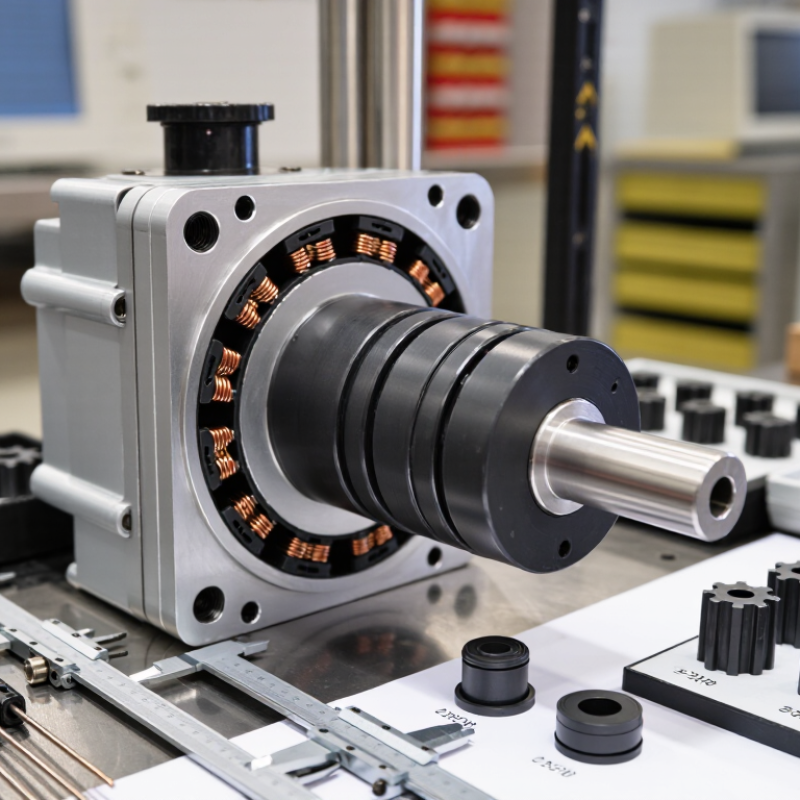
2026 Top Fuel Pump Carbon Commutator Manufacturers

What Is a Carbon Commutator in a Fuel Pump?

What Is a Carbon Commutator in a Fuel Pump?

A fuel-pump carbon commutator is part of the small electric motor that drives the pump. In many product descriptions, “carbon commutator” loosely means the contact system, rather than a commutator made entirely of carbon. The commutator is commonly built from copper segments; carbon brushes press against it and transfer current as the rotor spins. That switching keeps the motor turning. It is small, but its contact surface works continuously in a hot, vibrating environment.

OICA’s 2023 production statistics recorded about 93.5 million motor vehicles built worldwide. This figure describes vehicle production, not fuel-pump demand, but it shows the scale of systems that depend on durable motor components.

In service, brush pressure, surface finish, and electrical load all affect wear. Fine dark dust, uneven contact marks, or rising electrical resistance can signal deterioration. A worn commutator may cause intermittent pump operation, though those symptoms can have other causes. The terminology is imperfect, and inspection alone does not always identify the fault. SAE technical literature on brushed DC motors likewise treats brush-commutator contact as a key factor in motor performance and durability.


How Carbon Commutators Support Fuel Pump Operation

A fuel pump depends on steady motor rotation to move fuel at a consistent rate. In a brushed motor, carbon brushes maintain contact with a rotating commutator, transferring current to the rotor windings. Some designs use carbon-based commutator components. As the rotor turns, the commutator switches the current between windings, helping the motor continue producing torque. That contact matters.

Inside a compact pump, space is tight and operating conditions can be demanding. Brush pressure, commutator alignment, and surface finish affect electrical contact and wear. Excessive resistance can add heat or reduce motor performance; uneven contact may cause faster wear. Small differences matter. A well-made carbon component can support smooth current transfer, but it cannot compensate for poor assembly or unsuitable motor design.

Manufacturers typically assess dimensions, electrical resistance, surface condition, and performance during rotation. Testing under realistic loads is useful because a part that looks sound on a bench may behave differently in a working pump. Carbon also wears over time, so service life depends on material, contact pressure, heat, and operating cycles. There is no perfect material. Even a quiet motor does not tell the whole story; measured performance and consistent inspection provide better evidence.

Materials and Manufacturing Processes for Carbon Commutators

Materials and Manufacturing Processes for Carbon Commutators

A fuel pump carbon commutator must conduct current while resisting friction, heat, and wear. Manufacturers typically blend carbon or graphite with conductive metal powders and carefully selected binders. The exact recipe depends on operating current, contact pressure, and expected service conditions. More metal can improve conductivity, but may also change wear behavior. There is no universal mix. Choosing one requires testing against the pump’s actual duty cycle.

Production begins with powder preparation and controlled mixing. The compound is pressed into segments, then cured or heat-treated to develop strength and stability. Machining brings each segment to precise dimensions, while surface finishing helps create consistent brush contact. Small differences matter. Uneven density or rough edges can cause localized heating and faster wear. Quality checks may include dimensional inspection, electrical resistance measurement, and friction testing. These checks reduce risk, though they cannot perfectly reproduce every field condition.

Tips: Ask for material specifications and test results, not just a “high conductivity” claim. Check segment dimensions and surface finish. Keep in mind that a lower-cost formulation may perform well in one pump but poorly in another. Actual service feedback should guide the final choice.

2026 Top Fuel Pump Carbon Commutator Manufacturers - Materials and Manufacturing Processes for Carbon Commutators

Technical context: In many fuel-pump DC motors, the commutator is made from copper or a copper alloy, while carbon-graphite components serve as brushes that contact it. The material and process information below describes carbon-based electrical contact components; construction varies by motor design.

Material or process area Typical materials Manufacturing process Relevant properties or purpose Common quality checks
Carbon-graphite base Natural or synthetic graphite blended with carbonaceous powders; proportions depend on the electrical and wear requirements. Raw materials are selected, milled, classified, weighed, and blended to achieve a consistent particle-size distribution and composition. Graphite supports electrical conduction and sliding contact. The formulation affects friction, wear, and contact behavior. Incoming-material identification, particle-size analysis, moisture checks, and batch-composition records.
Resin-bonded carbon grade Carbon or graphite powders with a thermosetting resin binder. The blend is formed by pressing or molding and then cured. Cure temperature and time depend on the binder system and part geometry. Resin bonding can provide mechanical strength and is used in some carbon electrical-contact grades; the resulting properties are formulation-specific. Dimensional inspection, visual examination, density measurement, and electrical-resistance testing.
Baked carbon grade Carbonaceous powders with a suitable pitch or other carbon-forming binder. After forming, parts may be baked in a controlled, low-oxygen atmosphere. Carbonization commonly uses temperatures in the approximate range of 800–1,200°C, depending on the material and process. Baking converts the binder to a carbon-rich bond and can improve structural integrity. The exact cycle is grade- and component-dependent. Crack and defect inspection, dimensional checks, bulk-density measurement, and electrical-property testing.
Graphitized carbon grade Suitable carbonized stock made from graphite-forming precursors. Where specified, graphitization is carried out at very high temperature, commonly around 2,500–3,000°C, in a controlled atmosphere. Not every carbon contact grade is graphitized. Graphitization changes the carbon structure and can increase electrical and thermal conductivity; the effect depends on precursor and processing conditions. Electrical resistivity, density, dimensional stability, and microstructure checks against the grade specification.
Impregnated carbon grade Porous carbon or graphite treated with a compatible resin, metal, or other impregnant specified for the application. Impregnation may use vacuum or pressure-assisted methods, followed by a material-appropriate curing or heat-treatment cycle. Impregnation can reduce porosity or modify strength, friction, and wear behavior. The selected treatment must suit the operating environment. Impregnant uptake, mass change, porosity or density, electrical properties, and visual inspection.
Forming and consolidation Prepared carbon mixture appropriate to the selected grade. Depending on the design, the mixture may be die-pressed, molded, or extruded. Consolidation conditions are set to control shape and material uniformity. Consistent forming helps achieve repeatable dimensions and contact geometry; it does not by itself define the final electrical performance. Part dimensions, mass, density uniformity, edge condition, and checks for visible laminations or cracks.
Machining and contact finishing Cured, baked, or otherwise consolidated carbon-based stock. Parts are machined to drawing dimensions. Contact faces may be finished to the specified surface condition and geometry. Accurate dimensions and a suitable contact face support correct fit and stable operation in the intended motor assembly. Dimensional and surface-finish inspection, edge inspection, and verification against the component drawing.
Finished-part validation Completed carbon electrical-contact component, assessed against its application specification. Representative parts may be evaluated in electrical, mechanical, and motor-level tests. Test conditions should reflect the intended operating duty. Performance depends on the complete motor system, including contact pressure, commutator material and finish, current, speed, temperature, and fuel-pump environment. Electrical resistance, wear or endurance testing, dimensional conformity, and application-specific motor validation.

How to Evaluate Fuel Pump Carbon Commutator Manufacturers

How to Evaluate Fuel Pump Carbon Commutator Manufacturers

A carbon commutator may look simple, but small defects can create uneven brush contact, heat, and premature wear. Ask manufacturers for dimensional tolerances, carbon-grade specifications, and test results from production batches—not just a polished sample. OICA reported about 93.5 million motor vehicles produced worldwide in 2023. That scale makes repeatable quality and traceable lots practical supplier checks, not paperwork details. Still, vehicle production figures do not prove commutator performance; component-level evidence matters more.

Request data on electrical resistance, contact stability, wear, and performance under heat and vibration. Check whether tests reflect your pump’s operating current, speed, and fuel environment. Review how the supplier controls raw materials, tooling wear, and rejected parts. A clear process beats a vague promise. Ask for sample inspection records and a corrective-action example, with sensitive customer details removed. One limitation: a short test may not predict years of field use.

Tips: Compare several production lots, not only one sample. Confirm traceability from carbon material to finished part. Visit the production line if feasible; observe dust control, measurement equipment, and how operators handle borderline results. Then document acceptance limits before approval. Small inconsistencies are easy to overlook. Don’t assume low unit price means low total cost.

Leading Fuel Pump Carbon Commutator Manufacturers in 2026

In 2026, leading fuel pump carbon commutator manufacturers stand out through consistent materials, precise machining, and dependable quality checks. A commutator must maintain stable contact with the motor brushes while rotating at high speed. Small defects matter. Uneven segments or rough surfaces can increase wear, noise, and electrical variation. Experienced manufacturers monitor dimensions, surface finish, and material composition across production batches.

Strong suppliers also understand the conditions inside a fuel pump. Heat, vibration, fuel exposure, and repeated starts can challenge carbon components over time. Useful capabilities include controlled molding, accurate slot geometry, and testing under representative operating conditions. Ask how sample parts are inspected and how production changes are documented. A polished catalogue is not enough. Evidence matters more.

Comparing manufacturers requires more than a price check. Review traceability, process consistency, technical support, and the supplier’s ability to meet the required volume. Request clear test criteria and confirm that samples match production parts. One point can be easy to miss: a specification may look complete yet leave wear limits unclear. I would ask for that detail in writing. Careful evaluation helps buyers identify a suitable manufacturing partner without assuming that the largest operation is automatically the best fit.

Powder Coat Booths

For those larger-sized parts, or smaller quantity runs, we have 2 independent powder coat booths and ovens. The quality, durability and affordability of today’s powder coating finishes make this the process of choice for world-class companies.

Powder coating advantages over other forms of coating are many. Materials used in the Powder coating process can be metals and non-metals that come in a multitude of thicknesses, textures, colors, etc. Another of Powder coating’s biggest advantages over conventional coatings is its ability to create finishes in many different textures. Powder Coating Booths allow us the ability to apply these advantages to large products.

Wet Paint Line

Tri-State Fabricators runs a full-service conveyor line for painting. Wet painting can provide protection or decoration to many different part styles. From start to finish, every project is easier to undergo random and point-based inspection by our skilled painting team.

Advantages to our Wet Paint Line are these lines start with product prep and ends with a thorough inspection of a high quality finished product. Our ability to complete large and small projects with a superior finish and doing so in a timely and economical fashion. This passes along the savings in production to our customers. When powder coating ins not an option, our Wet Paint Line gets the job done right the first time.

Wet Paint Booths

When the parts get big and heavy we roll-out our custom paint racks and oversize booth. By utilizing our partnerships with all the major paint brands, we can match virtually any color with wet paint.

The advantages of having access to a Wet Paint Booth are many. Large projects of many different shapes can be loaded into the booth. The Wet Paint Booth offers an environment that is much more controlled than a typical parts painting operation.

Not only are they used because of their controlled environment, but they’re are also advantageous when it comes to applying paint to parts that are needed in industries that require specialty coatings such as medical, aerospace, etc.

Military CARC

Our military forces have some very high standards when it comes to the finish of their vehicles and equipment. From the first pre-treatment step to final coat, it takes a great deal of knowledge and experience to protect the men and women of our armed forces. They deserve only the best, and Tri-State Fabricators provides it.

All of our processes are closely monitored by our staff and management teams. Both of which are highly trained in the processes of metal fabrication and finishing. Tri-State Fabricators’ goal is to always fully satisfy each and every customer, including the military. We will always put a 110% into what we do.

Glass-Bead Blasting

Abrasive media blasting is an excellent way to remove old paint, rust, and increase the paint/powder adhesion. Glass beads produce a much smoother and brighter finish than angular abrasives; leaving the part clean yet without any dimensional change. Chemically inert and environmentally friendly, we can recycle our beads approximately 30 times; making them a more preferred method of metal cleaning or surface finishing.

Advantages to Glass Bead Blasting are many. Glass bead blast media is used when a project is needing rough surfaces need to become smooth for applications of coatings such as paint. It is typically used to clean paint and rust from a product surface without deforming the surface it is being used on. Overall, compared to many other blasting media, Glass Bead Blasting is a very economical choice and those savings are always passed on to our customers.

Part Washing

Tri-State Fabricators utilize a zinc phosphate wash to clean and etch the material to ensure the best paint adhesion possible. The unique design of our 3-stage wash system does the work like a 5-stage. From Cleaning and rinsing to conversion coating and post-treatment, Our Part Washing process is a complete service and works throughout the fabrication service and the finishing service.

Along with the previously mentioned benefits, Curing is a vital chemical reaction that leaves the product finish hard and relatively safe from mild abrasion and aggressive corrosion. This process can be done in more than one way; ambient air-dry or in curing ovens at temps that exceed 240°.

Burn-Off Oven

From fixing paint mistakes (someone else’s of course) to simply cleaning our paint line hooks, our burn-off oven is put to good use. After a quick burn-off, a little clean up, and a fresh coat of paint, your parts will look better than new.

Why does our Burn-Off Oven work so well? Because super heating the air around parts turns the materials into ashes. From paint and powder coatings to rubber and machining oils, high temps do the job without degrading the integrity of the part.

Masking

Masking is a vital part of producing high quality products. We have die-cut masking patterns to protect machined surfaces as well as a wide range of plugs and caps to protect threaded holes and bolts. We provide permanent and temporary masking.

Masking allows the selected sections of a product to be protected from a fabrication or finishing service. This can be with both chemicals when etching and tapes, paints when only finishing just a section of the product. Masking is great in aiding the customization process of a project.

Screen Printing

Screen printing is a photographic process that transfers artwork onto a porous nylon screen which allows colored ink to flow through the screen and be deposited on an aluminum or plastic component. We can generally have just about any design created onto a screen for your parts.

Some of the advantages of Screen Printing are, brand recognition for your business displaying on your products, assembly instructions, product warnings/hazards, etc. Tri-State Fabricators produces Screen Printing of the highest quality so you know it’s durable.

Metal Finishing

Metal Finishing is the art of treating the exterior portion of product, often metal but can also be made of other materials, so that the surface is clean and free of any debris. Then the process of applying coats or either paint of powder coat takes place. This coating process improves the quality of the product in both appearance and resistance to wear and corrosion.

Tri-State Fabricators, Inc., understands that a project typically isn’t complete until a high-quality finish has been added to your product. This is why our painting and powder coating teams continuously inspect the products throughout the Metal Finishing process.
