


Conveyor belt components depend on accurate cutting, consistent pressure, and reliable material handling. Beam cutting presses can process rubber, fabric-reinforced sheets, and other layered materials used in belt production and maintenance. Yet press capacity alone does not guarantee clean edges or repeatable parts. Die design, working area, operator access, and after-sales support matter on the factory floor.
Automation is also reshaping manufacturing. The International Federation of Robotics reported 541,302 industrial robot installations worldwide in 2023, a 4% increase from 2022. This figure describes industrial robots, not conveyor-belt cutting presses. It does, however, show why buyers increasingly assess how machines fit into broader production lines. Conveyor Belt Beam Cutting Press Factories should therefore be compared by practical evidence: machine specifications, documented testing, safety features, and service capability—not promotional claims alone.
This 2026 overview examines manufacturers through those decision points. Look for clear information on cutting force, usable table size, cycle controls, and the materials each model is designed to process. Ask how suppliers verify cutting accuracy and train operators. Small details count. A poorly supported die, for example, can affect edge quality and slow changeovers. Some factory information may remain difficult to verify publicly; that limitation deserves attention, not guesswork. A careful shortlist helps manufacturers balance output, maintenance needs, and the realities of their own production runs.
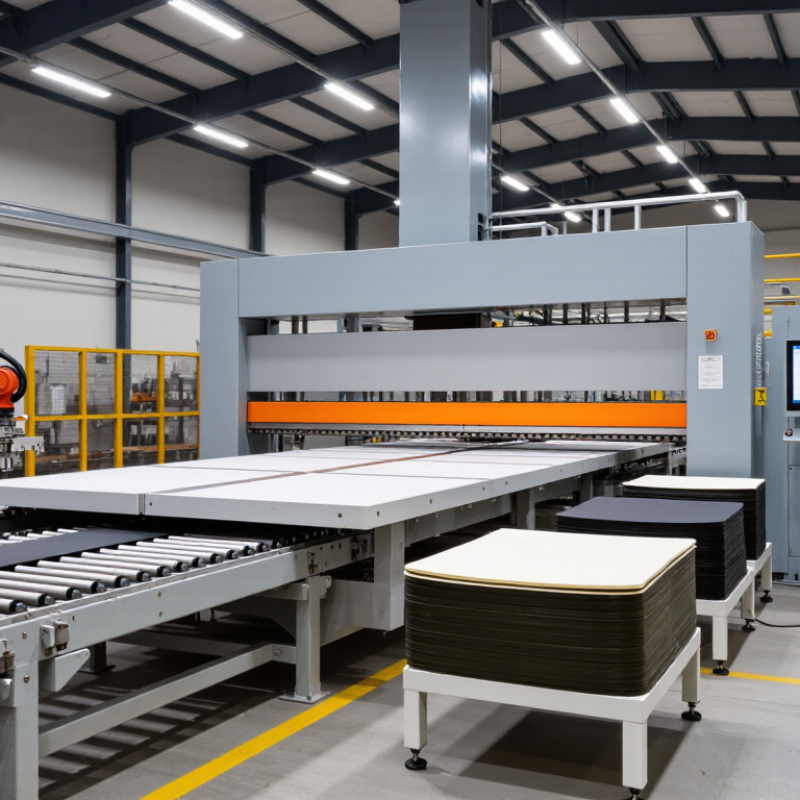
2026 Top Conveyor Belt Beam Cutting Press Factories
What Is a Conveyor Belt Beam Cutting Press?
A conveyor belt beam cutting press is an industrial machine that cuts shaped parts from sheet or roll materials. It uses a cutting die and a broad pressure beam to press through the material. The term “beam” describes the press head, which applies force across the cutting area. On a factory floor, operators may use one to produce belt components, liners, gaskets, or other repeatable shapes. A clean cut matters.
The operator places the material and die on the cutting bed, then sets the stroke and pressure for the job. Some presses use hydraulic systems; others use mechanical drive mechanisms. Material thickness, hardness, and die condition all affect the result. Too little pressure can leave fibers attached, while excessive force may shorten die life or mark the bed. Setup is rarely perfect on the first try. Small test cuts help reveal uneven edges or shifting material before a full run. A press is not a cure-all: feeding, alignment, and regular inspection still require attention. When comparing machines, buyers should check usable cutting area, force control, safety features, and how easily the press handles their actual material. I would not judge one by capacity alone.

A beam cutting press uses a shaped steel die to punch conveyor belt material into defined parts. The press head applies force across the die, driving its cutting edge through rubber, fabric, or layered belt stock. The operator positions the material on a firm cutting board and checks that the die sits flat. A clean strike matters.
Belt construction changes the cutting process. A fabric-reinforced sheet may compress before the die passes through, while a thicker rubber cover can need more pressure or a slower cycle. Steel-cord belts require different tooling and handling than textile-reinforced stock, so a standard die setup may not suit every job. That assumption can be wrong. Test cuts help reveal frayed edges, incomplete penetration, or distortion near the cut line.
Experienced operators watch the result, not only the press settings. They inspect die sharpness, material alignment, and the board beneath the workpiece. If parts vary in size, pressure, belt thickness, or material tension may be responsible. Even a small shift can affect fit. Keeping a record of successful settings can reduce repeat adjustments, though it will not replace checking each new material batch. Sometimes the first sample needs another pass through the inspection process.
2026 Top Conveyor Belt Beam Cutting Press Factories
Key Technologies Used in Press Design and Production
Factories designing conveyor belt beam cutting presses must balance cutting force, working width, and repeatable accuracy. A rigid frame helps limit deflection when the press handles dense rubber sheets. Engineers may use finite element analysis to identify stress points before production, then verify those predictions with physical load tests. It is a useful check, not a substitute for testing. Wide platens also need even pressure distribution, or the blade may cut cleanly at one edge and leave fibers at the other.
Modern systems often combine servo-hydraulic control with pressure sensors and programmable cutting cycles. Operators can adjust stroke depth for different belt thicknesses, while position sensors monitor the moving beam. In production, machined guide surfaces and careful assembly reduce unwanted play. Small alignment errors matter. No setup is perfect. Dust, temperature changes, and worn tooling can still affect results, so routine calibration should be part of the operating plan. Safety interlocks and two-hand controls help reduce exposure to the cutting zone, but training and clear maintenance procedures remain essential. A factory’s real capability shows in consistent test cuts, documented checks, and honest handling of process limits.
Technology and production benchmarks for evaluating beam cutting presses used to process conveyor-belt materials. Entries describe general engineering practices, not a ranking of named manufacturers.
| Technology Area | Design or Production Method | How It Is Verified | Relevance to Conveyor-Belt Cutting |
|---|---|---|---|
| Hydraulic drive and pressure control | Hydraulic power unit with pressure regulation and monitoring. A variable-speed or servo-driven pump can reduce unnecessary pump operation when the production cycle permits. | Review the hydraulic schematic, pressure settings, temperature behavior, leakage checks, and cycle performance under the intended load. | Provides the force needed to press a cutting die through belt materials while allowing pressure to be managed for different jobs. |
| Beam and frame construction | Rigid welded or fabricated structure designed to resist deflection under the press load. Stress-relief processes may be used where appropriate to the material and manufacturing route. | Inspect fabrication records and confirm frame and platen geometry through dimensional measurement and loaded testing. | Structural stiffness helps maintain consistent cutting conditions across the working area. |
| Platen parallelism and alignment | Machined and aligned press surfaces, with adjustment provisions where required by the machine design. | Measure platen parallelism and check pressure or cut results at multiple positions across the usable area. | Helps reduce uneven die engagement and inconsistent cuts, especially when cutting large or layered belt sections. |
| Stroke and cutting-depth control | Adjustable stroke or cutting-height settings, supported by position sensing or controlled mechanical limits according to the machine configuration. | Check repeatability of the selected settings and perform trial cuts using the specified die, cutting board, and material stack. | Supports repeatable cutting while helping prevent excessive impact on the cutting board or tooling. |
| Programmable control system | PLC-based control for operating sequences, interlocks, fault indication, and adjustable process settings. Some designs also record cycle or alarm data. | Test operating modes, emergency-stop response, interlocks, fault messages, and documented control settings. | Improves process consistency and makes operating faults easier to identify during production. |
| Operator safety systems | Risk-assessed safeguards such as fixed or interlocked guards, emergency stops, and appropriately designed presence-sensing or two-hand controls. | Review the machine risk assessment and validate safety functions and control-system design against applicable requirements, such as ISO 12100 and ISO 13849-1 where relevant. | Reduces exposure to crushing and cutting hazards around the press and its operating zone. |
| Die and cutting-board setup | Work surface and tooling arrangements designed for secure positioning of cutting dies and suitable cutting boards, with clear setup and replacement procedures. | Confirm die retention, work-surface condition, setup instructions, and cut quality using representative production tooling. | Correct setup supports stable cutting and helps protect both the die and the press surface. |
| Electrical and hydraulic system integration | Coordinated electrical controls, hydraulic components, sensors, cabling, and service access, with component documentation and circuit identification. | Check wiring and hydraulic diagrams, component labels, protective devices, hose routing, and maintenance access. | Well-documented integration simplifies troubleshooting and routine service in a production environment. |
| Manufacturing quality control | Documented inspection of incoming components, fabricated structures, machined surfaces, assemblies, and completed machines. | Review inspection records, calibration status of measurement equipment, assembly checks, and corrective-action records. | Provides evidence that the press has been built and inspected against its specified design requirements. |
| Factory acceptance and commissioning | Functional testing of operating modes, safety devices, pressure controls, stroke settings, and representative cutting tasks before handover. | Use a recorded acceptance checklist and confirm the results with the agreed material, die, operating conditions, and machine specification. | Helps confirm that the press is ready for its intended cutting application and that operators receive relevant setup information. |
Leading conveyor belt beam cutting press factories in 2026 stand out through practical engineering, consistent production, and clear technical support. Their teams understand how belt thickness, reinforcement, and beam dimensions affect cutting pressure. They can explain those choices without relying on vague performance claims.
Experienced factories should demonstrate how a press handles real materials. Ask for a test using your belt samples, then inspect the cut edges for fraying, compression, and dimensional variation.
Small details matter. Check the bed’s usable area, blade adjustment method, safety controls, and time needed for routine maintenance. A polished demonstration is useful, but production conditions can be less tidy.
Reliable suppliers also provide installation guidance, operator training, and accessible replacement parts. Request drawings, operating instructions, and a maintenance schedule before placing an order. Compare quoted cycle rates with your own production needs; faster is not automatically better if cuts become inconsistent.
One limitation is easy to overlook: factory tests may not reflect worn tooling or varied material batches. Ask how performance is monitored after delivery, and whether technicians can help diagnose uneven cuts.
2026 Top Conveyor Belt Beam Cutting Press Factories
How to Compare Factories by Quality, Capacity, and Service
Comparing factories takes more than reading machine specifications. Ask how each press controls cutting depth across different belt thicknesses. Request sample cuts using your material, then inspect the edges for fraying, unevenness, or heat marks. Small defects matter. Review inspection records and ask how often key components are checked. A polished demonstration is useful, but it may not reflect a full production shift.
Capacity should match your actual workload, not an optimistic sales estimate. Compare cutting speed, setup time, supported belt widths, and planned maintenance hours. Ask the factory to explain its daily output assumptions, including operator breaks and material changes. If possible, observe a test run with several belt sizes. The numbers can still feel uncertain; production conditions rarely stay perfectly consistent.
Tips: Request a written service plan covering installation, operator training, spare-part availability, and response times. Check whether troubleshooting support is available across your working hours. Ask for references from buyers with similar materials and output needs. One useful question: what happens when a cut fails? A clear answer can reveal more than a brochure. Also compare warranty exclusions carefully, since they are easy to overlook.
How to Compare Factories by Quality, Capacity, and Service
Suggested evaluation weights: quality 40%, production capacity 35%, and service 25%. These are a comparison framework, not measured results for specific factories. Score each supplier using verified documents, production records, and service commitments.


For those larger-sized parts, or smaller quantity runs, we have 2 independent powder coat booths and ovens. The quality, durability and affordability of today’s powder coating finishes make this the process of choice for world-class companies.
Powder coating advantages over other forms of coating are many. Materials used in the Powder coating process can be metals and non-metals that come in a multitude of thicknesses, textures, colors, etc. Another of Powder coating’s biggest advantages over conventional coatings is its ability to create finishes in many different textures. Powder Coating Booths allow us the ability to apply these advantages to large products.
Tri-State Fabricators runs a full-service conveyor line for painting. Wet painting can provide protection or decoration to many different part styles. From start to finish, every project is easier to undergo random and point-based inspection by our skilled painting team.
Advantages to our Wet Paint Line are these lines start with product prep and ends with a thorough inspection of a high quality finished product. Our ability to complete large and small projects with a superior finish and doing so in a timely and economical fashion. This passes along the savings in production to our customers. When powder coating ins not an option, our Wet Paint Line gets the job done right the first time.
When the parts get big and heavy we roll-out our custom paint racks and oversize booth. By utilizing our partnerships with all the major paint brands, we can match virtually any color with wet paint.
The advantages of having access to a Wet Paint Booth are many. Large projects of many different shapes can be loaded into the booth. The Wet Paint Booth offers an environment that is much more controlled than a typical parts painting operation.
Not only are they used because of their controlled environment, but they’re are also advantageous when it comes to applying paint to parts that are needed in industries that require specialty coatings such as medical, aerospace, etc.
Our military forces have some very high standards when it comes to the finish of their vehicles and equipment. From the first pre-treatment step to final coat, it takes a great deal of knowledge and experience to protect the men and women of our armed forces. They deserve only the best, and Tri-State Fabricators provides it.
All of our processes are closely monitored by our staff and management teams. Both of which are highly trained in the processes of metal fabrication and finishing. Tri-State Fabricators’ goal is to always fully satisfy each and every customer, including the military. We will always put a 110% into what we do.
Abrasive media blasting is an excellent way to remove old paint, rust, and increase the paint/powder adhesion. Glass beads produce a much smoother and brighter finish than angular abrasives; leaving the part clean yet without any dimensional change. Chemically inert and environmentally friendly, we can recycle our beads approximately 30 times; making them a more preferred method of metal cleaning or surface finishing.
Advantages to Glass Bead Blasting are many. Glass bead blast media is used when a project is needing rough surfaces need to become smooth for applications of coatings such as paint. It is typically used to clean paint and rust from a product surface without deforming the surface it is being used on. Overall, compared to many other blasting media, Glass Bead Blasting is a very economical choice and those savings are always passed on to our customers.
Tri-State Fabricators utilize a zinc phosphate wash to clean and etch the material to ensure the best paint adhesion possible. The unique design of our 3-stage wash system does the work like a 5-stage. From Cleaning and rinsing to conversion coating and post-treatment, Our Part Washing process is a complete service and works throughout the fabrication service and the finishing service.
Along with the previously mentioned benefits, Curing is a vital chemical reaction that leaves the product finish hard and relatively safe from mild abrasion and aggressive corrosion. This process can be done in more than one way; ambient air-dry or in curing ovens at temps that exceed 240°.
From fixing paint mistakes (someone else’s of course) to simply cleaning our paint line hooks, our burn-off oven is put to good use. After a quick burn-off, a little clean up, and a fresh coat of paint, your parts will look better than new.
Why does our Burn-Off Oven work so well? Because super heating the air around parts turns the materials into ashes. From paint and powder coatings to rubber and machining oils, high temps do the job without degrading the integrity of the part.
Masking is a vital part of producing high quality products. We have die-cut masking patterns to protect machined surfaces as well as a wide range of plugs and caps to protect threaded holes and bolts. We provide permanent and temporary masking.
Masking allows the selected sections of a product to be protected from a fabrication or finishing service. This can be with both chemicals when etching and tapes, paints when only finishing just a section of the product. Masking is great in aiding the customization process of a project.
Screen printing is a photographic process that transfers artwork onto a porous nylon screen which allows colored ink to flow through the screen and be deposited on an aluminum or plastic component. We can generally have just about any design created onto a screen for your parts.
Some of the advantages of Screen Printing are, brand recognition for your business displaying on your products, assembly instructions, product warnings/hazards, etc. Tri-State Fabricators produces Screen Printing of the highest quality so you know it’s durable.
Metal Finishing is the art of treating the exterior portion of product, often metal but can also be made of other materials, so that the surface is clean and free of any debris. Then the process of applying coats or either paint of powder coat takes place. This coating process improves the quality of the product in both appearance and resistance to wear and corrosion.
Tri-State Fabricators, Inc., understands that a project typically isn’t complete until a high-quality finish has been added to your product. This is why our painting and powder coating teams continuously inspect the products throughout the Metal Finishing process.

