


Choosing the 2026 Best Wire Shielding Sleeve for EMI Protection requires more than comparing product photos or braid density. Engineers must consider cable diameter, shielding coverage, flexibility, temperature exposure, and installation conditions. A sleeve that performs well inside a control cabinet may fail near a vibrating motor or sharp metal edge.
In practical testing, a quality Wire Shielding Sleeve should expand smoothly without exposing the cable underneath. Its conductive braid should maintain consistent contact around bends, connectors, and entry points. Grounding also matters. An excellent sleeve cannot compensate for a poorly planned termination. Small gaps can become unexpected paths for electromagnetic interference.
Material selection deserves close attention. Tinned copper often offers dependable conductivity and corrosion resistance, while aluminum-based designs may reduce weight. Heat resistance, abrasion protection, and resistance to oils should match the working environment. Measurements matter more than marketing language. Check attenuation data, operating temperatures, inner diameter, and verified application guidance.
No sleeve is perfect.
Real installations involve compromises. A tighter braid may improve shielding but reduce flexibility. A thicker construction may protect better but complicate connector assembly. This guide compares leading options through an experience-based lens, combining technical specifications with realistic installation concerns. It also recognizes an uncomfortable truth: published laboratory results may not represent every vehicle, machine, or data cable. Careful testing remains essential. Use the recommendations as a structured starting point, then confirm performance under actual routing, grounding, vibration, and temperature conditions. That assumption deserves checking.
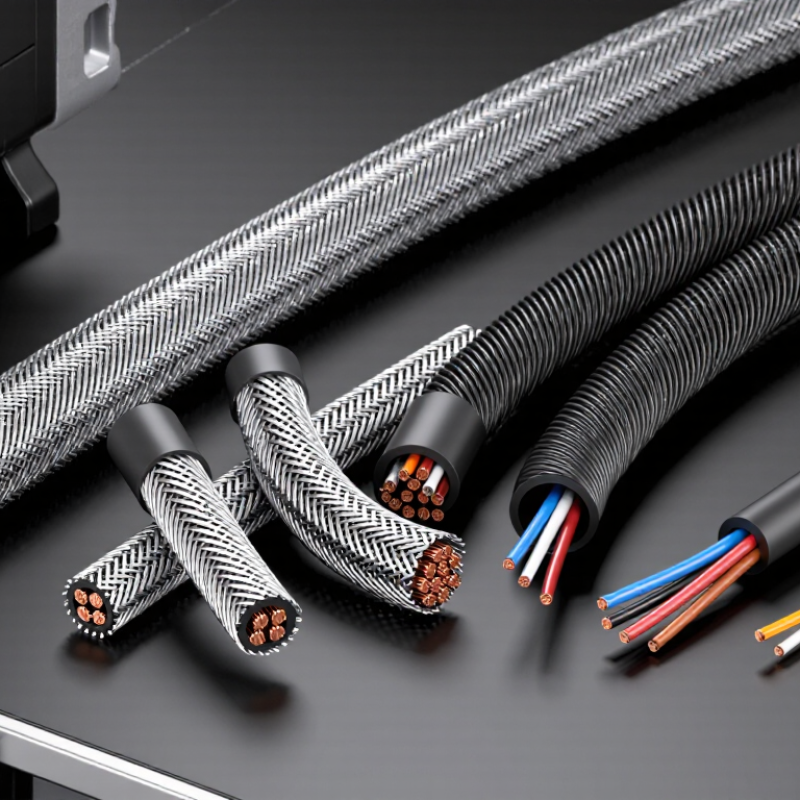
2026 Best Wire Shielding Sleeve for EMI Protection
What Is a Wire Shielding Sleeve for EMI Protection?
A wire shielding sleeve is a flexible conductive cover placed around cables to reduce electromagnetic interference, or EMI. It usually combines metal fibers, conductive foil, or both. The sleeve creates a partial Faraday cage around signal wires and helps control unwanted electrical noise.
In practical installations, the sleeve may protect sensor cables, data lines, power leads, and audio wiring. I have seen interference appear as unstable readings, buzzing sounds, or random communication errors. A properly fitted sleeve can reduce noise entering or leaving the cable. However, shielding is not magic. The sleeve must connect reliably to ground or chassis at the intended termination point. An open shield can provide limited protection.
Material choice matters. Tinned copper offers strong conductivity and good flexibility. Aluminum foil can provide broad coverage but may tear during repeated bending. Braided sleeves handle movement well, especially near hinges or engine compartments. Check the cable diameter carefully. A loose sleeve may shift, while an overly tight sleeve can stress connectors.
Small details matter.
During testing, technicians should inspect coverage, grounding, bend radius, and connector transitions. My early evaluations often focused on shielding material alone, but installation quality caused more failures than expected. Testing with the actual equipment remains essential because motor drives, wireless transmitters, and switching circuits produce different interference patterns. A sleeve that works well in one cabinet may perform poorly in another.

2026 Best Wire Shielding Sleeve for EMI Protection
How Wire Shielding Sleeves Block Electromagnetic Interference
Wire shielding sleeves reduce electromagnetic interference by surrounding cables with a conductive layer. This layer creates a partial Faraday cage around the wires. When interference reaches the sleeve, electrical charges move along its surface instead of entering the conductors directly.
Braided copper, tinned copper, and aluminum shielding each behave differently. Copper offers strong conductivity and practical flexibility. Tinned surfaces resist oxidation, especially in humid equipment rooms. Aluminum layers can provide broad coverage, but they may need careful termination. The sleeve does not work alone.
Grounding matters greatly. A poorly connected shield can act like an antenna and collect noise. Installers should keep shield connections short, secure, and appropriate for the system’s grounding design. Coverage also matters. Gaps, loose overlaps, and sharp bends can weaken protection.
Frequency changes the result. A sleeve that performs well against low-frequency noise may not control fast digital interference equally. Check shielding coverage, transfer impedance, cable geometry, and installation conditions. Practical testing with a spectrum analyzer often reveals faults that visual inspection misses.
Small details matter.
In field work, I have seen shielding selected correctly but installed too loosely. That mistake reduced its real performance. Sleeve materials also add diameter and stiffness, so bend radius and connector space require planning. No shielding method is perfect. Evaluate the complete cable assembly, not only the sleeve.
| Sleeve Construction | Typical Material | How It Blocks EMI | Indicative Shielding Effectiveness | Coverage | Flexibility | Common Temperature Range | Suitable Applications |
|---|---|---|---|---|---|---|---|
| Expandable Copper Braid | Tinned copper or bare copper strands | Provides a conductive Faraday cage around the wire bundle and carries induced currents to a grounded termination. | Approximately 60–95 dB in well-terminated assemblies; results vary with frequency, braid coverage, and installation. | Typically 85–95% visual coverage | High; expands over irregular bundles and bends easily | About −65°C to +200°C, depending on insulation and plating | Power electronics, industrial controls, robotics, and automotive harnesses |
| Nickel-Plated Copper Braid | Copper braid with nickel surface plating | Reflects and absorbs electric-field interference while maintaining a low-resistance conductive path. | Approximately 70–100 dB in properly bonded systems | Typically 85–95% visual coverage | High, with good resistance to repeated flexing | About −65°C to +260°C, depending on construction | High-temperature equipment, aerospace wiring, motors, and sensors |
| Stainless-Steel Braid | Stainless-steel filaments or fine metallic wire | Forms a conductive barrier that reduces radiated coupling and offers strong mechanical protection. | Approximately 50–85 dB, depending on braid density and grounding | Typically 80–95% visual coverage | Medium to high; generally stiffer than copper braid | About −70°C to +500°C for suitable high-temperature designs | High-abrasion areas, industrial machinery, exhaust zones, and harsh environments |
| Aluminum Foil Laminate Sleeve | Aluminum foil bonded to polyester film | Uses a continuous conductive layer to reflect high-frequency electric-field noise; foil overlap must remain electrically continuous. | Approximately 80–120 dB at higher frequencies when seams and drain wires are correctly terminated | Up to 100% surface coverage | Medium; less tolerant of repeated sharp bending than braid | About −40°C to +150°C, depending on laminate and outer jacket | Data cables, control panels, communication wiring, and compact electronic assemblies |
| Conductive Fabric Sleeve | Metal-plated textile fibers, often based on polyester or nylon | Creates a lightweight, flexible conductive enclosure that attenuates electric-field interference. | Approximately 40–80 dB, strongly dependent on fabric conductivity and closure design | Typically 80–95% effective textile coverage | Very high; suitable for tight bends and moving cable assemblies | About −40°C to +125°C, depending on textile composition | Portable electronics, medical equipment, display cables, and moving harnesses |
| Braid-and-Foil Dual Layer | Metal foil layer combined with copper or tinned-copper braid | Combines the continuous high-frequency barrier of foil with the mechanical strength, grounding reliability, and low-frequency performance of braid. | Approximately 90–120 dB in optimized assemblies across a broad frequency range | Up to 100% foil coverage plus 85–95% braid coverage | Medium; thicker and less flexible than a single-layer sleeve | About −40°C to +150°C, depending on the outer braid and insulation | Industrial drives, medical systems, test equipment, and high-noise environments |
Material choice determines how well a shielding sleeve controls electromagnetic interference. Tinned copper braid offers strong conductivity, flexibility, and practical corrosion resistance. Nickel-plated copper performs better in hotter environments. Stainless steel resists abrasion, but its conductivity is lower. Conductive fabric sleeves feel lighter and bend easily around tight cable paths. They may need careful handling near sharp brackets.
Design affects protection as much as the metal itself. Expandable braided sleeves fit connectors and uneven cable bundles without cutting them. Woven sleeves provide continuous coverage, while foil-based designs can deliver high shielding efficiency with less space. However, foil sleeves can split after repeated bending. Split sleeves with hook-and-loop closures simplify maintenance, though their overlap needs firm contact.
Reliable installation depends on details. The sleeve should cover the cable route without excessive stretching. Shield continuity must reach the grounding points through suitable terminations. Small gaps can become leakage paths, especially near motors, inverters, and switching power supplies. Testing should include bending, vibration, temperature changes, and connector movement. Laboratory results can look excellent. Real assemblies are often messier. A sleeve selected only by material may fail when its bend radius, seam, or termination is ignored.
2026 Best Wire Shielding Sleeve for EMI Protection
Choosing the best wire shielding sleeve in 2026 starts with the interference problem, not the product label. Measure where noise appears: near motors, power converters, sensors, or communication lines. A braided metal sleeve can reduce radiated interference, but its performance depends on coverage, grounding, and installation quality. High coverage usually improves protection, although it may reduce flexibility.
Match the sleeve diameter to the cable bundle. Leave enough room for movement, but avoid excessive gaps. Check the minimum bend radius before routing wires around sharp corners. Temperature ratings also matter near engines, heaters, and enclosed electrical cabinets. Copper, tinned copper, and stainless steel offer different balances of conductivity, corrosion resistance, and mechanical strength. I prefer testing a short sample first. Specifications alone can mislead.
Grounding deserves careful attention. A shield connected at only one suitable point may reduce unwanted current paths, but the correct method depends on system design and frequency. Use compatible clamps, backshells, or termination hardware. Poor contact can turn a good sleeve into decoration. I have seen a properly sized sleeve fail because paint covered the grounding surface. That mistake was easy to miss. Test the finished cable with realistic operating loads, then inspect it after repeated bending and vibration. Performance can change over time.
Typical shielding effectiveness of common wire-sleeve constructions at 100 MHz. Actual performance depends on coverage, grounding, seam quality, cable geometry, and installation.
For high EMI protection, choose a sleeve with continuous conductive coverage and reliable electrical termination at both ends. Flexible braided copper and conductive foil-braid constructions generally provide stronger shielding than metallized fabric alone, while bendability, weight, corrosion resistance, and installation space should also be considered.
Choose an EMI shielding sleeve that matches the cable diameter, flexibility, and operating environment. Confirm its coverage range before installation. A loose sleeve can reduce shielding performance.
Before fitting it, disconnect power and inspect the cable jacket for damage. Clean oil, dust, and moisture from the surface. Slide the sleeve over the cable without stretching it excessively. Keep enough length for movement near connectors and bends.
Terminate the sleeve firmly at both ends. A short, low-inductance connection usually performs better than a long pigtail. Small gaps matter. Secure the termination against sharp edges and avoid crushing the braid with excessive clamps.
One field lesson is easy to miss: neat installation does not always mean effective shielding.
Testing should include visual inspection, continuity checks, and functional EMI measurements. Use a calibrated resistance meter to verify electrical continuity through the sleeve and its terminations. Then operate the cable under normal load while checking for unexpected noise, signal errors, or communication drops. A near-field probe can help locate leakage around seams and connector transitions. For critical equipment, compare emissions before and after installation under repeatable conditions. Record cable layout, test distance, frequency range, and ambient conditions. Without these details, results become difficult to trust.
Maintenance requires scheduled inspections, especially near moving joints and heat sources. Look for frayed braid, flattened sections, corrosion, loose clamps, and damaged outer jackets. Replace compromised sections rather than hiding them with tape.
Recheck continuity after service work. I would also review the design when failures repeat; the sleeve may not be the real problem. Poor bonding, routing, or grounding can defeat a good shielding material.


For those larger-sized parts, or smaller quantity runs, we have 2 independent powder coat booths and ovens. The quality, durability and affordability of today’s powder coating finishes make this the process of choice for world-class companies.
Powder coating advantages over other forms of coating are many. Materials used in the Powder coating process can be metals and non-metals that come in a multitude of thicknesses, textures, colors, etc. Another of Powder coating’s biggest advantages over conventional coatings is its ability to create finishes in many different textures. Powder Coating Booths allow us the ability to apply these advantages to large products.
Tri-State Fabricators runs a full-service conveyor line for painting. Wet painting can provide protection or decoration to many different part styles. From start to finish, every project is easier to undergo random and point-based inspection by our skilled painting team.
Advantages to our Wet Paint Line are these lines start with product prep and ends with a thorough inspection of a high quality finished product. Our ability to complete large and small projects with a superior finish and doing so in a timely and economical fashion. This passes along the savings in production to our customers. When powder coating ins not an option, our Wet Paint Line gets the job done right the first time.
When the parts get big and heavy we roll-out our custom paint racks and oversize booth. By utilizing our partnerships with all the major paint brands, we can match virtually any color with wet paint.
The advantages of having access to a Wet Paint Booth are many. Large projects of many different shapes can be loaded into the booth. The Wet Paint Booth offers an environment that is much more controlled than a typical parts painting operation.
Not only are they used because of their controlled environment, but they’re are also advantageous when it comes to applying paint to parts that are needed in industries that require specialty coatings such as medical, aerospace, etc.
Our military forces have some very high standards when it comes to the finish of their vehicles and equipment. From the first pre-treatment step to final coat, it takes a great deal of knowledge and experience to protect the men and women of our armed forces. They deserve only the best, and Tri-State Fabricators provides it.
All of our processes are closely monitored by our staff and management teams. Both of which are highly trained in the processes of metal fabrication and finishing. Tri-State Fabricators’ goal is to always fully satisfy each and every customer, including the military. We will always put a 110% into what we do.
Abrasive media blasting is an excellent way to remove old paint, rust, and increase the paint/powder adhesion. Glass beads produce a much smoother and brighter finish than angular abrasives; leaving the part clean yet without any dimensional change. Chemically inert and environmentally friendly, we can recycle our beads approximately 30 times; making them a more preferred method of metal cleaning or surface finishing.
Advantages to Glass Bead Blasting are many. Glass bead blast media is used when a project is needing rough surfaces need to become smooth for applications of coatings such as paint. It is typically used to clean paint and rust from a product surface without deforming the surface it is being used on. Overall, compared to many other blasting media, Glass Bead Blasting is a very economical choice and those savings are always passed on to our customers.
Tri-State Fabricators utilize a zinc phosphate wash to clean and etch the material to ensure the best paint adhesion possible. The unique design of our 3-stage wash system does the work like a 5-stage. From Cleaning and rinsing to conversion coating and post-treatment, Our Part Washing process is a complete service and works throughout the fabrication service and the finishing service.
Along with the previously mentioned benefits, Curing is a vital chemical reaction that leaves the product finish hard and relatively safe from mild abrasion and aggressive corrosion. This process can be done in more than one way; ambient air-dry or in curing ovens at temps that exceed 240°.
From fixing paint mistakes (someone else’s of course) to simply cleaning our paint line hooks, our burn-off oven is put to good use. After a quick burn-off, a little clean up, and a fresh coat of paint, your parts will look better than new.
Why does our Burn-Off Oven work so well? Because super heating the air around parts turns the materials into ashes. From paint and powder coatings to rubber and machining oils, high temps do the job without degrading the integrity of the part.
Masking is a vital part of producing high quality products. We have die-cut masking patterns to protect machined surfaces as well as a wide range of plugs and caps to protect threaded holes and bolts. We provide permanent and temporary masking.
Masking allows the selected sections of a product to be protected from a fabrication or finishing service. This can be with both chemicals when etching and tapes, paints when only finishing just a section of the product. Masking is great in aiding the customization process of a project.
Screen printing is a photographic process that transfers artwork onto a porous nylon screen which allows colored ink to flow through the screen and be deposited on an aluminum or plastic component. We can generally have just about any design created onto a screen for your parts.
Some of the advantages of Screen Printing are, brand recognition for your business displaying on your products, assembly instructions, product warnings/hazards, etc. Tri-State Fabricators produces Screen Printing of the highest quality so you know it’s durable.
Metal Finishing is the art of treating the exterior portion of product, often metal but can also be made of other materials, so that the surface is clean and free of any debris. Then the process of applying coats or either paint of powder coat takes place. This coating process improves the quality of the product in both appearance and resistance to wear and corrosion.
Tri-State Fabricators, Inc., understands that a project typically isn’t complete until a high-quality finish has been added to your product. This is why our painting and powder coating teams continuously inspect the products throughout the Metal Finishing process.

