


2026 Best Sewer Drain Cleaning Equipment for Global Buyers

Choosing the right Sewer Drain Cleaning Equipment can determine service speed, worker safety, and long-term operating costs. Global buyers face different pipe materials, voltage systems, water conditions, and maintenance expectations. A compact electric machine may suit apartment maintenance, while a trailer-mounted water jetter may serve municipal networks. The details matter.

Richard Trethewey, a respected plumbing expert and longtime This Old House technical adviser, often stresses this practical principle: “The right tool makes the job easier, safer, and more reliable.” That idea guides this 2026 equipment overview. Buyers should examine cable diameter, jetting pressure, flow rate, drum capacity, camera compatibility, noise levels, and transport weight. They should also confirm local electrical requirements and parts availability before ordering.

Small differences become expensive quickly. A poorly matched cable can damage fragile lines. An undersized jetter may struggle with hardened grease. Operators need clear controls, protective guards, emergency shutoffs, and realistic training. Manufacturer support matters, especially when equipment crosses borders. Certifications should be checked carefully, not assumed from attractive product pages.

No buying guide is perfect. Field conditions change. Experienced contractors still misjudge access, blockage depth, or pipe strength. That is why this article compares practical performance, not impressive specifications alone. It considers workshops, service vans, construction sites, and municipal crews. The strongest choice is rarely the most powerful machine. It is the equipment that fits the drain, operator, budget, and maintenance plan.
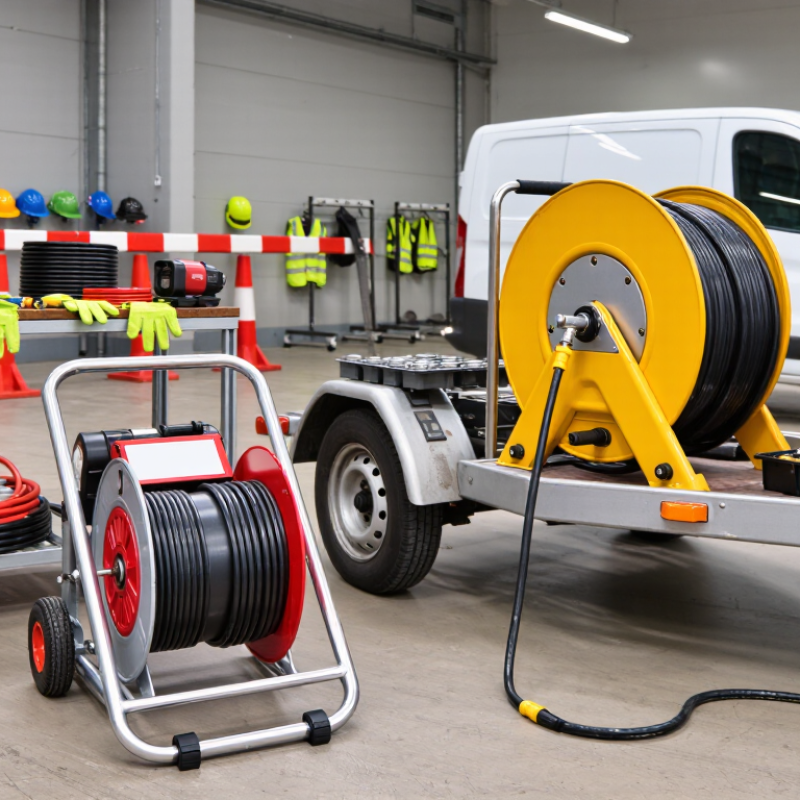
2026 Best Sewer Drain Cleaning Equipment for Global Buyers

What Sewer Drain Cleaning Equipment Does and Why It Matters

2026 Best Sewer Drain Cleaning Equipment for Global Buyers

What Sewer Drain Cleaning Equipment Does and Why It Matters

Sewer drain cleaning equipment removes blockages, sediment, grease, and roots from collection pipes. It restores flow without immediately replacing underground infrastructure. A jetting unit can push high-pressure water through a narrow line. A mechanical cable machine can break compacted deposits near inspection chambers. Vacuum equipment then removes loosened waste from the pipe and surrounding pit.

The need is substantial. The United Nations SDG 6.3.1 report found that only 56% of domestic wastewater flows were safely treated globally in 2022. Poor maintenance can worsen this gap. The U.S. Environmental Protection Agency’s 2022 Clean Watersheds Needs Survey identified 630.1 billion dollars in water infrastructure needs over twenty years. Cleaning equipment helps operators protect existing assets while funding remains limited.

Good selection depends on pipe diameter, blockage type, access, water supply, and operator skill. A camera inspection before cleaning can reveal cracked joints or displaced sections. That detail matters. More pressure is not always better. Excessive force may damage fragile pipes, especially in older networks. Field crews often need quieter machines, manageable hose lengths, and simple controls near homes or busy streets. Data sheets can look convincing, but actual site conditions remain harder to predict. Mistakes still happen.


Main Equipment Types for Different Sewer and Drain Conditions

2026 Best Sewer Drain Cleaning Equipment for Global Buyers

Main Equipment Types for Different Sewer and Drain Conditions

Choosing sewer drain cleaning equipment starts with the blockage, pipe size, and access point. A compact sectional machine suits indoor drains and narrow service lines. Its flexible cable reaches bends without requiring a large vehicle. Drum machines handle longer runs, but they need careful cable control. Operators sometimes select oversized equipment too quickly. That choice can damage fragile pipes.

Hydro jetters work well against grease, sludge, and loose sediment. Use lower pressure for old clay, cracked concrete, or weakened connections. Root cutters are useful when tree roots repeatedly enter joints. Their cutting heads must match the pipe diameter.

For deep municipal lines, combination vacuum units remove liquid waste and heavy debris efficiently. Inspection cameras improve decisions before and after cleaning. They reveal collapsed sections that cleaning alone cannot repair.

Tips: Check flow rate, working pressure, cable length, and nozzle compatibility. Keep spare hoses and cutting heads available. Test equipment on a controlled section first. Weather matters, too. Cold conditions can stiffen hoses and reduce performance. Local technicians should receive practical training, not only product manuals. Record pipe material, blockage type, and cleaning results after every job. This information supports safer equipment choices later.

How to Compare Cleaning Power, Reach, Safety, and Portability

2026 Best Sewer Drain Cleaning Equipment for Global Buyers

How to Compare Cleaning Power, Reach, Safety, and Portability

Global buyers should compare equipment by measurable performance, not pressure alone. The U.S. Environmental Protection Agency’s 2022 Clean Watersheds Needs Survey estimated 630.1 billion dollars in wastewater infrastructure needs over 20 years. This scale increases demand for reliable drain-cleaning tools. A practical comparison starts with water pressure, flow rate, nozzle design, and cable torque. Higher pressure may remove grease quickly, but flow rate carries loosened debris away. A 60-meter reach can be useful, yet excess hose weight may slow work inside narrow streets. The strongest machine is not always the best choice.

Reach should match pipe diameter, blockage type, and access conditions. Inspectors should check hose flexibility, cable stiffness, and quick-change fittings.

Safety also deserves equal attention. Look for guarded rotating parts, emergency shutoff controls, ground-fault protection, and clear operating instructions. ISO 12100 risk-assessment principles support this approach. Do not treat certification as a substitute for training. That mistake remains common.

Portability matters on sloped roads, wet floors, and crowded service lanes. Wheels, lifting points, noise levels, and fuel or battery logistics can change daily productivity.

Tips: Request test data at several flow rates, not only the maximum rating. Ask for cleaning distance under realistic pipe conditions. Verify spare-part availability in the destination country. Record setup time, operator fatigue, and water consumption during a live trial. A small, balanced unit may outperform a powerful machine that crews avoid carrying.

Global Standards, Maintenance Needs, and Operator Requirements

Choosing sewer drain cleaning equipment in 2026 requires more than pressure and reach.

Global buyers must match machines with local standards, pipe materials, water access, and site conditions. Electrical systems should suit regional voltage, frequency, grounding rules, and documented safety testing. Operators also need clear emergency stops, guarded moving parts, and readable controls. In wet chambers, small design details matter. A sealed control box can prevent costly downtime.

Maintenance planning should begin before purchase.

Ask for service intervals, spare-part availability, cleaning procedures, and technical records. Pumps, hoses, nozzles, filters, reels, and cable systems require different inspections.

After each shift, crews should flush dirty water, check hose covers, and record unusual vibration. Weekly checks can include nozzle wear, oil levels, electrical connections, and wheel brakes.

Keep it simple.

A practical logbook often reveals problems earlier than a dashboard.

Operator requirements vary across regions, but competence should never depend on guesswork.

Training should cover flow control, confined-space awareness, lockout procedures, traffic protection, and safe waste handling. Workers need gloves, eye protection, hearing protection, and equipment-specific instructions.

I have seen teams focus heavily on clearing speed and overlook hose recoil risks. That is an uncomfortable lesson.

Equipment may meet a specification, yet poor training can still create unsafe decisions. Buyers should request demonstrations using realistic pipe diameters, bends, sediment loads, and water limits.

Test records should be traceable, not merely promised.

How to Select the Best Equipment for International Sewer Operations

2026 Best Sewer Drain Cleaning Equipment for Global Buyers

How to Select the Best Equipment for International Sewer Operations

International sewer operations demand more than high pressure and long cables. They require equipment that matches pipe diameter, blockage type, climate, power supply, and local maintenance skills. The United Nations World Water Development Report 2024 states that 3.5 billion people lacked safely managed sanitation in 2022. This gap increases demand for reliable, serviceable cleaning systems.

Begin with the worksite, not the catalog. For narrow residential lines, choose a compact jetting unit with adjustable pressure and flow. Larger municipal networks may need a trailer-mounted system, vacuum recovery, and extended hose capacity. Record pipe materials, access points, average blockage depth, and daily operating hours. A 400-volt machine is unsuitable where only 230-volt power exists. Simple details prevent expensive delays.

Check water consumption carefully. A high-flow pump can clean quickly, but it may strain areas with limited water supply. Select corrosion-resistant components for coastal or humid regions. Ask whether filters, hoses, nozzles, and seals are locally replaceable. The U.S. Environmental Protection Agency’s 2022 Clean Watersheds Needs Survey estimated $630.1 billion in wastewater infrastructure needs over twenty years. That figure supports long-term maintenance planning, not careless purchasing.

Field testing remains essential. A machine may look powerful on paper and still perform poorly in silt-heavy pipes. Request operating data, noise levels, safety controls, and service intervals. No checklist is perfect. Buyers should review failures after each project and revise specifications before the next order.

2026 Best Sewer Drain Cleaning Equipment for Global Buyers - How to Select the Best Equipment for International Sewer Operations

Equipment Category Recommended Pipe Diameter Cleaning Method Typical Pressure Typical Flow Rate Power Configuration Best Application International Selection Considerations
Portable Electric Drain Cleaner 40–100 mm Rotating cable with interchangeable cutters Mechanical torque; no water pressure Not applicable 0.75–1.5 kW electric motor Indoor drains, sinks, floor drains, and short branch lines Confirm local voltage, frequency, plug type, grounding, and electrical safety requirements.
Compact Water Jetting Machine 50–150 mm High-pressure water jetting 100–250 bar 15–45 L/min Electric or small petrol engine Residential laterals, commercial drains, and grease removal Check water availability, hose and nozzle standards, noise limits, and operator protection rules.
Trailer-Mounted Jetting Unit 100–300 mm Continuous high-pressure jetting 150–300 bar 50–150 L/min Diesel or petrol engine Municipal laterals, road drainage, and longer sewer runs Evaluate towing regulations, trailer braking, road clearance, tank capacity, and spare-parts access.
Truck-Mounted Combination Unit 150–1200 mm High-pressure jetting plus vacuum extraction 100–300 bar 100–500 L/min Heavy-duty diesel vehicle and hydraulic system Large municipal sewers, stormwater lines, and sludge removal Assess vehicle emissions rules, axle load limits, tank layout, driving side, service network, and import duties.
Mechanical Drum Machine 50–150 mm Flexible rotating cable Mechanical torque; no water pressure Not applicable 0.5–1.5 kW electric motor Routine blockage removal in small commercial and residential lines Prioritize cable containment, ground-fault protection, corrosion resistance, and easy transport.
Sectional Cable Machine 75–300 mm Interconnected rigid cable sections Mechanical torque; no water pressure Not applicable 1–2.5 kW electric motor Longer commercial lines and heavy root or scale obstructions Check cable compatibility, drum or section storage, transport weight, and local electrical certification.
Vacuum Excavation and Sewer Suction Unit 100–1500 mm Air or liquid vacuum extraction Vacuum typically 0.4–0.9 bar below atmospheric pressure Airflow commonly 2,000–10,000 m³/h Truck-mounted diesel system Debris, sediment, standing water, and confined-access excavation work Verify hazardous-area requirements, disposal regulations, tank certification, payload limits, and noise controls.
Sewer Inspection Camera System 50–1200 mm, depending on camera configuration CCTV visual inspection and locating Not applicable Not applicable Battery or 100–240 V AC power supply Pre-cleaning assessment, post-cleaning verification, and asset condition surveys Select compatible video formats, language settings, cable length, geolocation functions, and data-export options.

Note: Performance ranges are typical industry values for equipment selection and may vary with pump design, nozzle configuration, hose length, pipe condition, elevation, and operating environment. Confirm final specifications against local safety, electrical, emissions, transport, and wastewater-disposal requirements.

Powder Coat Booths

For those larger-sized parts, or smaller quantity runs, we have 2 independent powder coat booths and ovens. The quality, durability and affordability of today’s powder coating finishes make this the process of choice for world-class companies.

Powder coating advantages over other forms of coating are many. Materials used in the Powder coating process can be metals and non-metals that come in a multitude of thicknesses, textures, colors, etc. Another of Powder coating’s biggest advantages over conventional coatings is its ability to create finishes in many different textures. Powder Coating Booths allow us the ability to apply these advantages to large products.

Wet Paint Line

Tri-State Fabricators runs a full-service conveyor line for painting. Wet painting can provide protection or decoration to many different part styles. From start to finish, every project is easier to undergo random and point-based inspection by our skilled painting team.

Advantages to our Wet Paint Line are these lines start with product prep and ends with a thorough inspection of a high quality finished product. Our ability to complete large and small projects with a superior finish and doing so in a timely and economical fashion. This passes along the savings in production to our customers. When powder coating ins not an option, our Wet Paint Line gets the job done right the first time.

Wet Paint Booths

When the parts get big and heavy we roll-out our custom paint racks and oversize booth. By utilizing our partnerships with all the major paint brands, we can match virtually any color with wet paint.

The advantages of having access to a Wet Paint Booth are many. Large projects of many different shapes can be loaded into the booth. The Wet Paint Booth offers an environment that is much more controlled than a typical parts painting operation.

Not only are they used because of their controlled environment, but they’re are also advantageous when it comes to applying paint to parts that are needed in industries that require specialty coatings such as medical, aerospace, etc.

Military CARC

Our military forces have some very high standards when it comes to the finish of their vehicles and equipment. From the first pre-treatment step to final coat, it takes a great deal of knowledge and experience to protect the men and women of our armed forces. They deserve only the best, and Tri-State Fabricators provides it.

All of our processes are closely monitored by our staff and management teams. Both of which are highly trained in the processes of metal fabrication and finishing. Tri-State Fabricators’ goal is to always fully satisfy each and every customer, including the military. We will always put a 110% into what we do.

Glass-Bead Blasting

Abrasive media blasting is an excellent way to remove old paint, rust, and increase the paint/powder adhesion. Glass beads produce a much smoother and brighter finish than angular abrasives; leaving the part clean yet without any dimensional change. Chemically inert and environmentally friendly, we can recycle our beads approximately 30 times; making them a more preferred method of metal cleaning or surface finishing.

Advantages to Glass Bead Blasting are many. Glass bead blast media is used when a project is needing rough surfaces need to become smooth for applications of coatings such as paint. It is typically used to clean paint and rust from a product surface without deforming the surface it is being used on. Overall, compared to many other blasting media, Glass Bead Blasting is a very economical choice and those savings are always passed on to our customers.

Part Washing

Tri-State Fabricators utilize a zinc phosphate wash to clean and etch the material to ensure the best paint adhesion possible. The unique design of our 3-stage wash system does the work like a 5-stage. From Cleaning and rinsing to conversion coating and post-treatment, Our Part Washing process is a complete service and works throughout the fabrication service and the finishing service.

Along with the previously mentioned benefits, Curing is a vital chemical reaction that leaves the product finish hard and relatively safe from mild abrasion and aggressive corrosion. This process can be done in more than one way; ambient air-dry or in curing ovens at temps that exceed 240°.

Burn-Off Oven

From fixing paint mistakes (someone else’s of course) to simply cleaning our paint line hooks, our burn-off oven is put to good use. After a quick burn-off, a little clean up, and a fresh coat of paint, your parts will look better than new.

Why does our Burn-Off Oven work so well? Because super heating the air around parts turns the materials into ashes. From paint and powder coatings to rubber and machining oils, high temps do the job without degrading the integrity of the part.

Masking

Masking is a vital part of producing high quality products. We have die-cut masking patterns to protect machined surfaces as well as a wide range of plugs and caps to protect threaded holes and bolts. We provide permanent and temporary masking.

Masking allows the selected sections of a product to be protected from a fabrication or finishing service. This can be with both chemicals when etching and tapes, paints when only finishing just a section of the product. Masking is great in aiding the customization process of a project.

Screen Printing

Screen printing is a photographic process that transfers artwork onto a porous nylon screen which allows colored ink to flow through the screen and be deposited on an aluminum or plastic component. We can generally have just about any design created onto a screen for your parts.

Some of the advantages of Screen Printing are, brand recognition for your business displaying on your products, assembly instructions, product warnings/hazards, etc. Tri-State Fabricators produces Screen Printing of the highest quality so you know it’s durable.

Metal Finishing

Metal Finishing is the art of treating the exterior portion of product, often metal but can also be made of other materials, so that the surface is clean and free of any debris. Then the process of applying coats or either paint of powder coat takes place. This coating process improves the quality of the product in both appearance and resistance to wear and corrosion.

Tri-State Fabricators, Inc., understands that a project typically isn’t complete until a high-quality finish has been added to your product. This is why our painting and powder coating teams continuously inspect the products throughout the Metal Finishing process.
