


2026 Best POY Spinning and Winding Machine Manufacturers

POY Spinning And Winding sits at a demanding point in the polyester value chain: a small tension variation can become a visible defect in the package. Textile Exchange’s Materials Market Report 2024 estimates global fiber production reached 124 million tonnes in 2023, with polyester representing about 57%. That scale makes machine selection more than a price comparison. Buyers must examine yarn quality, package build, energy use, automation, and service response under real production conditions.

This guide compares manufacturers against those practical demands. It considers spinning stability, winding precision, line integration, spare-parts access, and the ability to handle different production targets. A useful expert perspective comes from Dr. Seshadri Ramkumar, a textile and fiber technology researcher: his work highlights the importance of matching material properties with end use. The takeaway here is that process consistency matters as much as headline speed. This is a paraphrase, not a verbatim quotation about POY machinery.

There is no perfect machine. A supplier may offer excellent throughput yet provide limited local support; another may be dependable but less flexible during product changes. Those trade-offs deserve scrutiny. The rankings should therefore be read as a decision aid, not a universal verdict. Where published specifications lack comparable test conditions, buyers should request trial data and inspect actual packages before committing.
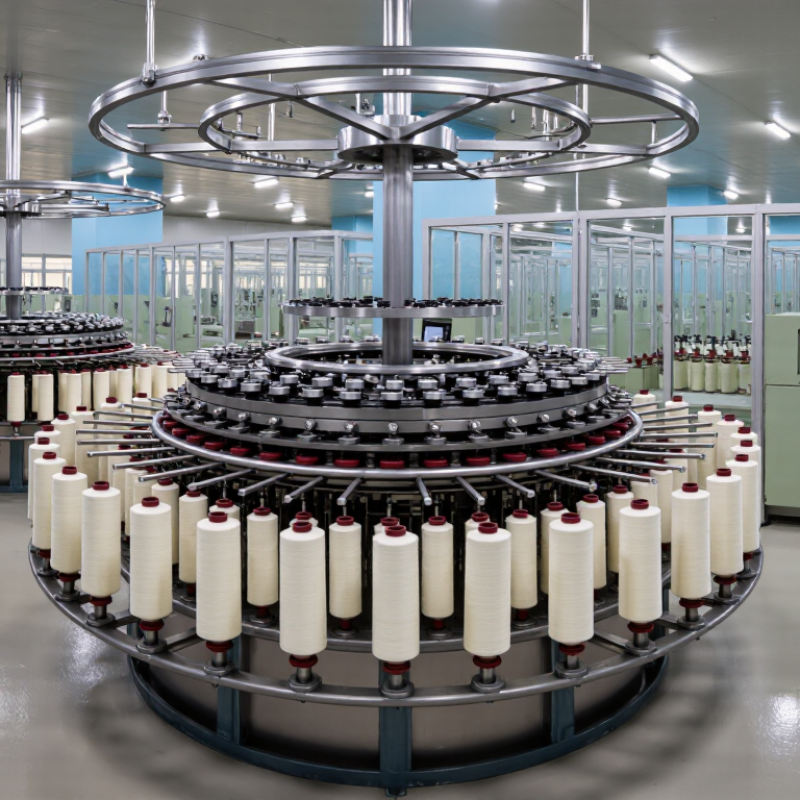
2026 Best POY Spinning and Winding Machine Manufacturers

What Is a POY Spinning and Winding Machine?

A POY spinning and winding machine converts molten polymer into continuous polyester filament yarn. POY means partially oriented yarn. Polymer chips are dried, melted, and pushed through a spinneret, forming fine filaments. Cooling air solidifies them before finish oil and controlled rollers guide the strands. The winding unit then lays yarn onto packages at a set speed and tension. A tiny defect travels. Uneven cooling, blocked spinneret holes, or unstable winding can create breaks and inconsistent packages. These may cause trouble during later drawing or texturing.

Textile Exchange’s Materials Market Report 2024 estimates global fiber production reached 124 million tonnes in 2023, with polyester representing 57% of total output. That scale helps explain why stable filament production matters, though the figure covers many fiber types and uses, not POY alone. When assessing a machine, engineers typically examine output per position, filament count, winding speed, package size, and energy use. They also check how quickly operators can thread filaments and clean the spinneret area. Real production conditions are less tidy than a specification sheet suggests. Small temperature shifts or inconsistent feedstock can affect yarn quality, so trial runs and measured operating data remain important.


How POY Spinning and Winding Processes Work

POY production begins when dried polymer chips melt and pass through a spinneret, forming fine continuous filaments. Cool air solidifies the strands as they descend. A metered finish applicator adds a thin lubricant layer to reduce friction during handling. Small changes matter.

Godet rollers guide the filaments at controlled speeds, creating partial molecular orientation without fully drawing the yarn. The winding unit then lays the yarn onto a tube, building a package with consistent density and stable edges. POY is commonly used in later drawing and texturing steps, so its properties affect downstream processing.

Operators monitor melt temperature, quench airflow, roller speed, and winding tension. A loose package may slip; excessive tension can deform the yarn or create hard edges. Not every run behaves alike. Room humidity, raw-material variation, and minor setup differences can shift results. A smooth-looking package alone does not confirm uniform filament quality. Checking package weight, unwinding behavior, and yarn consistency gives a more dependable picture, though no single check catches every defect.

2026 Best POY Spinning and Winding Machine Manufacturers - How POY Spinning and Winding Processes Work

A practical comparison framework for understanding the POY process and assessing spinning-and-winding equipment capabilities. No company or brand rankings are included.

Category Process or evaluation dimension What happens / what to assess Typical data or practical consideration
How POY Spinning and Winding Work
Feed preparation Polymer drying and melt preparation Polyester chips are dried to control moisture, then melted and conveyed to the spinning system. Moisture control helps limit polymer degradation during melt processing. Drying conditions depend on the polymer grade and supplier guidance; moisture limits and dryer performance should be verified for the intended material.
Melt spinning Extrusion and metering The polymer melt passes through an extruder, filtration components, and a metering pump before reaching the spinneret. Temperature profile, melt pressure, filtration, and throughput must be matched to the polymer, filament count, and target yarn specification.
Filament formation Spinneret and quenching The spinneret forms continuous filaments. Controlled cross-flow or radial quench air cools and solidifies them before they are gathered into a yarn bundle. Spinneret design, quench uniformity, and airflow stability influence filament consistency and yarn quality.
Yarn conditioning Finish application and yarn control A finish applicator adds a small amount of spin finish to help manage friction and downstream processing. Guides and godets control yarn path and tension. Finish type and application level should be selected for the polymer and intended downstream process; even application is important.
Partial orientation POY formation Take-up speed gives the filaments partial molecular orientation. POY is an intermediate yarn, commonly drawn or textured in a later process rather than treated as fully drawn yarn. For PET POY, take-up speeds are commonly in the approximate 2,500–3,500 m/min range; actual operating limits depend on line design and yarn specification.
Winding Package build and doffing The winding unit lays yarn onto a package while controlling traverse, contact, and winding tension. Packages are doffed for handling and subsequent processing. Package dimensions, yarn length, winding pattern, and doffing method are configuration-dependent and should be confirmed against the production plan.
Quality control Online monitoring and inspection Monitoring can identify yarn breaks, abnormal tension, package faults, or process deviations. Laboratory checks commonly include linear density and yarn evenness. Agree on test methods, sampling frequency, defect definitions, and acceptance limits before equipment acceptance testing.
How to Evaluate POY Spinning and Winding Machine Manufacturers
Product fit Yarn and polymer range Check whether the proposed line is designed for the intended polymer, filament count, linear-density range, and production mix. Request a written operating window for each target product rather than relying on a single maximum-capacity figure.
Line configuration Positions, ends, and layout Compare the number of spinning positions and yarn ends, equipment footprint, access for maintenance, and compatibility with the plant layout. Capacity depends on the complete configuration, operating hours, product mix, and planned maintenance—not just the number of positions.
Winder performance Package quality and changeover Assess winding stability, package density and shape, traverse control, yarn-break handling, doffing arrangements, and changeover time. Use sample packages or a supervised trial to verify package quality at the intended yarn specification and operating speed.
Automation Controls and process data Review recipe management, alarms, production records, data export, operator access levels, and integration with plant control systems. Confirm which functions are included, how data are stored, and whether interfaces meet the plant’s requirements.
Utilities and efficiency Energy, air, cooling, and exhaust Compare electrical load, compressed-air demand, quench-air requirements, cooling needs, and heat-management provisions. Request consumption figures with stated production conditions and system boundaries so proposals can be compared consistently.
Maintainability Spare parts and service access Check access to spinnerets, filters, godets, finish systems, and winding components, along with maintenance instructions and spare-parts availability. Clarify recommended spare-parts lists, lead times, training, warranty terms, and remote or on-site service arrangements.
Acceptance testing Performance verification Define how output, yarn quality, package quality, operating stability, and agreed utility measurements will be tested during commissioning. Set measurable acceptance criteria in advance, including test duration, product specification, sampling plan, and treatment of interruptions.

Note: Operating ranges are indicative, not universal specifications. Actual values vary with polymer grade, yarn construction, equipment configuration, ambient conditions, and process targets. Confirm limits and guarantees with the equipment supplier and polymer technical data.

Core Technologies and Performance Factors

POY spinning and winding performance depends on stable polymer flow, controlled cooling, and precise take-up. The Textile Exchange Materials Market Report 2024 estimates that polyester made up 57% of global fiber production in 2023. That scale makes consistency important: small variations in filament diameter or winding tension can affect downstream texturing and fabric quality.

Key technologies include accurate melt metering, uniform quench airflow, synchronized godet drives, and responsive tension control. On the winding side, traverse precision and package build matter as much as top speed. A practical check is to compare yarn denier variation, package hardness, broken-filament frequency, and downtime across positions during a full production shift.

One uncomfortable point: a fast line can still waste material if package edges collapse or tension drifts. Operators should review process data alongside physical package samples; neither tells the whole story.

Tips: Log temperature, pressure, and tension by position. Inspect package edges at regular intervals. Treat a single clean sample with caution. It may not represent an entire shift.

How to Evaluate POY Machine Manufacturers

When evaluating POY spinning and winding machine manufacturers, look beyond rated speed. The 2024 Textile Exchange Materials Market Report estimates global fiber production reached 124 million tonnes in 2023, with polyester making up 57 percent. That scale makes stable production and repeatable package quality essential. Ask manufacturers for test records showing denier variation, winding tension, package density, and yarn-break rates under comparable operating conditions. Numbers matter. So does seeing a full-speed trial with your own polymer and operating settings.

Check how clearly the supplier documents energy use, operator training, commissioning support, and spare-parts availability. Request references from plants running similar capacities, then ask about actual output after startup—not just the acceptance test. Inspect the control interface and maintenance access in person. A polished brochure cannot show how quickly a technician can reach a sensor behind a guard. I would also question unusually strong efficiency claims unless the measurement method and production conditions are stated.

Tips: Compare at least two trial reports using the same yarn specification and test duration. Record downtime, waste, and package defects; small differences can grow across continuous shifts. Be cautious: a machine that performs well in a demonstration may need adjustment in daily production.

Leading POY Spinning and Winding Machine Manufacturers in 2026

Leading POY spinning and winding machine manufacturers in 2026 should be judged by process fit, not brochure claims. A reliable supplier can explain how its spinning line controls melt delivery, quenching airflow, filament stability, and draw-off conditions. Ask for output ranges, denier flexibility, energy use, and changeover time under comparable polymer and yarn specifications.

Details matter.

A neat sample package cannot reveal long-run consistency. For winding systems, inspect package density, traverse performance, tension control, and automatic doffing at the intended speed. Request a factory acceptance test plan, sample production records, maintenance intervals, and a clear list of recommended spare parts.

Service response matters when a position stops; ask how remote diagnostics and technician training work in practice. Also compare utility needs, installation layout, and compatibility with downstream texturing equipment. A technically strong machine may still be a poor fit if space or operator skills are overlooked.

Not always obvious.

Manufacturer references should involve similar fiber types and operating schedules, while efficiency claims should be checked against documented test conditions. Even a careful comparison can miss practical issues that only appear during sustained production.

Powder Coat Booths

For those larger-sized parts, or smaller quantity runs, we have 2 independent powder coat booths and ovens. The quality, durability and affordability of today’s powder coating finishes make this the process of choice for world-class companies.

Powder coating advantages over other forms of coating are many. Materials used in the Powder coating process can be metals and non-metals that come in a multitude of thicknesses, textures, colors, etc. Another of Powder coating’s biggest advantages over conventional coatings is its ability to create finishes in many different textures. Powder Coating Booths allow us the ability to apply these advantages to large products.

Wet Paint Line

Tri-State Fabricators runs a full-service conveyor line for painting. Wet painting can provide protection or decoration to many different part styles. From start to finish, every project is easier to undergo random and point-based inspection by our skilled painting team.

Advantages to our Wet Paint Line are these lines start with product prep and ends with a thorough inspection of a high quality finished product. Our ability to complete large and small projects with a superior finish and doing so in a timely and economical fashion. This passes along the savings in production to our customers. When powder coating ins not an option, our Wet Paint Line gets the job done right the first time.

Wet Paint Booths

When the parts get big and heavy we roll-out our custom paint racks and oversize booth. By utilizing our partnerships with all the major paint brands, we can match virtually any color with wet paint.

The advantages of having access to a Wet Paint Booth are many. Large projects of many different shapes can be loaded into the booth. The Wet Paint Booth offers an environment that is much more controlled than a typical parts painting operation.

Not only are they used because of their controlled environment, but they’re are also advantageous when it comes to applying paint to parts that are needed in industries that require specialty coatings such as medical, aerospace, etc.

Military CARC

Our military forces have some very high standards when it comes to the finish of their vehicles and equipment. From the first pre-treatment step to final coat, it takes a great deal of knowledge and experience to protect the men and women of our armed forces. They deserve only the best, and Tri-State Fabricators provides it.

All of our processes are closely monitored by our staff and management teams. Both of which are highly trained in the processes of metal fabrication and finishing. Tri-State Fabricators’ goal is to always fully satisfy each and every customer, including the military. We will always put a 110% into what we do.

Glass-Bead Blasting

Abrasive media blasting is an excellent way to remove old paint, rust, and increase the paint/powder adhesion. Glass beads produce a much smoother and brighter finish than angular abrasives; leaving the part clean yet without any dimensional change. Chemically inert and environmentally friendly, we can recycle our beads approximately 30 times; making them a more preferred method of metal cleaning or surface finishing.

Advantages to Glass Bead Blasting are many. Glass bead blast media is used when a project is needing rough surfaces need to become smooth for applications of coatings such as paint. It is typically used to clean paint and rust from a product surface without deforming the surface it is being used on. Overall, compared to many other blasting media, Glass Bead Blasting is a very economical choice and those savings are always passed on to our customers.

Part Washing

Tri-State Fabricators utilize a zinc phosphate wash to clean and etch the material to ensure the best paint adhesion possible. The unique design of our 3-stage wash system does the work like a 5-stage. From Cleaning and rinsing to conversion coating and post-treatment, Our Part Washing process is a complete service and works throughout the fabrication service and the finishing service.

Along with the previously mentioned benefits, Curing is a vital chemical reaction that leaves the product finish hard and relatively safe from mild abrasion and aggressive corrosion. This process can be done in more than one way; ambient air-dry or in curing ovens at temps that exceed 240°.

Burn-Off Oven

From fixing paint mistakes (someone else’s of course) to simply cleaning our paint line hooks, our burn-off oven is put to good use. After a quick burn-off, a little clean up, and a fresh coat of paint, your parts will look better than new.

Why does our Burn-Off Oven work so well? Because super heating the air around parts turns the materials into ashes. From paint and powder coatings to rubber and machining oils, high temps do the job without degrading the integrity of the part.

Masking

Masking is a vital part of producing high quality products. We have die-cut masking patterns to protect machined surfaces as well as a wide range of plugs and caps to protect threaded holes and bolts. We provide permanent and temporary masking.

Masking allows the selected sections of a product to be protected from a fabrication or finishing service. This can be with both chemicals when etching and tapes, paints when only finishing just a section of the product. Masking is great in aiding the customization process of a project.

Screen Printing

Screen printing is a photographic process that transfers artwork onto a porous nylon screen which allows colored ink to flow through the screen and be deposited on an aluminum or plastic component. We can generally have just about any design created onto a screen for your parts.

Some of the advantages of Screen Printing are, brand recognition for your business displaying on your products, assembly instructions, product warnings/hazards, etc. Tri-State Fabricators produces Screen Printing of the highest quality so you know it’s durable.

Metal Finishing

Metal Finishing is the art of treating the exterior portion of product, often metal but can also be made of other materials, so that the surface is clean and free of any debris. Then the process of applying coats or either paint of powder coat takes place. This coating process improves the quality of the product in both appearance and resistance to wear and corrosion.

Tri-State Fabricators, Inc., understands that a project typically isn’t complete until a high-quality finish has been added to your product. This is why our painting and powder coating teams continuously inspect the products throughout the Metal Finishing process.
