


2026 Best Type of Potassium Sulfate for Global Buyers?

Choosing the best Potassium Sulfate in 2026 requires more than comparing price per ton. Global buyers must examine purity, particle size, chloride content, production route, packaging, and delivery reliability. The right specification for greenhouse tomatoes may differ from one for tobacco, potatoes, or export-oriented fruit farms.

The International Fertilizer Association’s Fertilizer Outlook 2024–2028 indicates continued growth in global fertilizer demand. Its data also highlights potassium’s importance in intensive crop production and yield protection. The U.S. Geological Survey’s Mineral Commodity Summaries 2025 reports global potash production above 70 million metric tons in 2024, although most potash remains chloride-based. This matters because Potassium Sulfate supplies potassium without adding chloride. It can support chloride-sensitive crops and controlled-environment agriculture.

Dr. Ismail Cakmak, a widely cited plant nutrition expert, has stated that “potassium is very important for plants, especially under stress conditions.” His observation remains practical for buyers facing drought, salinity, and irregular weather. However, no universal “best” type exists. Mannheim-produced material often offers consistent industrial supply, while sulfate from alternative processes may require closer impurity checks. Crystalline grades dissolve quickly. Granular grades suit field application.

Small details matter. A damp bag can hide caking and uneven spreading. Buyers should request independent certificates for K2O, sulfur, chloride, moisture, heavy metals, and particle distribution. Supplier claims are not enough. Reported market figures also vary by methodology, region, and product definition. That uncertainty deserves attention. A reliable 2026 purchasing decision should combine laboratory evidence, crop experience, and verified logistics rather than chasing the lowest quotation.
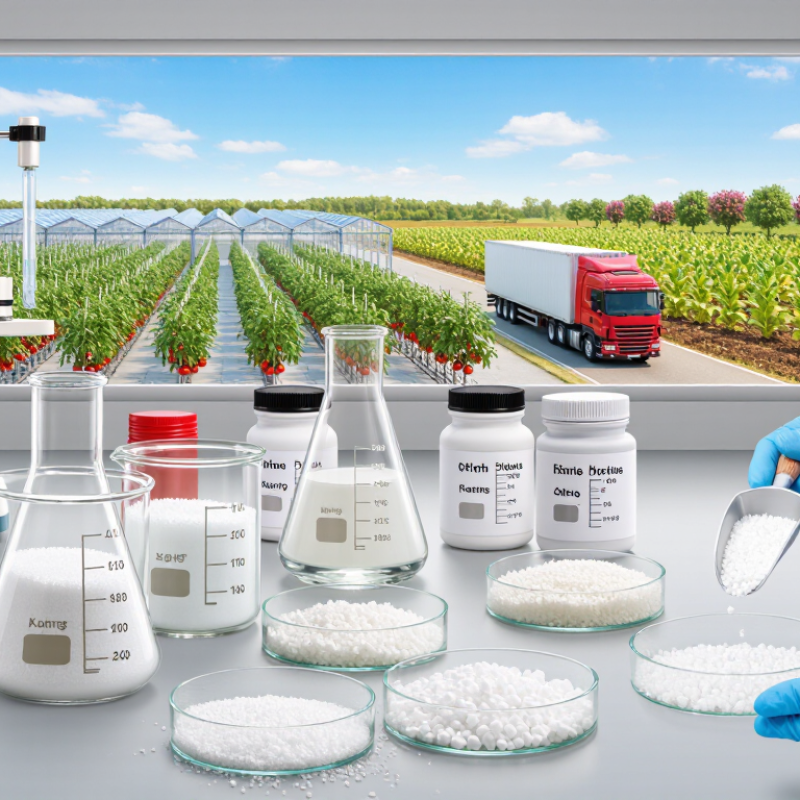
2026 Best Type of Potassium Sulfate for Global Buyers?

2026 SOP Grades: Compare 50–52% K₂O and 17–18% Sulfur

For global buyers, SOP quality starts with the grade, not the bag. Commercial potassium sulfate usually contains 50–52% K₂O and 17–18% sulfur. Pure K₂SO₄ calculates near 54% K₂O and 18.4% sulfur, but real products include moisture and minor mineral residues. The International Fertilizer Association’s Medium-Term Fertilizer Outlook 2024–2028 tracks fertilizer demand by nutrient content, while USGS Mineral Commodity Summaries 2025 reports potash using K₂O equivalent. These conventions make supplier comparisons easier.

A 52% K₂O grade suits buyers seeking concentrated potassium with limited application volume. A 50% grade may still perform well, if its assay is stable and moisture remains controlled. Check the certificate of analysis, not only the headline number. Ask for water-soluble potassium, sulfur, chloride, moisture, particle-size distribution, and insoluble matter. Granules should move evenly through a spreader. Powdery material can bridge inside a hopper.

Low chloride is important for chloride-sensitive crops and protected cultivation. However, “low chloride” needs a measured value. Some purchasing decisions rely too heavily on K₂O alone. That is a weakness. Storage conditions also matter, especially in humid ports where caking can develop. Independent laboratory testing before shipment is prudent, although it adds cost and time. Grade selection should match crop sensitivity, application equipment, soil testing, and delivered cost per unit of K₂O and sulfur.


Chloride Limits: Select Fertilizer with Cl⁻ Below 1.5%

2026 Best Type of Potassium Sulfate for Global Buyers?

For chloride-sensitive crops, potassium sulfate with Cl⁻ below 1.5% deserves careful attention. This limit equals 15,000 mg/kg of chloride. At an application rate of 300 kg per hectare, it could add 4.5 kg of chloride. The amount may matter in greenhouse beds, sandy soils, and areas with limited rainfall. FAO Irrigation and Drainage Paper 29 identifies chloride as a crop-specific toxicity risk under saline conditions. Potatoes, tobacco, fruits, and some vegetables can show stronger sensitivity.

Standard potassium sulfate usually contains about 50–52% K₂O and 17–18% sulfur. IFA’s Medium-Term Fertilizer Outlook 2024–2028 places global potash demand near 40 million tonnes of K₂O annually. That scale increases the need for consistent product testing.

Buyers should request a recent certificate of analysis, not only a product brochure. Check whether chloride is reported on a dry basis, water-soluble basis, or another method. These details can change the purchasing decision.

Tips: Ask for independent batch testing before shipment. Compare chloride, K₂O, sulfur, moisture, and particle size together. A low chloride result is helpful, but it is not the whole answer. I would also inspect storage conditions. Damp granules can bridge, segregate, and distribute nutrients unevenly. That practical risk is often underestimated.

Granular SOP: Match 2–4 mm Particles to Field Application Systems

For global buyers in 2026, granular potassium sulfate should match the application system, not only the laboratory certificate. A 2–4 mm particle range suits many broadcast spreaders and blended fertilizer lines. It supports steadier flow across conveyor belts, hoppers, and field discs. The International Fertilizer Association projects global fertilizer demand to approach 205 million tonnes of nutrients by 2027/28. That growth increases pressure on handling consistency.

Particle shape matters too. Rounded granules usually roll more evenly, while excessive fines can create dust and uneven discharge. Ask for sieve analysis, moisture data, crushing strength, and chloride content. Keep moisture low. Wet granules bridge inside bins, especially after long sea transport. The Food and Agriculture Organization emphasizes nutrient efficiency and site-specific fertilizer management in its fertilizer use guidance. A practical test remains necessary: run a sample through the buyer’s actual spreader at working speed, then inspect the application pattern.

The fit is not perfect.

A 2–4 mm specification may still segregate during loading or blending. Different densities can separate even when particle sizes appear similar. Buyers should repeat testing after transport, not only before shipment. This small step often reveals weak granules, excess powder, or caking that a certificate misses. Reliable SOP purchasing therefore combines chemical analysis, physical screening, and field observation.

Water-Soluble SOP: Check 100+ g/L Solubility for Fertigation

2026 Best Type of Potassium Sulfate for Global Buyers?

For fertigation, water-soluble potassium sulfate is usually the more practical choice. A useful screening point is solubility above 100 g/L. However, the test temperature must be stated clearly. Solubility at 20°C may differ greatly from results at warmer temperatures. Ask for a recent laboratory report, not only a technical brochure. Check potassium content, sulfate content, moisture, and insoluble residue. Small differences can affect stock-tank performance.

In the field, the real test begins inside the mixing tank. Add the fertilizer gradually, using clean water and steady agitation. Watch for sediment after 30 to 60 minutes. A clear solution protects filters and reduces uneven delivery through drip lines.

The fertilizer should also maintain consistent quality across shipments. A low-chloride profile may matter for chloride-sensitive crops, but buyers should verify the actual specification. Do not assume every granular product dissolves well.

One detail is often missed.

Fertigation programs need more than a high solubility number. Compare solution temperature, water hardness, tank concentration, and compatibility with calcium fertilizers. Jar testing can reveal unexpected precipitation before it reaches the field. I would also review batch-to-batch results, because one excellent sample does not prove stable supply. In some cases, 100 g/L is only a starting point, not a guarantee of trouble-free application. Local agronomists and irrigation technicians should confirm the final rate for each crop and system.

Buyer Checklist: Verify Moisture Below 1.5% and Crop Compatibility

For global buyers, potassium sulfate selection starts with a measurable moisture limit. Ask for moisture below 1.5% on the latest batch certificate. High moisture can cause caking, poor flow, and uneven dosing. A dry-looking bag is not proof.

Request a representative sample before shipment. Check moisture through an independent laboratory when the order is significant. Compare the supplier’s method, sampling date, and batch number.

Also inspect particle size, potassium content, sulfate content, and visible impurities. Packaging matters too. Torn bags or weak inner liners can increase moisture during long transport. Small details matter.

Crop compatibility requires equal attention. Potassium sulfate suits many chloride-sensitive crops, including tobacco, potatoes, fruits, and selected vegetables. Yet soil tests, irrigation quality, and application rate can change the recommendation.

Confirm whether the product dissolves well enough for your fertigation equipment. Granular material may perform differently from water-soluble grades.

I once treated a passing moisture result as a complete quality verdict. That was too narrow. A product can meet the moisture target but still mismatch the crop, soil, or delivery system. Ask for field-use guidance, recent test reports, and traceable batch records before approving a purchase.

Powder Coat Booths

For those larger-sized parts, or smaller quantity runs, we have 2 independent powder coat booths and ovens. The quality, durability and affordability of today’s powder coating finishes make this the process of choice for world-class companies.

Powder coating advantages over other forms of coating are many. Materials used in the Powder coating process can be metals and non-metals that come in a multitude of thicknesses, textures, colors, etc. Another of Powder coating’s biggest advantages over conventional coatings is its ability to create finishes in many different textures. Powder Coating Booths allow us the ability to apply these advantages to large products.

Wet Paint Line

Tri-State Fabricators runs a full-service conveyor line for painting. Wet painting can provide protection or decoration to many different part styles. From start to finish, every project is easier to undergo random and point-based inspection by our skilled painting team.

Advantages to our Wet Paint Line are these lines start with product prep and ends with a thorough inspection of a high quality finished product. Our ability to complete large and small projects with a superior finish and doing so in a timely and economical fashion. This passes along the savings in production to our customers. When powder coating ins not an option, our Wet Paint Line gets the job done right the first time.

Wet Paint Booths

When the parts get big and heavy we roll-out our custom paint racks and oversize booth. By utilizing our partnerships with all the major paint brands, we can match virtually any color with wet paint.

The advantages of having access to a Wet Paint Booth are many. Large projects of many different shapes can be loaded into the booth. The Wet Paint Booth offers an environment that is much more controlled than a typical parts painting operation.

Not only are they used because of their controlled environment, but they’re are also advantageous when it comes to applying paint to parts that are needed in industries that require specialty coatings such as medical, aerospace, etc.

Military CARC

Our military forces have some very high standards when it comes to the finish of their vehicles and equipment. From the first pre-treatment step to final coat, it takes a great deal of knowledge and experience to protect the men and women of our armed forces. They deserve only the best, and Tri-State Fabricators provides it.

All of our processes are closely monitored by our staff and management teams. Both of which are highly trained in the processes of metal fabrication and finishing. Tri-State Fabricators’ goal is to always fully satisfy each and every customer, including the military. We will always put a 110% into what we do.

Glass-Bead Blasting

Abrasive media blasting is an excellent way to remove old paint, rust, and increase the paint/powder adhesion. Glass beads produce a much smoother and brighter finish than angular abrasives; leaving the part clean yet without any dimensional change. Chemically inert and environmentally friendly, we can recycle our beads approximately 30 times; making them a more preferred method of metal cleaning or surface finishing.

Advantages to Glass Bead Blasting are many. Glass bead blast media is used when a project is needing rough surfaces need to become smooth for applications of coatings such as paint. It is typically used to clean paint and rust from a product surface without deforming the surface it is being used on. Overall, compared to many other blasting media, Glass Bead Blasting is a very economical choice and those savings are always passed on to our customers.

Part Washing

Tri-State Fabricators utilize a zinc phosphate wash to clean and etch the material to ensure the best paint adhesion possible. The unique design of our 3-stage wash system does the work like a 5-stage. From Cleaning and rinsing to conversion coating and post-treatment, Our Part Washing process is a complete service and works throughout the fabrication service and the finishing service.

Along with the previously mentioned benefits, Curing is a vital chemical reaction that leaves the product finish hard and relatively safe from mild abrasion and aggressive corrosion. This process can be done in more than one way; ambient air-dry or in curing ovens at temps that exceed 240°.

Burn-Off Oven

From fixing paint mistakes (someone else’s of course) to simply cleaning our paint line hooks, our burn-off oven is put to good use. After a quick burn-off, a little clean up, and a fresh coat of paint, your parts will look better than new.

Why does our Burn-Off Oven work so well? Because super heating the air around parts turns the materials into ashes. From paint and powder coatings to rubber and machining oils, high temps do the job without degrading the integrity of the part.

Masking

Masking is a vital part of producing high quality products. We have die-cut masking patterns to protect machined surfaces as well as a wide range of plugs and caps to protect threaded holes and bolts. We provide permanent and temporary masking.

Masking allows the selected sections of a product to be protected from a fabrication or finishing service. This can be with both chemicals when etching and tapes, paints when only finishing just a section of the product. Masking is great in aiding the customization process of a project.

Screen Printing

Screen printing is a photographic process that transfers artwork onto a porous nylon screen which allows colored ink to flow through the screen and be deposited on an aluminum or plastic component. We can generally have just about any design created onto a screen for your parts.

Some of the advantages of Screen Printing are, brand recognition for your business displaying on your products, assembly instructions, product warnings/hazards, etc. Tri-State Fabricators produces Screen Printing of the highest quality so you know it’s durable.

Metal Finishing

Metal Finishing is the art of treating the exterior portion of product, often metal but can also be made of other materials, so that the surface is clean and free of any debris. Then the process of applying coats or either paint of powder coat takes place. This coating process improves the quality of the product in both appearance and resistance to wear and corrosion.

Tri-State Fabricators, Inc., understands that a project typically isn’t complete until a high-quality finish has been added to your product. This is why our painting and powder coating teams continuously inspect the products throughout the Metal Finishing process.
