


2026 Best Moved Chipper Machine for Global Buyers?

Choosing the 2026 Best Moved Chipper Machine requires more than comparing engine power or advertised output. Global buyers need equipment that performs reliably across farms, landscaping projects, municipal maintenance, and timber operations. A suitable machine should process branches smoothly, move safely between work areas, and remain practical under changing weather and road conditions.

Real-world evaluation matters. Operators should examine feed opening size, cutting capacity, fuel consumption, discharge control, tire design, and maintenance access. A machine that handles wet branches in a test yard may perform differently on uneven ground or during long working shifts. Small details matter. Easy blade inspection can reduce downtime. Clear controls can improve operator confidence. Reliable emergency-stop systems are essential.

Supplier experience also deserves careful attention. Buyers should request verified specifications, service records, spare-parts availability, warranty terms, and operator training details. Regional compliance requirements may vary, so technical documents must be checked before purchase. Transport dimensions, shipping weight, and local service capability can affect the real investment considerably.

Not every powerful model is the best choice. That assumption deserves reconsideration. Some buyers may prioritize mobility, while others need higher throughput or lower operating costs. This guide examines the strengths and limitations of leading 2026 options, using practical criteria rather than impressive claims alone. Independent testing is not always available, and supplier data may require further verification. A careful decision remains the safest decision.
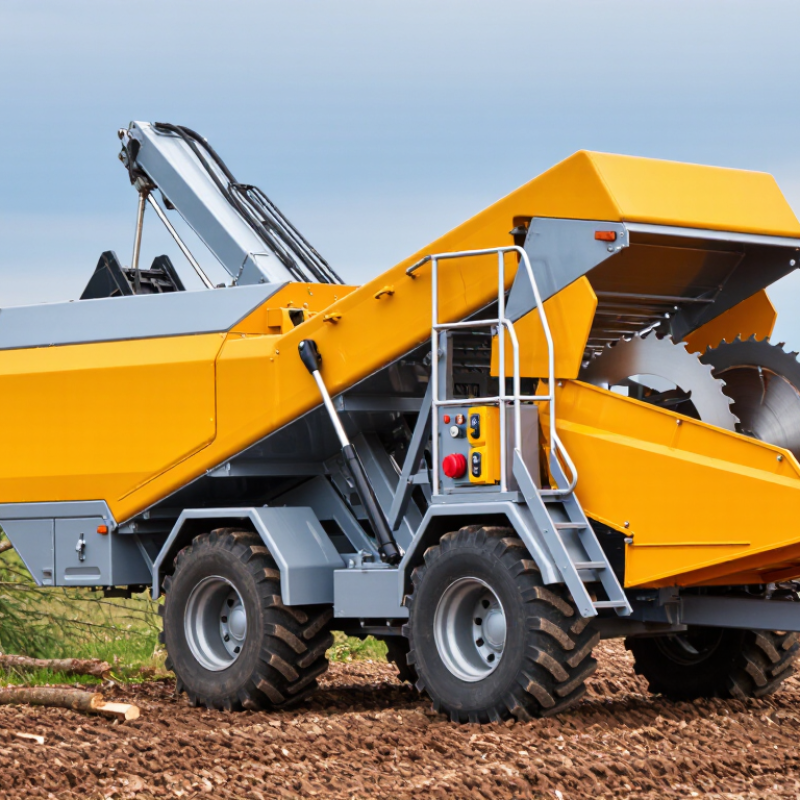
2026 Best Moved Chipper Machine for Global Buyers?

What Is a Mobile Chipper Machine and How Does It Work?

A mobile chipper machine is a towable or self-propelled system that turns branches, logs, and pruning waste into wood chips. Unlike a fixed chipper, it can move directly to orchards, roadside projects, or construction sites. This reduces hauling distance and keeps bulky branches away from public work areas.

The machine usually has an infeed hopper, feed rollers, cutting knives, and a discharge chute. Feed rollers pull the wood inward at a controlled speed. A rotating drum or disc then cuts it against sharp blades. The chute directs chips into a truck, trailer, or collection pile. Operators should match the machine opening with the branch diameter. Oversized material can cause vibration, jams, or uneven chips.

Safety matters every minute. A trained operator checks guards, emergency stops, blade condition, and towing connections before work begins. Wet wood may feed differently. Dirty wood can damage knives quickly. In my experience, regular knife inspection often improves output more than simply choosing a larger engine. That deserves more attention.

Fuel use, road width, tire condition, and local transport rules also affect the right mobile chipper. A compact unit may reach narrow garden paths, but it usually handles smaller material. A heavy unit processes larger logs, yet it needs stronger towing equipment and more open space. No machine fits every site. Careful measurement still beats confident guessing.


Which Types of Mobile Chippers Suit Different Global Applications?

2026 Best Moved Chipper Machine for Global Buyers?

Which Types of Mobile Chippers Suit Different Global Applications?

Mobile chippers should match the worksite, not only the required output. Towable drum chippers suit landscaping contractors moving between gardens, roadsides, and small construction areas. Their compact frames can fit through narrow gates. A two-person crew may reposition one with a suitable vehicle. However, rough roads can expose weak tires, hitches, and suspension parts.

Tracked chippers work better on muddy plantations, steep slopes, and uneven forestry sites. Their low ground pressure helps protect soft soil. Operators can move slowly around stumps, drainage channels, and scattered branches. They also need regular track inspection. Mud hides wear. That detail is easy to underestimate.

Large disc chippers serve municipal clearing projects and commercial biomass operations. They handle heavier logs and continuous feeding more effectively. Their transport dimensions require careful planning at ports, bridges, and local roads. Buyers should confirm feed opening size, engine emissions requirements, spare-part access, and operator training. A powerful machine is not always the practical choice.

In dry regions, dust protection and simple maintenance matter greatly. In cold climates, starting systems and hydraulic fluid selection deserve attention. Electric mobile chippers can reduce local noise and emissions, but charging access may limit remote use. I have seen buyers focus on capacity while ignoring service distance. That mistake becomes expensive. Trial processing with local wood is wiser than relying only on brochures.

2026 Best Moved Chipper Machine for Global Buyers? - Which Types of Mobile Chippers Suit Different Global Applications?

Practical comparison of common mobile wood-chipper configurations. Capacity and output figures are typical operating ranges and vary with wood species, moisture, feed method, knife condition, and operator practices.

Mobile Chipper Type Typical Maximum Feed Diameter Typical Throughput Power Range Mobility and Transport Best-Fit Global Applications Recommended Feedstock Main Selection Advantage
Towable Disc Chipper 150–300 mm 8–30 green tonnes/hour 30–150 kW Road-towable trailer; suitable for frequent movement between small and medium job sites Branches, limbs, small trunks, and fresh pruning waste Good balance of purchase cost, transportability, and clean chip production
Towable Drum Chipper 200–400 mm 15–45 green tonnes/hour 75–250 kW Trailer-mounted; generally requires a suitable towing vehicle and wider access routes Mixed branches, small logs, tops, and irregular woody material High feeding capacity and strong performance on larger, mixed-diameter material
Tracked Drum Chipper 250–500 mm 20–60 green tonnes/hour 150–500 kW Self-propelled crawler chassis; designed for soft ground, slopes, and areas without paved access Whole trees, logs, branches, and heavy woody debris Superior off-road mobility and reduced dependence on road access
Tracked Disc Chipper 200–350 mm 12–35 green tonnes/hour 75–250 kW Tracked undercarriage; suitable for parks, uneven terrain, and restricted-access sites Fresh branches, limbs, and medium-sized stems Better terrain access than a trailer unit while maintaining relatively uniform chip size
Whole-Tree Chipper 300–600 mm 30–100 green tonnes/hour 250–750 kW Usually truck-mounted, semi-mobile, or crawler-mounted; needs high-capacity transport planning Entire small trees, tops, slash, and large branches Very high productivity with minimal pre-processing of harvested material
Small Compact Chipper 80–180 mm 2–12 green tonnes/hour 10–60 kW Compact trailer or walk-behind configuration; easy access through narrow gates and urban roads Pruning branches, hedge trimmings, and small-diameter wood Low transport burden, simple site setup, and suitability for confined work areas
High-Speed Biomass Chipper 150–350 mm 25–90 green tonnes/hour 200–650 kW Mobile or semi-mobile industrial configuration; commonly moved between stockpiles and processing sites Clean forest residues, plantation waste, sawmill residues, and dry or semi-dry wood High production rate for fuel chips when feedstock quality and logistics are consistent
PTO-Driven Farm Chipper 100–250 mm 5–25 green tonnes/hour Tractor PTO, commonly 40–150 kW Mounted or trailed behind an agricultural tractor; practical where tractors are already available Branches, orchard prunings, small logs, and farm-grown woody material Uses existing tractor power and simplifies equipment ownership for agricultural operators
Electric Mobile Chipper 150–400 mm 10–50 green tonnes/hour 75–400 kW electric motor Trailer, skid, or semi-mobile installation; requires adequate grid, generator, or battery power Branches, clean wood waste, pallets, and sorted woody residues Lower local emissions and noise potential where reliable electrical infrastructure is available
Combination Chipper with Screening or Conveying 200–450 mm 15–60 green tonnes/hour 100–500 kW Mobile processing line with integrated discharge conveyor, screen, or material-handling equipment Mixed woody residues requiring chip-size control or separation of fines More controlled final product and reduced secondary handling
Buyer note: Select the machine according to feedstock diameter, required chip size, daily volume, road regulations, towing capacity, terrain, service support, fuel or power availability, and local emissions requirements. Throughput is normally lower when processing hard, frozen, contaminated, very dry, or highly irregular material.

How to Compare Chipping Capacity, Power, Mobility, and Safety Features

Choosing the best moved chipper machine in 2026 starts with the worksite, not the sales brochure. The FAO Global Forest Resources Assessment 2020 records 4.06 billion hectares of forest worldwide, with major differences in terrain, species, and moisture. A machine rated for 200 millimetre branches may struggle with wet hardwood. The USDA Forest Products Laboratory Wood Handbook, FPL-GTR-282, explains that density and moisture strongly affect wood handling and energy demand. Compare maximum in-feed diameter, realistic tonnes-per-hour output, and fuel use under similar material conditions. Horsepower alone misleads.

Mobility needs equal attention. Check towing mass, axle loading, ground clearance, turning radius, and setup time. On narrow roads, a compact machine with slower output may outperform a larger unit. It sounds obvious. It is often ignored.

Safety comparisons should include guarded in-feed rollers, a reachable emergency stop, reverse controls, discharge shielding, and clear maintenance isolation procedures. ANSI Z133.1 and OSHA logging-equipment guidance provide useful benchmarks for guarding, training, and lockout practices.

Operators should also inspect noise, vibration, lighting, and stability on slopes. Reported capacity is not a guarantee. Test logs from comparable branches, weather, and operators are more reliable than a single catalogue figure.

My practical concern is simple: buyers often compare machines when new, but overlook tire wear, blade access, and service support after twelve months. That gap can change the real cost dramatically.

What Should International Buyers Check Before Purchasing in 2026?

International buyers should judge a mobile wood chipper by working conditions, not photographs. Check the feed opening against your typical branch diameter, including crooked or wet timber. A wide opening may improve productivity, but it can increase weight, fuel use, and transport demands. Measure the machine with its discharge chute folded.

Ask for verified output data, engine specifications, service intervals, and operating noise levels. Do not rely only on advertised hourly capacity. Real production changes with wood species, moisture, operator skill, and blade sharpness. Request a live demonstration with material similar to yours. Watch for vibration, uneven feeding, and difficult cleaning points.

Safety details deserve careful inspection. Confirm emergency-stop controls, guarded moving parts, reverse-feed functions, and clear maintenance instructions. Review trailer dimensions, axle loads, braking equipment, lighting, and connection requirements before shipment. Documentation matters. Check conformity records, user manuals, spare-part lists, and remote technical support. Parts availability can decide whether a machine works next season.

Currency, shipping, and import costs also affect the purchase. A low initial price can become expensive after delays or unavailable components. Speak with the manufacturer’s technical team, but verify every claim independently. I would avoid choosing the largest model too quickly. Bigger is not always better. In some regions, easier transport and simpler maintenance create higher long-term value. Test assumptions before signing.

2026 Best Mobile Chipper Machine for Global Buyers

What should international buyers check before purchasing in 2026? The chart compares representative maximum feed-diameter classes commonly used for mobile wood chippers. Actual performance depends on rotor design, knife configuration, material type, moisture, and operating conditions.

International purchasing checklist: confirm the maximum feed opening and required engine power, verify emissions compliance for the destination market, check road-towing dimensions and gross vehicle weight, request safety documentation and spare-parts availability, and confirm warranty, operator training, shipping requirements, and after-sales support.

Reference values are practical market specification bands for comparison only. Buyers should verify the exact technical data, certification, and legal requirements for the selected machine and destination country.

How to Select the Best Mobile Chipper for Budget, Service, and Regulations

2026 Best Moved Chipper Machine for Global Buyers?

For global buyers, the best mobile chipper is not always the largest machine. It must match local feedstock, roads, labor, and service access. The IEA’s Renewables 2024 report forecasts about 5,500 GW of new renewable capacity by 2030. This growth may increase demand for reliable biomass handling. Yet a high-output chipper can waste money when branches are small or transport is frequent.

Check the feed opening, engine rating, towing weight, and discharge control. A machine processing wet hardwood needs stronger torque than one handling dry orchard prunings. Measure real fuel use per operating hour, not only advertised capacity. During site inspections, operators should examine knife access, hydraulic leaks, tire clearance, and emergency stops. Small details matter. A complicated service panel can delay work for hours.

Regulations also shape the purchase. The United States Environmental Protection Agency states that Tier 4 nonroad engines can reduce particulate matter by up to 50% and nitrogen oxides by up to 96% compared with earlier standards. European buyers may need Stage V compliance, while other markets require different emissions documents, noise limits, or road approvals. Confirm these requirements before payment. Local technicians, spare knives, filters, and documented training often matter more than a low initial price. I would still question every claimed throughput figure. Field conditions rarely resemble laboratory tests.

Powder Coat Booths

For those larger-sized parts, or smaller quantity runs, we have 2 independent powder coat booths and ovens. The quality, durability and affordability of today’s powder coating finishes make this the process of choice for world-class companies.

Powder coating advantages over other forms of coating are many. Materials used in the Powder coating process can be metals and non-metals that come in a multitude of thicknesses, textures, colors, etc. Another of Powder coating’s biggest advantages over conventional coatings is its ability to create finishes in many different textures. Powder Coating Booths allow us the ability to apply these advantages to large products.

Wet Paint Line

Tri-State Fabricators runs a full-service conveyor line for painting. Wet painting can provide protection or decoration to many different part styles. From start to finish, every project is easier to undergo random and point-based inspection by our skilled painting team.

Advantages to our Wet Paint Line are these lines start with product prep and ends with a thorough inspection of a high quality finished product. Our ability to complete large and small projects with a superior finish and doing so in a timely and economical fashion. This passes along the savings in production to our customers. When powder coating ins not an option, our Wet Paint Line gets the job done right the first time.

Wet Paint Booths

When the parts get big and heavy we roll-out our custom paint racks and oversize booth. By utilizing our partnerships with all the major paint brands, we can match virtually any color with wet paint.

The advantages of having access to a Wet Paint Booth are many. Large projects of many different shapes can be loaded into the booth. The Wet Paint Booth offers an environment that is much more controlled than a typical parts painting operation.

Not only are they used because of their controlled environment, but they’re are also advantageous when it comes to applying paint to parts that are needed in industries that require specialty coatings such as medical, aerospace, etc.

Military CARC

Our military forces have some very high standards when it comes to the finish of their vehicles and equipment. From the first pre-treatment step to final coat, it takes a great deal of knowledge and experience to protect the men and women of our armed forces. They deserve only the best, and Tri-State Fabricators provides it.

All of our processes are closely monitored by our staff and management teams. Both of which are highly trained in the processes of metal fabrication and finishing. Tri-State Fabricators’ goal is to always fully satisfy each and every customer, including the military. We will always put a 110% into what we do.

Glass-Bead Blasting

Abrasive media blasting is an excellent way to remove old paint, rust, and increase the paint/powder adhesion. Glass beads produce a much smoother and brighter finish than angular abrasives; leaving the part clean yet without any dimensional change. Chemically inert and environmentally friendly, we can recycle our beads approximately 30 times; making them a more preferred method of metal cleaning or surface finishing.

Advantages to Glass Bead Blasting are many. Glass bead blast media is used when a project is needing rough surfaces need to become smooth for applications of coatings such as paint. It is typically used to clean paint and rust from a product surface without deforming the surface it is being used on. Overall, compared to many other blasting media, Glass Bead Blasting is a very economical choice and those savings are always passed on to our customers.

Part Washing

Tri-State Fabricators utilize a zinc phosphate wash to clean and etch the material to ensure the best paint adhesion possible. The unique design of our 3-stage wash system does the work like a 5-stage. From Cleaning and rinsing to conversion coating and post-treatment, Our Part Washing process is a complete service and works throughout the fabrication service and the finishing service.

Along with the previously mentioned benefits, Curing is a vital chemical reaction that leaves the product finish hard and relatively safe from mild abrasion and aggressive corrosion. This process can be done in more than one way; ambient air-dry or in curing ovens at temps that exceed 240°.

Burn-Off Oven

From fixing paint mistakes (someone else’s of course) to simply cleaning our paint line hooks, our burn-off oven is put to good use. After a quick burn-off, a little clean up, and a fresh coat of paint, your parts will look better than new.

Why does our Burn-Off Oven work so well? Because super heating the air around parts turns the materials into ashes. From paint and powder coatings to rubber and machining oils, high temps do the job without degrading the integrity of the part.

Masking

Masking is a vital part of producing high quality products. We have die-cut masking patterns to protect machined surfaces as well as a wide range of plugs and caps to protect threaded holes and bolts. We provide permanent and temporary masking.

Masking allows the selected sections of a product to be protected from a fabrication or finishing service. This can be with both chemicals when etching and tapes, paints when only finishing just a section of the product. Masking is great in aiding the customization process of a project.

Screen Printing

Screen printing is a photographic process that transfers artwork onto a porous nylon screen which allows colored ink to flow through the screen and be deposited on an aluminum or plastic component. We can generally have just about any design created onto a screen for your parts.

Some of the advantages of Screen Printing are, brand recognition for your business displaying on your products, assembly instructions, product warnings/hazards, etc. Tri-State Fabricators produces Screen Printing of the highest quality so you know it’s durable.

Metal Finishing

Metal Finishing is the art of treating the exterior portion of product, often metal but can also be made of other materials, so that the surface is clean and free of any debris. Then the process of applying coats or either paint of powder coat takes place. This coating process improves the quality of the product in both appearance and resistance to wear and corrosion.

Tri-State Fabricators, Inc., understands that a project typically isn’t complete until a high-quality finish has been added to your product. This is why our painting and powder coating teams continuously inspect the products throughout the Metal Finishing process.
