


Mining operations are entering 2026 under tighter cost, safety, and production pressures. A delayed bearing can stop a crusher, haul truck, or conveyor for hours. The financial impact grows quickly. Deloitte’s Tracking the Trends 2025 highlights productivity, operational resilience, and technology adoption as continuing priorities for mining companies. These priorities make dependable replacement components more important than ever.
Industry data also shows a demanding market. Fortune Business Insights valued the global mining equipment market at approximately USD 135.78 billion in 2023. Its report projects continued expansion through 2032. More equipment means greater demand for verified Mining Machinery Spare Part suppliers. However, market growth does not guarantee quality. Some catalogs list compatible parts without proving material grades, heat treatment, or dimensional accuracy. That gap deserves attention.
Maintenance consultant and author John D. Campbell wrote, “The goal of maintenance is not to keep equipment running, but to keep production running.” His principle remains practical on a mine site. A hardened bucket tooth, sealed hydraulic kit, or correctly matched gearbox component can protect that objective. This 2026 guide examines supplier capability, manufacturing consistency, documentation, delivery performance, and after-sales support. It considers OEM and aftermarket options, while recognizing that neither is automatically superior. Supplier claims still require evidence. Inspection records, traceability documents, warranty terms, and field experience matter. This guide cannot remove every purchasing risk. It can make those risks easier to identify before a critical machine stops.
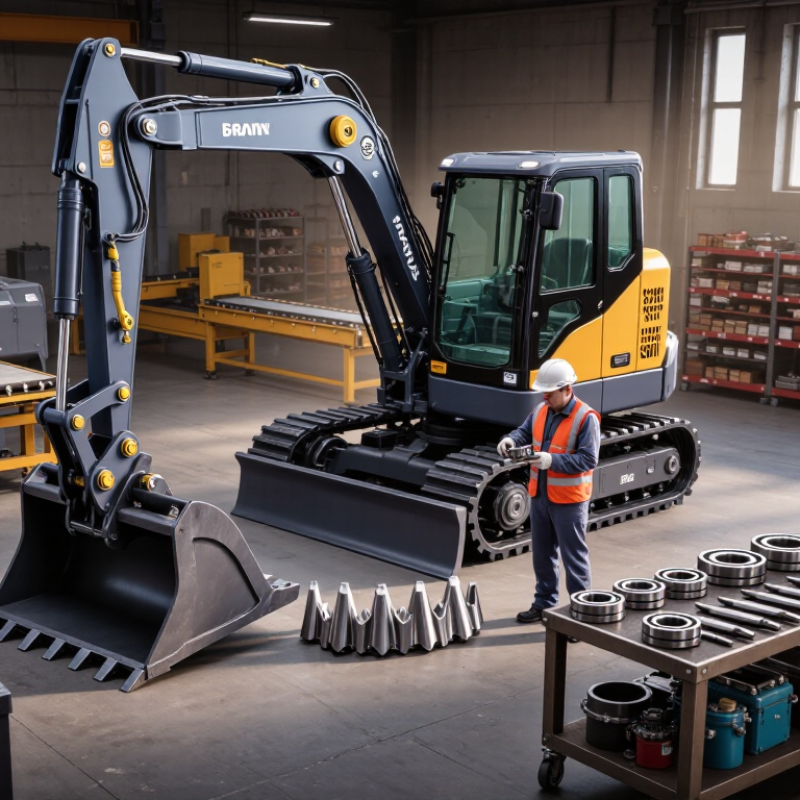
Mining machinery spare parts suppliers do more than sell replacement components. They help mines keep excavators, crushers, loaders, and conveyors working under severe conditions. Their work includes identifying compatible parts, checking material grades, managing inventory, and arranging delivery to remote sites. A worn crusher liner can reduce output quickly. A failed hydraulic seal can stop an entire shift.
Industry data shows why this role matters. The International Energy Agency reported that lithium demand increased by nearly 30% in 2023, while demand for nickel, cobalt, and graphite also grew strongly. Grand View Research estimates that the global mining equipment market will continue expanding through the decade. More production creates more pressure on maintenance schedules. Suppliers must therefore provide accurate dimensions, wear-resistant materials, traceable quality records, and realistic lead times.
Good suppliers also support maintenance decisions. They may review failure photos, operating temperatures, lubrication records, and machine hours before recommending a part. This practical feedback can prevent repeated failures. However, a polished catalog is not proof of reliability. A cheaper component may fit perfectly but fail early in abrasive dust. Inventory plans can also be wrong when usage data is incomplete. Suppliers should admit uncertainty, test critical parts, and improve recommendations from field results. Deloitte’s Tracking the Trends reports continue to identify productivity, resilience, and technology adoption as major mining priorities. Parts suppliers now contribute to all three.

Choosing a reliable mining machinery spare parts supplier starts with measurable quality, not attractive catalog photos. In field inspections, I check material certificates, heat-treatment records, and batch traceability. A genuine supplier should provide exact drawings, tolerances, and inspection reports. Surface appearance can mislead. A smooth gear may still have incorrect hardness or poor internal structure.
Tips: Compare critical dimensions with the equipment manual. Confirm bolt patterns, shaft diameters, seal sizes, and operating temperatures. Request a sample inspection before ordering large quantities. Check whether the supplier explains deviations clearly. Silence is a warning sign.
Compatibility requires more than matching a part number. The replacement must suit the machine’s load, speed, lubrication, and working environment. For example, a crusher bushing used in wet, abrasive conditions needs suitable material and clearance. A small measurement error can cause vibration, overheating, or rapid wear. I have seen technically acceptable parts fail because installation conditions were ignored. That mistake is easy to repeat. Ask for application data, installation guidance, and documented performance evidence. Independent testing can strengthen confidence when the part is safety-critical. Still, no document replaces a careful fit check and controlled trial. Reliability grows from evidence, communication, and honest limits.
Quality and compatibility should be evaluated using measurable inspection checkpoints before purchase or installation.
The chart shows recommended minimum acceptance targets for critical spare-parts inspections. Actual supplier performance should be verified through inspection reports, material certificates, dimensional measurements, hardness testing, fit checks, and load-test records.
Mining machinery spare parts determine uptime, safety, and repair costs in harsh working conditions. The most frequently replaced group is wear parts, including crusher liners, cutting bits, bucket teeth, screens, and conveyor skirting. Their service life depends on ore hardness, moisture, feed size, and operator habits. A tooth that looks usable may already have a rounded profile. Small details matter. Use measured wear limits, not appearance alone.
Powertrain parts include engines, transmissions, drive axles, couplings, bearings, and track components. Hydraulic systems require pumps, valves, cylinders, hoses, seals, and filters matched to pressure ratings. Electrical spares cover sensors, relays, alternators, starter motors, cables, and control modules. Filtration parts deserve special attention in dusty sites. Blocked elements increase heat and fuel consumption. One mismatch can damage connected equipment.
Reliable suppliers should provide material certificates, dimensional records, batch traceability, and clear warranty terms. Experienced maintenance teams compare part numbers, drawings, metallurgy, and operating hours before purchasing. They also inspect packaging for moisture, impact marks, and missing protective caps. I have found that delivery speed alone is a poor measure of supplier quality. An urgent part may arrive quickly but fail after several shifts. That possibility deserves honest review. Keep critical seals, hoses, bearings, and fasteners near the workshop. Yet stocking everything is wasteful. Use failure records to set reorder levels.
Comparing spare parts suppliers requires more than checking the lowest quoted price. Ask whether the price includes packaging, freight, taxes, and inspection costs. A cheaper component may create expensive downtime if its alloy, dimensions, or tolerance differs from your machine’s requirements. Request drawings, material reports, and compatibility details before approving an order. Experienced buyers also compare expected service life, not only purchase price.
Delivery promises need evidence. Check stock status, production schedules, dispatch procedures, and realistic transit times. Ask how delays are reported and whether urgent parts can be prioritized.
Support matters after delivery. Reliable suppliers provide installation guidance, warranty terms, replacement procedures, and technical replies from qualified staff. References from similar quarrying or construction operations can strengthen confidence. Still, no supplier performs perfectly. A careful review should leave room for delays, unclear specifications, and communication gaps.
Tips: Compare three written quotations. Use the same part specifications for every supplier. Calculate the cost of one day’s downtime. Test response speed before placing a large order. Keep all promises in writing. Be cautious when a supplier avoids technical questions or offers an unrealistically short lead time. A useful scorecard can rate price, delivery reliability, documentation, warranty support, and communication separately. Recheck the scores after each purchase; assumptions often look weaker after real field use.
In 2026, reliable spare-parts sourcing starts with evidence, not attractive quotations. The World Bank’s Minerals for Climate Action report estimates mineral production may increase nearly 500% by 2050. This pressure can expose weak supplier networks. Ask for material certificates, dimensional records, batch numbers, and documented quality checks. Traceability matters.
Mining sites also need practical performance data. A supplier should explain expected service life under abrasive ore, high shock, heat, and dust. Request field-test results from comparable equipment, not generic laboratory claims. The International Organization for Standardization links consistent quality systems with controlled processes and corrective action. Certification helps, but it does not replace inspection. Check the actual process.
Delivery capability deserves equal attention. The International Energy Agency’s Global Critical Minerals Outlook 2024 highlights growing supply-chain concentration risks. A supplier relying on one factory or one shipping route may create serious downtime. Review safety stock, tooling ownership, emergency production capacity, and realistic lead times. Ask for recent on-time delivery data. Numbers can be polished. Verify them through customer references and site audits.
Price remains important, but the cheapest liner can become expensive after repeated stoppages. Compare total cost per operating hour, installation time, warranty handling, and technical support. Require clear terms for rejected parts and failure analysis. One uncomfortable lesson is often ignored: a perfect supplier scorecard may still miss poor communication during a night shift breakdown. Test responsiveness before signing. Small trial orders reveal more than presentations.
| Evaluation Criterion | Why It Matters in Mining | Recommended 2026 Benchmark | Evidence to Request | Suggested Weight |
|---|---|---|---|---|
| Part Compatibility and Fit | Incorrect dimensions or interfaces can cause equipment downtime, installation delays, and safety risks. | 100% match against machine model, serial range, drawing revision, and technical specification before shipment. | Dimensional drawings, cross-reference list, compatibility statement, and sample inspection report. | 20% |
| Material and Metallurgical Quality | Wear parts such as crusher liners, bucket teeth, and mill components require controlled hardness, toughness, and composition. | Material certificates and heat or batch traceability for every critical wear or load-bearing part. | Chemical composition report, hardness results, heat-treatment records, and batch identification. | 15% |
| Quality Management System | A controlled quality system reduces variation, nonconformities, and repeat failures across production batches. | A current ISO 9001 certificate covering the relevant design, manufacturing, inspection, or distribution activities. | Certificate number, certification scope, issuing body, expiry date, and recent audit or corrective-action records. | 12% |
| Inspection and Testing Capability | Independent inspection helps detect dimensional, surface, hardness, pressure, and assembly defects before delivery. | Documented inspection plans for critical parts, with calibrated equipment and recorded acceptance criteria. | Inspection and test plans, calibration certificates, non-destructive testing records, and final inspection reports. | 10% |
| Lead Time and Availability | Delays in high-wear or critical components can extend unplanned maintenance and reduce production output. | Written lead-time commitments by part category; stocked standard items should normally ship faster than engineered-to-order parts. | Inventory policy, production schedule, historical delivery records, and escalation procedure for urgent orders. | 10% |
| On-Time and In-Full Delivery | Reliable delivery planning supports shutdown maintenance, spare-parts forecasting, and working-capital control. | Target an OTIF performance of at least 95%, measured over a defined period and order population. | At least 6–12 months of delivery-performance data, including late, short, and damaged shipments. | 8% |
| Warranty and Nonconformance Handling | Clear remedies reduce the financial and operational impact of premature failure or incorrect supply. | Written warranty terms, defined claim-response times, root-cause analysis, and replacement or credit procedures. | Warranty period, exclusions, claim form, corrective-action template, and anonymized claim-resolution records. | 8% |
| Technical Support and Documentation | Accurate installation, maintenance, and application guidance helps prevent fitment errors and premature wear. | Technical responses within one business day for routine requests and documented support for critical applications. | Installation instructions, maintenance recommendations, parts lists, service contacts, and response-time records. | 6% |
| Supply-Chain Traceability | Traceability supports recalls, root-cause investigations, inventory control, and regulatory or customer audits. | Unique part, batch, or heat identification retained from production through shipment and after-sales service. | Traceability procedure, labels, packing records, supplier-control process, and retention-period policy. | 4% |
| Health, Safety, and Environmental Controls | Responsible manufacturing and handling practices reduce workplace, environmental, and compliance risks. | Risk-based controls supported by applicable occupational-safety and environmental management procedures. | Relevant management-system certificates, safety records, environmental permits, and material-handling procedures. | 3% |
| Total Evaluation Weight | Use a weighted scorecard and verify critical technical requirements before comparing commercial terms. | 100% | ||


For those larger-sized parts, or smaller quantity runs, we have 2 independent powder coat booths and ovens. The quality, durability and affordability of today’s powder coating finishes make this the process of choice for world-class companies.
Powder coating advantages over other forms of coating are many. Materials used in the Powder coating process can be metals and non-metals that come in a multitude of thicknesses, textures, colors, etc. Another of Powder coating’s biggest advantages over conventional coatings is its ability to create finishes in many different textures. Powder Coating Booths allow us the ability to apply these advantages to large products.
Tri-State Fabricators runs a full-service conveyor line for painting. Wet painting can provide protection or decoration to many different part styles. From start to finish, every project is easier to undergo random and point-based inspection by our skilled painting team.
Advantages to our Wet Paint Line are these lines start with product prep and ends with a thorough inspection of a high quality finished product. Our ability to complete large and small projects with a superior finish and doing so in a timely and economical fashion. This passes along the savings in production to our customers. When powder coating ins not an option, our Wet Paint Line gets the job done right the first time.
When the parts get big and heavy we roll-out our custom paint racks and oversize booth. By utilizing our partnerships with all the major paint brands, we can match virtually any color with wet paint.
The advantages of having access to a Wet Paint Booth are many. Large projects of many different shapes can be loaded into the booth. The Wet Paint Booth offers an environment that is much more controlled than a typical parts painting operation.
Not only are they used because of their controlled environment, but they’re are also advantageous when it comes to applying paint to parts that are needed in industries that require specialty coatings such as medical, aerospace, etc.
Our military forces have some very high standards when it comes to the finish of their vehicles and equipment. From the first pre-treatment step to final coat, it takes a great deal of knowledge and experience to protect the men and women of our armed forces. They deserve only the best, and Tri-State Fabricators provides it.
All of our processes are closely monitored by our staff and management teams. Both of which are highly trained in the processes of metal fabrication and finishing. Tri-State Fabricators’ goal is to always fully satisfy each and every customer, including the military. We will always put a 110% into what we do.
Abrasive media blasting is an excellent way to remove old paint, rust, and increase the paint/powder adhesion. Glass beads produce a much smoother and brighter finish than angular abrasives; leaving the part clean yet without any dimensional change. Chemically inert and environmentally friendly, we can recycle our beads approximately 30 times; making them a more preferred method of metal cleaning or surface finishing.
Advantages to Glass Bead Blasting are many. Glass bead blast media is used when a project is needing rough surfaces need to become smooth for applications of coatings such as paint. It is typically used to clean paint and rust from a product surface without deforming the surface it is being used on. Overall, compared to many other blasting media, Glass Bead Blasting is a very economical choice and those savings are always passed on to our customers.
Tri-State Fabricators utilize a zinc phosphate wash to clean and etch the material to ensure the best paint adhesion possible. The unique design of our 3-stage wash system does the work like a 5-stage. From Cleaning and rinsing to conversion coating and post-treatment, Our Part Washing process is a complete service and works throughout the fabrication service and the finishing service.
Along with the previously mentioned benefits, Curing is a vital chemical reaction that leaves the product finish hard and relatively safe from mild abrasion and aggressive corrosion. This process can be done in more than one way; ambient air-dry or in curing ovens at temps that exceed 240°.
From fixing paint mistakes (someone else’s of course) to simply cleaning our paint line hooks, our burn-off oven is put to good use. After a quick burn-off, a little clean up, and a fresh coat of paint, your parts will look better than new.
Why does our Burn-Off Oven work so well? Because super heating the air around parts turns the materials into ashes. From paint and powder coatings to rubber and machining oils, high temps do the job without degrading the integrity of the part.
Masking is a vital part of producing high quality products. We have die-cut masking patterns to protect machined surfaces as well as a wide range of plugs and caps to protect threaded holes and bolts. We provide permanent and temporary masking.
Masking allows the selected sections of a product to be protected from a fabrication or finishing service. This can be with both chemicals when etching and tapes, paints when only finishing just a section of the product. Masking is great in aiding the customization process of a project.
Screen printing is a photographic process that transfers artwork onto a porous nylon screen which allows colored ink to flow through the screen and be deposited on an aluminum or plastic component. We can generally have just about any design created onto a screen for your parts.
Some of the advantages of Screen Printing are, brand recognition for your business displaying on your products, assembly instructions, product warnings/hazards, etc. Tri-State Fabricators produces Screen Printing of the highest quality so you know it’s durable.
Metal Finishing is the art of treating the exterior portion of product, often metal but can also be made of other materials, so that the surface is clean and free of any debris. Then the process of applying coats or either paint of powder coat takes place. This coating process improves the quality of the product in both appearance and resistance to wear and corrosion.
Tri-State Fabricators, Inc., understands that a project typically isn’t complete until a high-quality finish has been added to your product. This is why our painting and powder coating teams continuously inspect the products throughout the Metal Finishing process.

