


Industrial buyers choosing Gasket Rings in 2026 face a practical challenge: a seal must match the equipment, the process, and the maintenance plan. Material names alone do not tell the full story. Temperature swings, pressure cycles, fluid exposure, flange condition, and bolt load all affect performance. Small details matter. A ring that fits neatly on a drawing may still leak if the mating surfaces are scratched or uneven.
Gasket application engineer Michael Turner offers this reminder: “A reliable gasket starts with the service conditions, not the catalog photo.” Buyers should compare material compatibility, operating limits, dimensions, compression behavior, and supplier documentation before ordering. Check whether the ring will contact oils, steam, chemicals, or abrasive particles; each changes the selection conversation. Ask for traceable specifications and clear installation guidance, especially when replacing a part in critical equipment. This guide reviews gasket types, materials, quality indicators, and purchasing questions to help industrial teams narrow their choices. Yet no comparison can replace checking the actual joint and process data. Sometimes, less is safer. Revisit assumptions when field conditions differ from the equipment manual, and involve a qualified engineer when the consequences of failure are significant.
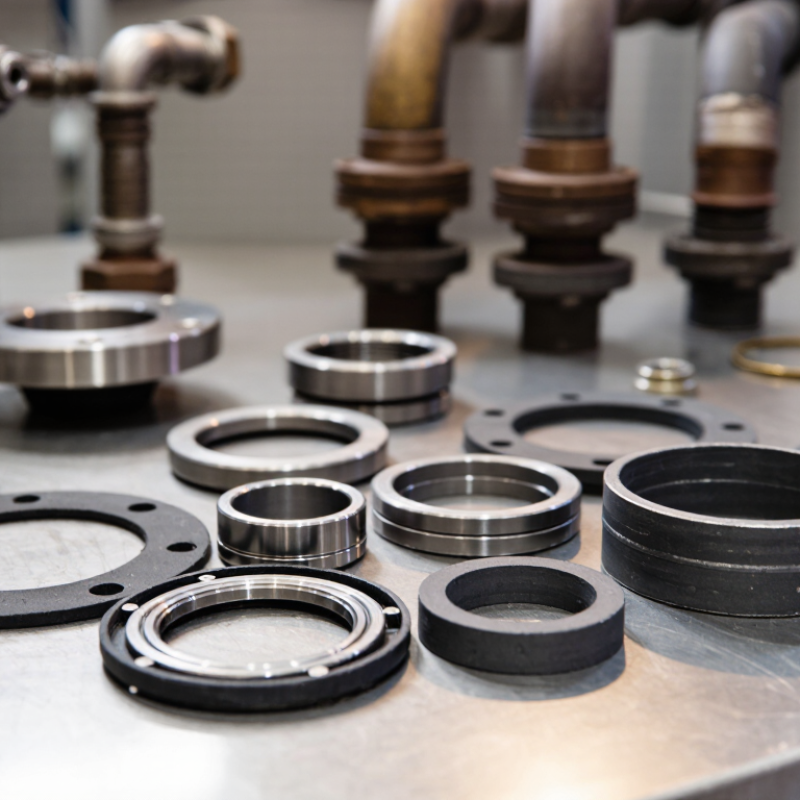
A gasket ring is a sealing component placed between two connected surfaces, often pipe flanges or equipment joints. It does not seal by simply covering the gap. Bolts apply a controlled load, compressing the ring against both faces. The material deforms slightly and fills small scratches and surface irregularities, creating a barrier against escaping liquid or gas. That matters.
Gasket rings come in different materials and constructions. Elastomeric rings can suit many lower-temperature services, while PTFE and spiral-wound designs are used in other conditions. No material fits every connection. Selection should account for the fluid, operating temperature and pressure, flange surface, and expected bolt load. A ring that looks suitable may still perform poorly if the connection conditions differ.
Before fitting a ring, check that the flange faces are clean, aligned, and free of deep scoring. Even a small piece of old gasket material can interfere with contact. Follow the equipment specifications for gasket dimensions, bolt sequence, and tightening values; excessive compression can damage some rings. A controlled leak check after assembly can help reveal problems. Small details count. In practice, choosing a gasket is sometimes less straightforward than a product chart suggests, so uncertain conditions deserve careful review.
| Gasket Ring Type | What It Is | How It Seals | Common Industrial Uses | Key Selection Considerations |
|---|---|---|---|---|
| Elastomer O-Ring | A circular ring made from an elastomer such as NBR, EPDM, FKM, or silicone. | Compression between mating surfaces deforms the ring, helping it fill the gland and block the leakage path. | Hydraulic and pneumatic equipment, pumps, valves, and instrument connections. | Match the elastomer to the fluid, temperature, pressure, and motion. Confirm gland dimensions, squeeze, and extrusion gap. |
| Metal Ring-Type Joint (RTJ) | A solid metallic ring fitted into matching grooves in flanged connections. | Bolting load compresses the ring against the groove faces, creating a localized metal-to-metal seal. | High-pressure process piping and equipment designed with RTJ flanges. | Verify ring profile, dimensions, material compatibility, flange standard, and surface condition. RTJ rings are not interchangeable with flat gaskets. |
| Spiral-Wound Gasket | A gasket formed from alternating wound metal strip and soft filler, commonly supplied in ring or centered-ring configurations. | Compression of the winding and filler conforms to flange surfaces; the metal winding provides structural support. | Process piping, heat exchangers, and flanged equipment where operating conditions vary. | Check winding and filler materials, inner and outer rings, flange facing, dimensions, and the required bolting procedure. |
| Corrugated Metal Gasket | A formed metal ring with corrugations, sometimes combined with a soft facing layer. | Corrugations concentrate compressive load and can provide recovery as the joint experiences movement or thermal cycling. | Flanged joints and equipment requiring a metal-based gasket with a conformable sealing surface. | Confirm metal and facing compatibility, flange condition, available seating load, and the gasket design specified for the joint. |
| Flat Sheet Ring Gasket | A ring cut or molded from sheet material, such as compressed fiber, graphite, or PTFE-based material. | Bolting compresses the sheet material against the flange faces so it conforms to surface irregularities. | General-purpose pipe flanges, covers, and equipment connections. | Select material for the process media and temperature. Check flange flatness, surface finish, gasket thickness, and required bolt load. |
| PTFE-Envelope Gasket | A gasket with a PTFE envelope around a compressible insert, often used in ring form. | The PTFE surface contacts the process fluid while the insert helps the gasket accommodate flange irregularities. | Chemical-processing connections where PTFE chemical resistance is needed. | Check chemical compatibility, temperature and pressure limits for the complete gasket construction, and whether the insert is suitable for the service. |
| Metal-Jacketed Gasket | A soft filler enclosed in a formed metal jacket, manufactured in a shape suited to the joint. | The filler conforms under compression while the metal jacket protects and supports the sealing material. | Heat exchangers, vessel covers, and other equipment joints designed for this gasket style. | Confirm jacket and filler materials, joint geometry, flange condition, and the compression load the assembly can provide. |
Buyer note: A gasket ring seals by being compressed or energized within a designed joint; the correct choice depends on the connection geometry, flange or gland condition, process media, temperature, pressure, and installation requirements. Allowable operating limits vary by material, gasket construction, dimensions, and assembly, so verify them against the applicable technical specification before purchase.

Common Gasket Ring Materials and Design Types
Material choice starts with the fluid, temperature, pressure, and flange condition. Industrial buyers commonly compare compressed non-asbestos fiber, graphite, PTFE, and metallic rings. Fiber sheets suit many general-duty joints, while graphite handles high heat but needs careful protection from oxidation. PTFE resists many chemicals, yet can creep under sustained load. No material wins everywhere. A damp chemical line and a hot steam flange need different trade-offs.
Design matters just as much. Flat rings are straightforward, but spiral-wound and kammprofile designs can better accommodate movement or uneven flange faces when correctly specified. ASTM F36 test reports measure gasket compressibility and recovery; ASTM F146 reports changes after fluid exposure, including weight and thickness. Ask suppliers for test results on the actual grade, not a generic material family. Record ring dimensions, flange finish, bolt loading, and service conditions. ASME PCC-1 guidance also emphasizes controlled assembly and bolt tightening. Fit matters. One imperfect detail: buyers often compare temperature ratings but overlook flange condition, which can undermine even a suitable gasket. Check the mating surfaces before approving the drawing.
A gasket ring must suit the actual operating conditions, not just the pipe size. Record the fluid, operating pressure, temperature range, and any startup or shutdown spikes. Check chemical compatibility, too: oils, steam, solvents, and cleaning fluids can affect materials differently. Small details matter. A ring that works at steady temperature may loosen or degrade during frequent thermal cycling.
The U.S. Department of Energy’s Improving Compressed Air System Performance: A Sourcebook for Industry reports that leaks in poorly maintained industrial facilities can waste 20–30% of compressed-air production capacity. That is a system-level estimate, not a gasket failure rate. Still, it shows why joint condition deserves attention. Match ring dimensions to the flange, and follow the equipment maker’s guidance for compression and installation. Over-tightening can distort some rings; too little compression can leave a leak path.
For a hot line, verify the ring’s temperature limit against both normal service and brief excursions. For vibration or pressure cycling, consider whether the joint can retain compression over time. Ask suppliers for documented material compatibility and test conditions, then compare those conditions with the plant’s records. If those records are incomplete, say so; selection based on a guessed peak temperature is not dependable. A small trial on a representative joint can reveal fit or installation problems before wider purchasing.
Gasket rings serve very different duties across chemical processing, oil and gas, power generation, and water treatment. In chemical plants, they seal flanged pipe joints exposed to changing temperatures and corrosive fluids. Refineries use them around pumps, heat exchangers, and pressure vessels. The IEA’s Oil 2024 report projects global oil demand will approach 106 million barrels per day by 2030, underscoring the continued scale of equipment operating across the sector. Leaks are costly. A ring that suits one fluid may fail with another.
Steelmaking and other heavy industries rely on seals around furnaces, hydraulic systems, and high-temperature process lines. World Steel Association data puts 2024 global crude steel production at about 1.88 billion tonnes. That scale means gasket selection matters at many maintenance points, not just major shutdowns. In food and pharmaceutical facilities, hygienic design and cleanability also shape choices; surface finish and joint geometry deserve attention alongside material compatibility.
Buyers should match gasket material to media, temperature, pressure, flange condition, and cleaning cycles. A compressed fiber ring may suit a different duty than a metal or elastomer design. Small details matter. In practice, flange misalignment or uneven bolt loading can undermine even a carefully selected gasket. Specifications help, but site conditions do not always behave as neatly as a datasheet suggests.
When evaluating gasket rings in 2026, begin with the joint—not a catalog description. Record fluid chemistry, temperature, pressure, flange finish, bolt load, and operating cycles. Fit matters. A ring that seals water at steady temperatures may fail after thermal cycling or chemical exposure. Request material traceability, dimensional tolerances, and test results for the exact grade and thickness.
Use relevant standards to compare evidence. ASTM F37 measures gasket-material sealability; ASTM F38 evaluates creep relaxation. ASME PCC-1 provides guidance on bolted-flange assembly, where uneven bolt loading can defeat a suitable gasket.
The U.S. Department of Energy’s Improving Pumping System Performance guide estimates that pumping systems use nearly 20% of global electricity. That is not a gasket failure rate, but it shows why leakage and maintenance belong in lifecycle-cost reviews.
Compare delivered price, installation time, replacement interval, and downtime exposure—not unit cost alone. Ask for test conditions, including pressure, temperature, surface finish, and compression; results without them are difficult to apply.
A spreadsheet may still miss rushed installation or aging flanges. I would pilot a candidate on a representative joint, inspect it after the first operating cycle, and revise the specification when field evidence disagrees.


For those larger-sized parts, or smaller quantity runs, we have 2 independent powder coat booths and ovens. The quality, durability and affordability of today’s powder coating finishes make this the process of choice for world-class companies.
Powder coating advantages over other forms of coating are many. Materials used in the Powder coating process can be metals and non-metals that come in a multitude of thicknesses, textures, colors, etc. Another of Powder coating’s biggest advantages over conventional coatings is its ability to create finishes in many different textures. Powder Coating Booths allow us the ability to apply these advantages to large products.
Tri-State Fabricators runs a full-service conveyor line for painting. Wet painting can provide protection or decoration to many different part styles. From start to finish, every project is easier to undergo random and point-based inspection by our skilled painting team.
Advantages to our Wet Paint Line are these lines start with product prep and ends with a thorough inspection of a high quality finished product. Our ability to complete large and small projects with a superior finish and doing so in a timely and economical fashion. This passes along the savings in production to our customers. When powder coating ins not an option, our Wet Paint Line gets the job done right the first time.
When the parts get big and heavy we roll-out our custom paint racks and oversize booth. By utilizing our partnerships with all the major paint brands, we can match virtually any color with wet paint.
The advantages of having access to a Wet Paint Booth are many. Large projects of many different shapes can be loaded into the booth. The Wet Paint Booth offers an environment that is much more controlled than a typical parts painting operation.
Not only are they used because of their controlled environment, but they’re are also advantageous when it comes to applying paint to parts that are needed in industries that require specialty coatings such as medical, aerospace, etc.
Our military forces have some very high standards when it comes to the finish of their vehicles and equipment. From the first pre-treatment step to final coat, it takes a great deal of knowledge and experience to protect the men and women of our armed forces. They deserve only the best, and Tri-State Fabricators provides it.
All of our processes are closely monitored by our staff and management teams. Both of which are highly trained in the processes of metal fabrication and finishing. Tri-State Fabricators’ goal is to always fully satisfy each and every customer, including the military. We will always put a 110% into what we do.
Abrasive media blasting is an excellent way to remove old paint, rust, and increase the paint/powder adhesion. Glass beads produce a much smoother and brighter finish than angular abrasives; leaving the part clean yet without any dimensional change. Chemically inert and environmentally friendly, we can recycle our beads approximately 30 times; making them a more preferred method of metal cleaning or surface finishing.
Advantages to Glass Bead Blasting are many. Glass bead blast media is used when a project is needing rough surfaces need to become smooth for applications of coatings such as paint. It is typically used to clean paint and rust from a product surface without deforming the surface it is being used on. Overall, compared to many other blasting media, Glass Bead Blasting is a very economical choice and those savings are always passed on to our customers.
Tri-State Fabricators utilize a zinc phosphate wash to clean and etch the material to ensure the best paint adhesion possible. The unique design of our 3-stage wash system does the work like a 5-stage. From Cleaning and rinsing to conversion coating and post-treatment, Our Part Washing process is a complete service and works throughout the fabrication service and the finishing service.
Along with the previously mentioned benefits, Curing is a vital chemical reaction that leaves the product finish hard and relatively safe from mild abrasion and aggressive corrosion. This process can be done in more than one way; ambient air-dry or in curing ovens at temps that exceed 240°.
From fixing paint mistakes (someone else’s of course) to simply cleaning our paint line hooks, our burn-off oven is put to good use. After a quick burn-off, a little clean up, and a fresh coat of paint, your parts will look better than new.
Why does our Burn-Off Oven work so well? Because super heating the air around parts turns the materials into ashes. From paint and powder coatings to rubber and machining oils, high temps do the job without degrading the integrity of the part.
Masking is a vital part of producing high quality products. We have die-cut masking patterns to protect machined surfaces as well as a wide range of plugs and caps to protect threaded holes and bolts. We provide permanent and temporary masking.
Masking allows the selected sections of a product to be protected from a fabrication or finishing service. This can be with both chemicals when etching and tapes, paints when only finishing just a section of the product. Masking is great in aiding the customization process of a project.
Screen printing is a photographic process that transfers artwork onto a porous nylon screen which allows colored ink to flow through the screen and be deposited on an aluminum or plastic component. We can generally have just about any design created onto a screen for your parts.
Some of the advantages of Screen Printing are, brand recognition for your business displaying on your products, assembly instructions, product warnings/hazards, etc. Tri-State Fabricators produces Screen Printing of the highest quality so you know it’s durable.
Metal Finishing is the art of treating the exterior portion of product, often metal but can also be made of other materials, so that the surface is clean and free of any debris. Then the process of applying coats or either paint of powder coat takes place. This coating process improves the quality of the product in both appearance and resistance to wear and corrosion.
Tri-State Fabricators, Inc., understands that a project typically isn’t complete until a high-quality finish has been added to your product. This is why our painting and powder coating teams continuously inspect the products throughout the Metal Finishing process.

