


Choosing the best Glass Sorting Machine for recycling in 2026 is not just about finding the fastest model. A plant’s glass stream may contain clear, green, and amber fragments, plus ceramics, stones, labels, and moisture. Each contaminant can affect sorting accuracy and the quality of recovered glass. Small details matter.
A useful comparison looks at more than advertised capacity. Consider how the machine handles mixed colors, irregular glass sizes, dust, and changing feed rates. Check the sensor configuration, belt width, control options, and access for routine cleaning. Ask suppliers for test results using material similar to your own. A polished demonstration may not reflect a noisy, dusty production floor. It happens.
Operating costs deserve equal attention. Energy use, replacement parts, maintenance intervals, and operator training can shape long-term value. So can the space available for installation and the equipment already upstream or downstream. Request clear figures, but treat estimates as estimates. Even a well-designed system may need tuning after installation.
This guide introduces practical criteria for comparing glass sorting equipment and identifying a suitable option for different recycling operations. It does not assume one machine fits every plant. The best choice depends on feed composition, throughput targets, product specifications, and service support. Some details are easy to overlook. A careful trial, with representative samples and agreed performance measures, can reveal them before a purchase decision.
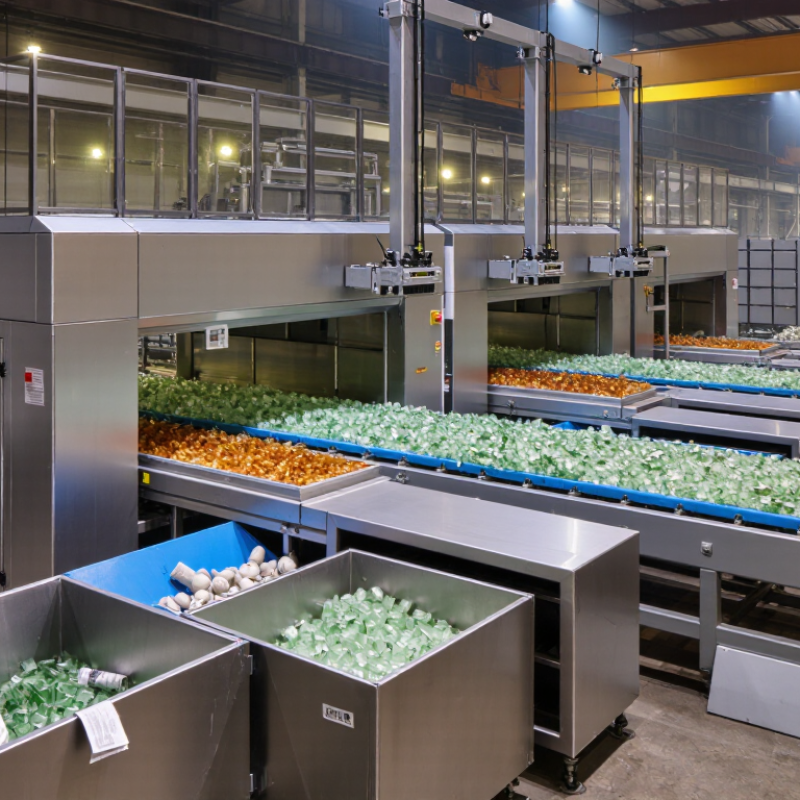
A glass sorting machine separates recovered glass by color, size, or material type. It helps recycling facilities prepare cullet, the small glass pieces used as feedstock for new products. Optical sensors inspect glass moving along a conveyor. When the system detects a target color or unwanted material, a short burst of air directs it into a separate chute. Fast, but not magic.
In a typical line, workers remove large contaminants and screens divide material by size before optical sorting. The glass should be spread in a reasonably even layer; crowded pieces can hide one another from the sensors. Operators adjust settings for the incoming mix, then check sample batches for missed ceramics, stones, or mixed-color glass. Those checks matter. A small amount of contamination can affect the quality of the recovered material.
Real plants are less tidy than diagrams. Dust, labels, moisture, and uneven glass shapes can reduce sorting accuracy, so cleaning and routine calibration are part of daily operation. Staff also monitor reject bins and adjust the feed rate when the conveyor becomes overloaded. No machine catches everything. The right setup depends on the facility’s material, throughput, and quality goals, and those conditions may change from one delivery to the next.

2026 Best Glass Sorting Machine for Recycling?
How Glass Sorting Machines Identify and Separate Materials
Glass sorting begins with a controlled feed. A vibrating screen spreads broken pieces across a moving belt, where cameras read their color, shape, and position. Some systems add near-infrared or X-ray sensors to help identify ceramics, stones, heat-resistant glass, and other contaminants. The machine then tracks each target piece and uses a brief air jet to push it into a separate chute. Small timing errors matter: one misplaced fragment can contaminate a whole batch.
The need for accurate separation is clear. The U.S. EPA’s 2018 Advancing Sustainable Materials Management report estimated that 3.1 million tons of glass were recycled from 12.3 million tons generated. Eurostat reported that the EU recycled about 75% of its glass packaging waste in 2022. These figures use different regions and measures, but both show why clean cullet matters to recycling operations.
On a real sorting line, dust, labels, wet surfaces, and overlapping shards can confuse sensors. Operators often adjust belt speed and lighting, then check rejected material by hand. Still, no sensor is infallible. A machine may mistake a clear ceramic chip for glass, or miss a tiny stone beneath a shard. Routine sampling helps reveal these blind spots, though it takes time and careful records.
| Sorting stage or method | What the sensor identifies | How material is separated | Typical feed characteristics | Best-fit recycling task | Key operating consideration |
|---|---|---|---|---|---|
| RGB color sorting | Visible color and, depending on the system, object shape or surface appearance. Common glass color categories include clear, green, and amber. | Cameras capture the material on a moving belt or chute; timed air jets eject selected pieces into a separate outlet. | Prepared, reasonably spread cullet; many systems are configured for defined particle-size bands, often in the millimetre-to-centimetre range. | Separating mixed container glass into color fractions for remelting. | Consistent illumination, a clean viewing window, and an even feed layer support reliable color recognition. |
| RGB or line-scan contaminant sorting | Visible non-glass items and visually distinct contaminants, such as some ceramics, stones, metals, plastics, or paper. | Image-processing software flags objects that differ from the accepted glass stream; air jets eject the flagged pieces. | Single-layer or well-separated material gives the camera a clearer view of individual pieces. | Removing visible foreign objects from glass cullet after screening and size preparation. | Small, obscured, or glass-like contaminants may be difficult to distinguish by visible appearance alone. |
| X-ray transmission (XRT) sorting | Differences in X-ray absorption related to material thickness, density, and composition. It can help identify certain ceramics, stones, and porcelain (CSP) in a glass stream. | The detector analyses the X-ray signal as pieces pass through the inspection zone; selected objects are rejected, commonly with air jets. | Prepared particles that pass individually through the sensing area; particle size and bed depth must suit the equipment and application. | Reducing CSP contamination where visual sorting alone is insufficient. | Performance depends on particle size, overlap, material composition, and the system’s detection settings; validate with representative feed samples. |
| Near-infrared (NIR) sorting | Spectral signatures from exposed surfaces, commonly used to distinguish many plastics and some organic materials. | The sensor classifies detectable items and directs air jets to remove selected materials from the belt or chute. | Useful when non-glass materials are present in the feed; results depend on exposed, unobstructed surfaces. | Removing certain plastics or organics from mixed recyclables before or during glass recovery. | NIR is generally not the primary method for separating glass by color or reliably identifying glass composition; dark, covered, or overlapping items can limit detection. |
| Screening and size classification | Particle size, rather than glass color or chemistry. | Vibrating or rotary screens separate material into size fractions using selected screen openings. | Mixed-size cullet; screen aperture is selected to match the process and downstream sorter. | Preparing a more uniform feed and diverting fines before optical sorting. | Screening is a feed-preparation step, not a substitute for color or contaminant identification. |
Selection note: The suitable sensor, particle-size range, throughput, and achievable product quality depend on feed composition, moisture, presentation, and the required output specification. Confirm performance through a material test and supplier-specific technical data; no single sorting method detects every contaminant.
In 2026, glass sorting lines commonly combine color cameras, near-infrared spectroscopy, and X-ray detection. Cameras classify clear, green, and amber cullet by reflected light. Air jets then eject off-color pieces. Near-infrared sensors can help identify ceramics, stones, and porcelain—contaminants that may damage furnace batches. X-ray systems detect density differences, including some opaque or heavy inclusions. No sensor sees everything.
FEVE’s 2022 industry report estimated an 80.1% glass packaging recycling rate across the European Union. The figure measures recycling performance, not cullet purity. The U.S. EPA’s 2018 materials report recorded a 31.3% recycling rate for glass containers. The years and methods differ, so these figures are not directly comparable. They do show why sorting systems must suit local material streams.
A mixed feed containing labels, wet fines, and tiny ceramic shards may need screening before optical sorting. Color cameras handle color separation; near-infrared and X-ray systems add contaminant control, but increase equipment and maintenance demands. Performance can also shift when cullet is dusty or unusually small. Manual conveyor checks remain useful, if less elegant. Plants should test with their own cullet and measure both recovery yield and ceramic carryover, rather than relying only on advertised detection rates.
A glass sorting machine should be judged on both purity and recovery. Purity measures unwanted material in the sorted glass; recovery shows how much usable glass the machine retains. Ask suppliers to test a sample resembling your actual feed, including mixed colors, labels, and small ceramic fragments. A clean demonstration sample can make almost any system look impressive. Real loads are less tidy.
Capacity figures need context. Check whether a quoted rate refers to tonnes per hour under specific conditions, not a best-case estimate. Moisture, particle size, and contamination can slow feeding or affect detection. That matters. Observe a trial over a sustained period, and record throughput alongside sorting results. One fast run proves little.
Compare the total operating cost, not just the purchase price. Include installation, energy use, routine cleaning, replacement parts, and the labor needed to manage rejects. Ask how quickly sensors can be inspected and what happens during a stoppage. Request written test conditions and maintenance assumptions. Some details may still be uncertain; your own glass stream can change by season or supplier, so budget for follow-up testing after installation.
Choosing a glass sorting machine starts with the material, not the catalogue. Sample several shifts of incoming cullet, including dusty batches, labels, ceramics, and mixed colors. Note the particle-size range and hourly throughput. Small fragments behave differently. A machine tuned for clean, uniform glass may lose accuracy when feed quality changes.
Match the sorting method to the facility’s actual targets. Optical systems can separate colors or identify contaminants, but sensor performance depends on lighting, belt loading, and calibration. Ask suppliers to test representative samples, not only hand-picked glass. Watch the reject stream. A high purity figure means little if valuable glass leaves with the rejects. Check whether the line can handle wet material and short throughput peaks.
Allow space for access, dust control, and maintenance. Operators need safe routes to inspect belts and clear routine blockages without awkward reaching. Confirm service intervals, spare-part availability, and whether settings can be adjusted by trained staff. Keep records of throughput, rejects, and downtime for several weeks after installation. Real conditions are messy. Even a well-specified machine may need tuning as feed composition shifts, and that adjustment time is easy to underestimate.


For those larger-sized parts, or smaller quantity runs, we have 2 independent powder coat booths and ovens. The quality, durability and affordability of today’s powder coating finishes make this the process of choice for world-class companies.
Powder coating advantages over other forms of coating are many. Materials used in the Powder coating process can be metals and non-metals that come in a multitude of thicknesses, textures, colors, etc. Another of Powder coating’s biggest advantages over conventional coatings is its ability to create finishes in many different textures. Powder Coating Booths allow us the ability to apply these advantages to large products.
Tri-State Fabricators runs a full-service conveyor line for painting. Wet painting can provide protection or decoration to many different part styles. From start to finish, every project is easier to undergo random and point-based inspection by our skilled painting team.
Advantages to our Wet Paint Line are these lines start with product prep and ends with a thorough inspection of a high quality finished product. Our ability to complete large and small projects with a superior finish and doing so in a timely and economical fashion. This passes along the savings in production to our customers. When powder coating ins not an option, our Wet Paint Line gets the job done right the first time.
When the parts get big and heavy we roll-out our custom paint racks and oversize booth. By utilizing our partnerships with all the major paint brands, we can match virtually any color with wet paint.
The advantages of having access to a Wet Paint Booth are many. Large projects of many different shapes can be loaded into the booth. The Wet Paint Booth offers an environment that is much more controlled than a typical parts painting operation.
Not only are they used because of their controlled environment, but they’re are also advantageous when it comes to applying paint to parts that are needed in industries that require specialty coatings such as medical, aerospace, etc.
Our military forces have some very high standards when it comes to the finish of their vehicles and equipment. From the first pre-treatment step to final coat, it takes a great deal of knowledge and experience to protect the men and women of our armed forces. They deserve only the best, and Tri-State Fabricators provides it.
All of our processes are closely monitored by our staff and management teams. Both of which are highly trained in the processes of metal fabrication and finishing. Tri-State Fabricators’ goal is to always fully satisfy each and every customer, including the military. We will always put a 110% into what we do.
Abrasive media blasting is an excellent way to remove old paint, rust, and increase the paint/powder adhesion. Glass beads produce a much smoother and brighter finish than angular abrasives; leaving the part clean yet without any dimensional change. Chemically inert and environmentally friendly, we can recycle our beads approximately 30 times; making them a more preferred method of metal cleaning or surface finishing.
Advantages to Glass Bead Blasting are many. Glass bead blast media is used when a project is needing rough surfaces need to become smooth for applications of coatings such as paint. It is typically used to clean paint and rust from a product surface without deforming the surface it is being used on. Overall, compared to many other blasting media, Glass Bead Blasting is a very economical choice and those savings are always passed on to our customers.
Tri-State Fabricators utilize a zinc phosphate wash to clean and etch the material to ensure the best paint adhesion possible. The unique design of our 3-stage wash system does the work like a 5-stage. From Cleaning and rinsing to conversion coating and post-treatment, Our Part Washing process is a complete service and works throughout the fabrication service and the finishing service.
Along with the previously mentioned benefits, Curing is a vital chemical reaction that leaves the product finish hard and relatively safe from mild abrasion and aggressive corrosion. This process can be done in more than one way; ambient air-dry or in curing ovens at temps that exceed 240°.
From fixing paint mistakes (someone else’s of course) to simply cleaning our paint line hooks, our burn-off oven is put to good use. After a quick burn-off, a little clean up, and a fresh coat of paint, your parts will look better than new.
Why does our Burn-Off Oven work so well? Because super heating the air around parts turns the materials into ashes. From paint and powder coatings to rubber and machining oils, high temps do the job without degrading the integrity of the part.
Masking is a vital part of producing high quality products. We have die-cut masking patterns to protect machined surfaces as well as a wide range of plugs and caps to protect threaded holes and bolts. We provide permanent and temporary masking.
Masking allows the selected sections of a product to be protected from a fabrication or finishing service. This can be with both chemicals when etching and tapes, paints when only finishing just a section of the product. Masking is great in aiding the customization process of a project.
Screen printing is a photographic process that transfers artwork onto a porous nylon screen which allows colored ink to flow through the screen and be deposited on an aluminum or plastic component. We can generally have just about any design created onto a screen for your parts.
Some of the advantages of Screen Printing are, brand recognition for your business displaying on your products, assembly instructions, product warnings/hazards, etc. Tri-State Fabricators produces Screen Printing of the highest quality so you know it’s durable.
Metal Finishing is the art of treating the exterior portion of product, often metal but can also be made of other materials, so that the surface is clean and free of any debris. Then the process of applying coats or either paint of powder coat takes place. This coating process improves the quality of the product in both appearance and resistance to wear and corrosion.
Tri-State Fabricators, Inc., understands that a project typically isn’t complete until a high-quality finish has been added to your product. This is why our painting and powder coating teams continuously inspect the products throughout the Metal Finishing process.

