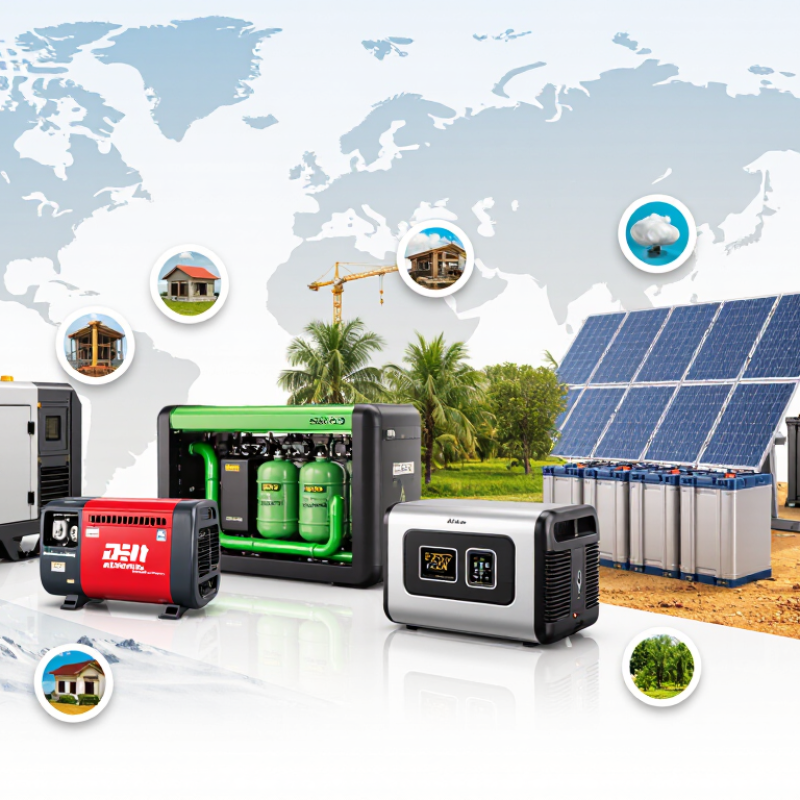
Choosing the best Power Generators in 2026 requires more than comparing rated wattage or purchase prices. Global buyers face different grid frequencies, voltage standards, fuel supplies, climate conditions, and import requirements. A generator that performs reliably on a European construction site may need modification for a tropical warehouse or a remote mining camp. Real-world selection starts with the load profile: starting current, continuous demand, operating hours, and acceptable noise levels.
This guide examines diesel, gasoline, natural gas, dual-fuel, inverter, battery, solar-hybrid, and emerging low-emission generator systems. Diesel models remain strong for heavy-duty applications, while inverter generators suit sensitive electronics and quieter operation. Gas and dual-fuel units can reduce fuel-storage pressure where infrastructure is available. Battery and solar-hybrid systems offer cleaner temporary power, but their performance depends on sunlight, storage capacity, and duty cycles. Hydrogen options may attract attention in 2026, although availability, maintenance expertise, and total cost still require careful evaluation.
Practical experience shows that the cheapest unit is rarely the lowest-cost solution. Fuel consumption, spare-parts access, technician training, warranty coverage, and emissions compliance can change the final decision. International buyers should verify certifications, local service support, and compatibility with regional electrical standards before ordering. No ranking fits every market. Even detailed comparisons can miss local conditions. That limitation matters. The most reliable choice balances power quality, resilience, operating cost, environmental goals, and long-term support.
A power generator converts mechanical energy into electrical energy. Most models use an engine, alternator, fuel system, control panel, and cooling system. The engine turns a shaft inside the alternator. This movement creates an electromagnetic field. Electricity then flows through the output terminals to connected equipment.
The process is practical, but not completely simple. Fuel powers the engine, while the governor controls rotation speed. Stable speed helps maintain a consistent electrical frequency. The voltage regulator adjusts electrical pressure as loads change. When a motor starts, it may demand several times its normal power. A small generator can struggle here. Careful load calculations matter.
Global buyers usually compare diesel, gasoline, natural gas, and hybrid generator types. Diesel units often suit long operating hours and demanding industrial sites. Gasoline models are lighter and useful for temporary, lower-power work. Natural gas systems can provide cleaner operation where pipelines are reliable. Hybrid systems combine generation with battery storage. They can reduce fuel use, but controls may require more technical support.
Look at voltage, frequency, phase, altitude rating, noise, emissions rules, and spare-part access. Do not judge capacity from the largest advertised number. Rated power is more useful than short-term peak power. Installation conditions also affect performance. Dust, heat, poor ventilation, and neglected filters reduce output. The explanation sounds straightforward, yet real sites are rarely perfect. A generator must match the people, climate, workload, and maintenance skills available.
A power generator converts mechanical or electrochemical energy into electrical energy. The chart compares typical electrical-efficiency ranges for commonly used generator technologies at or near rated load.
Diesel and natural-gas generators generally provide strong efficiency for continuous or standby operation. Gasoline units are widely used for portable applications, while dual-fuel systems offer fuel flexibility. Microturbines can support compact distributed-power projects but typically operate at a lower electrical efficiency. Values are representative engineering ranges; actual results vary with load, model design, maintenance, ambient conditions, and fuel quality.
In 2026, global buyers can choose from diesel, natural-gas, gasoline, dual-fuel, inverter, and hybrid power generators. Diesel units remain practical for construction sites, hospitals, ports, and remote mines because they deliver high torque and long runtime. Gas generators suit locations with reliable pipeline access and lower local emissions requirements. Gasoline models are lighter, but frequent refueling makes them less suitable for continuous industrial duty.
The IEA Electricity 2024 report forecasts global electricity demand to grow by an average of 3.4% annually through 2026. This pressure is increasing interest in standby and prime-power systems. Inverter generators provide cleaner electricity for medical devices, telecommunications, and sensitive electronics. Hybrid systems combine an engine, battery storage, and sometimes solar panels. They can reduce fuel use during light loads, although battery replacement costs are easy to underestimate.
Dual-fuel systems offer operational flexibility when diesel prices rise or gas supply is available. Hydrogen-ready generators are also entering technical discussions, but fuel infrastructure remains limited in many markets. The IEA’s Global Hydrogen Review 2024 shows that low-emission hydrogen production is growing, yet it is still small compared with conventional fuel supply. Buyers should check altitude, ambient temperature, load profile, fuel quality, service access, and local noise rules. A cheaper generator may perform poorly in humid coastal air. That detail is often missed. No type wins everywhere.
| Generator Type | Typical Output Range | Primary Energy Source | Typical Applications | Main Advantages | Key Limitations | Noise and Emissions Profile | Global Availability in 2026 | Best Buyer Profile |
|---|---|---|---|---|---|---|---|---|
| Portable Petrol Generator | Approximately 0.8–15 kW | Petrol (gasoline) | Home backup, outdoor work, small construction sites, events and recreational use | Low initial cost, compact design, easy transport and widely available fuel | Higher fuel consumption than many diesel units; petrol storage requires careful safety management; usually unsuitable for long-term continuous operation | Generally high noise and combustion emissions compared with inverter and battery systems | Widely available | Buyers needing affordable, occasional and portable backup power |
| Portable Diesel Generator | Approximately 2–100 kW | Diesel | Construction, agriculture, mobile services, emergency backup and remote work sites | Strong low-speed torque, good durability, efficient performance under heavy loads and long operating life | Heavier and usually more expensive than petrol models; requires regular maintenance and fuel-quality control | Typically louder than inverter generators and produces nitrogen oxides and particulate emissions without after-treatment | Widely available | Professional and industrial users requiring rugged mobile power |
| Diesel Standby Generator | Approximately 10 kW–3 MW or more | Diesel | Factories, hospitals, data centers, commercial buildings, utilities and critical infrastructure | Reliable high-load operation, fast automatic starting and strong suitability for extended outages | Requires fuel storage, ventilation, exhaust treatment, periodic testing and scheduled servicing | Noise and emissions are significant, although acoustic enclosures and modern emission-control systems can reduce impacts | Widely available | Organizations prioritizing dependable high-capacity emergency power |
| Natural Gas Generator | Approximately 10 kW–10 MW or more | Pipeline natural gas or compressed natural gas | Commercial buildings, combined heat and power, hospitals, manufacturing and distributed energy systems | Lower local particulate emissions than diesel, convenient fuel supply where pipelines exist and suitable for continuous operation | Dependent on gas infrastructure; supply may be interrupted during earthquakes, floods or severe weather; still produces carbon dioxide | Usually quieter and cleaner-burning than diesel, but methane leakage and combustion emissions remain relevant | Widely available in suitable regions | Grid-connected or commercial buyers with dependable gas access |
| LPG or Propane Generator | Approximately 1–100 kW | Liquefied petroleum gas or propane | Residential backup, small businesses, rural sites, food service and temporary power | Fuel stores well, burns relatively cleanly, and can be useful where petrol or natural gas access is limited | Fuel tanks occupy space; cold-weather vaporization can affect performance; fuel availability varies by country | Generally lower particulate emissions than diesel, with moderate engine noise and carbon dioxide emissions | Widely available in suitable regions | Residential and small-commercial buyers seeking storable gaseous fuel |
| Dual-Fuel Generator | Approximately 2–500 kW | Usually diesel plus natural gas, or petrol plus LPG | Remote operations, commercial backup, construction, agriculture and areas with uncertain fuel supply | Fuel flexibility, improved resilience and the ability to select the more accessible or economical fuel | More complex fuel systems; performance, maintenance and emissions depend on the active fuel mode | Usually similar to the underlying engine type; gas-assisted operation can reduce some diesel consumption and emissions | Widely available | Buyers operating across regions with variable fuel infrastructure |
| Inverter Generator | Approximately 0.8–7 kW | Petrol, LPG or dual fuel | Electronics, camping, residential essentials, mobile work and low-noise applications | Stable electricity waveform, low noise, good part-load efficiency and compact portable construction | Limited output compared with industrial generators; often not intended for large motors or continuous heavy loads | Typically quieter and more fuel-efficient at partial load than conventional portable generators, but still has combustion emissions | Widely available | Households and professionals needing clean, quiet portable electricity |
| Solar Battery Storage System | Approximately 1–100 kW continuous output; energy capacity commonly 2–200 kWh for smaller systems | Solar photovoltaic panels plus rechargeable batteries | Homes, small businesses, telecommunications, remote facilities and essential-load backup | Near-silent operation, no on-site fuel combustion, low routine maintenance and strong suitability for daily cycling | Higher upfront cost; output depends on battery capacity, solar conditions and system design; batteries require eventual replacement | No direct on-site exhaust emissions during operation and very low operating noise | Widely available | Buyers prioritizing quiet operation, renewable integration and reduced fuel dependence |
| Hybrid Renewable Generator System | Approximately 5 kW–5 MW or more | Solar or wind plus battery storage, often supported by diesel, gas or grid power | Microgrids, islands, mines, telecom networks, farms, resorts and remote communities | Can reduce fuel consumption, improve renewable utilization and provide layered energy resilience | Requires energy management controls, system integration and careful sizing of renewable, storage and backup assets | Renewable components are silent during operation; emissions depend on the backup generator's operating hours and fuel | Commercially available | Remote or high-energy-cost users seeking lower fuel use and improved reliability |
| Hydrogen Fuel-Cell Generator | Approximately 1–200 kW per modular system; larger systems can be combined | Hydrogen supplied from cylinders, tube trailers or on-site production | Telecommunications, backup power, temporary power, remote infrastructure and specialized microgrids | Quiet operation, rapid deployment potential and zero direct carbon emissions when using a fuel cell | Hydrogen storage, transport, refueling infrastructure and total fuel cost can be significant; availability varies substantially by region | Very low local air pollution and noise; overall climate impact depends on how the hydrogen is produced | Available but regionally limited | Organizations with decarbonization targets and access to hydrogen logistics |
| Microturbine Generator | Approximately 30 kW–500 kW per unit | Natural gas, biogas, LPG or other suitable gaseous fuels | Commercial combined heat and power, wastewater facilities, hotels, industrial sites and microgrids | Compact design, few moving parts, fuel flexibility and potential for high total efficiency in combined heat and power applications | Higher purchase cost for some applications; output and efficiency can vary with ambient temperature and fuel conditions | Generally steady and relatively low-vibration operation; emissions depend on fuel and combustion-control technology | Available for specialized projects | Commercial and industrial buyers needing distributed power plus usable heat |
| Biogas Generator | Approximately 30 kW–5 MW or more | Biogas from anaerobic digestion, landfill gas or wastewater treatment | Farms, food-processing plants, wastewater facilities, landfills and rural energy projects | Converts organic waste into electricity and can reduce dependence on purchased fossil fuels | Requires a reliable biogas source, gas cleaning, moisture control and engine maintenance; methane management is essential | Can reduce net emissions when methane would otherwise escape, but combustion still produces air pollutants and carbon dioxide | Available for suitable sites | Organizations with continuous organic waste or wastewater resources |

Fuel choice changes generator performance, running cost, and maintenance more than many buyers expect. Diesel units usually deliver strong torque and stable output under heavy loads. They suit construction sites, hospitals, and long operating periods. However, diesel fuel systems need clean storage and regular filtration. The U.S. Energy Information Administration reports about 10.21 kilograms of carbon dioxide per gallon for distillate fuel oil. Gasoline generators are often lighter and cheaper to purchase. They can respond quickly, but gasoline storage is less practical for extended backup use. The same EIA data lists motor gasoline at approximately 8.89 kilograms per gallon.
Natural-gas generators can reduce local fuel-handling work when a reliable pipeline exists. Their operating cost may be attractive, but pressure interruptions can stop production during emergencies. Liquefied petroleum gas offers easier storage than natural gas, yet cold weather may reduce vaporization. The International Energy Agency’s World Energy Outlook 2024 also warns that fuel prices and infrastructure conditions vary sharply by region. A low fuel price today may not remain low.
Tips: Compare total cost per operating hour, not only purchase price. Record fuel consumption at 25%, 50%, and 75% load. Ask for measured noise, emissions, and maintenance intervals. In my field observations, buyers often oversize equipment “for safety.” That decision can increase fuel waste during light loads. A smaller, correctly loaded generator may perform better. Still, local fuel access deserves more attention than a spreadsheet suggests.
Global buyers should compare generators by real operating demand, not advertised peak output. A 500 kW unit may struggle if motors create heavy starting surges. Check both rated and standby capacity. Rated capacity supports continuous operation, while standby capacity usually covers temporary outages. Keep a practical reserve of 15 to 25 percent for future equipment and unstable loads.
That distinction matters. Review the site’s load profile across day and night. Include pumps, compressors, heating systems, elevators, and sensitive electronics.
Then check voltage, frequency, phase, and starting-current requirements. I have seen buyers select capacity correctly but overlook altitude and high temperatures. These conditions can reduce engine performance.
Fuel availability also matters, especially where deliveries are seasonal or unreliable. Features should match the working environment. Compare automatic transfer systems, remote monitoring, noise control, weather protection, and maintenance access.
For construction sites, transportability and dust resistance may matter most. For hospitals or data facilities, fast transfer, redundancy, and clean power deserve greater attention.
Battery storage or hybrid operation can reduce fuel use, but only when sunlight, charging time, and replacement costs are realistic.
My own early comparisons focused too much on kilowatts. That was a mistake. Total ownership cost, service skills, spare parts, and local compliance often decide whether a generator performs well after installation.
2026 Best Power Generator Types for Global Buyers?
For global buyers, generator selection begins with risk control, not rated output. Portable units need outdoor placement, exhaust clearance, and carbon-monoxide monitoring. The U.S. Consumer Product Safety Commission estimates that portable generators cause about 85 carbon-monoxide deaths annually. That figure should change purchasing decisions. A low-cost model becomes expensive when ventilation, alarms, and operator training are ignored.
Compliance requirements vary by destination. Buyers should request test reports against ISO 8528 for generator performance and relevant IEC electrical-safety standards. Emission rules also differ between regions, especially for diesel engines. The International Energy Agency reports that diesel remains important for backup power, but fuel quality and emissions controls increasingly affect lifecycle costs. Documentation matters. Ask for serial-number traceability, conformity declarations, protection ratings, and emergency shutdown details. A certificate alone does not prove safe installation.
Maintenance planning is less glamorous, but more decisive. Follow operating-hour schedules for oil, filters, batteries, coolant, and load-bank testing. Keep batteries warm and terminals clean; a silent battery can defeat a perfect generator. NFPA 110 guidance emphasizes periodic inspection and testing for emergency power systems. However, fixed intervals are not enough in dusty, humid, or coastal locations. Local conditions may require shorter intervals. Buyers should budget for trained technicians, spare filters, fuel testing, and documented service logs. One weakness remains: many procurement teams compare purchase prices, while neglecting five-year maintenance evidence.


For those larger-sized parts, or smaller quantity runs, we have 2 independent powder coat booths and ovens. The quality, durability and affordability of today’s powder coating finishes make this the process of choice for world-class companies.
Powder coating advantages over other forms of coating are many. Materials used in the Powder coating process can be metals and non-metals that come in a multitude of thicknesses, textures, colors, etc. Another of Powder coating’s biggest advantages over conventional coatings is its ability to create finishes in many different textures. Powder Coating Booths allow us the ability to apply these advantages to large products.
Tri-State Fabricators runs a full-service conveyor line for painting. Wet painting can provide protection or decoration to many different part styles. From start to finish, every project is easier to undergo random and point-based inspection by our skilled painting team.
Advantages to our Wet Paint Line are these lines start with product prep and ends with a thorough inspection of a high quality finished product. Our ability to complete large and small projects with a superior finish and doing so in a timely and economical fashion. This passes along the savings in production to our customers. When powder coating ins not an option, our Wet Paint Line gets the job done right the first time.
When the parts get big and heavy we roll-out our custom paint racks and oversize booth. By utilizing our partnerships with all the major paint brands, we can match virtually any color with wet paint.
The advantages of having access to a Wet Paint Booth are many. Large projects of many different shapes can be loaded into the booth. The Wet Paint Booth offers an environment that is much more controlled than a typical parts painting operation.
Not only are they used because of their controlled environment, but they’re are also advantageous when it comes to applying paint to parts that are needed in industries that require specialty coatings such as medical, aerospace, etc.
Our military forces have some very high standards when it comes to the finish of their vehicles and equipment. From the first pre-treatment step to final coat, it takes a great deal of knowledge and experience to protect the men and women of our armed forces. They deserve only the best, and Tri-State Fabricators provides it.
All of our processes are closely monitored by our staff and management teams. Both of which are highly trained in the processes of metal fabrication and finishing. Tri-State Fabricators’ goal is to always fully satisfy each and every customer, including the military. We will always put a 110% into what we do.
Abrasive media blasting is an excellent way to remove old paint, rust, and increase the paint/powder adhesion. Glass beads produce a much smoother and brighter finish than angular abrasives; leaving the part clean yet without any dimensional change. Chemically inert and environmentally friendly, we can recycle our beads approximately 30 times; making them a more preferred method of metal cleaning or surface finishing.
Advantages to Glass Bead Blasting are many. Glass bead blast media is used when a project is needing rough surfaces need to become smooth for applications of coatings such as paint. It is typically used to clean paint and rust from a product surface without deforming the surface it is being used on. Overall, compared to many other blasting media, Glass Bead Blasting is a very economical choice and those savings are always passed on to our customers.
Tri-State Fabricators utilize a zinc phosphate wash to clean and etch the material to ensure the best paint adhesion possible. The unique design of our 3-stage wash system does the work like a 5-stage. From Cleaning and rinsing to conversion coating and post-treatment, Our Part Washing process is a complete service and works throughout the fabrication service and the finishing service.
Along with the previously mentioned benefits, Curing is a vital chemical reaction that leaves the product finish hard and relatively safe from mild abrasion and aggressive corrosion. This process can be done in more than one way; ambient air-dry or in curing ovens at temps that exceed 240°.
From fixing paint mistakes (someone else’s of course) to simply cleaning our paint line hooks, our burn-off oven is put to good use. After a quick burn-off, a little clean up, and a fresh coat of paint, your parts will look better than new.
Why does our Burn-Off Oven work so well? Because super heating the air around parts turns the materials into ashes. From paint and powder coatings to rubber and machining oils, high temps do the job without degrading the integrity of the part.
Masking is a vital part of producing high quality products. We have die-cut masking patterns to protect machined surfaces as well as a wide range of plugs and caps to protect threaded holes and bolts. We provide permanent and temporary masking.
Masking allows the selected sections of a product to be protected from a fabrication or finishing service. This can be with both chemicals when etching and tapes, paints when only finishing just a section of the product. Masking is great in aiding the customization process of a project.
Screen printing is a photographic process that transfers artwork onto a porous nylon screen which allows colored ink to flow through the screen and be deposited on an aluminum or plastic component. We can generally have just about any design created onto a screen for your parts.
Some of the advantages of Screen Printing are, brand recognition for your business displaying on your products, assembly instructions, product warnings/hazards, etc. Tri-State Fabricators produces Screen Printing of the highest quality so you know it’s durable.
Metal Finishing is the art of treating the exterior portion of product, often metal but can also be made of other materials, so that the surface is clean and free of any debris. Then the process of applying coats or either paint of powder coat takes place. This coating process improves the quality of the product in both appearance and resistance to wear and corrosion.
Tri-State Fabricators, Inc., understands that a project typically isn’t complete until a high-quality finish has been added to your product. This is why our painting and powder coating teams continuously inspect the products throughout the Metal Finishing process.