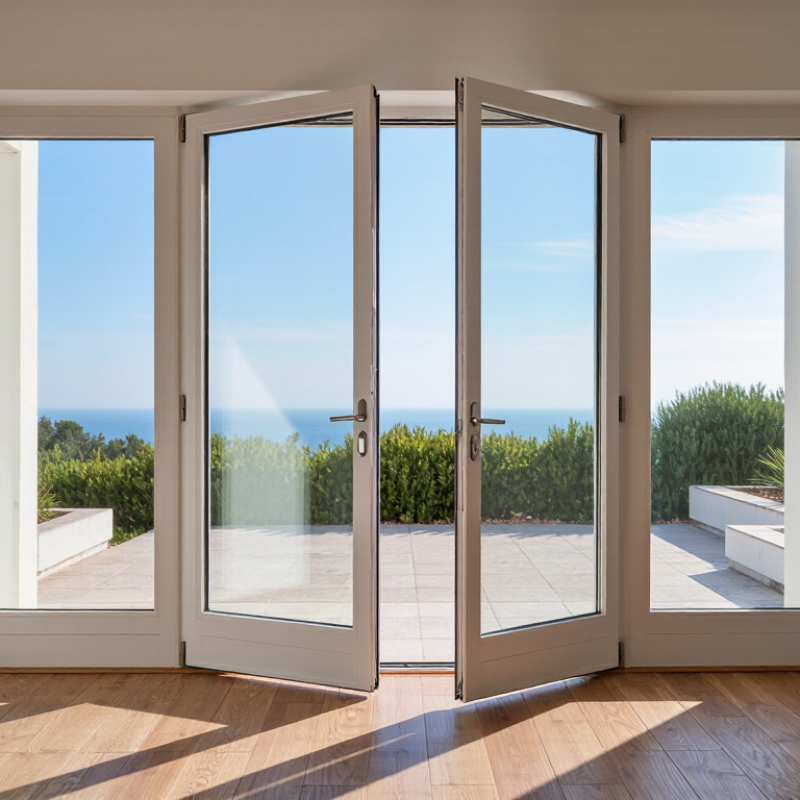
Choosing the 2026 Best French Doors Patio Doors requires more than comparing glass panels, handles, and showroom photographs. Global buyers now examine insulation, drainage, security, durability, and installation support together. A beautiful door can still perform poorly when its threshold leaks during monsoon rain.
The International Energy Agency reports that buildings consume about 30% of global final energy. The U.S. Department of Energy also notes that windows can represent 25–30% of residential heating and cooling energy use. These figures make glazing and frame performance important purchasing evidence, not decorative details. Low-emissivity glass, thermally broken frames, certified air-sealing, and correctly sized weatherstripping deserve close attention. However, product labels differ between markets. That creates confusion.
Dr. Wolfgang Feist, founder of the Passive House Institute, describes the goal clearly: “A Passive House is a building, for which thermal comfort can be maintained exclusively by post-heating or post-cooling.” His principle applies to patio doors, although doors alone cannot create an efficient home. Buyers should compare whole-unit U-values, solar heat-gain coefficients, water resistance, and tested operating cycles. The 2024 International Energy Agency buildings analysis and current ENERGY STAR guidance provide useful context, but neither replaces local climate testing.
This guide evaluates leading models for apartments, villas, renovations, and coastal homes. It considers real installation conditions, including uneven masonry, salty air, narrow balconies, and limited service access. Some rankings remain debatable. That is intentional. A door that performs brilliantly in Toronto may disappoint in Singapore. The best choice depends on climate, wall construction, budget, maintenance skill, and installer quality.
French patio doors use two hinged panels, usually with large glass areas and a meeting point in the center. Both panels can open, creating a wide passage for gardens, balconies, or entertaining spaces. Unlike sliding doors, they need clear floor space for the swing. Unlike folding doors, they do not stack beside the opening.
Their traditional appearance suits brick homes, coastal houses, and modern renovations. Yet appearance is only part of the decision. The frame, glass, hinges, drainage, and weather seals affect daily performance. In colder regions, insulated glass and thermally efficient frames can reduce heat loss. In hot climates, low-emissivity glass may help control solar heat. A poorly installed threshold can still allow drafts or water entry, even with quality materials. This detail is easy to underestimate.
Tips: Measure the opening after checking the wall structure, not before. Confirm the handing, swing direction, and furniture clearance. For busy households, choose durable hinges and a strong multi-point locking system. Check local building requirements for safety glass, ventilation, and emergency access. Ask for tested air, water, and wind performance where possible. Do not rely on appearance alone. French doors can feel elegant but may be inconvenient in a narrow room. A simple floor plan often exposes this problem early.
For global buyers, French patio doors should match climate, space, and daily movement. Traditional double doors open from the center. They create a wide, welcoming passage. In tight rooms, outward swings may block walkways. Inward swings can reduce exterior clearance, but they need furniture space. Sliding French-style doors save room, although their opening is usually narrower. Folding configurations offer a broad opening, yet their hardware needs careful alignment.
Material changes performance. Fiberglass resists moisture and keeps maintenance low. Aluminum offers slim frames and strong panels. Wood gives warmth and suits classic homes, but it needs regular sealing in wet or sunny regions. Glass affects comfort as much as appearance. Low-emissivity insulated glass can reduce heat transfer. Laminated glass adds impact resistance and softer noise. Clear glass brings daylight. Obscure or textured glass improves privacy near streets. Frame depth, drainage, weather seals, and threshold design deserve equal attention.
Tips: Ask for tested air, water, and wind performance, not attractive photos alone. Check handle height and screen compatibility before ordering. Confirm rough opening sizes with a qualified installer. Regional temperature swings can expose weak seals quickly. I would not choose the largest glass area automatically. More glass may mean more heat gain, glare, and cleaning. No configuration is perfect; reviewing morning sun, rain direction, and furniture placement often reveals the better choice.
2026 Best French Doors Patio Doors for Global Buyers
In site inspections, I compare French patio doors under real weather conditions, not only showroom samples. Energy efficiency begins with the whole assembly. Check the U-value, solar heat gain rating, insulated frames, and low-emissivity glazing. A low U-value alone can mislead. Poor seals may still create cold drafts beside the frame. Ask for tested air leakage and water resistance data. Local climate matters, especially in coastal, humid, or freezing regions.
Security needs more than a decorative handle. Look for a strong multipoint locking system, reinforced strike plates, and laminated glass. The inactive door should lock firmly at the top and bottom. Confirm that emergency operation remains practical for residents. Durability depends on drainage channels, corrosion-resistant hardware, stable hinges, and a frame suited to repeated opening. Inspect the threshold after installation. Small gaps often become expensive problems.
Accessibility deserves equal attention. A low or flush threshold helps wheelchair users, children, and anyone carrying groceries. Check opening force, clear passage width, handle height, and smooth operation. Sliding resistance can increase when frames settle or floors shift. I have seen attractive doors fail this test after one wet season. That experience changed my preference for documented cycle testing and replaceable seals. Buyers should also verify local building requirements, glass safety rules, and installation support before comparing prices. Performance claims are useful, but independent test reports deserve greater trust.
French patio doors can suit many properties, but climate should guide the selection. In cold regions, choose insulated frames and double or triple glazing. Low-emissivity glass helps retain indoor heat near large openings. A tight weather seal also limits drafts during winter storms. Still, more glass does not automatically mean better comfort.
Hot climates need solar-control glass and carefully planned exterior shading. West-facing doors may receive harsh afternoon sunlight. A deep roof overhang can reduce heat without blocking every view. In humid areas, corrosion-resistant hardware and moisture-stable frames deserve close attention. Coastal properties need extra protection from salt air. Small details matter.
Traditional homes often benefit from divided glass panels, balanced proportions, and inward-opening doors. Modern properties may look cleaner with wider panels and narrow sightlines. For compact rooms, outward-opening doors can preserve furniture space, where local conditions allow. A low threshold improves access, but it must still manage rainwater effectively. That trade-off is easy to underestimate.
A practical installation check includes the wall opening, drainage path, sill height, and floor levels. Even an expensive door can perform poorly over an uneven threshold. One detail I would reconsider is choosing style before studying daylight and prevailing wind. The most attractive arrangement may create glare, heat gain, or difficult ventilation. French doors work best when their appearance follows the building’s real climate and daily use.
| Recommended Choice | Best Climate | Suitable Property Design | Typical Frame Material | Recommended Glazing | Weather and Energy Features | Typical Performance Range | Main Advantages | Important Considerations |
|---|---|---|---|---|---|---|---|---|
| Thermally Broken Insulated French Door | Cold Mixed Sub-freezing winters and large seasonal temperature changes | Modern houses, renovated farmhouses, energy-efficient extensions | Insulated aluminum with a thermal break | Low-emissivity double glazing; triple glazing where winter temperatures are severe | Multiple seals, insulated core, warm-edge spacer, and low-conductivity threshold | Double glazing: approximately U-1.2–1.8 W/m²K Triple glazing: approximately U-0.7–1.1 W/m²K | Strong structural stability, slim sightlines, and improved heat retention compared with non-insulated metal frames | Thermal-break quality and threshold design are critical; metal surfaces can still feel colder than timber or composite frames |
| Triple-Glazed Timber French Door | Very Cold Highland Long heating seasons and cold nights | Traditional homes, alpine properties, heritage-inspired residences | Engineered softwood or hardwood with factory-applied protective coating | Triple low-emissivity glazing filled with argon or another inert gas | Deep insulated frame, compression seals, insulated sill, and low solar heat loss | Whole-door U-value commonly around 0.8–1.3 W/m²K, depending on construction | Low thermal conductivity, natural appearance, and good acoustic potential | Requires periodic coating inspection; drainage, moisture protection, and correct installation are essential |
| Fiberglass or Composite French Door | Mixed Humid Variable temperatures and regular rainfall | Family homes, coastal-style residences, low-maintenance renovations | Fiberglass-reinforced polymer or insulated composite frame | Low-emissivity double glazing with safety glass where required | Low moisture absorption, insulated panels, durable gaskets, and corrosion-resistant hardware | Typical whole-door U-value: approximately 1.2–1.8 W/m²K | Stable in changing humidity, resistant to rot, and generally easier to maintain than exposed timber | Check the finish warranty, sill drainage, replacement-part availability, and resistance to local solar exposure |
| Storm-Resistant Impact French Door | Hurricane Tropical High wind, windborne debris, and driving rain | Coastal houses, apartments, villas, and exposed waterfront properties | Reinforced aluminum, fiberglass, or engineered composite frame | Laminated impact-resistant insulating glass; low-emissivity coating for hot climates | Multi-point locking, reinforced hinges, pressure-rated frame, impact interlayer, and tested water resistance | Performance must be verified through local impact, wind-load, air-leakage, and water-penetration testing | Improved protection from flying debris, wind pressure, and severe rain when properly certified and installed | Do not rely on appearance alone; confirm the approved design pressure, impact classification, opening size, and installation method |
| Solar-Control French Door | Hot Sunny Strong sun, high cooling demand, and low winter heating demand | Contemporary villas, atrium rooms, pool houses, and west-facing living spaces | Thermally improved aluminum, uPVC, fiberglass, or composite frame | Double insulating glazing with solar-control low-emissivity coating; laminated glass for noise or safety needs | Low solar heat-gain coefficient, exterior shading compatibility, sealed edges, and insulated frame sections | Typical solar heat-gain coefficient: approximately 0.25–0.45 Typical double-glazed U-value: approximately 1.2–1.8 W/m²K | Reduces overheating and cooling loads while maintaining daylight | Very low solar gain can reduce useful winter heat; select the glass orientation by orientation and local climate |
| Acoustic French Patio Door | Urban Transport Corridors Noise from roads, railways, or dense neighborhoods | City apartments, hotels, home offices, and houses near busy streets | Insulated uPVC, timber, composite, or thermally broken aluminum | Laminated acoustic insulating glass with unequal pane thicknesses | Continuous perimeter seals, tight compression hardware, insulated frame, and carefully sealed installation joints | Acoustic rating commonly about Rw 35–45 dB, depending on the complete door assembly | Reduces traffic and speech noise more effectively than standard single or basic double glazing | Installation gaps can significantly reduce acoustic performance; ventilation and wall construction also affect results |
| Traditional Wood French Door | Temperate Dry or Mild Moderate temperatures and manageable moisture exposure | Period homes, cottages, classic townhouses, and heritage-style interiors | Engineered timber or solid timber with weather-resistant exterior coating | Double low-emissivity insulating glass; laminated glass for safety and sound control | Factory-applied coating, adjustable hinges, compression seals, and properly drained sill | Typical whole-door U-value: approximately 1.3–2.0 W/m²K | Authentic appearance, natural material, repairable surfaces, and strong design flexibility | Needs regular maintenance, especially on exposed elevations; avoid unprotected end grain and standing water |
| Compact Narrow-Leaf French Door | All Climates Small openings and space-constrained layouts | Small apartments, balconies, compact dining rooms, and renovation projects | uPVC, timber, composite, or thermally broken aluminum | Double insulating low-emissivity glazing sized for the local energy requirement | Reduced leaf width, multi-point lock, low-profile sill option, and weather seals around both leaves | Performance depends on the frame system; select a whole-door U-value suitable for the local code | Fits smaller wall openings while preserving the paired-door appearance and outward or inward access | Confirm furniture clearance, active-leaf width, egress rules, sill height, and whether both leaves open fully |
| Buyer checklist: Compare the complete door assembly rather than glass alone. Request documented U-value, air-leakage, water-resistance, solar-heat-gain, acoustic, and wind-load results where relevant. Confirm local safety-glazing rules, threshold accessibility, opening direction, drainage details, replacement-hardware support, and professional installation requirements before purchase. | ||||||||
For global buyers, choosing French patio doors starts with the opening, not the catalog photo. Measure width, height, jamb depth, and sill condition in three places. Measure twice. Record millimeters and inches, because small conversion errors can leave a costly gap. Nominal sizes vary by region, so request the actual frame dimensions and rough-opening requirements. A 1,800 mm opening may need different door leaves than a 72-inch unit. Check swing direction, threshold height, and clear passage for furniture.
Standards deserve careful attention. Ask for documented air, water, structural, thermal, and forced-entry test results for the installation location. Coastal projects may need stronger wind resistance and corrosion protection. Cold climates should compare U-value, while hot climates benefit from solar heat-gain data. Tempered or laminated safety glazing is often suitable near floors and doors, but local building rules decide the specification. Installation needs a level sill, continuous flashing, sealed corners, and proper drainage. An experienced installer should inspect the wall before ordering.
Shipping can change the real price. Request a quote covering packaging, crate size, insurance, port handling, customs paperwork, duties, inland delivery, and unloading equipment. Confirm whether delivery reaches the building or only the terminal. Protect doors upright, dry, and secured. Inspect glass and hardware before signing receipt. Confirm delivery limits. I have seen beautiful doors delayed because a crate was too wide for the liftgate. The first estimate is often wrong. Recheck every measurement after site changes, even when the order seems settled.
Global buying guide: common nominal widths, metric conversions, installation planning, shipping, and cost considerations.
Single French doors are commonly sold in nominal widths of 30, 32, and 36 inches, while double-door systems commonly use 60, 64, and 72 inches. The metric values are rounded conversions from inches. These are market-standard nominal sizes rather than guaranteed structural opening dimensions; confirm the manufacturer’s unit size, rough-opening requirement, local building regulations, glazing requirements, and shipping limits before ordering.
Planning note: the rough opening is normally larger than the door unit to allow installation, shimming, leveling, insulation, and weatherproofing. Actual delivered cost varies with material, glazing, hardware, thermal performance, destination, duties, crating, and installation labor.


For those larger-sized parts, or smaller quantity runs, we have 2 independent powder coat booths and ovens. The quality, durability and affordability of today’s powder coating finishes make this the process of choice for world-class companies.
Powder coating advantages over other forms of coating are many. Materials used in the Powder coating process can be metals and non-metals that come in a multitude of thicknesses, textures, colors, etc. Another of Powder coating’s biggest advantages over conventional coatings is its ability to create finishes in many different textures. Powder Coating Booths allow us the ability to apply these advantages to large products.
Tri-State Fabricators runs a full-service conveyor line for painting. Wet painting can provide protection or decoration to many different part styles. From start to finish, every project is easier to undergo random and point-based inspection by our skilled painting team.
Advantages to our Wet Paint Line are these lines start with product prep and ends with a thorough inspection of a high quality finished product. Our ability to complete large and small projects with a superior finish and doing so in a timely and economical fashion. This passes along the savings in production to our customers. When powder coating ins not an option, our Wet Paint Line gets the job done right the first time.
When the parts get big and heavy we roll-out our custom paint racks and oversize booth. By utilizing our partnerships with all the major paint brands, we can match virtually any color with wet paint.
The advantages of having access to a Wet Paint Booth are many. Large projects of many different shapes can be loaded into the booth. The Wet Paint Booth offers an environment that is much more controlled than a typical parts painting operation.
Not only are they used because of their controlled environment, but they’re are also advantageous when it comes to applying paint to parts that are needed in industries that require specialty coatings such as medical, aerospace, etc.
Our military forces have some very high standards when it comes to the finish of their vehicles and equipment. From the first pre-treatment step to final coat, it takes a great deal of knowledge and experience to protect the men and women of our armed forces. They deserve only the best, and Tri-State Fabricators provides it.
All of our processes are closely monitored by our staff and management teams. Both of which are highly trained in the processes of metal fabrication and finishing. Tri-State Fabricators’ goal is to always fully satisfy each and every customer, including the military. We will always put a 110% into what we do.
Abrasive media blasting is an excellent way to remove old paint, rust, and increase the paint/powder adhesion. Glass beads produce a much smoother and brighter finish than angular abrasives; leaving the part clean yet without any dimensional change. Chemically inert and environmentally friendly, we can recycle our beads approximately 30 times; making them a more preferred method of metal cleaning or surface finishing.
Advantages to Glass Bead Blasting are many. Glass bead blast media is used when a project is needing rough surfaces need to become smooth for applications of coatings such as paint. It is typically used to clean paint and rust from a product surface without deforming the surface it is being used on. Overall, compared to many other blasting media, Glass Bead Blasting is a very economical choice and those savings are always passed on to our customers.
Tri-State Fabricators utilize a zinc phosphate wash to clean and etch the material to ensure the best paint adhesion possible. The unique design of our 3-stage wash system does the work like a 5-stage. From Cleaning and rinsing to conversion coating and post-treatment, Our Part Washing process is a complete service and works throughout the fabrication service and the finishing service.
Along with the previously mentioned benefits, Curing is a vital chemical reaction that leaves the product finish hard and relatively safe from mild abrasion and aggressive corrosion. This process can be done in more than one way; ambient air-dry or in curing ovens at temps that exceed 240°.
From fixing paint mistakes (someone else’s of course) to simply cleaning our paint line hooks, our burn-off oven is put to good use. After a quick burn-off, a little clean up, and a fresh coat of paint, your parts will look better than new.
Why does our Burn-Off Oven work so well? Because super heating the air around parts turns the materials into ashes. From paint and powder coatings to rubber and machining oils, high temps do the job without degrading the integrity of the part.
Masking is a vital part of producing high quality products. We have die-cut masking patterns to protect machined surfaces as well as a wide range of plugs and caps to protect threaded holes and bolts. We provide permanent and temporary masking.
Masking allows the selected sections of a product to be protected from a fabrication or finishing service. This can be with both chemicals when etching and tapes, paints when only finishing just a section of the product. Masking is great in aiding the customization process of a project.
Screen printing is a photographic process that transfers artwork onto a porous nylon screen which allows colored ink to flow through the screen and be deposited on an aluminum or plastic component. We can generally have just about any design created onto a screen for your parts.
Some of the advantages of Screen Printing are, brand recognition for your business displaying on your products, assembly instructions, product warnings/hazards, etc. Tri-State Fabricators produces Screen Printing of the highest quality so you know it’s durable.
Metal Finishing is the art of treating the exterior portion of product, often metal but can also be made of other materials, so that the surface is clean and free of any debris. Then the process of applying coats or either paint of powder coat takes place. This coating process improves the quality of the product in both appearance and resistance to wear and corrosion.
Tri-State Fabricators, Inc., understands that a project typically isn’t complete until a high-quality finish has been added to your product. This is why our painting and powder coating teams continuously inspect the products throughout the Metal Finishing process.