


2026 Best Automation Computer Suppliers for Global Buyers?

Global buyers are entering a demanding Automation Computer market. Machines now need faster processing, stable connectivity, and reliable operation near production lines. A factory floor is not a quiet office. It includes dust, vibration, heat, and sudden network interruptions.

Industry reports show why supplier selection matters. MarketsandMarkets estimates that the industrial PC market will grow from about USD 5.2 billion in 2023 to USD 7.2 billion by 2028. Its report identifies edge computing, machine vision, and industrial IoT as major growth drivers. IDC also expects worldwide edge-computing spending to expand strongly through 2028, supporting real-time decisions closer to equipment. These figures indicate opportunity, but they do not guarantee product quality.

“The PC is the heart of automation,” says Hans Beckhoff, founder of Beckhoff Automation. His view reflects a practical reality: the computer often controls motion, collects sensor data, and supports predictive maintenance simultaneously. Leading suppliers must therefore demonstrate more than attractive specifications. Buyers should examine processor stability, operating-temperature ratings, long-term component availability, cybersecurity updates, certifications, and local technical support. A sealed aluminum chassis beside a robotic arm may matter more than a higher benchmark score.

No supplier wins every test. That is important. A low-cost system can reduce initial spending but create expensive downtime later. A premium system can also be excessive for a simple packaging line. This 2026 guide compares leading Automation Computer suppliers through performance, durability, integration experience, service coverage, and total ownership cost. The evaluation remains practical, because real factories rarely match brochure conditions.
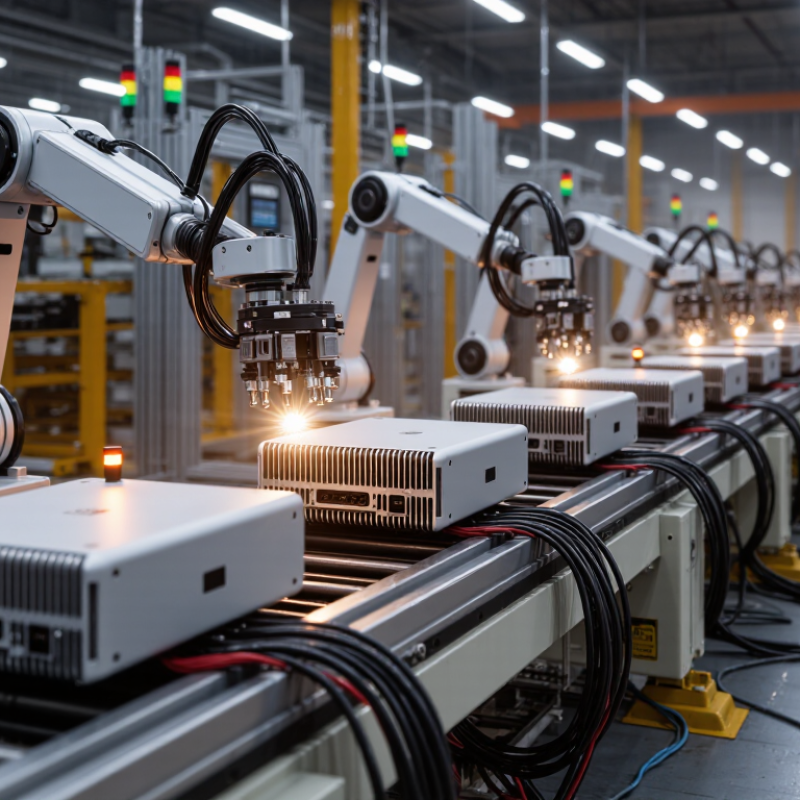
2026 Best Automation Computer Suppliers for Global Buyers?

What Is an Automation Computer and Why Does Supplier Choice Matter?

An automation computer is an industrial computing system built to control machines, collect sensor data, and run factory software. Unlike an office PC, it may operate beside a furnace, conveyor, or robotic cell. It needs stable performance, long product life, vibration resistance, and predictable communication.

Supplier choice matters because downtime spreads quickly across production. MarketsandMarkets’ 2023 Industrial PC report valued this market at about USD 6.5 billion in 2023 and projected it to approach USD 9.8 billion by 2028. That growth reflects wider industrial digitization, but buying decisions remain practical.

A reliable supplier should explain processor limits, storage endurance, thermal design, operating temperature, and replacement planning.
Deloitte’s 2023 Smart Manufacturing Survey found that 86% of manufacturers expect smart manufacturing to become a major competitiveness source within five years.

Yet many projects still underestimate maintenance. That is the uncomfortable part.

Tips: Ask for lifetime availability, test reports, cybersecurity update policies, and regional service response times. Check whether the computer starts reliably after power loss. Request a sample unit and test it with your actual sensors, cables, and software. Cheap hardware can become expensive when one missing driver stops a production line. I have seen specifications look excellent on paper, while connector placement caused cabinet installation problems. Recheck the small details.


Which Specifications Define a Reliable Automation Computer?

A reliable automation computer begins with predictable performance, not impressive peak speed. For PLC coordination, vision inspection, and data logging, choose a processor with practical headroom. Eight or more gigabytes of industrial memory suits many control tasks, while heavier analytics may require more. ECC memory, when supported, can reduce corruption risks. Use storage designed for continuous writing and power-loss protection. Small details matter.

Thermal design often separates a dependable controller from a short-lived desktop. A fanless aluminum enclosure can resist dust, but it still needs airflow around its cooling fins. Check operating temperature, vibration tolerance, shock ratings, and humidity limits against the actual cabinet. I once underestimated cabinet heat; the computer passed bench tests but slowed during summer production. That mistake remains useful. Test under stress.

Connectivity must match the machine, not the sales brochure. Count network ports, serial interfaces, USB connections, display outputs, and expansion options before ordering. Dual network ports can separate control traffic from factory data. A hardware watchdog may help recovery after software freezes. Secure boot, controlled BIOS settings, and clear update procedures strengthen operational security. Suppliers should provide lifecycle notices, repair policies, test records, and technical documentation. Global buyers also need documented conformity for their destination markets. Benchmarks can mislead. Verify performance inside a realistic cabinet, with actual sensors, cables, heat, and vibration.

How to Evaluate Automation Computer Suppliers for Global Purchasing

When evaluating automation computer suppliers for global purchasing, start with evidence, not polished brochures. The International Federation of Robotics reported 541,302 industrial robots installed worldwide in 2023, showing the rising need for dependable computing at the production edge. Ask suppliers for processor lifecycle plans, ECC memory options, thermal test results, and documented operating ranges. A dusty control cabinet exposes weak designs quickly.

Cybersecurity and compliance deserve equal attention. Check TPM support, secure boot, signed firmware, vulnerability response procedures, and an up-to-date software bill of materials. IEC 62443 alignment can indicate stronger industrial security practices, although certification alone proves little. Request certificates, audit dates, and test scopes. Ask for evidence. Numbers can mislead.

Supply performance matters after deployment. Deloitte’s 2024 Smart Manufacturing Survey found that 86% of manufacturers expect smart manufacturing to become a major competitiveness driver within five years. That expectation makes spare parts, repair capacity, and regional technical support important purchasing criteria. Compare warranty terms, RMA timelines, minimum order quantities, and documented lead times across regions. Require a pilot sample under real vibration, heat, and network conditions. A low price may conceal costly downtime. I have seen evaluations overvalue specifications and undervalue recovery procedures. That is an avoidable mistake, but not an unusual one. Supplier references should include installations with similar temperatures, workloads, and maintenance skills, rather than only impressive factory photographs.

2026 Best Automation Computer Suppliers for Global Buyers? - How to Evaluate Automation Computer Suppliers for Global Purchasing

Evaluation Dimension Recommended Purchasing Benchmark Evidence to Request Why It Matters for Global Buyers Suggested Weight
Industrial Reliability Fanless or low-maintenance design; industrial-grade components; documented operating-life expectations. Reliability test reports, component temperature ratings, product lifecycle statement, and failure-analysis process. Reduces unplanned downtime in 24/7 production environments and limits maintenance visits. 15%
Operating Temperature Select a rated range suitable for the installation; common industrial requirements include approximately −20°C to +60°C or wider. Official datasheet, thermal test conditions, derating curves, and enclosure installation requirements. Temperature capability affects deployment in factories, outdoor cabinets, warehouses, and high-heat regions. 10%
Ingress Protection Use IEC 60529 IP ratings as a reference; IP65 protects against dust ingress and water jets when the complete enclosure is tested accordingly. IP test report, test configuration, connector-cover details, and installation limitations. Helps match the computer to washdown areas, dusty production lines, and control cabinets. 8%
EMC and Electrical Safety Verify applicable industrial EMC requirements, including IEC 61000-series immunity and emissions testing, plus local safety requirements. Declaration of conformity, EMC test reports, safety certificates, and power-supply specifications. Industrial networks contain electrical noise that can cause communication errors, resets, or unsafe interruptions. 12%
Vibration and Shock Resistance Require test conditions appropriate to the machine environment, with vibration and shock testing referenced to IEC 60068 methods where applicable. Test method, frequency range, acceleration level, pulse duration, mounting method, and pass/fail criteria. Protects storage devices, connectors, circuit boards, and display assemblies on moving equipment. 8%
Processing and Expansion Confirm required CPU performance, memory capacity, storage type, display outputs, serial interfaces, USB ports, Ethernet ports, and expansion options. Full technical datasheet, interface pinouts, maximum memory, storage compatibility, and application performance test. Prevents costly redesign when connecting PLCs, cameras, sensors, field devices, or multiple displays. 12%
Operating-System and Software Support Confirm compatibility with the required operating system, real-time software, visualization platform, security tools, and device drivers. Compatibility matrix, driver package, update policy, image-management procedure, and cybersecurity guidance. Software incompatibility can delay commissioning and create long-term security or maintenance risks. 10%
Supply Continuity Prefer documented product availability, change-notification procedures, repair options, and a defined last-time-buy process. Product-lifecycle policy, end-of-life notice period, change-control procedure, and replacement-product policy. Stable supply is essential when machines are deployed across multiple countries for many years. 10%
Warranty and Technical Service Evaluate warranty duration, advance replacement availability, remote troubleshooting, repair turnaround, and multilingual documentation. Written warranty terms, service-level agreement, escalation contacts, RMA process, and spare-parts policy. Clear support arrangements reduce downtime and communication barriers across time zones. 8%
International Logistics Assess export documentation, packaging standards, customs support, delivery terms, regional stock, and replacement-part availability. Sample commercial invoice, packing list, HS classification support, delivery options, and shipping-damage procedure. Accurate documentation and logistics planning help avoid customs delays and unexpected landed costs. 7%
Buyer note: The benchmarks above are procurement evaluation criteria based on commonly used industrial standards and purchasing practices. Confirm every rating, certification, test condition, delivery commitment, and warranty term against the supplier’s current technical and contractual documentation.

What Certifications and Support Should International Buyers Check?

International buyers should inspect certifications before comparing automation computer prices. A certificate alone can mislead. Ask for the certificate number, issuing body, validity period, and covered product model. ISO 9001 indicates controlled quality processes, while ISO 14001 shows structured environmental management. These standards support confidence, but they do not prove every computer is suitable for your factory.

Request regional conformity documents for the destination market. Depending on the application, this may include electrical safety, electromagnetic compatibility, environmental material compliance, and functional safety evidence. Ask for laboratory test reports, declarations of conformity, and serial-number traceability. Check whether the tested configuration matches the quoted unit, including processor, memory, storage, and power supply. Small differences matter.

Support quality often decides whether a system succeeds after delivery. Confirm commissioning guidance, installation manuals, wiring diagrams, software updates, and cybersecurity procedures. A reliable supplier should explain response times, remote diagnostic methods, spare-part availability, and escalation contacts. Ask whether engineers can support your time zone and communicate in clear technical English. Training is useful, especially for maintenance teams.

Do not accept vague promises. Get service terms in writing. One overlooked issue is lifecycle planning. Ask how long replacement parts and firmware remain available. Also ask what happens when a component becomes obsolete. Buyers sometimes focus too heavily on certificates and ignore field support. That mistake can create expensive downtime. Even experienced teams miss details, so review every document with an independent technical specialist when the application is critical.

2026 Best Automation Computer Suppliers for Global Buyers

International buyers should verify both regulatory documentation and after-sales capability before selecting an automation computer supplier. The chart uses a practical five-point verification priority scale, where 5 indicates the highest priority.

Buyer guidance: Confirm that certificates apply to the exact model and destination market. Request declarations of conformity, test reports, operating-temperature details, warranty terms, spare-parts availability, firmware-update procedures, and documented technical support response times.

How to Compare Prices, Customization, Delivery, and After-Sales Service?

2026 Best Automation Computer Suppliers for Global Buyers?

How to Compare Prices, Customization, Delivery, and After-Sales Service?

For global buyers, the lowest quotation is rarely the lowest total cost. Ask for a line-by-line offer covering the computer, industrial enclosure, operating system, testing, packaging, and freight. Compare identical specifications, including processor class, memory, storage endurance, display ports, and operating temperature. Watch the extras. A missing mounting bracket can delay installation and increase local labor costs.

Customization requires technical proof, not attractive promises. Send a clear requirement sheet with dimensions, connector types, network protocols, power input, and software needs. Request a sample unit or a documented compatibility test before approving volume production. Confirm whether firmware changes are included, charged separately, or unsupported after delivery. Delivery estimates should identify prototype time, production time, inspection time, and customs paperwork. Ask for recent production records or realistic capacity data. Very short lead times deserve questions.

After-sales service often separates a dependable supplier from a risky one. Check response hours, remote diagnosis procedures, spare-parts availability, warranty boundaries, and escalation contacts. A useful agreement should define replacement timing for failed storage, power supplies, or cooling components. Evaluate service with a written scenario: “Five units stop booting during installation; what happens next?” Score each supplier across price, engineering support, delivery control, and service reliability. My own comparison method is not perfect; it can overweight measurable costs and miss communication quality. A short technical meeting can reveal that weakness quickly.

Powder Coat Booths

For those larger-sized parts, or smaller quantity runs, we have 2 independent powder coat booths and ovens. The quality, durability and affordability of today’s powder coating finishes make this the process of choice for world-class companies.

Powder coating advantages over other forms of coating are many. Materials used in the Powder coating process can be metals and non-metals that come in a multitude of thicknesses, textures, colors, etc. Another of Powder coating’s biggest advantages over conventional coatings is its ability to create finishes in many different textures. Powder Coating Booths allow us the ability to apply these advantages to large products.

Wet Paint Line

Tri-State Fabricators runs a full-service conveyor line for painting. Wet painting can provide protection or decoration to many different part styles. From start to finish, every project is easier to undergo random and point-based inspection by our skilled painting team.

Advantages to our Wet Paint Line are these lines start with product prep and ends with a thorough inspection of a high quality finished product. Our ability to complete large and small projects with a superior finish and doing so in a timely and economical fashion. This passes along the savings in production to our customers. When powder coating ins not an option, our Wet Paint Line gets the job done right the first time.

Wet Paint Booths

When the parts get big and heavy we roll-out our custom paint racks and oversize booth. By utilizing our partnerships with all the major paint brands, we can match virtually any color with wet paint.

The advantages of having access to a Wet Paint Booth are many. Large projects of many different shapes can be loaded into the booth. The Wet Paint Booth offers an environment that is much more controlled than a typical parts painting operation.

Not only are they used because of their controlled environment, but they’re are also advantageous when it comes to applying paint to parts that are needed in industries that require specialty coatings such as medical, aerospace, etc.

Military CARC

Our military forces have some very high standards when it comes to the finish of their vehicles and equipment. From the first pre-treatment step to final coat, it takes a great deal of knowledge and experience to protect the men and women of our armed forces. They deserve only the best, and Tri-State Fabricators provides it.

All of our processes are closely monitored by our staff and management teams. Both of which are highly trained in the processes of metal fabrication and finishing. Tri-State Fabricators’ goal is to always fully satisfy each and every customer, including the military. We will always put a 110% into what we do.

Glass-Bead Blasting

Abrasive media blasting is an excellent way to remove old paint, rust, and increase the paint/powder adhesion. Glass beads produce a much smoother and brighter finish than angular abrasives; leaving the part clean yet without any dimensional change. Chemically inert and environmentally friendly, we can recycle our beads approximately 30 times; making them a more preferred method of metal cleaning or surface finishing.

Advantages to Glass Bead Blasting are many. Glass bead blast media is used when a project is needing rough surfaces need to become smooth for applications of coatings such as paint. It is typically used to clean paint and rust from a product surface without deforming the surface it is being used on. Overall, compared to many other blasting media, Glass Bead Blasting is a very economical choice and those savings are always passed on to our customers.

Part Washing

Tri-State Fabricators utilize a zinc phosphate wash to clean and etch the material to ensure the best paint adhesion possible. The unique design of our 3-stage wash system does the work like a 5-stage. From Cleaning and rinsing to conversion coating and post-treatment, Our Part Washing process is a complete service and works throughout the fabrication service and the finishing service.

Along with the previously mentioned benefits, Curing is a vital chemical reaction that leaves the product finish hard and relatively safe from mild abrasion and aggressive corrosion. This process can be done in more than one way; ambient air-dry or in curing ovens at temps that exceed 240°.

Burn-Off Oven

From fixing paint mistakes (someone else’s of course) to simply cleaning our paint line hooks, our burn-off oven is put to good use. After a quick burn-off, a little clean up, and a fresh coat of paint, your parts will look better than new.

Why does our Burn-Off Oven work so well? Because super heating the air around parts turns the materials into ashes. From paint and powder coatings to rubber and machining oils, high temps do the job without degrading the integrity of the part.

Masking

Masking is a vital part of producing high quality products. We have die-cut masking patterns to protect machined surfaces as well as a wide range of plugs and caps to protect threaded holes and bolts. We provide permanent and temporary masking.

Masking allows the selected sections of a product to be protected from a fabrication or finishing service. This can be with both chemicals when etching and tapes, paints when only finishing just a section of the product. Masking is great in aiding the customization process of a project.

Screen Printing

Screen printing is a photographic process that transfers artwork onto a porous nylon screen which allows colored ink to flow through the screen and be deposited on an aluminum or plastic component. We can generally have just about any design created onto a screen for your parts.

Some of the advantages of Screen Printing are, brand recognition for your business displaying on your products, assembly instructions, product warnings/hazards, etc. Tri-State Fabricators produces Screen Printing of the highest quality so you know it’s durable.

Metal Finishing

Metal Finishing is the art of treating the exterior portion of product, often metal but can also be made of other materials, so that the surface is clean and free of any debris. Then the process of applying coats or either paint of powder coat takes place. This coating process improves the quality of the product in both appearance and resistance to wear and corrosion.

Tri-State Fabricators, Inc., understands that a project typically isn’t complete until a high-quality finish has been added to your product. This is why our painting and powder coating teams continuously inspect the products throughout the Metal Finishing process.
