


In 2026, global buyers need more than a low quoted price for stainless steel plate. The right 304 Stainless Steel Plate must match the application, fabrication method, and delivery environment. Kitchen equipment, pharmaceutical vessels, architectural panels, and food-processing lines demand different specifications. A polished sheet may look excellent, yet it can fail when thickness tolerance or surface treatment is unsuitable.
This guide examines practical buying factors from a supplier and engineering perspective. It considers chemical composition, yield strength, corrosion resistance, finish, flatness, cutting accuracy, and available dimensions. Buyers should request mill test certificates, inspection reports, and traceable batch information before placing large orders. Reliable suppliers should explain standards clearly, such as ASTM A240, EN 10088, or equivalent regional requirements. Documentation matters.
Not every “best” plate is best for every project. That is the uncomfortable part. Price comparisons may exclude packaging, testing, tariffs, inland transport, or replacement risks. Some online specifications also appear complete but omit tolerance details. Careful buyers should question unclear claims and compare like-for-like products. Small details matter, including protective film, edge condition, pallet strength, and moisture control during shipment. This overview aims to help importers, fabricators, and distributors make defensible decisions. It does not replace professional material verification. Supplier performance can vary, even within the same market.
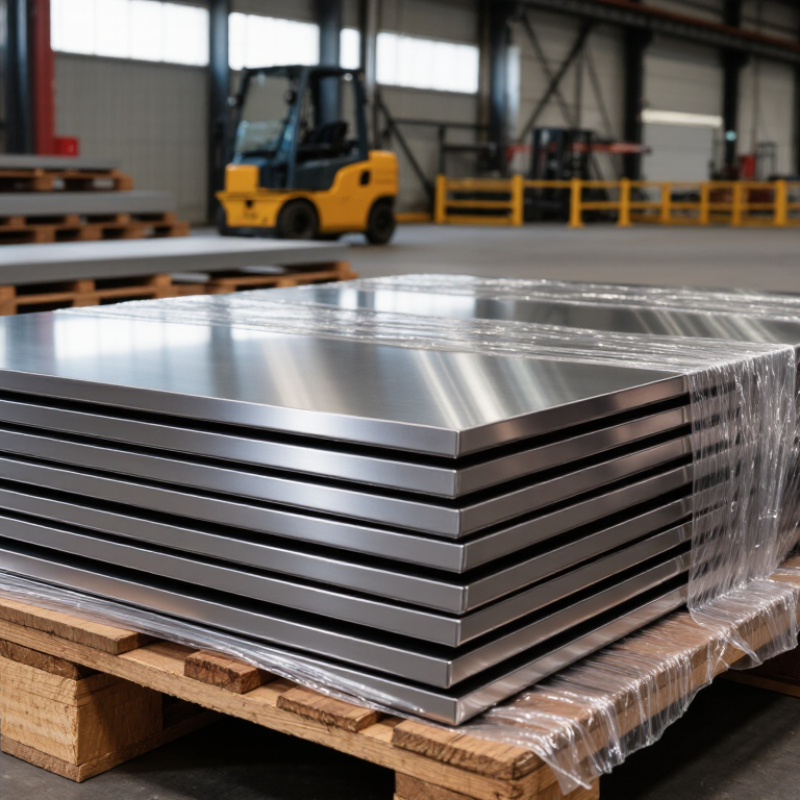
304 stainless steel plate is an austenitic stainless steel made mainly from iron, chromium, and nickel. Chromium forms a thin passive layer that helps resist moisture, stains, and everyday corrosion. Nickel supports its toughness and improves performance during forming.
It is not rust-proof. Salt spray, chemicals, poor cleaning, or trapped moisture can still cause staining. In practical fabrication, 304 plate is easy to cut, weld, bend, and polish. Annealed 304 is usually non-magnetic, although rolling, bending, or stamping can create slight magnetism. That detail often surprises buyers.
Typical uses include food-processing tables, kitchen equipment, storage tanks, architectural panels, and indoor industrial parts. A clean surface matters. Scratches, iron dust, and rough weld areas may become visible after installation. These small details are easy to underestimate.
When selecting a plate, check thickness tolerance, surface finish, flatness, edge condition, and heat number. Request a material test certificate showing chemical composition and mechanical properties. ASTM A240 and EN 10088 are common reference standards, but the project specification should control. Positive material identification can verify the alloy when documentation seems unclear.
A thoughtful buyer also considers the environment. Coastal exposure may require a more corrosion-resistant grade. For ordinary indoor service, 304 is often practical and economical. Still, “304” alone does not describe every quality aspect. The best choice depends on fabrication, cleaning routines, temperature, and actual exposure conditions.

304 stainless steel plate remains a practical choice for global buyers in 2026. Its balanced chemistry usually includes about 18% chromium and 8% nickel. This austenitic structure supports corrosion resistance, clean appearance, and reliable fabrication.
The plate handles moisture, food-processing environments, indoor equipment, and general industrial service well. Its smooth surface is easy to clean after proper finishing. It also offers strong formability, allowing fabricators to bend, roll, cut, and draw many shapes. Welding is generally straightforward when procedures, heat input, and post-weld cleaning are controlled. It is not a universal solution. High chloride exposure can cause pitting, especially near seawater, salt deposits, or stagnant joints. Cold working may also create slight magnetism, which can surprise some buyers.
In practical purchasing, specify thickness, width, length, surface finish, and edge condition clearly. Request chemical analysis, mechanical test results, and dimensional inspection records. A clean mill certificate improves traceability, but it should not replace independent checks for critical projects. Plate strength is useful, though 304 may not suit every high-temperature or heavily loaded structure. Comparing service conditions before ordering prevents expensive changes later. Small details matter: protective film, dry packing, and separated plates can reduce scratches and moisture staining during shipment. Some suppliers describe “corrosion resistant” too broadly. Real performance still depends on design, cleaning, welding quality, and the surrounding environment.
Choosing the right 304 stainless steel plate starts with the service environment, not the lowest quotation. Standard 304 contains chromium and nickel, offering reliable resistance to moisture, many chemicals, and indoor corrosion. It is widely used for food equipment, tanks, kitchen surfaces, and architectural parts. However, 304 is not immune to saltwater or concentrated chlorides. Coastal projects may require a more resistant grade.
Plate thickness should match the load, forming method, and welding plan. A thin plate can reduce cost, but it may warp during fabrication. A thick plate adds strength, though it increases weight and cutting expense. Specify the surface finish clearly, such as 2B, brushed, or polished. A polished sample can look perfect, yet transport scratches may appear later. Protect the surface with suitable film and careful packaging.
Reliable purchasing depends on traceable documents. Request the material test certificate, heat number, chemical analysis, mechanical results, thickness tolerance, and applicable standard, such as ASTM A240 or EN 10088. Check whether the supplier can provide third-party inspection and dimensional records. For welded assemblies, 304L may deserve consideration because its lower carbon content can reduce sensitization risks. I would not trust a certificate alone. Compare markings, packing photos, and inspection data before shipment, because small inconsistencies can become expensive problems.
For global buyers, 304 stainless steel plate should meet a recognized product standard, not only a seller’s description. Common references include ASTM A240, EN 10088, and JIS G4304. Requirements may differ by destination, thickness, and application. Confirm the exact grade, dimensions, surface finish, and heat treatment before ordering. Small wording differences can create expensive disputes.
Reliable suppliers should provide a material test certificate, preferably EN 10204 3.1, with heat number traceability. The certificate should list chemical composition, mechanical properties, product standard, and inspection results. Check whether the document matches the plate markings and purchase order. A certificate is not proof by itself. It must be traceable.
Physical checks remain essential. Measure thickness at several points with a calibrated micrometer. Inspect edges, weld-free surfaces, scratches, pits, and rolling marks under strong light. Positive material identification can confirm chromium and nickel content. Tensile and bend tests may be required for structural or fabricated parts. Surface roughness testing is useful for hygienic equipment. Packaging also matters; damaged wrapping can leave moisture stains during shipment. I have seen specifications that looked complete but missed flatness tolerance. That detail deserves a second review. Independent inspection can reduce uncertainty, although it adds time and cost. Always record photographs, batch numbers, test dates, and sampling methods before acceptance.
2026 Best 304 Stainless Steel Plate for Global Buyers?
In 2026, 304 stainless steel plate pricing will depend on thickness, surface finish, width, and order volume. A thin, polished plate may cost more than a thicker, standard-finish plate. Raw nickel prices can also change offers quickly. Request prices with currency, validity period, packaging, and delivery terms clearly stated. A quote without these details is incomplete.
Reliable suppliers should provide mill test certificates, chemical composition, mechanical properties, and dimensional tolerances. Ask for recent production photos and independent inspection access. Verify whether the supplied grade matches the required standard and end use. Supplier directories can help, but they are not proof of quality. That part is easy to forget. Compare at least three written quotations before choosing.
Import planning requires careful document control. Confirm the correct customs classification with a qualified broker before shipment. Check certificates of origin, commercial invoices, packing lists, and transport documents. Calculate more than the steel price. Include freight, insurance, duties, port charges, inland delivery, and possible inspection fees. Choose suitable Incoterms and define responsibility for damage or delays. A pre-shipment inspection may prevent expensive surprises, although it cannot replace clear specifications. Some buyers focus heavily on price and overlook packaging. Moisture, salt air, and poor wooden supports can stain plate surfaces during transit. Demand sealed protection, stable stacking, and photographs before loading.
| Data Dimension | Typical 304 Stainless Steel Plate Data | Buyer Relevance in 2026 | Import or Purchasing Check |
|---|---|---|---|
| Material designation | AISI 304; UNS S30400; EN 1.4301; commonly specified under ASTM A240 or EN 10088. | Use the designation required by the destination market and project specification. | Request a material test certificate showing the applicable standard and heat number. |
| Nominal chemical composition | Chromium approximately 18%; nickel approximately 8%; carbon generally limited to 0.08% maximum for standard 304. | Provides general corrosion resistance and formability for many architectural, food-processing, and industrial uses. | Confirm the exact chemistry against the purchase standard; 304L is a separate low-carbon grade. |
| Standard mechanical properties | For common ASTM A240 annealed product: tensile strength minimum about 515 MPa; yield strength minimum about 205 MPa; elongation commonly 40% minimum, subject to thickness and specification. | Useful for preliminary design, but not a substitute for the certificate or final engineering approval. | Check the standard edition, thickness range, test direction, and actual mill-test results. |
| Density and weight calculation | Approximate density: 8.0 g/cm³. Approximate mass: 7.85 kg per m² for each 1 mm of thickness. | Supports freight budgeting, container planning, and landed-cost calculations. | Actual shipment weight may vary because of thickness tolerance, plate size, packaging, and moisture. |
| Common thickness range | Approximately 3–150 mm is commonly available through plate and heavy-sheet supply channels; availability varies by mill, width, and length. | Thin material may be sold as sheet rather than plate, affecting terminology and minimum order quantities. | State nominal thickness, permitted tolerance, width, length, and whether cut-to-size service is required. |
| Common surface finishes | No. 1 hot-rolled annealed and pickled; 2B cold-rolled smooth finish; No. 4 brushed finish; BA bright annealed finish. | Finish affects appearance, cleaning performance, fabrication suitability, and price. | Define finish standard, roughness requirement if applicable, protective film, and acceptable surface marks. |
| Indicative 2026 material price | Planning range: approximately USD 2.80–5.50 per kg for standard commercial plate, before freight, duties, taxes, cutting, and local delivery. | Actual prices depend on nickel and chromium costs, order quantity, thickness, finish, origin, certification, and exchange rates. | Treat this as a budgeting range rather than a quotation; obtain offers based on the same specification and Incoterm. |
| Typical price premium factors | Small lots, non-standard dimensions, tight tolerances, special testing, polished finishes, certified origin, and urgent production generally increase cost. | A lower base price may not produce the lowest landed cost. | Compare total cost including inspection, export packing, inland transport, ocean or air freight, insurance, duties, and customs fees. |
| Supplier categories | Primary mills, authorized distributors, regional stockholders, service centers, and metal-fabrication processors. | Mills may offer better pricing for larger volumes, while stockholders may provide faster delivery and smaller quantities. | Verify production capability, stock position, export experience, traceability, inspection procedures, and references. |
| Common supply origins | Major supply regions include East Asia, South Asia, Europe, North America, and other established stainless-steel producing markets. | Origin affects lead time, freight cost, trade remedies, documentation, and buyer qualification requirements. | Confirm country of origin, production country, shipping route, and whether the destination imposes quotas or anti-dumping measures. |
| Recommended Incoterms | FCA or FOB can provide clearer freight control; CIF or CIP may simplify initial procurement but requires careful insurance and destination-cost review. | The best term depends on the buyer’s freight contracts, customs capability, and risk tolerance. | Name the exact delivery point and confirm who handles export clearance, insurance, unloading, and import clearance. |
| Typical export documents | Commercial invoice, packing list, transport document, certificate of origin where required, material test certificate, and inspection report when specified. | Complete documentation reduces customs delays and supports quality claims. | Match product description, HS classification, weights, quantities, origin, and consignee details across all documents. |
| HS classification | Flat-rolled stainless products are commonly classified within HS heading 7219, but the exact subheading depends on width, thickness, rolling process, and destination-country rules. | Incorrect classification can change duty rates and create customs exposure. | Obtain a binding or official tariff ruling where available; do not rely only on a supplier’s code. |
| Corrosion suitability | Suitable for many atmospheric, food, architectural, and general industrial environments, but not universally resistant to chloride-rich or highly reducing conditions. | Marine exposure, concentrated chlorides, and high-temperature chemical service may require a different grade. | Have the end-use environment reviewed by a qualified materials engineer before substituting 304 for another grade. |
| Quality inspection points | Verify dimensions, flatness, surface condition, edge quality, grade, heat number, chemical analysis, mechanical properties, and quantity. | Pre-shipment inspection is especially valuable for first orders or custom dimensions. | Use an agreed inspection plan, sampling level, rejection criteria, and independent inspection procedure. |
| Packaging and logistics | Export packing commonly uses steel strapping, moisture protection, edge protection, skids or pallets, and lifting marks. | Stainless plate is heavy and vulnerable to scratching, contamination, and water-related staining during transit. | Specify seaworthy packing, corrosion protection, package dimensions, gross weight, lifting points, and container loading limits. |
| Lead-time planning | Stock items may ship faster; mill production, custom cutting, special testing, and peak freight periods can extend delivery schedules. | Build time for production, inspection, export clearance, ocean transit, customs, and inland delivery. | Obtain a firm production date and latest ship date, not only an estimated transit time. |
Note: Price ranges are non-binding 2026 budgeting estimates stated in USD per kilogram before freight, duties, taxes, and local charges. Standards, tariff classifications, availability, and import measures must be confirmed with the relevant authority and supplier for the destination country.


For those larger-sized parts, or smaller quantity runs, we have 2 independent powder coat booths and ovens. The quality, durability and affordability of today’s powder coating finishes make this the process of choice for world-class companies.
Powder coating advantages over other forms of coating are many. Materials used in the Powder coating process can be metals and non-metals that come in a multitude of thicknesses, textures, colors, etc. Another of Powder coating’s biggest advantages over conventional coatings is its ability to create finishes in many different textures. Powder Coating Booths allow us the ability to apply these advantages to large products.
Tri-State Fabricators runs a full-service conveyor line for painting. Wet painting can provide protection or decoration to many different part styles. From start to finish, every project is easier to undergo random and point-based inspection by our skilled painting team.
Advantages to our Wet Paint Line are these lines start with product prep and ends with a thorough inspection of a high quality finished product. Our ability to complete large and small projects with a superior finish and doing so in a timely and economical fashion. This passes along the savings in production to our customers. When powder coating ins not an option, our Wet Paint Line gets the job done right the first time.
When the parts get big and heavy we roll-out our custom paint racks and oversize booth. By utilizing our partnerships with all the major paint brands, we can match virtually any color with wet paint.
The advantages of having access to a Wet Paint Booth are many. Large projects of many different shapes can be loaded into the booth. The Wet Paint Booth offers an environment that is much more controlled than a typical parts painting operation.
Not only are they used because of their controlled environment, but they’re are also advantageous when it comes to applying paint to parts that are needed in industries that require specialty coatings such as medical, aerospace, etc.
Our military forces have some very high standards when it comes to the finish of their vehicles and equipment. From the first pre-treatment step to final coat, it takes a great deal of knowledge and experience to protect the men and women of our armed forces. They deserve only the best, and Tri-State Fabricators provides it.
All of our processes are closely monitored by our staff and management teams. Both of which are highly trained in the processes of metal fabrication and finishing. Tri-State Fabricators’ goal is to always fully satisfy each and every customer, including the military. We will always put a 110% into what we do.
Abrasive media blasting is an excellent way to remove old paint, rust, and increase the paint/powder adhesion. Glass beads produce a much smoother and brighter finish than angular abrasives; leaving the part clean yet without any dimensional change. Chemically inert and environmentally friendly, we can recycle our beads approximately 30 times; making them a more preferred method of metal cleaning or surface finishing.
Advantages to Glass Bead Blasting are many. Glass bead blast media is used when a project is needing rough surfaces need to become smooth for applications of coatings such as paint. It is typically used to clean paint and rust from a product surface without deforming the surface it is being used on. Overall, compared to many other blasting media, Glass Bead Blasting is a very economical choice and those savings are always passed on to our customers.
Tri-State Fabricators utilize a zinc phosphate wash to clean and etch the material to ensure the best paint adhesion possible. The unique design of our 3-stage wash system does the work like a 5-stage. From Cleaning and rinsing to conversion coating and post-treatment, Our Part Washing process is a complete service and works throughout the fabrication service and the finishing service.
Along with the previously mentioned benefits, Curing is a vital chemical reaction that leaves the product finish hard and relatively safe from mild abrasion and aggressive corrosion. This process can be done in more than one way; ambient air-dry or in curing ovens at temps that exceed 240°.
From fixing paint mistakes (someone else’s of course) to simply cleaning our paint line hooks, our burn-off oven is put to good use. After a quick burn-off, a little clean up, and a fresh coat of paint, your parts will look better than new.
Why does our Burn-Off Oven work so well? Because super heating the air around parts turns the materials into ashes. From paint and powder coatings to rubber and machining oils, high temps do the job without degrading the integrity of the part.
Masking is a vital part of producing high quality products. We have die-cut masking patterns to protect machined surfaces as well as a wide range of plugs and caps to protect threaded holes and bolts. We provide permanent and temporary masking.
Masking allows the selected sections of a product to be protected from a fabrication or finishing service. This can be with both chemicals when etching and tapes, paints when only finishing just a section of the product. Masking is great in aiding the customization process of a project.
Screen printing is a photographic process that transfers artwork onto a porous nylon screen which allows colored ink to flow through the screen and be deposited on an aluminum or plastic component. We can generally have just about any design created onto a screen for your parts.
Some of the advantages of Screen Printing are, brand recognition for your business displaying on your products, assembly instructions, product warnings/hazards, etc. Tri-State Fabricators produces Screen Printing of the highest quality so you know it’s durable.
Metal Finishing is the art of treating the exterior portion of product, often metal but can also be made of other materials, so that the surface is clean and free of any debris. Then the process of applying coats or either paint of powder coat takes place. This coating process improves the quality of the product in both appearance and resistance to wear and corrosion.
Tri-State Fabricators, Inc., understands that a project typically isn’t complete until a high-quality finish has been added to your product. This is why our painting and powder coating teams continuously inspect the products throughout the Metal Finishing process.

