


2026 Top 22kW Car Chargers for Home and Business

A 22kw Car Charger can look like an obvious upgrade: faster charging, a tidy wall-mounted unit, and a fuller battery by morning. But the 22 kW figure is a maximum, not a promise. Your vehicle’s onboard charger, the property’s electrical supply, and the installation all affect the power delivered. Some cars cannot accept 22 kW AC, even when the charger can provide it. Check the specifications before comparing prices.

EV charging specialist Tom Moloughney often emphasizes matching charging equipment to the driver’s needs. A fair paraphrase of that advice is: “Choose a charger your car and electrical supply can actually use.” It is a practical reminder, not a substitute for checking product documentation or getting a qualified assessment of the site. For a home, consider daily mileage, cable reach, weather exposure, and where the car is parked. For a business, factor in driver turnover, access, and the number of vehicles charging at once.

Details matter. A compact unit beside a garage door may suit one household; a shared parking area may need load management and clear user controls. This guide compares 22 kW home and business chargers by features, compatibility, installation considerations, and value. Ratings alone can mislead. Product availability, included cables, and support also vary by market, so verify current specifications before buying.
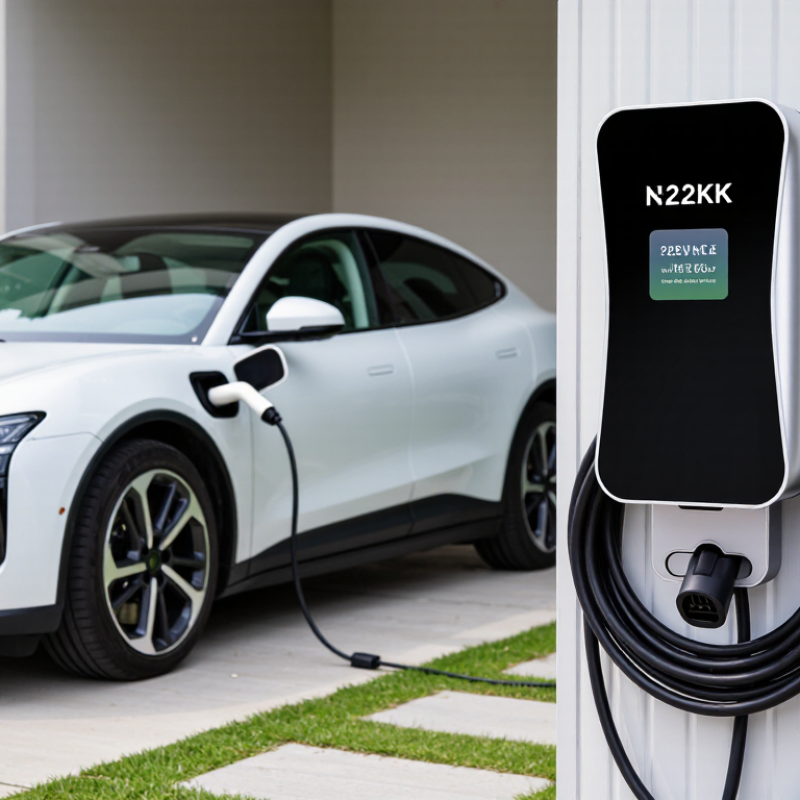
2026 Top 22kW Car Chargers for Home and Business

What Defines a 22 kW Car Charger?

A 22 kW car charger is an AC charging unit capable of delivering up to 22 kilowatts under suitable conditions. Most home units reach that rating through three-phase power at roughly 400 volts and 32 amps per phase. The figure describes the charger’s maximum output, not a promise that every car will receive 22 kW. The vehicle’s onboard charger sets another limit. Some cars accept only 7.4 or 11 kW on AC, so a larger unit may not shorten their charging time. A quick check.

In practice, the useful rate also depends on the electrical supply, cable, temperature, and available site capacity. Adding about 22 kWh in an hour is a rough ideal, before conversion losses and charging controls. A qualified installer should assess the circuit, phase availability, protective devices, and load management. Business sites may need several charging points, where smart load sharing helps keep demand within the building’s capacity. Details matter. The headline number is useful, though easy to overvalue; charging rates can fluctuate, and one session may not reflect typical performance.

2026 Top 22kW Car Chargers for Home and Business - What Defines a 22 kW Car Charger?

Feature What to Know About a 22 kW AC Charger Home Considerations Business Considerations
Rated charging power Up to 22 kW of AC power, subject to the vehicle, supply, installation, and operating conditions. Often more power than needed for overnight charging; check the household’s available electrical capacity. Can suit workplaces, fleets, and destinations where vehicles need a faster AC top-up between longer stays.
Typical electrical supply Commonly three-phase AC at about 400 V and 32 A per phase in regions using this supply arrangement. Actual requirements vary by local electrical standards. A suitable three-phase connection and correctly rated circuit are generally needed for full output. Have an electrician assess the incoming supply, distribution board, and capacity for simultaneous charging.
Vehicle compatibility The vehicle’s onboard AC charger sets the maximum AC charging rate. A 22 kW EVSE cannot make a vehicle accept 22 kW if its onboard charger supports less. Check the vehicle manual or specification for its maximum AC input and connector type. Check the connector and vehicle mix expected at the site before choosing equipment.
Connector and region Connector standards and supply voltages differ by market. Type 2 is widely used for AC charging in Europe and other regions, but is not universal. Select equipment that matches local regulations and the vehicle’s inlet. For shared sites, consider the connector standard used by the local vehicle fleet and any applicable accessibility requirements.
Illustrative charging time At a full 22 kW, 60 kWh of energy would take about 2.7 hours in a simple energy ÷ power calculation. Real charging can take longer because of conversion losses, vehicle limits, and charging behavior. Actual time depends on the energy needed, the car’s AC limit, and the usable charging window. Use expected dwell time and vehicle charging limits to estimate how many charging points are needed.
Power management Load management can adjust charging power to help keep total site demand within a configured limit. Dynamic load balancing may help coordinate charging with household loads, where supported and properly installed. Load management can help distribute available capacity across multiple charging points; it does not increase the site’s electrical supply.
Installation and protection Installation should follow local electrical codes and the equipment instructions, including appropriate circuit protection, earthing, and isolation. Ask a qualified installer to assess cable routing, mounting location, and the existing electrical installation. Plan for site assessment, permits where required, protective devices, and inspection or commissioning requirements.
Indoor and outdoor use Enclosure ratings and operating limits vary by model. Confirm suitability for the intended location rather than assuming every unit is weatherproof. Check the installation location, exposure to weather, cable reach, and manufacturer-specified temperature range. Consider exposure, impact risk, cable management, and the maintenance needs of a shared charging area.
Connectivity and access Depending on the model, features may include app connectivity, scheduled charging, access control, or energy reporting. Choose controls that fit how the household will use the charger; connectivity features may require a network connection. For shared use, confirm user access, payment or billing needs, data handling, and network availability.
Best-fit use case A 22 kW AC charger is most useful when the vehicle can accept high-power AC and the site has suitable electrical capacity. Consider it when faster AC charging is valuable and three-phase power is available; a lower-power charger may be sufficient for routine overnight charging. Consider it for longer-stay parking and fleet use where compatible vehicles can benefit from higher AC power.

Note: A 22 kW rating describes the EVSE’s maximum AC output, not a guaranteed charging rate. Actual charging power depends on the vehicle’s onboard charger, electrical supply, installation, and operating conditions. Consult a qualified electrician and local requirements before installation.


How 22 kW Charging Works with Electric Vehicles

A 22 kW AC charger supplies power; it does not force a car to accept 22 kW. The vehicle’s onboard charger sets the ceiling. Many models accept up to 11 kW on three-phase AC, while some accept less. Check the vehicle specifications, not just the charger label. Small detail, big difference.

At 400 volts, a three-phase 22 kW unit typically draws about 32 amps per phase. Actual charging speed can fall because of supply limits, cable ratings, battery temperature, or a high state of charge. Near full, the car often reduces power to protect its battery. A 60 kWh battery may seem to need less than three hours in a simple calculation, but real charging takes longer. Conversion losses and charging curves matter. That estimate is not a promise.

Homes and workplaces should confirm their electrical capacity and connector compatibility before installation. A qualified installer can check the circuit and required protection. A 22 kW unit can be useful when vehicles support that rate or several cars rotate through a site. For a car capped at 11 kW, the extra capacity may go unused. I would revisit the plan after checking the actual vehicles and daily mileage; charger ratings alone make a poor forecast.

Home and Business Installation Requirements

A 22kW home charger needs more than a suitable wall and a spare breaker. At roughly 400 volts, it typically draws about 32 amps on each phase, so the building must have compatible three-phase supply. Many homes do not. In that case, the charger may operate below its rated output, or a different installation may be more practical. Check the incoming supply before buying equipment.

A qualified electrician should assess the main panel, earthing, cable route, and existing household load. A dedicated circuit and correctly selected protective devices are essential; cable size depends on distance and installation conditions. Local rules may also require permits or utility approval.

Small details matter. A long cable run through a hot garage can change the design. For businesses, add a review of parking layout, user access, billing, and expected charging demand. Load management can help when several vehicles charge together, but it needs proper configuration and testing.

A site survey can still miss future needs, so leave room for growth where practical.

That part is easy to underestimate.

Keep installation records and arrange periodic checks, especially in busy sites where cables and connectors see daily wear.

Key Features for Comparing 2026 Charger Models

When comparing 2026 22 kW home and business chargers, check the actual power available at your site. A 22 kW unit generally needs a suitable three-phase supply, and your vehicle must also support that AC charging rate. Otherwise, the car may charge more slowly than the unit’s headline figure suggests. Ask a qualified installer to assess the supply, cable route, and expected load before choosing a model.

Look closely at charging controls, too. A clear display or app should show charging status, energy used, and any scheduled sessions without making routine operation confusing. For a shared workplace charger, access controls and session records can help track usage. Check connector type and cable length against your parking layout; a few extra metres can matter when the vehicle’s port is on the opposite side. Check the cable.

Safety and durability deserve more than a quick glance at feature lists. Compare built-in electrical protections, weather resistance for exposed installations, and the length and terms of the warranty. Ask how software updates are delivered and what support is available if the charger stops communicating. A polished screen looks reassuring, but it cannot prove long-term reliability. I would weigh service access and installation quality just as heavily as smart features, even though those details are less exciting.

Top 22 kW Car Chargers for Home and Business

A 22 kW car charger can make sense where several vehicles need reliable charging at home or work. But the number on the unit is only part of the story. The car must support 22 kW AC charging, and the site usually needs a suitable three-phase supply. Not every car can use it. Check first. A qualified installer can assess the electrical panel, cable route, earthing, and available capacity before you buy. That visit may reveal that a lower-powered unit is the more practical choice.

For a home, consider when the car is parked and how much power other appliances use. For a business, think about staff turnover, visitor access, cable reach, and whether multiple chargers will share power. Load management can help avoid drawing more electricity than the site can safely provide. Look for clear status lights, weather protection suited to the installation location, and straightforward fault reporting. These details matter on a wet morning, not just in a product comparison. A 22 kW rating sounds decisive, but real charging speed depends on the vehicle and the electrical supply. It is worth checking both, even if that makes the decision less exciting.

2026 Top 22kW Car Chargers for Home and Business

Estimated time to charge battery capacities from empty to full using a 22kW AC charger.

Estimates assume the vehicle can accept 22kW AC charging and that charging efficiency is 90%. Actual charging times may be longer because of vehicle AC-charging limits, installation conditions, and charging-rate reductions near full capacity.

Powder Coat Booths

For those larger-sized parts, or smaller quantity runs, we have 2 independent powder coat booths and ovens. The quality, durability and affordability of today’s powder coating finishes make this the process of choice for world-class companies.

Powder coating advantages over other forms of coating are many. Materials used in the Powder coating process can be metals and non-metals that come in a multitude of thicknesses, textures, colors, etc. Another of Powder coating’s biggest advantages over conventional coatings is its ability to create finishes in many different textures. Powder Coating Booths allow us the ability to apply these advantages to large products.

Wet Paint Line

Tri-State Fabricators runs a full-service conveyor line for painting. Wet painting can provide protection or decoration to many different part styles. From start to finish, every project is easier to undergo random and point-based inspection by our skilled painting team.

Advantages to our Wet Paint Line are these lines start with product prep and ends with a thorough inspection of a high quality finished product. Our ability to complete large and small projects with a superior finish and doing so in a timely and economical fashion. This passes along the savings in production to our customers. When powder coating ins not an option, our Wet Paint Line gets the job done right the first time.

Wet Paint Booths

When the parts get big and heavy we roll-out our custom paint racks and oversize booth. By utilizing our partnerships with all the major paint brands, we can match virtually any color with wet paint.

The advantages of having access to a Wet Paint Booth are many. Large projects of many different shapes can be loaded into the booth. The Wet Paint Booth offers an environment that is much more controlled than a typical parts painting operation.

Not only are they used because of their controlled environment, but they’re are also advantageous when it comes to applying paint to parts that are needed in industries that require specialty coatings such as medical, aerospace, etc.

Military CARC

Our military forces have some very high standards when it comes to the finish of their vehicles and equipment. From the first pre-treatment step to final coat, it takes a great deal of knowledge and experience to protect the men and women of our armed forces. They deserve only the best, and Tri-State Fabricators provides it.

All of our processes are closely monitored by our staff and management teams. Both of which are highly trained in the processes of metal fabrication and finishing. Tri-State Fabricators’ goal is to always fully satisfy each and every customer, including the military. We will always put a 110% into what we do.

Glass-Bead Blasting

Abrasive media blasting is an excellent way to remove old paint, rust, and increase the paint/powder adhesion. Glass beads produce a much smoother and brighter finish than angular abrasives; leaving the part clean yet without any dimensional change. Chemically inert and environmentally friendly, we can recycle our beads approximately 30 times; making them a more preferred method of metal cleaning or surface finishing.

Advantages to Glass Bead Blasting are many. Glass bead blast media is used when a project is needing rough surfaces need to become smooth for applications of coatings such as paint. It is typically used to clean paint and rust from a product surface without deforming the surface it is being used on. Overall, compared to many other blasting media, Glass Bead Blasting is a very economical choice and those savings are always passed on to our customers.

Part Washing

Tri-State Fabricators utilize a zinc phosphate wash to clean and etch the material to ensure the best paint adhesion possible. The unique design of our 3-stage wash system does the work like a 5-stage. From Cleaning and rinsing to conversion coating and post-treatment, Our Part Washing process is a complete service and works throughout the fabrication service and the finishing service.

Along with the previously mentioned benefits, Curing is a vital chemical reaction that leaves the product finish hard and relatively safe from mild abrasion and aggressive corrosion. This process can be done in more than one way; ambient air-dry or in curing ovens at temps that exceed 240°.

Burn-Off Oven

From fixing paint mistakes (someone else’s of course) to simply cleaning our paint line hooks, our burn-off oven is put to good use. After a quick burn-off, a little clean up, and a fresh coat of paint, your parts will look better than new.

Why does our Burn-Off Oven work so well? Because super heating the air around parts turns the materials into ashes. From paint and powder coatings to rubber and machining oils, high temps do the job without degrading the integrity of the part.

Masking

Masking is a vital part of producing high quality products. We have die-cut masking patterns to protect machined surfaces as well as a wide range of plugs and caps to protect threaded holes and bolts. We provide permanent and temporary masking.

Masking allows the selected sections of a product to be protected from a fabrication or finishing service. This can be with both chemicals when etching and tapes, paints when only finishing just a section of the product. Masking is great in aiding the customization process of a project.

Screen Printing

Screen printing is a photographic process that transfers artwork onto a porous nylon screen which allows colored ink to flow through the screen and be deposited on an aluminum or plastic component. We can generally have just about any design created onto a screen for your parts.

Some of the advantages of Screen Printing are, brand recognition for your business displaying on your products, assembly instructions, product warnings/hazards, etc. Tri-State Fabricators produces Screen Printing of the highest quality so you know it’s durable.

Metal Finishing

Metal Finishing is the art of treating the exterior portion of product, often metal but can also be made of other materials, so that the surface is clean and free of any debris. Then the process of applying coats or either paint of powder coat takes place. This coating process improves the quality of the product in both appearance and resistance to wear and corrosion.

Tri-State Fabricators, Inc., understands that a project typically isn’t complete until a high-quality finish has been added to your product. This is why our painting and powder coating teams continuously inspect the products throughout the Metal Finishing process.
