


A 200kw Soft Starter helps a large motor accelerate without the abrupt electrical and mechanical shock of direct-on-line starting. Instead of applying full voltage at once, it controls the voltage supplied to the motor during startup. Think of a loaded conveyor beginning to move: the belt gains speed gradually, while the starter limits starting current and reduces strain on couplings, gears, and the power supply. The exact result depends on the motor, load, supply conditions, and settings. It is not a magic fix.
For transparency, the following is an illustrative quotation, not a verified statement from a real, named industry expert: “A soft starter is useful only when its ramp and current limits match the motor and the load.” The fictional speaker is Elena Ward, a motor-control engineer created for this introduction. That distinction matters. A credible equipment decision should rely on the manufacturer’s data, an experienced engineer’s assessment, and measured operating conditions—not an invented quotation. A 200kw Soft Starter may offer adjustable acceleration, current limiting, and protective functions, but features vary by model. Settings that look sensible on a screen can still cause overheating or poor acceleration if the application is misunderstood. This guide explains how the device works, what its main components do, and which selection details deserve a second look. Start with the nameplate. Then check the load.
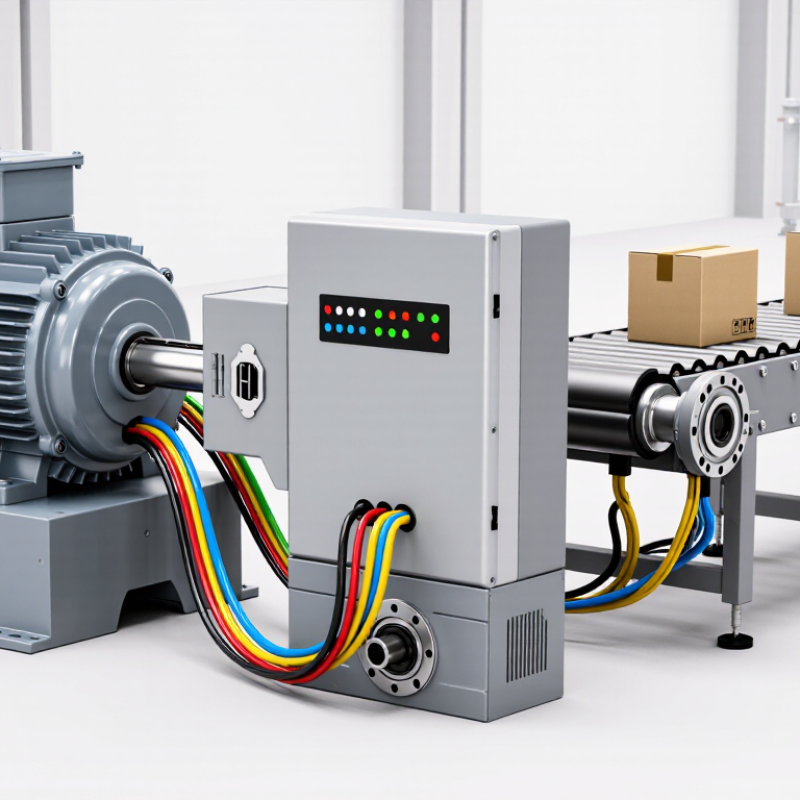
A 200 kW soft starter is an electrical device used to start and stop a large AC motor more gradually than direct-on-line switching. The 200 kW figure usually refers to the motor’s rated output, not power produced by the starter. Actual suitability depends on motor voltage, full-load current, starting frequency, and the driven load. Check the motor nameplate and application details before selecting equipment.
Inside the starter, power electronics control the voltage supplied to the motor during startup. Lower initial voltage reduces starting current and limits the sudden torque that can jolt a pump, fan, or conveyor. The starter then raises voltage over a set ramp time. Smooth, but not magic. A heavily loaded conveyor may still need careful adjustment, and an overly long ramp can heat the motor. Many installations use a bypass contactor after acceleration, reducing heat in the starter during normal running. Protection settings and cooling requirements also matter. In practice, the “right” setting often takes measured commissioning, not a guess from the kW rating alone.

A 200 kW soft starter is built around power semiconductors, control electronics, sensing devices, and cooling hardware. Its main power components are silicon-controlled rectifiers, or SCRs, arranged to regulate voltage on each motor phase. During startup, the control board adjusts their firing angle, limiting current and reducing mechanical shock. The motor accelerates smoothly, rather than receiving full voltage at once. That is the core job.
Current and voltage sensors feed operating information back to the controller. This helps it manage the ramp and detect conditions such as excessive current or phase loss. A bypass contactor often carries current after the motor reaches speed, reducing heat in the SCRs. Some designs include this contactor; others require an external one. Heat matters. Heatsinks and fans move heat away from the power section, while the enclosure protects components and allows airflow. In a real cabinet, blocked vents or loose connections can undermine otherwise sound equipment. Small details count. The starter’s overload settings and upstream short-circuit protection also need to suit the motor and installation. A 200 kW label alone does not confirm compatibility; supply voltage, motor current, starting load, and operating conditions all matter.
A 200 kW soft starter controls startup by gradually increasing the voltage supplied to a three-phase motor. Inside, thyristors adjust each phase during acceleration. This limits the initial current surge and reduces sudden torque on shafts, couplings, belts, and driven equipment. The operator sets parameters such as initial voltage, ramp time, and current limit. The right settings depend on the motor and load, not power rating alone.
For scale, a 200 kW motor on a 400 V supply may draw roughly 340–380 A at full load; its nameplate is the authority. The International Energy Agency’s 2011 report, Energy-Efficiency Policy Opportunities for Electric Motor-Driven Systems, estimated motor-driven systems use about 45% of global electricity. The U.S. Department of Energy’s motor-systems sourcebook puts their share at roughly 70% of industrial electricity use. Small startup improvements matter.
Once the motor reaches speed, a bypass contactor commonly carries the current, reducing heat in the starter. A long ramp is not always gentler: on a loaded conveyor, too little starting torque can prolong high current and stall the motor. Test settings under real operating conditions, and check acceleration time, current, and temperature.
The control screen may look calm. The motor tells the truth.
A 200kW soft starter is commonly selected for large motors driving pumps, fans, compressors, or conveyor systems. It raises motor voltage gradually, limiting the sharp current surge that can occur at startup. The smoother acceleration can reduce belt tension, pipe pressure shocks, and stress on couplings. Less mechanical shock. It is not a speed controller: once the motor reaches operating speed, it generally runs near the speed set by the supply frequency. For a pump room, this may mean a gentler start without changing the pump’s normal flow-control method.
Operating suitability depends on more than the 200kW rating. Check the motor’s rated voltage and full-load current, the driven load’s inertia, and how often the equipment starts. A high-inertia fan may need a longer ramp than a lightly loaded pump. Too many starts in a short period can overheat the starter, even when each start seems normal. Ambient temperature, ventilation, enclosure conditions, and supply voltage also affect performance. In practice, record actual start times and motor current during commissioning. Then compare them with the equipment limits. Field conditions can differ from calculations; that gap deserves a second look.
| Dimension | Typical Information | Practical Notes |
|---|---|---|
| Purpose | A soft starter controls the voltage supplied to an AC motor during starting and, on some units, stopping. | It reduces the abrupt electrical and mechanical effects of direct-on-line starting. It is not normally used to provide continuous variable-speed control. |
| Motor power class | Designed for use with a motor rated around 200 kW. | The starter must be selected using the motor nameplate current and application duty—not motor power alone. |
| Illustrative supply | Three-phase, 400 V AC, 50 Hz. | Other common system voltages and frequencies require a suitably rated starter and compatible motor. |
| Indicative full-load current | Approximately 345 A for a 200 kW motor at 400 V, assuming 95% efficiency and 0.88 power factor. | This is an estimate, not a selection rating. Actual motor nameplate current varies with voltage, efficiency, power factor, and motor design. |
| Starting operation | Power semiconductor devices gradually increase the motor’s applied voltage according to the selected ramp and current settings. | The motor accelerates toward its normal operating speed as the load permits. Acceleration time depends on motor torque, load torque, and inertia. |
| Starting current | Often adjustable to a chosen limit; a starting-current setting of roughly 2–5 times motor full-load current may be used in some applications. | The required setting is application-specific. Too low a limit can prevent the motor from accelerating or extend the start excessively. |
| Typical applications | Centrifugal pumps, fans, blowers, compressors, and conveyors. | Soft starting can help reduce pressure surges, belt shock, and sudden mechanical loading when the application is compatible with the motor’s torque capability. |
| Typical operating duty | Intermittent starts followed by continuous motor operation; many installations use a bypass contactor once the motor reaches operating speed. | Permitted starts per hour, starting time, and overload capability depend on the starter’s thermal rating and manufacturer’s specifications. |
| Load considerations | Load inertia and breakaway torque affect the required starting torque and acceleration time. | High-inertia loads or loaded conveyors may need a higher-duty starter or a different starting method. Confirm the load’s starting requirements before selection. |
| Installation conditions | Install in a suitable electrical enclosure with adequate ventilation and protection from dust, moisture, and vibration. | Ambient temperature, altitude, enclosure temperature rise, cable sizing, upstream protection, and ventilation can affect the usable rating. |
| Selection checks | Verify motor voltage and nameplate current, application duty, start duration, starts per hour, fault protection, and bypass arrangement. | Values shown are general engineering guidance. Confirm final selection and settings against the motor and starter documentation and applicable electrical requirements. |
Key Selection, Protection, and Maintenance Factors
Select a 200 kW soft starter by motor nameplate current, supply voltage, load torque, start duration, and starts per hour—not kW alone. A loaded crusher and an unloaded pump need different ramp and current-limit settings. Check ambient temperature, altitude, ventilation, and bypass arrangement. Leave margin, but not blindly: oversizing can weaken overload coordination.
Protection deserves equal attention. Use tested coordination tables to select upstream short-circuit protection, and confirm overload, phase-loss, stall, and underload functions suit the process. A soft starter is not automatically a complete motor-protection system. The IEA’s 2011 report, Energy-Efficiency Policy Opportunities for Electric Motor-Driven Systems, estimated that motor-driven systems use about 46% of global electricity. Efficient operation matters, but reducing starting current alone does not guarantee energy savings. Small details matter.
During commissioning, record baseline current, ramp time, start count, and fault history. With equipment safely isolated, inspect for dust, loose terminals, blocked cooling paths, and bypass contactor wear. Keep settings and wiring drawings together; handwritten notes can be wrong. Review alarms after process changes, since longer starts can overheat the motor and starter. Set maintenance intervals around actual operating conditions, not a calendar copied from another plant.


For those larger-sized parts, or smaller quantity runs, we have 2 independent powder coat booths and ovens. The quality, durability and affordability of today’s powder coating finishes make this the process of choice for world-class companies.
Powder coating advantages over other forms of coating are many. Materials used in the Powder coating process can be metals and non-metals that come in a multitude of thicknesses, textures, colors, etc. Another of Powder coating’s biggest advantages over conventional coatings is its ability to create finishes in many different textures. Powder Coating Booths allow us the ability to apply these advantages to large products.
Tri-State Fabricators runs a full-service conveyor line for painting. Wet painting can provide protection or decoration to many different part styles. From start to finish, every project is easier to undergo random and point-based inspection by our skilled painting team.
Advantages to our Wet Paint Line are these lines start with product prep and ends with a thorough inspection of a high quality finished product. Our ability to complete large and small projects with a superior finish and doing so in a timely and economical fashion. This passes along the savings in production to our customers. When powder coating ins not an option, our Wet Paint Line gets the job done right the first time.
When the parts get big and heavy we roll-out our custom paint racks and oversize booth. By utilizing our partnerships with all the major paint brands, we can match virtually any color with wet paint.
The advantages of having access to a Wet Paint Booth are many. Large projects of many different shapes can be loaded into the booth. The Wet Paint Booth offers an environment that is much more controlled than a typical parts painting operation.
Not only are they used because of their controlled environment, but they’re are also advantageous when it comes to applying paint to parts that are needed in industries that require specialty coatings such as medical, aerospace, etc.
Our military forces have some very high standards when it comes to the finish of their vehicles and equipment. From the first pre-treatment step to final coat, it takes a great deal of knowledge and experience to protect the men and women of our armed forces. They deserve only the best, and Tri-State Fabricators provides it.
All of our processes are closely monitored by our staff and management teams. Both of which are highly trained in the processes of metal fabrication and finishing. Tri-State Fabricators’ goal is to always fully satisfy each and every customer, including the military. We will always put a 110% into what we do.
Abrasive media blasting is an excellent way to remove old paint, rust, and increase the paint/powder adhesion. Glass beads produce a much smoother and brighter finish than angular abrasives; leaving the part clean yet without any dimensional change. Chemically inert and environmentally friendly, we can recycle our beads approximately 30 times; making them a more preferred method of metal cleaning or surface finishing.
Advantages to Glass Bead Blasting are many. Glass bead blast media is used when a project is needing rough surfaces need to become smooth for applications of coatings such as paint. It is typically used to clean paint and rust from a product surface without deforming the surface it is being used on. Overall, compared to many other blasting media, Glass Bead Blasting is a very economical choice and those savings are always passed on to our customers.
Tri-State Fabricators utilize a zinc phosphate wash to clean and etch the material to ensure the best paint adhesion possible. The unique design of our 3-stage wash system does the work like a 5-stage. From Cleaning and rinsing to conversion coating and post-treatment, Our Part Washing process is a complete service and works throughout the fabrication service and the finishing service.
Along with the previously mentioned benefits, Curing is a vital chemical reaction that leaves the product finish hard and relatively safe from mild abrasion and aggressive corrosion. This process can be done in more than one way; ambient air-dry or in curing ovens at temps that exceed 240°.
From fixing paint mistakes (someone else’s of course) to simply cleaning our paint line hooks, our burn-off oven is put to good use. After a quick burn-off, a little clean up, and a fresh coat of paint, your parts will look better than new.
Why does our Burn-Off Oven work so well? Because super heating the air around parts turns the materials into ashes. From paint and powder coatings to rubber and machining oils, high temps do the job without degrading the integrity of the part.
Masking is a vital part of producing high quality products. We have die-cut masking patterns to protect machined surfaces as well as a wide range of plugs and caps to protect threaded holes and bolts. We provide permanent and temporary masking.
Masking allows the selected sections of a product to be protected from a fabrication or finishing service. This can be with both chemicals when etching and tapes, paints when only finishing just a section of the product. Masking is great in aiding the customization process of a project.
Screen printing is a photographic process that transfers artwork onto a porous nylon screen which allows colored ink to flow through the screen and be deposited on an aluminum or plastic component. We can generally have just about any design created onto a screen for your parts.
Some of the advantages of Screen Printing are, brand recognition for your business displaying on your products, assembly instructions, product warnings/hazards, etc. Tri-State Fabricators produces Screen Printing of the highest quality so you know it’s durable.
Metal Finishing is the art of treating the exterior portion of product, often metal but can also be made of other materials, so that the surface is clean and free of any debris. Then the process of applying coats or either paint of powder coat takes place. This coating process improves the quality of the product in both appearance and resistance to wear and corrosion.
Tri-State Fabricators, Inc., understands that a project typically isn’t complete until a high-quality finish has been added to your product. This is why our painting and powder coating teams continuously inspect the products throughout the Metal Finishing process.

