5 Tips for 11kV to 400V Distribution Transformer

Selecting an 11kv To 400v Distribution Power Transformer is not simply a matter of changing voltage. It is a practical decision affecting safety, efficiency, maintenance, and future load growth. An 11kV incoming supply must become stable 400V power for factories, commercial buildings, pumps, and lighting systems. Small design errors can create heat, nuisance trips, or costly downtime.

Transformer specialist Dr. J. C. Das emphasizes a useful principle: “Good transformer design begins with understanding the load, not merely the voltage ratio.” That idea guides this discussion. The transformer must match real demand, including motor starting currents, harmonic-producing equipment, and uneven phase loading. Rated capacity matters. So do impedance, vector group, insulation level, tap settings, and enclosure protection. The details are physical. Think of warm oil, cable glands exposed to rain, and terminals tightened inside a crowded panel.

A reliable installation also depends on earthing, surge protection, cooling, testing, and routine inspection. Measure winding resistance. Check insulation before energizing. Inspect oil, bushings, connections, and abnormal sounds during operation. These steps are simple. They are often skipped.

The five tips ahead focus on choices that influence service life and operating confidence. They are not a substitute for local codes, manufacturer instructions, or a qualified engineer’s review. That limitation matters. A transformer selected from a spreadsheet may still fail in a dusty plant with frequent overloads. Good engineering includes calculation, site experience, and honest reconsideration when conditions change.
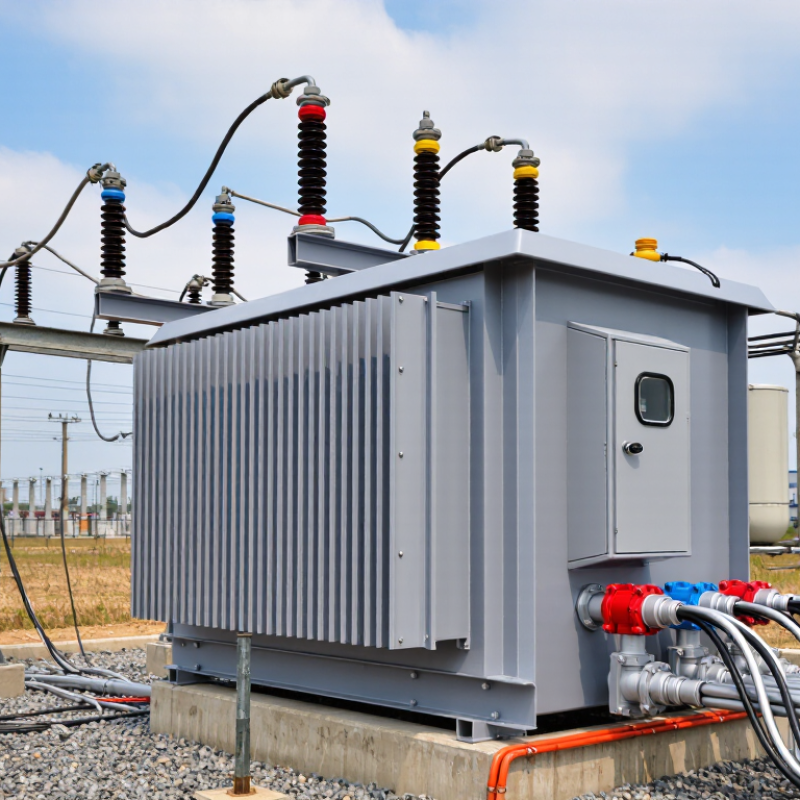
5 Tips for 11kV to 400V Distribution Transformer

11kV to 400V Distribution Transformers: Purpose and Basic Structure

An 11kV to 400V distribution transformer reduces medium voltage to a safe, usable level for factories, commercial buildings, and local networks. Its primary winding receives 11kV, while the secondary winding delivers 400V, usually through a three-phase connection. The magnetic core transfers energy between windings without direct electrical contact. The tank contains oil or dry insulation, bushings provide external connections, and a tap changer helps correct voltage variation. IEC 60076 defines key transformer performance and testing requirements.

Tip 1: Check the actual load profile, not only the nameplate rating. A 1,000kVA unit can suffer avoidable heating when harmonics or poor power factor increase current. IEEE C57.91 provides practical guidance for oil-immersed transformer loading and temperature evaluation.

Tip 2: Treat no-load losses seriously. The transformer remains energized throughout the day. The U.S. Department of Energy’s Distribution Transformer Energy Conservation Standards analysis estimates major long-term energy savings from reducing transformer losses. Small losses become expensive over decades.

Tip 3: Specify protection with the installation environment in mind. Indoor units may need dry-type insulation, while outdoor units often require weatherproof tanks, pressure relief, and oil containment.

Tip 4: Confirm the secondary earthing arrangement before energizing.

Tip 5: Review ventilation and clearance on site. A neat drawing can still fail in a crowded electrical room. Field measurements sometimes reveal assumptions that design calculations missed.

How Voltage Reduction Works in an 11kV/400V Transformer

An 11kV/400V transformer reduces medium voltage through electromagnetic induction. The high-voltage winding receives 11,000 volts. The low-voltage winding delivers about 400 volts between phases. In a three-phase system, this also provides approximately 230 volts from phase to neutral. The turns ratio is roughly 27.5:1, so fewer secondary turns create a lower voltage.

Alternating current produces a changing magnetic flux inside the core. That flux transfers energy across the insulated windings without a direct electrical connection. Frequency must remain stable because flux depends on voltage and frequency. When load current rises, winding resistance and leakage reactance cause voltage drop. The output may therefore fall below 400 volts during heavy demand. Check it under realistic load conditions. No-load readings can mislead.

Keep the transformer properly earthed. Confirm the tap setting before energising. Taps adjust the primary winding ratio for supply variations, but they do not replace correct system design. Inspect cable terminations for heat marks, loose hardware, or moisture. Verify protection settings against the transformer rating and inrush current. Measure phase balance regularly. A small imbalance can increase heating. I once found a “normal” panel reading hiding a loose neutral connection; assumptions deserve testing. Ventilation matters too. Dust and blocked airflow can shorten insulation life, even when the measured voltage looks correct.


Key Specifications for Selecting the Right Transformer

5 Tips for 11kV to 400V Distribution Transformer

Key Specifications for Selecting the Right Transformer

01 Tip 1: Confirm the load before choosing the kVA rating.

Record motors, lighting, harmonic-producing equipment, and future expansion. A small margin prevents overheating, but excessive capacity increases cost and no-load losses. In practical site surveys, measured demand often differs from design estimates. Do not trust a single reading.

02 Tip 2: Check the electrical configuration carefully.

An 11kV primary and 400V secondary commonly use a Dyn11 vector group, but the required arrangement depends on the network. Specify frequency, phase system, neutral grounding, tap range, impedance, and short-circuit withstand strength. Impedance affects fault current and voltage regulation. The wrong value can disturb downstream protection.

03 Tip 3: Compare insulation and efficiency data, not only the nameplate rating.

Review rated insulation levels, lightning impulse withstand, temperature rise, cooling method, and guaranteed losses. ONAN cooling is common for distribution service, though site temperature and ventilation still matter. Ask for test certificates under IEC 60076 or the applicable local standard.

Oil-filled units need suitable containment and clear maintenance access. Dry-type units may suit indoor locations, but they still require airflow and fire planning.

I would also verify enclosure protection, sound level, altitude correction, and tap-changer operation. These details are easy to overlook. A final review with the utility and a qualified electrical engineer can prevent costly field changes.

Installation Requirements for Safe and Reliable Operation

5 Tips for 11kV to 400V Distribution Transformer

Installation Requirements for Safe and Reliable Operation

A safe 11kV to 400V transformer installation begins with a verified design, not the nameplate alone. Confirm rated power, impedance, vector group, tap range, short-circuit duty, and site altitude. IEC 61936-1 requires suitable clearances, earthing, access control, and protection for high-voltage installations. Keep cable routes short, supported, and clearly identified. Small mistakes become expensive faults.

Provide a low-resistance protective earth and bond the tank, neutral point, cable screens, and metal structures. Install surge protection, correctly rated fuses or breakers, and visible isolation points. The U.S. Department of Energy reports that distribution transformer losses represent roughly 2.5% of electricity consumption, so loading and ventilation deserve attention. Leave space around radiators and avoid blocked airflow. Oil-filled units need bunding, drainage control, and fire separation where local rules require them. Dry-type units still need dust-free ventilation. They are not maintenance-free.

Before energizing, test insulation resistance, winding ratio, polarity, phase sequence, earth continuity, and protection settings. Record results. Compare them with factory and commissioning values. Thermographic checks after loading can reveal loose joints or uneven phases. I have seen tidy installations fail because one neutral connection was overlooked. That detail matters. Recheck torque, labels, barriers, and interlocks after the first operating cycle. CIGRE guidance also supports condition monitoring, especially for heavily loaded or aging transformers. A perfect drawing is not proof of a safe installation.

Testing, Maintenance, and Fault Prevention Procedures

5 Tips for 11kV to 400V Distribution Transformer

Testing, Maintenance, and Fault Prevention Procedures

A reliable 11kV to 400V transformer needs scheduled testing, not occasional inspection after a failure. Before energizing, qualified personnel should check insulation resistance, winding resistance, turns ratio, and earth continuity. Compare readings with commissioning records and manufacturer limits. A single acceptable reading proves little. Temperature, humidity, and test lead condition can change the result.

Inspect bushings, cable terminations, gaskets, radiators, and the enclosure for cracks, oil leaks, dust, or corrosion. Tighten accessible connections only when the transformer is isolated and properly discharged. Thermographic inspections can reveal a hot terminal before discoloration becomes visible. For oil-filled units, test dielectric strength and inspect the oil level. Moisture is easy to underestimate. It often enters through damaged seals or poorly closed breathers.

Preventive work should include cleaning ventilation paths, checking temperature indicators, verifying protective relay operation, and recording load current during peak demand. Avoid sustained overloading, even when the transformer appears quiet. Keep clearance around the enclosure, and correct loose neutral or earth connections immediately. Fault records deserve careful review; repeated trips may indicate an unresolved cable, connection, or insulation problem. Some maintenance plans look complete on paper but miss local conditions, such as construction dust or seasonal humidity. Review the procedure after every abnormal event, and revise it when field evidence exposes a weak point.

Powder Coat Booths

For those larger-sized parts, or smaller quantity runs, we have 2 independent powder coat booths and ovens. The quality, durability and affordability of today’s powder coating finishes make this the process of choice for world-class companies.

Powder coating advantages over other forms of coating are many. Materials used in the Powder coating process can be metals and non-metals that come in a multitude of thicknesses, textures, colors, etc. Another of Powder coating’s biggest advantages over conventional coatings is its ability to create finishes in many different textures. Powder Coating Booths allow us the ability to apply these advantages to large products.

Wet Paint Line

Tri-State Fabricators runs a full-service conveyor line for painting. Wet painting can provide protection or decoration to many different part styles. From start to finish, every project is easier to undergo random and point-based inspection by our skilled painting team.

Advantages to our Wet Paint Line are these lines start with product prep and ends with a thorough inspection of a high quality finished product. Our ability to complete large and small projects with a superior finish and doing so in a timely and economical fashion. This passes along the savings in production to our customers. When powder coating ins not an option, our Wet Paint Line gets the job done right the first time.

Wet Paint Booths

When the parts get big and heavy we roll-out our custom paint racks and oversize booth. By utilizing our partnerships with all the major paint brands, we can match virtually any color with wet paint.

The advantages of having access to a Wet Paint Booth are many. Large projects of many different shapes can be loaded into the booth. The Wet Paint Booth offers an environment that is much more controlled than a typical parts painting operation.

Not only are they used because of their controlled environment, but they’re are also advantageous when it comes to applying paint to parts that are needed in industries that require specialty coatings such as medical, aerospace, etc.

Military CARC

Our military forces have some very high standards when it comes to the finish of their vehicles and equipment. From the first pre-treatment step to final coat, it takes a great deal of knowledge and experience to protect the men and women of our armed forces. They deserve only the best, and Tri-State Fabricators provides it.

All of our processes are closely monitored by our staff and management teams. Both of which are highly trained in the processes of metal fabrication and finishing. Tri-State Fabricators’ goal is to always fully satisfy each and every customer, including the military. We will always put a 110% into what we do.

Glass-Bead Blasting

Abrasive media blasting is an excellent way to remove old paint, rust, and increase the paint/powder adhesion. Glass beads produce a much smoother and brighter finish than angular abrasives; leaving the part clean yet without any dimensional change. Chemically inert and environmentally friendly, we can recycle our beads approximately 30 times; making them a more preferred method of metal cleaning or surface finishing.

Advantages to Glass Bead Blasting are many. Glass bead blast media is used when a project is needing rough surfaces need to become smooth for applications of coatings such as paint. It is typically used to clean paint and rust from a product surface without deforming the surface it is being used on. Overall, compared to many other blasting media, Glass Bead Blasting is a very economical choice and those savings are always passed on to our customers.

Part Washing

Tri-State Fabricators utilize a zinc phosphate wash to clean and etch the material to ensure the best paint adhesion possible. The unique design of our 3-stage wash system does the work like a 5-stage. From Cleaning and rinsing to conversion coating and post-treatment, Our Part Washing process is a complete service and works throughout the fabrication service and the finishing service.

Along with the previously mentioned benefits, Curing is a vital chemical reaction that leaves the product finish hard and relatively safe from mild abrasion and aggressive corrosion. This process can be done in more than one way; ambient air-dry or in curing ovens at temps that exceed 240°.

Burn-Off Oven

From fixing paint mistakes (someone else’s of course) to simply cleaning our paint line hooks, our burn-off oven is put to good use. After a quick burn-off, a little clean up, and a fresh coat of paint, your parts will look better than new.

Why does our Burn-Off Oven work so well? Because super heating the air around parts turns the materials into ashes. From paint and powder coatings to rubber and machining oils, high temps do the job without degrading the integrity of the part.

Masking

Masking is a vital part of producing high quality products. We have die-cut masking patterns to protect machined surfaces as well as a wide range of plugs and caps to protect threaded holes and bolts. We provide permanent and temporary masking.

Masking allows the selected sections of a product to be protected from a fabrication or finishing service. This can be with both chemicals when etching and tapes, paints when only finishing just a section of the product. Masking is great in aiding the customization process of a project.

Screen Printing

Screen printing is a photographic process that transfers artwork onto a porous nylon screen which allows colored ink to flow through the screen and be deposited on an aluminum or plastic component. We can generally have just about any design created onto a screen for your parts.

Some of the advantages of Screen Printing are, brand recognition for your business displaying on your products, assembly instructions, product warnings/hazards, etc. Tri-State Fabricators produces Screen Printing of the highest quality so you know it’s durable.

Metal Finishing

Metal Finishing is the art of treating the exterior portion of product, often metal but can also be made of other materials, so that the surface is clean and free of any debris. Then the process of applying coats or either paint of powder coat takes place. This coating process improves the quality of the product in both appearance and resistance to wear and corrosion.

Tri-State Fabricators, Inc., understands that a project typically isn’t complete until a high-quality finish has been added to your product. This is why our painting and powder coating teams continuously inspect the products throughout the Metal Finishing process.



