


Heating is not a minor household expense. Eurostat reported that space heating represented 62.8% of European household energy use in 2020. Globally, the International Energy Agency states that buildings consume around 30% of final energy. These figures make room-by-room control increasingly important, especially in homes with uneven temperatures. A suitable Trv Radiator can reduce overheating, improve comfort, and support more deliberate energy use.
This guide examines 10 leading options through practical and technical criteria. We consider heat output, valve compatibility, operating noise, corrosion resistance, installation depth, warranty terms, and independent product information. EN 215 provides the relevant performance framework for thermostatic radiator valves, while the Energy Saving Trust recommends TRVs for controlling individual rooms. A bedroom set near 17°C should feel different from a busy living room. That difference matters.
Small details matter.
A numbered dial is not a precise temperature scale. Settings vary between manufacturers, room conditions, and radiator placement. Window drafts can also mislead the sensor. We therefore avoid treating expensive models as automatically superior. That would be too simple. Some budget radiators may perform well, while premium designs can disappoint if sizing or balancing is wrong. Product availability also changes by country, so readers should verify certifications, spare parts, and installer guidance before buying. The final selection is intended as a practical comparison, not a universal ranking. Your boiler, pipework, insulation, and room layout still influence the result. We may be cautious here, but cautious heating advice is usually cheaper than correcting an unsuitable installation.
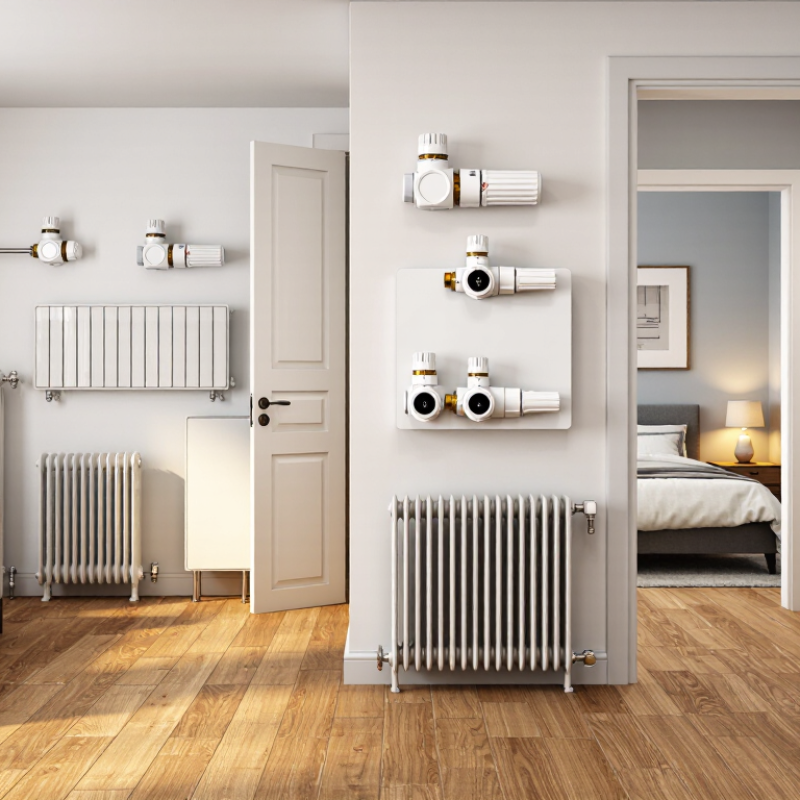
A thermostatic radiator valve, or TRV, is not the radiator itself. It is the control head attached to the radiator inlet. Inside, a temperature-sensitive element expands as room air warms. The valve then reduces hot-water flow. When the room cools, it opens again. This simple cycle helps maintain a steadier temperature than a manual valve.
When comparing the ten best TRV radiators to buy, examine the valve’s control accuracy, noise level, compatibility, and adjustment range. Numbered settings are not universal temperatures. A setting of three may feel comfortable in one room but too warm in another. Check the manufacturer’s temperature guide and connection size before purchasing. Small details matter.
Keep the valve exposed to room air. Curtains, furniture, or a nearby heater can fool its sensor. In a bedroom, a covered TRV may reduce heat while the bed area remains cold. That feels frustrating. A heating professional should also check system balance and water flow, because a good TRV cannot correct every installation problem. Some models include frost protection or tamper-resistant controls, which can help in unused rooms and shared homes. Still, no TRV is perfect; slow response, incorrect placement, and poor maintenance can weaken its performance.
Personally, I would value predictable control over an attractive finish.

Choosing among the 10 best TRV radiators requires more than comparing heat output. The valve should respond smoothly as room temperature changes. Look for a clear control range, frost protection, and a reliable sensing element. Liquid-filled sensors often react faster than wax-filled designs, although performance depends on installation. A TRV hidden behind curtains may read trapped warm air and reduce heating too early.
Radiator size must match the room’s heat-loss calculation, not a showroom guess. The Chartered Institution of Building Services Engineers provides heat-output guidance through its domestic heating standards. Check the stated output at the correct temperature difference, such as ΔT50 or ΔT30. These figures are not interchangeable. Valve compatibility also matters: confirm pipe size, flow direction, pressure rating, and whether the head can be replaced without draining the system. Small details matter.
The European Commission reports that buildings consume about 40% of the European Union’s energy and create roughly 36% of energy-related emissions. The International Energy Agency also identifies buildings as a major global energy-use sector. This makes controllability important, but a TRV cannot repair poor insulation or incorrect balancing. In my experience, low-cost valves can feel adequate at first, then become stiff after repeated seasonal use. That is easy to overlook. Compare adjustment feel, noise, warranty length, cleaning access, and independent test evidence. A smart control may add scheduling, but it also introduces batteries, connectivity, and another failure point. Not always better.
What Are the 10 Best TRV Radiators to Buy?
Choosing the best TRV radiator depends on room size, insulation, control needs, and available wall space. A thermostatic radiator valve adjusts water flow as room temperature changes. That can improve comfort and reduce unnecessary heating.
For a small bedroom, a compact single-panel radiator responds quickly and saves wall space. A double-panel model suits a larger living room with higher heat loss. Choose a vertical radiator for narrow walls, especially beside a door or window. A towel radiator works well in bathrooms, but it should resist moisture and provide enough output. Low-surface-temperature radiators are safer for nurseries, care spaces, and homes with young children. Measure carefully.
For older properties, a cast-iron radiator offers strong heat retention and a traditional appearance. It warms slowly, though. An aluminium radiator heats quickly and works well with responsive heating systems. A slim horizontal model suits standard window walls and simple replacements. A designer radiator can support interior styling, but unusual shapes may reduce usable output. For rooms with uneven temperatures, select a radiator with a precise, easy-to-read TRV. I once underestimated a hallway’s draughts, so its radiator felt undersized despite correct calculations. Check pipe positions, heat-loss estimates, valve direction, and system pressure before buying. Professional installation remains sensible when pipework, balancing, or compatibility is uncertain.
Typical heat output of radiator configurations suitable for different room-heating requirements, measured in watts per metre at a ΔT50 reference condition.
Higher-output designs are generally better suited to large rooms or areas with greater heat loss, while compact and low-output radiators can be appropriate for bedrooms, hallways, bathrooms, and well-insulated spaces. Actual performance depends on radiator size, flow temperature, insulation, room dimensions, and the selected thermostatic radiator valve.
Choosing among the 10 best TRV radiators requires more than comparing heat output. A thermostatic radiator valve controls water flow as room temperature changes. Installation quality strongly affects comfort and efficiency. Check the radiator’s valve connection, pipe position, thread size, and flow direction before ordering. Some systems use different fittings, so a visual match can be misleading. Measure twice.
The heating circuit should be isolated and drained by a qualified professional when necessary. A TRV must sit where room air can reach it freely. Curtains, furniture, or a nearby heat source can distort its reading. In older systems, flushing may be sensible because sludge can restrict flow. The lockshield valve also needs balancing, or some rooms may remain cold while others overheat.
Compatibility includes the boiler system, radiator material, pipework, and control layout. Smart controls may require additional wiring or a compatible hub. Maintenance is usually simple: keep the valve clean, turn it occasionally during warm months, and watch for leaks or stiffness. Do not force a seized head. Replace damaged seals promptly. A small drip can stain flooring and hide a larger fault. The most expensive option is not automatically the best choice. In practice, access and correct sizing matter more than appearance.
What Are the 10 Best TRV Radiators to Buy?
Selecting the right TRV radiator starts with heat demand, not appearance. The International Energy Agency reports that buildings use about 30% of global final energy. Space heating is a major part of that demand. Measure each room before shopping. A small bedroom needs less output than a draughty lounge with two external walls. Use the radiator’s output rating at Delta T50, then check your boiler’s operating temperature. Oversizing can improve comfort, but it may waste wall space and money.
Choose a thermostatic radiator valve with clear temperature settings and smooth adjustment. A lockshield valve should balance the system, while the TRV controls room temperature. Check pipe position, valve angle, thread size, and radiator width. Compatibility problems are common and frustrating. CIBSE heating guidance stresses correct system balancing and heat-loss calculations. Eurostat household energy data also shows that space heating remains the largest household energy use in Europe. A perfect choice is unrealistic. Existing insulation, window quality, and occupant habits still affect performance.
Tips: Set living rooms near 20°C and bedrooms slightly cooler. Keep curtains away from the valve. Do not cover the radiator with furniture. Ask a qualified installer to test flow and return temperatures. Review the room after one week, not one hour. A cheaper radiator may perform well, but only when its output and valve fit the room properly.
| Rank | Recommended Radiator Configuration | Best For | Typical Size | Approx. Heat Output* | Construction | TRV Compatibility | Key Selection Benefit |
|---|---|---|---|---|---|---|---|
| 1 | 600 × 1000 mm Type 22 panel radiator | Average living rooms | 600 mm high × 1000 mm wide | About 1,700–1,900 W | Steel panel with two panels and two convector layers | Compatible with standard thermostatic radiator valves and 15 mm pipework | Balanced heat output, depth and cost |
| 2 | 600 × 800 mm Type 22 panel radiator | Medium bedrooms | 600 mm high × 800 mm wide | About 1,350–1,550 W | Pressed steel panel with integrated convectors | Suitable for angled, straight or remote-sensing TRVs when correctly installed | Good output where wall space is limited |
| 3 | 600 × 1200 mm Type 22 panel radiator | Large living rooms and open-plan areas | 600 mm high × 1200 mm wide | About 2,050–2,300 W | Double steel panel with double convection fins | Standard two-pipe central-heating systems with compatible valve connections | Higher output without increasing radiator depth |
| 4 | 500 × 600 mm Type 22 panel radiator | Small bedrooms and home offices | 500 mm high × 600 mm wide | About 850–1,050 W | Compact steel panel with two convection layers | Works with standard Thermostatic Valves, subject to connection layout | Space-efficient option for lower heat requirements |
| 5 | 600 × 1000 mm Type 21 panel radiator | Rooms needing a slimmer radiator | 600 mm high × 1000 mm wide | About 1,350–1,550 W | Two steel panels with one convection layer | Compatible with conventional and low-temperature heating circuits | Less projection from the wall than a Type 22 radiator |
| 6 | 600 × 1000 mm Type 11 panel radiator | Narrow hallways and compact rooms | 600 mm high × 1000 mm wide | About 950–1,150 W | Single steel panel with one convection layer | Suitable for standard TRVs with correctly matched tails and adapters | Shallow profile where floor and wall clearance matter |
| 7 | 600 × 1400 mm Type 22 panel radiator | Cold external-wall rooms | 600 mm high × 1400 mm wide | About 2,400–2,700 W | Double steel panel with two convection layers | Compatible with manual or thermostatic control valves | High output for rooms with greater heat loss |
| 8 | 600 × 1000 mm low-temperature Type 22 radiator | Heat-pump systems | 600 mm high × 1000 mm wide | Output must be checked at the system’s lower flow temperature | Large surface-area steel panel construction | Suitable for TRVs rated for the selected heating system | Designed for efficient operation at reduced flow temperatures |
| 9 | 600 × 500 mm compact vertical panel radiator | Kitchens and narrow wall sections | Approximately 600 mm high × 500 mm wide | About 700–900 W | Compact steel panel with convector fins | Requires connection positions and TRV orientation to be checked carefully | Uses limited horizontal wall space |
| 10 | 600 × 1200 mm aluminium sectional radiator | Fast-response rooms and modern heating controls | Approx. 600 mm high × 1200 mm wide | Varies by section count and operating temperature | Lightweight aluminium sections | Usually compatible with standard TRVs using the correct thread and adapters | Low water content allows rapid response to temperature changes |
*Heat-output guidance: Figures are indicative ranges for common steel panel radiator sizes measured around a ΔT50 operating condition. Actual output depends on flow and return temperatures, room heat loss, installation conditions and the radiator’s certified performance. Always select the radiator by conducting a room-by-room heat-loss calculation, then verify the radiator dimensions, pipe connections, valve thread and TRV direction before purchase.


For those larger-sized parts, or smaller quantity runs, we have 2 independent powder coat booths and ovens. The quality, durability and affordability of today’s powder coating finishes make this the process of choice for world-class companies.
Powder coating advantages over other forms of coating are many. Materials used in the Powder coating process can be metals and non-metals that come in a multitude of thicknesses, textures, colors, etc. Another of Powder coating’s biggest advantages over conventional coatings is its ability to create finishes in many different textures. Powder Coating Booths allow us the ability to apply these advantages to large products.
Tri-State Fabricators runs a full-service conveyor line for painting. Wet painting can provide protection or decoration to many different part styles. From start to finish, every project is easier to undergo random and point-based inspection by our skilled painting team.
Advantages to our Wet Paint Line are these lines start with product prep and ends with a thorough inspection of a high quality finished product. Our ability to complete large and small projects with a superior finish and doing so in a timely and economical fashion. This passes along the savings in production to our customers. When powder coating ins not an option, our Wet Paint Line gets the job done right the first time.
When the parts get big and heavy we roll-out our custom paint racks and oversize booth. By utilizing our partnerships with all the major paint brands, we can match virtually any color with wet paint.
The advantages of having access to a Wet Paint Booth are many. Large projects of many different shapes can be loaded into the booth. The Wet Paint Booth offers an environment that is much more controlled than a typical parts painting operation.
Not only are they used because of their controlled environment, but they’re are also advantageous when it comes to applying paint to parts that are needed in industries that require specialty coatings such as medical, aerospace, etc.
Our military forces have some very high standards when it comes to the finish of their vehicles and equipment. From the first pre-treatment step to final coat, it takes a great deal of knowledge and experience to protect the men and women of our armed forces. They deserve only the best, and Tri-State Fabricators provides it.
All of our processes are closely monitored by our staff and management teams. Both of which are highly trained in the processes of metal fabrication and finishing. Tri-State Fabricators’ goal is to always fully satisfy each and every customer, including the military. We will always put a 110% into what we do.
Abrasive media blasting is an excellent way to remove old paint, rust, and increase the paint/powder adhesion. Glass beads produce a much smoother and brighter finish than angular abrasives; leaving the part clean yet without any dimensional change. Chemically inert and environmentally friendly, we can recycle our beads approximately 30 times; making them a more preferred method of metal cleaning or surface finishing.
Advantages to Glass Bead Blasting are many. Glass bead blast media is used when a project is needing rough surfaces need to become smooth for applications of coatings such as paint. It is typically used to clean paint and rust from a product surface without deforming the surface it is being used on. Overall, compared to many other blasting media, Glass Bead Blasting is a very economical choice and those savings are always passed on to our customers.
Tri-State Fabricators utilize a zinc phosphate wash to clean and etch the material to ensure the best paint adhesion possible. The unique design of our 3-stage wash system does the work like a 5-stage. From Cleaning and rinsing to conversion coating and post-treatment, Our Part Washing process is a complete service and works throughout the fabrication service and the finishing service.
Along with the previously mentioned benefits, Curing is a vital chemical reaction that leaves the product finish hard and relatively safe from mild abrasion and aggressive corrosion. This process can be done in more than one way; ambient air-dry or in curing ovens at temps that exceed 240°.
From fixing paint mistakes (someone else’s of course) to simply cleaning our paint line hooks, our burn-off oven is put to good use. After a quick burn-off, a little clean up, and a fresh coat of paint, your parts will look better than new.
Why does our Burn-Off Oven work so well? Because super heating the air around parts turns the materials into ashes. From paint and powder coatings to rubber and machining oils, high temps do the job without degrading the integrity of the part.
Masking is a vital part of producing high quality products. We have die-cut masking patterns to protect machined surfaces as well as a wide range of plugs and caps to protect threaded holes and bolts. We provide permanent and temporary masking.
Masking allows the selected sections of a product to be protected from a fabrication or finishing service. This can be with both chemicals when etching and tapes, paints when only finishing just a section of the product. Masking is great in aiding the customization process of a project.
Screen printing is a photographic process that transfers artwork onto a porous nylon screen which allows colored ink to flow through the screen and be deposited on an aluminum or plastic component. We can generally have just about any design created onto a screen for your parts.
Some of the advantages of Screen Printing are, brand recognition for your business displaying on your products, assembly instructions, product warnings/hazards, etc. Tri-State Fabricators produces Screen Printing of the highest quality so you know it’s durable.
Metal Finishing is the art of treating the exterior portion of product, often metal but can also be made of other materials, so that the surface is clean and free of any debris. Then the process of applying coats or either paint of powder coat takes place. This coating process improves the quality of the product in both appearance and resistance to wear and corrosion.
Tri-State Fabricators, Inc., understands that a project typically isn’t complete until a high-quality finish has been added to your product. This is why our painting and powder coating teams continuously inspect the products throughout the Metal Finishing process.

