


10 Best Pneumatic Conveying Blower Manufacturers

Choosing a Pneumatic Conveying Blower is not just a matter of comparing horsepower. Material properties, conveying distance, pressure, airflow, and duty cycle all affect performance. A fine powder moving through a long pipeline creates different demands from coarse pellets travelling a short route. Small details matter.

The U.S. Department of Energy’s Improving Compressed Air System Performance: A Sourcebook for Industry reports that compressed-air systems account for roughly 10% of electricity used in U.S. industry. That figure covers many applications, not pneumatic conveying alone. Still, it shows why efficiency deserves close attention. A blower that is oversized or poorly matched can waste energy, while an undersized unit may struggle to maintain stable flow.

David Mills, author of Pneumatic Conveying Design Guide, is a recognized specialist in conveying-system design. A fair paraphrase of his guidance is simple: match the system to the material and operating duty, rather than choosing equipment in isolation. That principle helps frame this list of 10 manufacturers. The comparison should consider technical support, product range, operating efficiency, and suitability for the actual process—not marketing claims alone. Manufacturer specifications are useful, but they cannot replace application-specific engineering. And even a careful shortlist has limits: plant layout, material behavior, and maintenance needs can change the right choice.
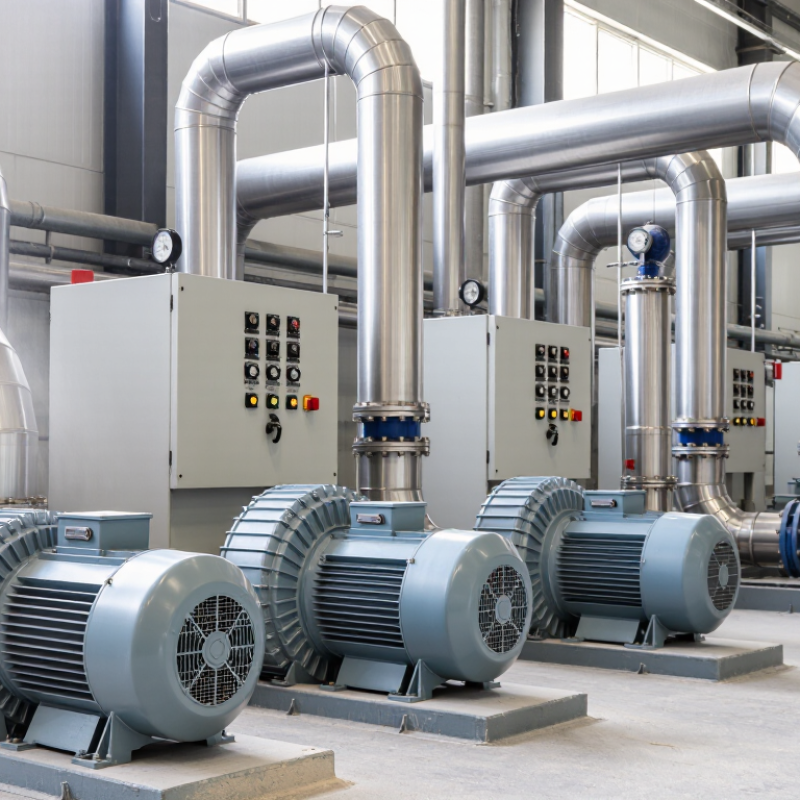
10 Best Pneumatic Conveying Blower Manufacturers

Pneumatic Conveying Basics: Typical Dilute-Phase Velocities of 15–30 m/s

In dilute-phase pneumatic conveying, moving air keeps particles suspended inside a pipeline. Typical conveying velocities are often around 15–30 m/s, but this range is a guide, not a universal setting. Fine powders may travel differently from coarse granules. Material shape, moisture, pipe diameter, and solids loading all affect the required airflow.

Too little velocity can let particles settle, especially at bends or horizontal runs. Too much can increase wear, particle breakage, and energy use. A technician might check pressure readings, listen for changes in the line, and inspect elbows for buildup. Small clues matter. A pale dust trail near a joint may signal leakage, while a sudden pressure rise can suggest a developing blockage.

Selecting a conveying blower means matching airflow and pressure to the actual system, not choosing from velocity alone. Start with the material supplier’s data and the pipeline layout, then confirm performance during controlled operation. I would treat calculated values as estimates; real installations can behave stubbornly. Adjustments should be measured, documented, and checked against product condition and line stability.


Typical Dilute-Phase Conveying Velocity

A reference range for dilute-phase pneumatic conveying, shown in meters per second.

Typical dilute-phase conveying velocities are approximately 15–30 m/s. The suitable operating velocity depends on material properties, pipe layout, and system design; use material-specific testing and engineering guidance when selecting a setpoint.

Blower Types: Roots, Screw, and Centrifugal Designs for Conveying Systems

Pneumatic conveying performance depends on more than blower horsepower. Material size, moisture, route length, and pickup points shape the required airflow and pressure. Roots blowers move a near-fixed volume of air with each rotation. They suit many steady, low-to-medium-pressure lines, but discharge air can become hot. A cooler, relief valve, or sound enclosure may be needed. Watch the fines.

Screw blowers use paired rotors and internal compression, often delivering air efficiently across stable operating conditions. Their initial cost and service needs can be higher, and dusty intake air may shorten rotor life. Keep filtration disciplined.

Centrifugal blowers add velocity through an impeller, then convert it into pressure. They can serve high-volume systems, especially where conveying pressure is modest and demand stays predictable. At low flow, performance may fall quickly unless controls match the operating range.

The practical choice begins with the conveying curve, not a catalog headline. Compare required airflow at actual pressure, including pipe bends, filters, and receiver losses. Fragile pellets may need gentler velocities; abrasive powder can demand tougher bends and careful wear checks. That trade-off is easy to underestimate.

A measured commissioning run can reveal plugging, heat, and energy use before routine operation. Allow for uncertainty: feed consistency changes, and yesterday’s settings may not fit tomorrow’s batch.

Key Performance Data: Airflow, Pressure, Power, and ISO 1217 Testing

When comparing pneumatic conveying blower manufacturers, read airflow and pressure as a matched operating point, not separate headline numbers. A unit rated for 1,000 m³/h at 60 kPa may deliver less flow after filters, pipe bends, and material pickup add resistance. Ask whether published airflow is stated at inlet conditions, and whether pressure means gauge or absolute pressure. Small differences matter.

Power figures deserve the same scrutiny. At 1,000 m³/h and 60 kPa, ideal air power is about 16.7 kW; at 65% overall efficiency, estimated input rises to roughly 25.6 kW. This is a calculation, not a guaranteed field result. The U.S. Department of Energy’s Improving Compressed Air System Performance sourcebook notes that compressed air can account for around 10% of industrial electricity use, though actual shares vary by facility. A few kilowatts can therefore matter over long shifts.

ISO 1217:2009, Displacement compressors—Acceptance tests, provides standardized methods for testing displacement-compressor capacity and power. Check whether a blower’s reported results were measured under comparable inlet temperature, pressure, and test conditions; the standard is not a substitute for application-specific conveying trials. Request the test sheet, including measured airflow, discharge pressure, shaft or input power, and stated tolerances. A neat datasheet can still hide assumptions. Ask for operating data at the duty point you actually need.

How to Select a Blower: Material, Conveying Phase, and System Pressure Loss

Start with the material, not the blower catalogue. Particle size, bulk density, moisture, and fragility affect both conveying behavior and equipment wear. Fine powders may disperse readily, while damp or irregular particles can settle or bridge. David Mills’s Pneumatic Conveying Design Guide describes dilute-phase conveying velocities commonly around 15–30 m/s; dense-phase systems operate more slowly, often around 2–8 m/s. These are design ranges, not guarantees. Test the actual material where possible.

Choose the conveying phase to suit the product and route. Dilute phase can work well for steady, longer-distance transport, but higher air velocity may increase particle impact at bends. Dense phase can reduce velocity and product damage, yet requires careful control of solids feeding and pressure. Real plants are rarely that tidy. A small change in moisture or feed rate can alter performance, so leave room for operating variation.

Estimate total pressure loss across the entire system, including straight pipe, elbows, pickup points, filters, and discharge equipment. The U.S. Department of Energy’s Improving Fan System Performance guide emphasizes evaluating fans against the system curve; the same operating-point principle matters when matching a blower. Do not size from pipe length alone. Record the required flow and pressure at the blower inlet, account for air temperature and altitude, then check the operating point with the system supplier. I would still verify the estimate against measured pressure after commissioning.

10 Leading Manufacturers Compared by Applications, Capacity, and Service Support

The ten leading pneumatic conveying blower manufacturers differ less by headline claims than by how well their equipment fits a process. Dense-phase systems may need steady pressure at lower airflow, while dilute-phase lines often require higher volume and careful velocity control. A cement transfer line, for example, faces different wear and dust challenges from a food ingredient system. Fit matters.

Compare capacity using airflow and pressure at the actual duty point, not the largest number on a brochure. Ask for performance curves, motor data, noise figures, and startup guidance. Some suppliers offer Roots, screw, or centrifugal designs, each with trade-offs in efficiency, footprint, and maintenance. Quiet running helps. It is not the whole story.

Service support can distinguish otherwise similar options. Check commissioning availability, spare-parts lead times, troubleshooting access, and whether technicians understand conveying systems, not only blowers. Request references from applications using comparable materials and line lengths. A polished proposal is useful, but it cannot replace operating evidence. I would question any comparison that treats capacity as fixed; temperature, altitude, filters, and pressure losses can change real output. Even a strong shortlist may need a site review before purchase.

10 Best Pneumatic Conveying Blower Manufacturers — 10 Leading Manufacturers Compared by Applications, Capacity, and Service Support
Anonymous Profile Typical Blower Technology Best-Fit Applications Indicative Airflow Capacity Typical Differential Pressure Service Support to Confirm
Profile 1
Positive displacement
Rotary-lobe blower, fixed-speed package Dilute-phase conveying of grain, flour, pellets, and other dry bulk materials About 100–10,000 m³/h About 0.3–1.0 bar Check local parts stock, overhaul capability, and commissioning availability.
Profile 2
Positive displacement
Rotary-lobe blower with variable-frequency drive Systems requiring adjustable airflow, such as multi-line conveying or changing production rates About 100–10,000 m³/h About 0.3–1.0 bar Confirm drive commissioning, controls integration, and service response coverage.
Profile 3
Oil-free option
Oil-free screw blower Applications where oil-free conveying air is specified, including food and pharmaceutical processes About 100–12,000 m³/h About 0.5–1.2 bar Verify air-quality documentation, element service intervals, and access to trained technicians.
Profile 4
High-volume
Multistage centrifugal blower High-flow dilute-phase conveying and central air systems serving several users About 1,000–100,000 m³/h About 0.2–1.0 bar Ask about balancing, vibration diagnostics, and planned maintenance support.
Profile 5
High-speed
High-speed turbo blower Variable-flow conveying systems where compact equipment and efficient operation are priorities About 500–30,000 m³/h About 0.3–1.0 bar Confirm specialist electronics support, spare-part lead times, and remote diagnostics options.
Profile 6
Compact systems
Side-channel (regenerative) blower Small-scale conveying, light-duty material transfer, and low-capacity applications About 20–1,500 m³/h About 0.1–0.5 bar Check suitability for the required duty cycle and availability of replacement bearings and seals.
Profile 7
Vacuum conveying
Rotary-lobe vacuum blower Vacuum conveying systems and suction-side material transfer About 100–10,000 m³/h Vacuum capability depends on the package and operating point; confirm the system curve. Verify vacuum-side filtration support, seal service, and package-specific troubleshooting.
Profile 8
Low-flow option
Dry claw vacuum pump or blower Clean, dry vacuum conveying in applications with modest airflow requirements About 50–4,000 m³/h Depends on configuration; confirm the permitted pressure and vacuum operating range. Ask about claw inspection, service intervals, and the availability of trained local support.
Profile 9
Wet-service option
Liquid-ring vacuum pump Vacuum conveying where the process gas may be humid or contain condensable vapour About 50–10,000 m³/h Depends on seal-liquid temperature and configuration; confirm the operating point. Confirm seal-liquid management support, materials compatibility guidance, and service access.
Profile 10
Packaged systems
Engineered blower package combining blower, motor, silencer, filter, and controls Turnkey installations requiring coordinated equipment, instrumentation, and system integration Package-dependent; commonly selected within the ranges of the underlying blower technology Package- and duty-dependent; size against the conveying system pressure drop Clarify responsibility for commissioning, controls, warranty coordination, and emergency callouts.

Comparison note: No company or brand names are shown. These rows describe common blower technology and package profiles, not verified specifications for individual manufacturers. Airflow and pressure ranges are indicative only; actual operating limits depend on the model, gas conditions, altitude, and system design. Confirm performance at the required duty point with the supplier.

Powder Coat Booths

For those larger-sized parts, or smaller quantity runs, we have 2 independent powder coat booths and ovens. The quality, durability and affordability of today’s powder coating finishes make this the process of choice for world-class companies.

Powder coating advantages over other forms of coating are many. Materials used in the Powder coating process can be metals and non-metals that come in a multitude of thicknesses, textures, colors, etc. Another of Powder coating’s biggest advantages over conventional coatings is its ability to create finishes in many different textures. Powder Coating Booths allow us the ability to apply these advantages to large products.

Wet Paint Line

Tri-State Fabricators runs a full-service conveyor line for painting. Wet painting can provide protection or decoration to many different part styles. From start to finish, every project is easier to undergo random and point-based inspection by our skilled painting team.

Advantages to our Wet Paint Line are these lines start with product prep and ends with a thorough inspection of a high quality finished product. Our ability to complete large and small projects with a superior finish and doing so in a timely and economical fashion. This passes along the savings in production to our customers. When powder coating ins not an option, our Wet Paint Line gets the job done right the first time.

Wet Paint Booths

When the parts get big and heavy we roll-out our custom paint racks and oversize booth. By utilizing our partnerships with all the major paint brands, we can match virtually any color with wet paint.

The advantages of having access to a Wet Paint Booth are many. Large projects of many different shapes can be loaded into the booth. The Wet Paint Booth offers an environment that is much more controlled than a typical parts painting operation.

Not only are they used because of their controlled environment, but they’re are also advantageous when it comes to applying paint to parts that are needed in industries that require specialty coatings such as medical, aerospace, etc.

Military CARC

Our military forces have some very high standards when it comes to the finish of their vehicles and equipment. From the first pre-treatment step to final coat, it takes a great deal of knowledge and experience to protect the men and women of our armed forces. They deserve only the best, and Tri-State Fabricators provides it.

All of our processes are closely monitored by our staff and management teams. Both of which are highly trained in the processes of metal fabrication and finishing. Tri-State Fabricators’ goal is to always fully satisfy each and every customer, including the military. We will always put a 110% into what we do.

Glass-Bead Blasting

Abrasive media blasting is an excellent way to remove old paint, rust, and increase the paint/powder adhesion. Glass beads produce a much smoother and brighter finish than angular abrasives; leaving the part clean yet without any dimensional change. Chemically inert and environmentally friendly, we can recycle our beads approximately 30 times; making them a more preferred method of metal cleaning or surface finishing.

Advantages to Glass Bead Blasting are many. Glass bead blast media is used when a project is needing rough surfaces need to become smooth for applications of coatings such as paint. It is typically used to clean paint and rust from a product surface without deforming the surface it is being used on. Overall, compared to many other blasting media, Glass Bead Blasting is a very economical choice and those savings are always passed on to our customers.

Part Washing

Tri-State Fabricators utilize a zinc phosphate wash to clean and etch the material to ensure the best paint adhesion possible. The unique design of our 3-stage wash system does the work like a 5-stage. From Cleaning and rinsing to conversion coating and post-treatment, Our Part Washing process is a complete service and works throughout the fabrication service and the finishing service.

Along with the previously mentioned benefits, Curing is a vital chemical reaction that leaves the product finish hard and relatively safe from mild abrasion and aggressive corrosion. This process can be done in more than one way; ambient air-dry or in curing ovens at temps that exceed 240°.

Burn-Off Oven

From fixing paint mistakes (someone else’s of course) to simply cleaning our paint line hooks, our burn-off oven is put to good use. After a quick burn-off, a little clean up, and a fresh coat of paint, your parts will look better than new.

Why does our Burn-Off Oven work so well? Because super heating the air around parts turns the materials into ashes. From paint and powder coatings to rubber and machining oils, high temps do the job without degrading the integrity of the part.

Masking

Masking is a vital part of producing high quality products. We have die-cut masking patterns to protect machined surfaces as well as a wide range of plugs and caps to protect threaded holes and bolts. We provide permanent and temporary masking.

Masking allows the selected sections of a product to be protected from a fabrication or finishing service. This can be with both chemicals when etching and tapes, paints when only finishing just a section of the product. Masking is great in aiding the customization process of a project.

Screen Printing

Screen printing is a photographic process that transfers artwork onto a porous nylon screen which allows colored ink to flow through the screen and be deposited on an aluminum or plastic component. We can generally have just about any design created onto a screen for your parts.

Some of the advantages of Screen Printing are, brand recognition for your business displaying on your products, assembly instructions, product warnings/hazards, etc. Tri-State Fabricators produces Screen Printing of the highest quality so you know it’s durable.

Metal Finishing

Metal Finishing is the art of treating the exterior portion of product, often metal but can also be made of other materials, so that the surface is clean and free of any debris. Then the process of applying coats or either paint of powder coat takes place. This coating process improves the quality of the product in both appearance and resistance to wear and corrosion.

Tri-State Fabricators, Inc., understands that a project typically isn’t complete until a high-quality finish has been added to your product. This is why our painting and powder coating teams continuously inspect the products throughout the Metal Finishing process.
