


Choosing a 3d Printing Machine is rarely as simple as comparing prices on a product page. Global buyers must examine print accuracy, material compatibility, software stability, service coverage, and long-term operating costs. A machine that produces sharp prototypes in a quiet showroom may struggle beside a factory floor, where dust, heat, and continuous production expose weaknesses.
Chuck Hull, the inventor of stereolithography, once said, “The ability to make parts quickly and accurately is a powerful advantage.” His observation still matters. A reliable printer should maintain consistent layers, whether it uses a 0.1-millimeter nozzle setting or cures detailed resin components. It should also provide clear manuals, replaceable parts, secure firmware, and responsive technical support across borders. Small details matter.
This guide reviews ten leading 3D printing machine brands for international buyers. The comparison considers industrial capability, desktop usability, material range, build volume, certification practices, user experience, and after-sales support. Brand reputation alone is not enough. Some manufacturers advertise impressive speed, yet their recommended settings may require careful calibration. Others offer affordable machines but limited local service. That difference can become expensive after a failed print or delayed spare part.
There is no perfect choice. We may overlook a regional specialist or undervalue a newer technology. Therefore, buyers should test representative files, inspect finished parts, and request documented performance data before purchasing. Real production evidence is stronger than polished specifications. This ranking aims to support informed decisions, not replace practical evaluation.
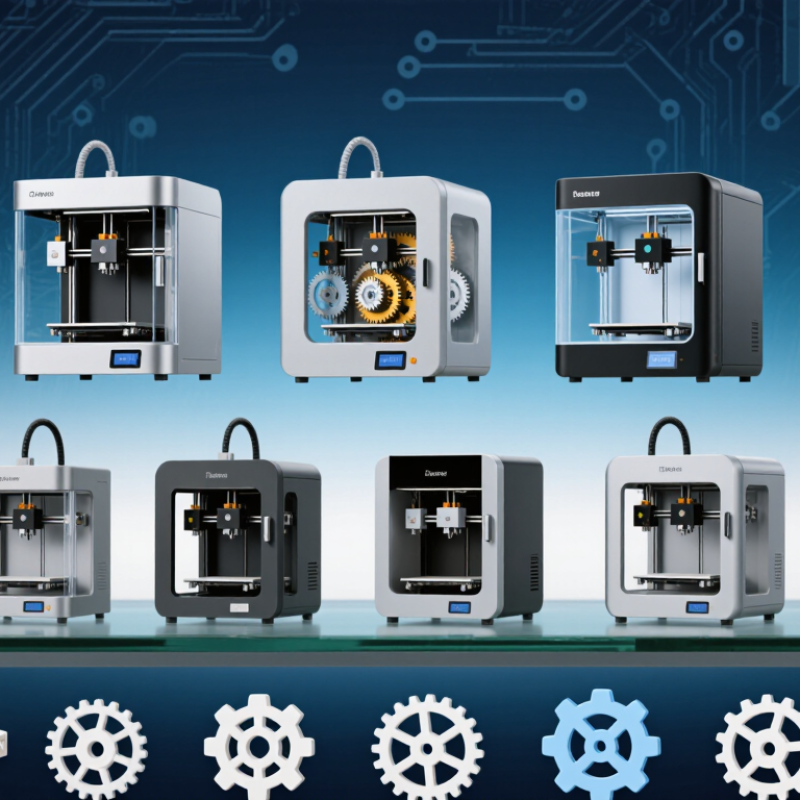
A reliable 3D printing machine brand proves its value through consistent results, not attractive specifications alone. In real workshops, operators notice small details: a stable heated bed, clean cable routing, accurate temperature sensors, and firmware that rarely freezes. A dependable manufacturer explains these systems clearly. It publishes dimensional accuracy tests, material compatibility data, and maintenance instructions. Vague promises weaken trust.
After testing machines in practical production settings, I look for repeatability across several prints. A reliable unit should reproduce small holes, sharp corners, and thin walls without constant manual adjustment. Replacement nozzles, belts, build surfaces, and control boards should remain available for years. Support matters too. Clear troubleshooting guides and technically trained staff can reduce a half-day failure to a short repair. Fast replies help, but useful replies matter more.
No machine is flawless. I once trusted a smooth first print and ignored unusual motor noise. That mistake later caused uneven layers. Brands should acknowledge common failures instead of hiding them. Transparent warranty terms, documented software updates, safety instructions, and realistic production limits show professional responsibility. Independent reviews and long-term user feedback add credibility, although they can also contain bias. Buyers should compare evidence, not slogans. A reliable brand earns confidence slowly, through measurable performance and honest communication.

Leading 3D printer manufacturers now combine several technologies rather than relying on one process. According to the Wohlers Report 2024, the additive manufacturing industry reached $20.035 billion in 2023, growing 13.5%. That expansion reflects stronger demand for production-ready machines, not only prototypes.
Fused filament fabrication remains practical for offices, schools, and large-format workshops. It uses heated nozzles to deposit thermoplastic layers, often with automatic bed leveling and filament monitoring. Resin systems use stereolithography, digital light processing, or masked LCD exposure. These methods create smooth surfaces and fine details. Powder-bed systems, including selective laser sintering and laser powder-bed fusion, support complex polymer and metal parts without traditional molds. The technology is powerful. It is not effortless.
Higher-end equipment increasingly uses closed-loop control. Cameras, thermal sensors, and melt-pool monitoring can detect layer variation during printing. Software then adjusts temperature, speed, or energy input. Material jetting places tiny droplets with impressive precision, while binder jetting joins powder before later curing or sintering. ISO/ASTM 52900 provides common terminology, helping buyers compare specifications more reliably. However, advertised accuracy can depend on material, geometry, calibration, and operator skill. A machine may perform beautifully in a showroom, yet behave differently after months of production. Professional buyers should request test parts, process records, service response times, and independent validation before purchasing.
| Profile | Core Printing Technology | Typical Build Volume | Typical Layer Thickness | Compatible Materials | Typical Production Role | Key Technology Features | Common Industries |
|---|---|---|---|---|---|---|---|
| 01 | Fused Deposition Modeling (FDM/FFF) | Approximately 200 × 200 × 200 mm to 1,000 × 1,000 × 1,000 mm | 50–500 μm | PLA ABS PETG Nylon PEEK | Functional prototypes, fixtures, tooling and low-volume parts | Heated build platforms, dual extrusion, enclosed chambers and high-temperature material systems | Engineering, education, automotive, consumer products and manufacturing |
| 02 | Stereolithography (SLA) | Approximately 145 × 145 × 175 mm to 800 × 800 × 550 mm | 25–100 μm | Standard Resin Tough Resin Castable Resin Dental Resin | High-detail prototypes, patterns, dental models and small-batch components | Laser-cured photopolymer resin, smooth surfaces, fine features and high dimensional detail | Dental, jewelry, healthcare, electronics and product design |
| 03 | Digital Light Processing (DLP) | Approximately 100 × 60 × 150 mm to 450 × 250 × 400 mm | 25–100 μm | Photopolymer Resin Ceramic-Filled Resin Castable Resin | Rapid production of detailed parts and repeatable small-batch manufacturing | Projector-based layer exposure, fast layer curing and consistent feature reproduction | Dental, hearing devices, jewelry, industrial design and medical modeling |
| 04 | Selective Laser Sintering (SLS) | Approximately 300 × 300 × 300 mm to 750 × 550 × 550 mm | 60–150 μm | PA12 PA11 TPU Glass-Filled Nylon | Durable end-use parts, complex geometries and production-grade prototypes | Powder-bed processing without support structures, nesting efficiency and internal-channel capability | Automotive, aerospace, healthcare, robotics and consumer products |
| 05 | Multi Jet Fusion (MJF) | Approximately 380 × 284 × 380 mm to 1,000 × 1,000 × 1,000 mm | Approximately 80 μm | PA12 PA11 PA12 Glass Bead TPU | Series production, functional parts and customized components | Fusing and detailing agents, high part nesting density and consistent mechanical properties | Industrial manufacturing, automotive, healthcare, electronics and consumer goods |
| 06 | Metal Laser Powder Bed Fusion (LPBF/SLM) | Approximately 100 × 100 × 100 mm to 500 × 500 × 500 mm | 20–60 μm | Stainless Steel Aluminum Titanium Nickel Alloys | Complex metal components, lightweight structures and certified production parts | One or more lasers, inert-gas atmosphere, support optimization and closed-loop melt-pool monitoring | Aerospace, medical implants, automotive, energy and tooling |
| 07 | Electron Beam Melting (EBM) | Approximately 200 × 200 × 180 mm to 500 × 500 × 500 mm | 50–100 μm | Titanium Alloys Cobalt-Chrome Nickel Alloys | Large, dense metal parts requiring reduced residual stress | Electron-beam heat source, vacuum environment, elevated powder-bed temperature and preheating | Aerospace, orthopedic implants, energy and high-performance engineering |
| 08 | Metal Binder Jetting | Approximately 100 × 100 × 100 mm to 430 × 320 × 200 mm | 70–150 μm | Stainless Steel Tool Steel Copper Iron-Based Alloys | High-throughput production of small and medium metal parts | Binder deposition onto powder, batch processing, followed by debinding and sintering | Automotive, industrial equipment, consumer products and tooling |
| 09 | Material Jetting | Approximately 490 × 390 × 200 mm to 1,000 × 800 × 500 mm | 16–32 μm | Rigid Photopolymer Flexible Photopolymer Transparent Resin Digital Materials | Full-color prototypes, multi-material models and visual product validation | Inkjet-style deposition, UV curing, multi-material printing and smooth surface finishing | Consumer products, packaging, healthcare, education and design studios |
| 10 | Large-Format Pellet Extrusion | Approximately 1,000 × 1,000 × 1,000 mm to several cubic meters | 0.5–5 mm | ABS Pellets PETG Pellets Recycled Polymers Fiber-Reinforced Polymers | Large prototypes, molds, patterns, architectural forms and tooling | Lower-cost pellet feedstock, high deposition rates, robotic motion systems and large heated build areas | Marine, construction, architecture, automotive, aerospace and industrial tooling |
For global buyers, the top 3D printing machine brands are not chosen by showroom speed alone. They must prove accuracy, service coverage, material access, and safe operation across regions. The Wohlers Report 2024 valued the additive manufacturing industry at $20.035 billion in 2023, following 13.5% growth. That expansion creates more options and more comparison risk. A polished demo can hide calibration drift. Ask for test parts. Use your own geometry, not a perfect sample.
A practical shortlist should include established industrial suppliers, specialized metal-system makers, and reliable mid-market producers. Compare dimensional repeatability, build volume, layer control, uptime records, and technician response. Material certification matters when parts face heat, load, or repeated cleaning. Fortune Business Insights estimated the global 3D printing market at $20.37 billion in 2023, showing strong commercial demand. However, market growth does not guarantee equal machine quality.
I would also inspect installation records, software updates, spare-part stock, and operator training. These details become painfully visible beside a production line. Sculpteo’s State of 3D Printing 2024 report identifies quality, cost, and skills as continuing adoption concerns. Warranty language deserves careful reading. A low purchase price may conceal expensive service delays. Regional voltage, import procedures, and data protection requirements also affect real ownership costs. Even strong machines can disappoint when the local support team is slow. That weakness should remain visible in any “best brands” ranking.
10 Best 3D Printing Machine Brands for Global Buyers
Comparing 3D printer brands requires more than checking the advertised speed. Wohlers Report 2024 valued the global additive manufacturing market at approximately $20.0 billion in 2023. It also reported 13.5% annual growth. This expansion brings more choices, but specifications can be inconsistent. A machine claiming 300 mm/s may need slower settings for detailed parts. Examine real print samples, layer consistency, noise, and recovery after a failed job.
Performance should be measured against total cost. Record the purchase price, printer lifespan, material waste, replacement nozzles, software fees, and maintenance time. A low-cost machine can become expensive after repeated calibration. Compare a standard test piece at 0.2 mm layer height, then inspect holes, corners, overhangs, and surface marks. Track the successful-print rate across ten attempts. Perfect scores are unrealistic. That is useful data, not a weakness. ISO/ASTM 52900 terminology can also improve comparisons between technical claims and actual results.
Tips: Ask for service response times and spare-part availability in your region. Check whether the warranty covers major components. Calculate cost per usable part, not cost per spool. Leave room for operator skill, because beginners may need more setup time. Reports provide market direction, but your workshop conditions decide the final value.
Global buyers should judge a 3D printer brand by practical support, not attractive specifications alone. In real purchasing projects, the best choice depends on part size, material requirements, production volume, and operator skill. A compact desktop printer may suit prototypes, while a larger system could reduce labor for repeated production. Define these needs before comparing suppliers.
Check print accuracy using sample parts, not brochures. Ask for dimensional test results, surface photographs, and failure-rate data. Confirm compatible materials, nozzle options, chamber temperature, software workflow, and maintenance intervals. A printer using common components may simplify repairs. However, lower purchase prices can hide costly filters, proprietary supplies, or frequent calibration.
Global delivery adds another layer. Verify power compatibility, customs documents, warranty coverage, installation training, and local technical response times. Spare parts should have clear lead times. Support in your working language matters during a failed overnight print. It is also wise to inspect electrical certifications and regional safety requirements before payment. No shortlist is perfect. I have seen buyers overvalue speed and underestimate cleaning time. A small pilot order, with ten repeated test prints, often reveals more than a polished demonstration. Compare total ownership cost over three years, including labor, materials, service, shipping, and downtime. Reliable purchasing is slower at the beginning, but less painful later.


For those larger-sized parts, or smaller quantity runs, we have 2 independent powder coat booths and ovens. The quality, durability and affordability of today’s powder coating finishes make this the process of choice for world-class companies.
Powder coating advantages over other forms of coating are many. Materials used in the Powder coating process can be metals and non-metals that come in a multitude of thicknesses, textures, colors, etc. Another of Powder coating’s biggest advantages over conventional coatings is its ability to create finishes in many different textures. Powder Coating Booths allow us the ability to apply these advantages to large products.
Tri-State Fabricators runs a full-service conveyor line for painting. Wet painting can provide protection or decoration to many different part styles. From start to finish, every project is easier to undergo random and point-based inspection by our skilled painting team.
Advantages to our Wet Paint Line are these lines start with product prep and ends with a thorough inspection of a high quality finished product. Our ability to complete large and small projects with a superior finish and doing so in a timely and economical fashion. This passes along the savings in production to our customers. When powder coating ins not an option, our Wet Paint Line gets the job done right the first time.
When the parts get big and heavy we roll-out our custom paint racks and oversize booth. By utilizing our partnerships with all the major paint brands, we can match virtually any color with wet paint.
The advantages of having access to a Wet Paint Booth are many. Large projects of many different shapes can be loaded into the booth. The Wet Paint Booth offers an environment that is much more controlled than a typical parts painting operation.
Not only are they used because of their controlled environment, but they’re are also advantageous when it comes to applying paint to parts that are needed in industries that require specialty coatings such as medical, aerospace, etc.
Our military forces have some very high standards when it comes to the finish of their vehicles and equipment. From the first pre-treatment step to final coat, it takes a great deal of knowledge and experience to protect the men and women of our armed forces. They deserve only the best, and Tri-State Fabricators provides it.
All of our processes are closely monitored by our staff and management teams. Both of which are highly trained in the processes of metal fabrication and finishing. Tri-State Fabricators’ goal is to always fully satisfy each and every customer, including the military. We will always put a 110% into what we do.
Abrasive media blasting is an excellent way to remove old paint, rust, and increase the paint/powder adhesion. Glass beads produce a much smoother and brighter finish than angular abrasives; leaving the part clean yet without any dimensional change. Chemically inert and environmentally friendly, we can recycle our beads approximately 30 times; making them a more preferred method of metal cleaning or surface finishing.
Advantages to Glass Bead Blasting are many. Glass bead blast media is used when a project is needing rough surfaces need to become smooth for applications of coatings such as paint. It is typically used to clean paint and rust from a product surface without deforming the surface it is being used on. Overall, compared to many other blasting media, Glass Bead Blasting is a very economical choice and those savings are always passed on to our customers.
Tri-State Fabricators utilize a zinc phosphate wash to clean and etch the material to ensure the best paint adhesion possible. The unique design of our 3-stage wash system does the work like a 5-stage. From Cleaning and rinsing to conversion coating and post-treatment, Our Part Washing process is a complete service and works throughout the fabrication service and the finishing service.
Along with the previously mentioned benefits, Curing is a vital chemical reaction that leaves the product finish hard and relatively safe from mild abrasion and aggressive corrosion. This process can be done in more than one way; ambient air-dry or in curing ovens at temps that exceed 240°.
From fixing paint mistakes (someone else’s of course) to simply cleaning our paint line hooks, our burn-off oven is put to good use. After a quick burn-off, a little clean up, and a fresh coat of paint, your parts will look better than new.
Why does our Burn-Off Oven work so well? Because super heating the air around parts turns the materials into ashes. From paint and powder coatings to rubber and machining oils, high temps do the job without degrading the integrity of the part.
Masking is a vital part of producing high quality products. We have die-cut masking patterns to protect machined surfaces as well as a wide range of plugs and caps to protect threaded holes and bolts. We provide permanent and temporary masking.
Masking allows the selected sections of a product to be protected from a fabrication or finishing service. This can be with both chemicals when etching and tapes, paints when only finishing just a section of the product. Masking is great in aiding the customization process of a project.
Screen printing is a photographic process that transfers artwork onto a porous nylon screen which allows colored ink to flow through the screen and be deposited on an aluminum or plastic component. We can generally have just about any design created onto a screen for your parts.
Some of the advantages of Screen Printing are, brand recognition for your business displaying on your products, assembly instructions, product warnings/hazards, etc. Tri-State Fabricators produces Screen Printing of the highest quality so you know it’s durable.
Metal Finishing is the art of treating the exterior portion of product, often metal but can also be made of other materials, so that the surface is clean and free of any debris. Then the process of applying coats or either paint of powder coat takes place. This coating process improves the quality of the product in both appearance and resistance to wear and corrosion.
Tri-State Fabricators, Inc., understands that a project typically isn’t complete until a high-quality finish has been added to your product. This is why our painting and powder coating teams continuously inspect the products throughout the Metal Finishing process.

